




-
TL;DR: Whiteman Air Force Base is adding a $13.6 million weapons and release-system facility to store, test and prepare B-21 Raider armament equipment while preserving space and operations for the B-2 Spirit. Located near the flight line, the facility is intended to streamline maintenance and weapons loading, helping avoid an operational gap as the Air Force transitions between stealth bomber fleets.
Whiteman Adds B-21 Weapons Facility
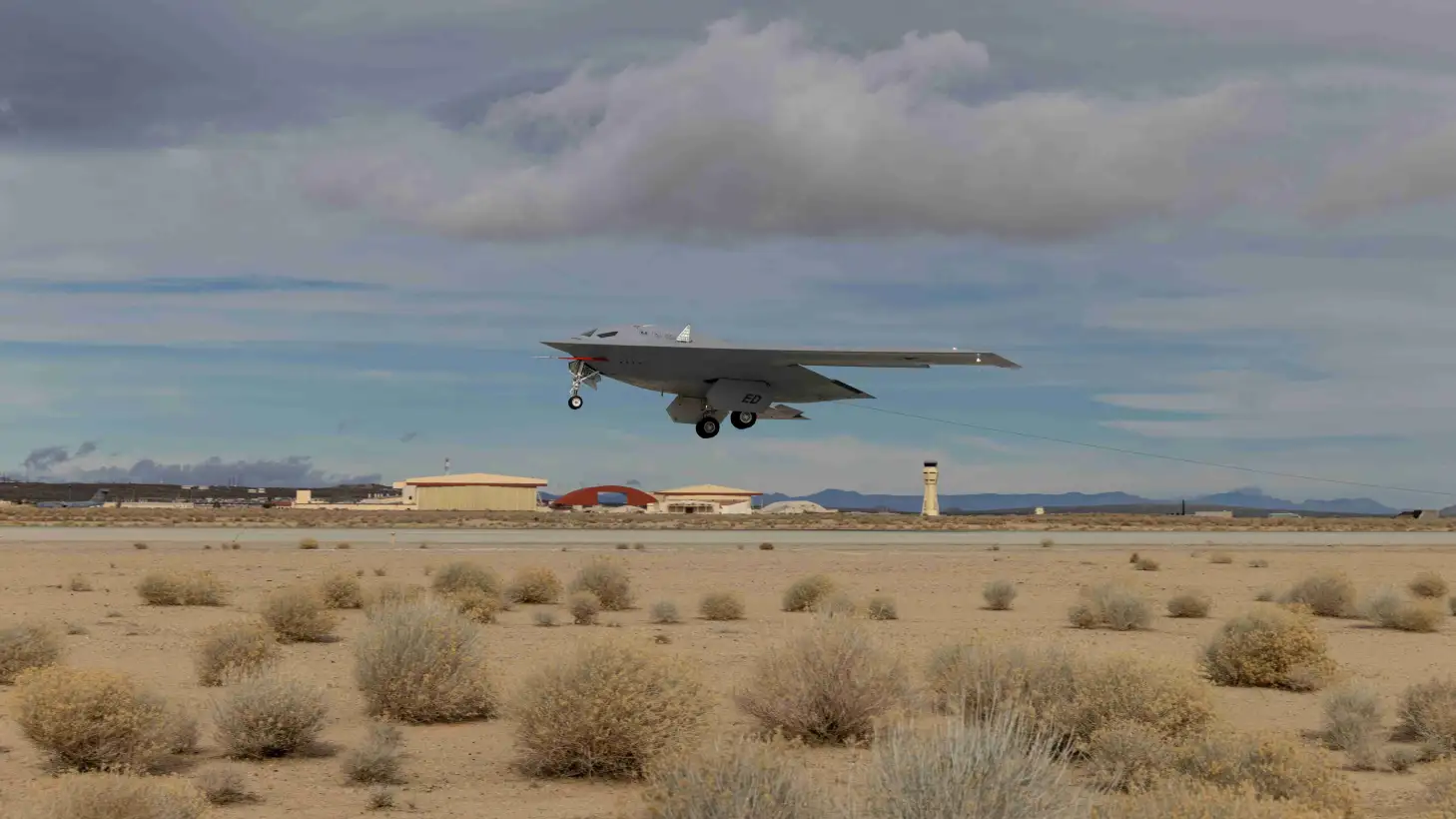
The United States is building a weapons and release-system facility at Whiteman Air Force Base in Missouri to support the arrival of the B-21 Raider while maintaining B-2 Spirit operations.
Air Force documentation states that Whiteman lacks sufficient space for the munitions-related parts and equipment expected with the B-21. The new facility will store and test armament-system accessories while freeing existing space for B-2 support during the transition between the two stealth bomber fleets.
Its location near the flight line is intended to allow equipment to move efficiently among storage areas, maintenance shops and aircraft. The arrangement is expected to support sortie generation by reducing delays between maintenance, weapons loading and an aircraft’s return to operational status.
Contract and Construction Details
According to a U.S. Department of War bulletin published Sept. 21, 2026, K & K Industries received a contract valued at $13,649,923. The cumulative announced value is $14,993,485.
The Kansas City District of the U.S. Army Corps of Engineers is responsible for the contract, with construction taking place in Knob Noster, Missouri.
The project includes a new 1,580-square-meter weapons and release-system shop and alterations covering another 674 square meters. Associated work includes utilities, communications, access routes, site preparation, and cybersecurity measures for the building’s control systems.
Supporting Two Bomber Fleets
Whiteman will need to support the B-2 and B-21 simultaneously as the Raider enters service. The aircraft have different maintenance, weapons-integration, and support requirements, increasing demand for specialized work and storage space.
The new shop is intended to reduce reliance on shared facilities and help maintenance personnel test and prepare weapons-system equipment without disrupting ongoing B-2 activities. This infrastructure is designed as an operational support facility rather than solely as storage.
Keeping the B-2 available during the transition will preserve an existing penetrating-strike capability while the Air Force fields the B-21 in larger numbers. The project is intended to reduce the risk of an operational gap during that process.
B-21 Mission and Design
Developed by Northrop Grumman, the B-21 uses a flying-wing configuration similar in principle to the B-2, with additional emphasis on reducing radar signature and using radar-absorbing materials. It is intended for long-range conventional strike and nuclear deterrence missions in environments where modern air defenses restrict the use of less stealthy aircraft.
The Raider’s open architecture is designed to simplify the integration of new sensors, software, munitions, and other capabilities over its service life. It is also described as combining multi-sensor fusion, electronic warfare and networked combat systems.
Available information indicates a crew of two, a wingspan of about 44.5 meters, and an estimated maximum range near 12,000 kilometers. Exact engine arrangements, payload, and some performance figures remain undisclosed or are based on estimates.
B-2 Role During the Transition
The B-2’s current mission illustrates the capability the B-21 is expected to assume. In June 2025, seven B-2s departing from the United States participated in Operation Midnight Hammer against Iranian nuclear facilities.
The operation involved multiple aerial refuellings and the use of 14 GBU-57 Massive Ordnance Penetrator bombs against heavily protected targets. It demonstrated the bomber force’s ability to operate over intercontinental distances, penetrate defended airspace, and strike high-value targets with specialized weapons.
The B-21 is intended to continue that role with a newer platform designed to adapt to evolving radar systems, integrated air-defense networks, and electronic warfare capabilities.
Recommended Comments