




-
TL;DR: The Army is pursuing a new mid-tier interceptor missile costing under $1 million to bridge the gap between cheap counter-drone systems and expensive Patriot PAC-3 missiles, aiming to counter drones, cruise missiles, aircraft, and short-range ballistic threats at scale. Emphasizing affordability, modular design, and rapid deployment, the effort invites multiple vendors to contribute components while requiring compatibility with existing Patriot launchers and the IBCS network. The move reflects growing concern over high interceptor costs and limited inventories in modern conflicts, where cheaper threats can quickly exhaust premium defenses, pushing the Army toward more sustainable, high-volume air defense solutions.
Army Issues Cost-Capped Interceptor Request
The U.S. Army is seeking a new low-cost interceptor missile designed to counter drones, cruise missiles, aircraft, and short-range ballistic threats without relying heavily on more expensive Patriot rounds. A request for information published May 15 by the Rapid Capabilities and Critical Technologies Office at Redstone Arsenal describes the effort as MOSAIC-26-03.
The Army wants complete interceptor rounds priced below $1 million each and has set a $250,000 ceiling for individual subsystems. It is asking the industry for mature technologies that could be ready for demonstrations by the fourth quarter of fiscal year 2026.
The effort is one of the clearest signs of a cost-focused shift in Army air defense planning, as the service looks for options that can be fielded in larger numbers during sustained attacks.
Designed to Fill a Gap Below PAC-3 MSE
The new interceptor is intended to occupy a middle tier between short-range counter-drone systems and high-end Patriot PAC-3 MSE missiles. According to the requirement, the missile must be an endo-atmospheric interceptor capable of speeds above Mach 5 and ranges greater than 120 miles.
The Army also wants the weapon to support in-flight target updates, terminal seeker guidance, and a blast-fragmentation warhead. That warhead requirement is notable because it points to a less costly engagement method than hit-to-kill designs, which depend on direct collision and tighter terminal precision.
By using proximity fuzes and fragmentation effects, the Army appears willing to trade some precision for affordability and higher inventory depth. Even so, the interceptor must still function in electronically contested environments and against dense raid scenarios.
Modular Acquisition Structure Signals Broader Competition
Rather than issuing a single all-in requirement, the Army divided the effort into five problem statements covering complete interceptor rounds, rocket motors, seekers, fire-control systems, and system integration.
That structure suggests a more modular procurement strategy, allowing multiple suppliers to compete on specific components instead of leaving the full design to a single prime contractor. The approach could broaden the industrial base and give the Army more flexibility in combining mature subsystems into a final weapon.
It also aligns with the program’s emphasis on speed and affordability, as subsystems with existing development progress may be easier to adapt than a fully new missile architecture.
Patriot Launcher and IBCS Compatibility Required
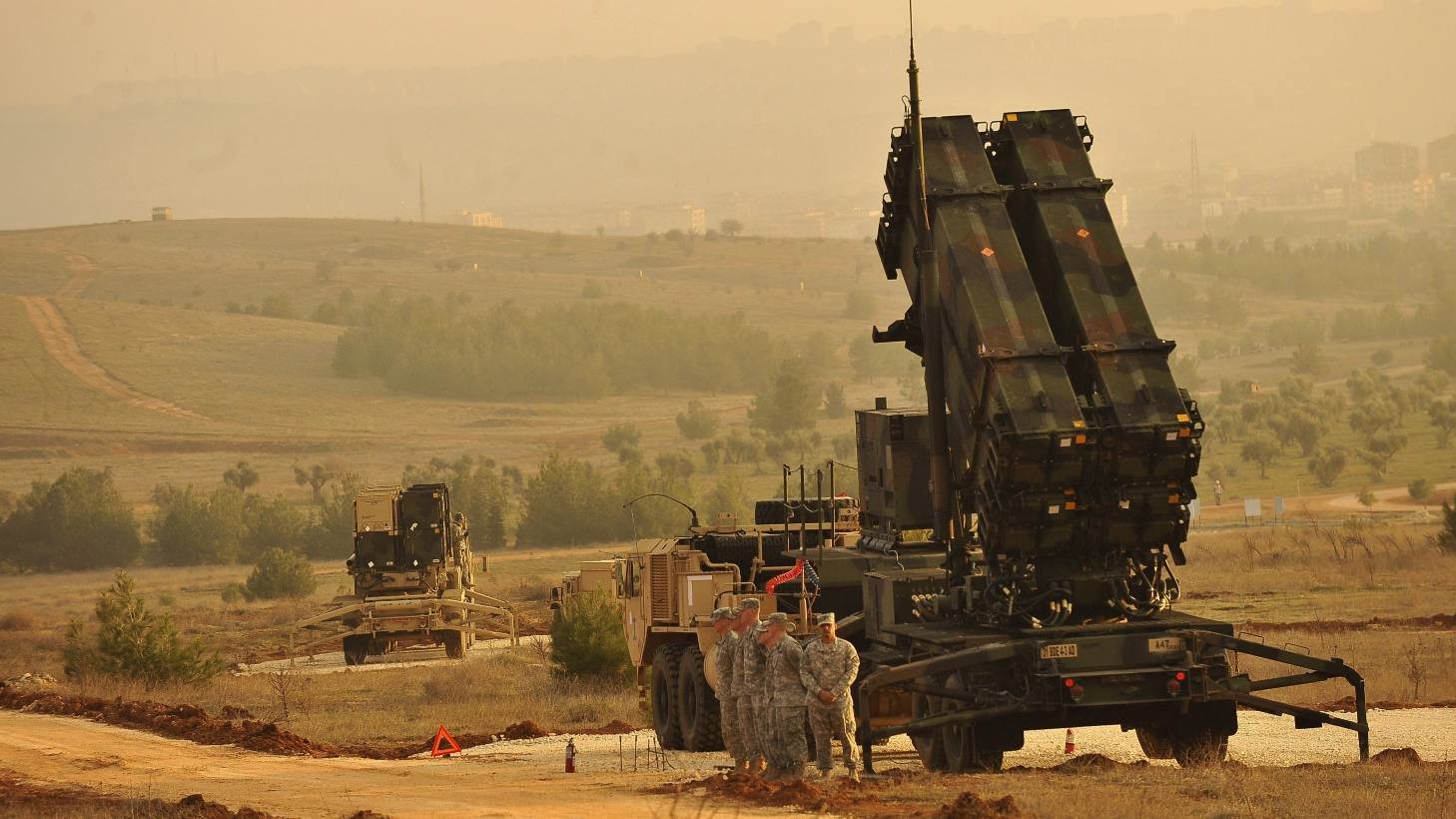
All proposed solutions must integrate with the M903 Patriot launch station and the Integrated Battle Command System, or IBCS. Those requirements sharply narrow the design space, as developers must meet Patriot canister dimensions, launcher interfaces, electrical connections, and launch sequencing standards.
The Army’s focus on compatibility reflects a desire to field the interceptor with existing Patriot formations rather than build a separate deployment model. Using the current launch infrastructure could reduce training burdens and avoid additional procurement costs.
IBCS integration is also central to the concept. The network fuses data from multiple sensors and launchers into a common fire-control architecture, allowing a missile to launch before its onboard seeker has fully acquired the target and receive updates during flight before terminal guidance begins.
Inventory and Cost Pressures Driving the Effort
The Army’s push for a cheaper interceptor comes as missile consumption rates and replenishment timelines have become a larger concern. A June 2024 multiyear contract for 870 PAC-3 MSE interceptors and related hardware was valued at $4.5 billion, while Army budget documents place the missile’s unit cost at about $4 million.
Recent combat in Ukraine and the Middle East has underscored how quickly advanced air defense inventories can be depleted during repeated drone and missile attacks. In those scenarios, the cost exchange often favors the attacker when low-cost threats are met with premium interceptors.
Recommended Comments