




-
TL;DR: U.S. Marines are training with AI-powered rifle scopes that can track and automatically time shots to hit small drones, reflecting a growing push to give individual troops counter-drone capability. The SMASH 2000L system boosts accuracy by calculating ballistics and compensating for movement, even against hard-to-jam or fiber-optic-controlled drones. Both the Marine Corps and Army are rapidly fielding these tools as part of a layered defense, responding to the rising threat of small unmanned aircraft seen across modern conflicts and reshaping how ground forces train and operate.
Marines Seen Training With Rifle-Mounted Counter-Drone Optics
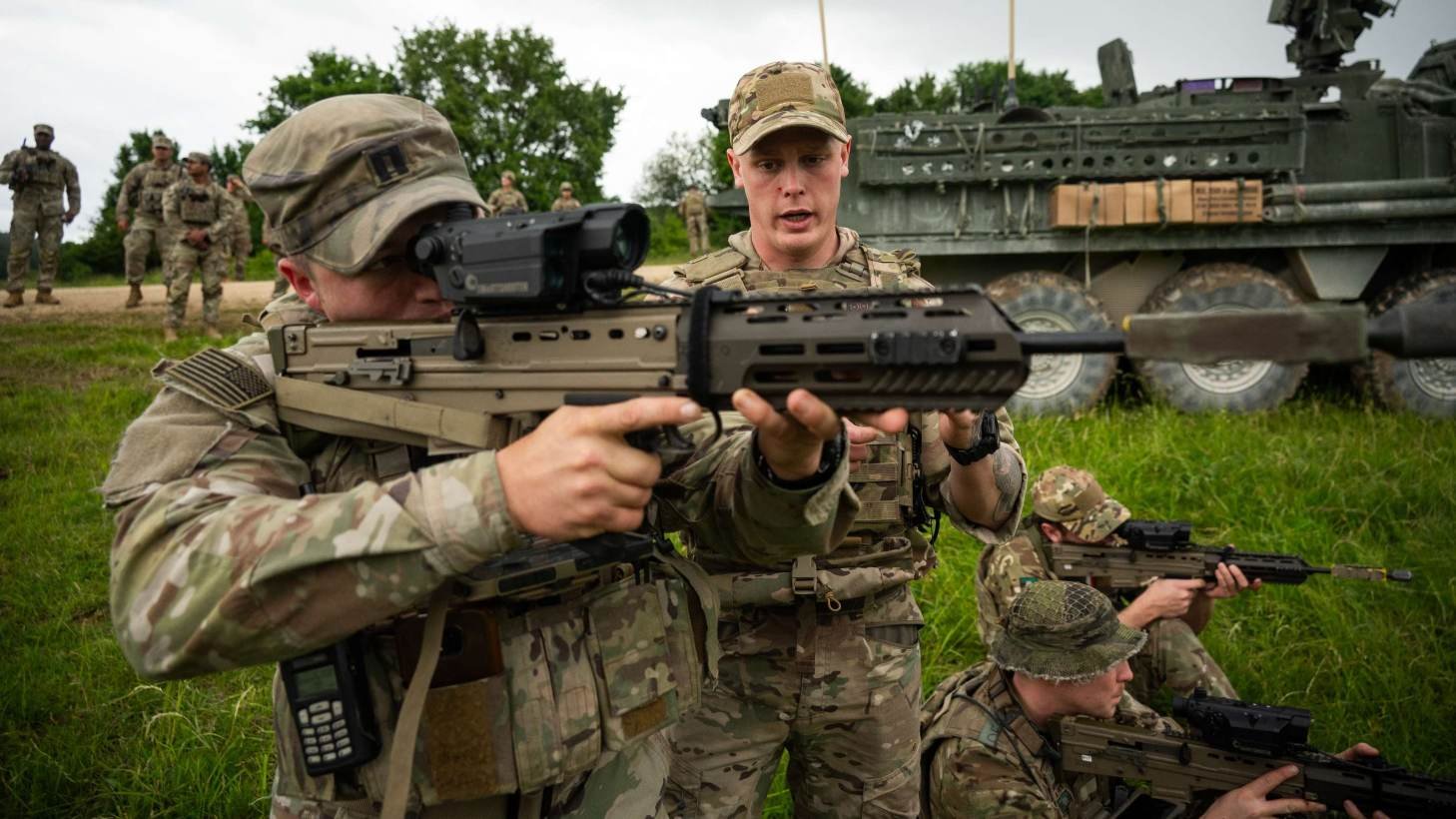
Recent U.S. military photos show Marines assigned to the 11th Marine Expeditionary Unit training with smart scopes designed to engage small drones. The images, published April 4 on the Defense Visual Information Distribution Service, show Marines aboard a ship in the Pacific using the optics on M4 carbines while preparing for operations linked to the Middle East.
The 11th MEU, a roughly 2,500-Marine force, embarked with the Boxer Amphibious Ready Group, deployed in March. Smart Shooter Inc. confirmed the optic in the photos is its SMASH 2000L advanced fire control system. The Marine Corps has previously said it would begin fielding the system with priority for units already deployed or scheduled to deploy soon.
How the SMASH System Functions
According to a report by Task and Purpose, the SMASH 2000L and related SMASH 2000LE models are designed to detect, track, and help engage both aerial and ground targets. The company says the fire control system performs ballistic calculations, compensates for shooter movement, and only releases the shot at the optimal moment for a higher probability of hit. It can also be unlocked for conventional firing if needed.
Company officials said the system uses computer vision, artificial intelligence, and other targeting algorithms. Smart Shooter also says the optic is resistant to jamming and can be used day or night, including against tethered drones operated through fiber-optic links rather than radio control.
Marine Corps Focuses on Capability Over Specific Equipment
Marine Corps officials declined to discuss the specific optic seen in the photos, but said Marines in the 11th MEU are training with systems that allow dismounted personnel to detect, track, identify, destroy, or otherwise defeat small unmanned aircraft.
That effort reflects a broader Marine Corps push to expand counter-drone tools at the individual and small-unit level. Senior Marine leaders have previously described small unmanned aerial systems as a threat affecting the entire force, not only infantry units.
Army Places New Order for Smart Scopes
The Army has also moved to expand rifle-mounted counter-drone capability. In a separate Task and Purpose report, Smart Shooter announced a $10.7 million Army contract for SMASH 2000LE systems and support services, with deliveries scheduled between July and September. Neither the company nor the Army disclosed the quantity being purchased.
The order follows a March contract from a Pentagon counter-drone task force for just over 200 systems valued at $6.1 million. Army officials said the smart scope will be part of a layered defense approach in which larger systems engage threats farther from troops, while soldiers armed with rifles and smart optics address drones that penetrate closer to the formation.
Small Drones Continue to Reshape Battlefield Planning
The Marine and Army efforts come as small drones have become increasingly influential in recent conflicts, including operations involving Ukraine, Israel, and Iran. U.S. planners have treated the trend as a force-protection and tactical challenge requiring both new technology and updated training.
In parallel with smart scopes, the Army has tested ammunition designed to disperse in flight to improve hit probability against fast-moving drones and has continued Project Flytrap, a program focused on rapid experimentation for ground units. During the Flytrap 5.0 exercise in Lithuania, soldiers practiced drone detection and counter-drone tactics under conditions that emphasized constant aerial surveillance and the possibility of one-way attack drones.
Recommended Comments