




-
TL;DR: A-10Cs will remain in service through 2030—two operational squadrons at Moody’s 23rd Fighter Group and a reserve squadron at Whiteman—after Operation Epic Fury showed the jet’s unique close-air-support, armed-overwatch, counter-drone, maritime-strike and CSAR utility. A-10s were used within 48 hours of strikes, employing the GAU-8 cannon, AGM-65s, AIM-9Ms, APKWS rockets (a low-cost option vs. Shahed drones) and Litening pods; at least one A-10 was lost during an F-15E rescue. Congressional limits (FY2026 NDAA) prevent cuts below 103 airframes and require 93 primary mission aircraft through Sept. 30, 2026, but pilot training, depot maintenance and test units have been ended and an estimated $423M to sustain the fleet wasn’t funded—making the extension a near-term capability preservation rather than a long-term revival amid vulnerabilities in contested airspace and without enough F-35/F-15EX capacity to replace it.
Service Life Extended to 2030
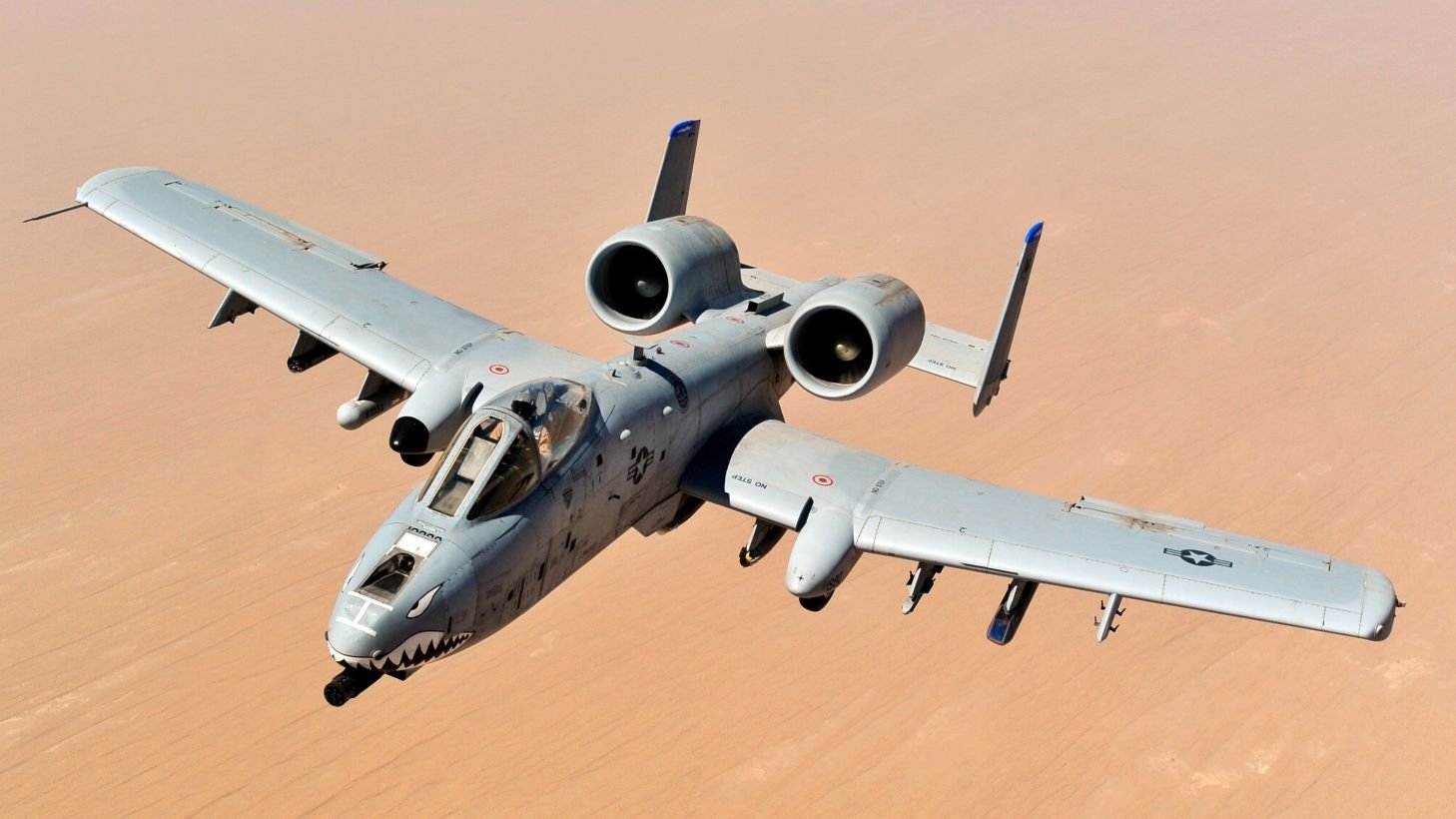
The U.S. Air Force will keep the A-10C Thunderbolt II in service through 2030 after combat operations against Iran highlighted the aircraft’s continued utility in close air support and related missions. Secretary of the Air Force Troy Meink confirmed the decision on April 20, 2026, reversing an FY2026 plan that had called for retiring all 162 remaining A-10s.
Under the revised plan, two operational squadrons will remain active through 2030 and one through 2029. The move follows an internal review of operational demand during Operation Epic Fury, conducted from March to April 2026.
Combat Employment in Operation Epic Fury
A-10s were deployed within the first 48 hours of strike operations and were used for close air support against Iranian and proxy ground elements, armed overwatch, counter-drone missions, maritime strike, and combat search and rescue support.
In the Strait of Hormuz, the aircraft was used against small, fast-moving attack craft in a congested environment where visual target identification and quick engagement cycles were important. On April 3, 2026, A-10s also supported the recovery of a downed F-15E crew, suppressing hostile fire while HH-60W helicopters and HC-130J aircraft executed the rescue. At least one A-10 was lost during that mission, though the pilot ejected after reaching friendly airspace.
Fleet Structure and Congressional Limits
The retained force will center on the 23rd Fighter Group at Moody Air Force Base, which keeps two squadrons, and a reserve squadron at Whiteman Air Force Base, which will remain active through 2030. However, the extension does not restore the broader support structure that previously sustained the fleet.
The final A-10 pilot training class graduated in April 2026 at Davis-Monthan Air Force Base, ending the pipeline for new pilots. Depot-level airframe maintenance at Hill Air Force Base had already been discontinued, and A-10 test units were inactivated in December 2025.
Congress also shaped the decision through the FY2026 National Defense Authorization Act. The law bars the Air Force from reducing the fleet below 103 aircraft and requires at least 93 primary mission aircraft through September 30, 2026. Any further cuts require certification by the Air Force secretary, a recapitalization plan, and congressional notification.
Why the A-10 Was Retained
Operation Epic Fury underscored mission areas where the A-10 still offers specific advantages. The aircraft can remain over a target area longer than faster jets, fly repeated low-altitude attack runs, and operate close to friendly forces. Its GAU-8/A 30 mm cannon fires about 3,900 rounds per minute, and the aircraft can carry up to 7,260 kilograms of ordnance on 11 pylons.
During recent operations, A-10s used combinations of AGM-65 Maverick missiles, AIM-9M Sidewinders, APKWS laser-guided rockets, a Litening targeting pod, and external fuel tanks. APKWS, with a unit cost below $30,000, was used against Shahed-type drones as a lower-cost option than standard air-to-air missiles.
Limits of the Extension
The Air Force has not rebuilt long-term sustainment capacity for the aircraft, indicating that the decision is intended to preserve near-term combat capability rather than reverse the broader retirement plan. The A-10 remains vulnerable in heavily contested airspace, particularly against modern integrated air defenses and man-portable missiles, and it lacks onboard radar for autonomous target acquisition.
The service has previously argued that newer aircraft, such as the F-35 and F-15EX, will eventually assume its missions, but production and fielding have not reached a level sufficient to replace the current close air support capacity. An estimated $423 million needed to sustain the A-10 fleet was not included in the FY2026 budget, underscoring that the extension is a limited measure rather than a full force-structure reset.
Recommended Comments