




-
TL;DR: Austria triggered its highest peacetime air-defense alert after four U.S. intelligence aircraft entered its airspace without required clearance, prompting two Eurofighter scrambles that intercepted and escorted the planes out. While no hostile activity was detected, the incursions were treated as sovereignty violations under Austria’s strict neutrality laws. The incidents occurred along strategically sensitive transit routes and may be linked to denied U.S. overflight requests tied to Iran-related operations, highlighting tensions between operational military movements and neutral-state airspace rules.
Unauthorized Overflights Trigger Austrian Alert
Austria activated “Priorität A,” its highest peacetime air-defense alert, after four U.S. Air Force intelligence aircraft entered Austrian airspace without the required diplomatic clearance, according to reporting published by Welt on May 12 and statements from the Austrian Ministry of Defence. The incidents occurred on May 10 and May 11 in Upper Austria and near the Totes Gebirge.
Austrian officials said the aircraft involved were two U-28A Draco intelligence platforms and two Pilatus PC-12 aircraft operated by the U.S. Air Force. Under Austria’s neutrality rules, foreign military overflights require prior diplomatic authorization.
Two Consecutive Eurofighter Scrambles
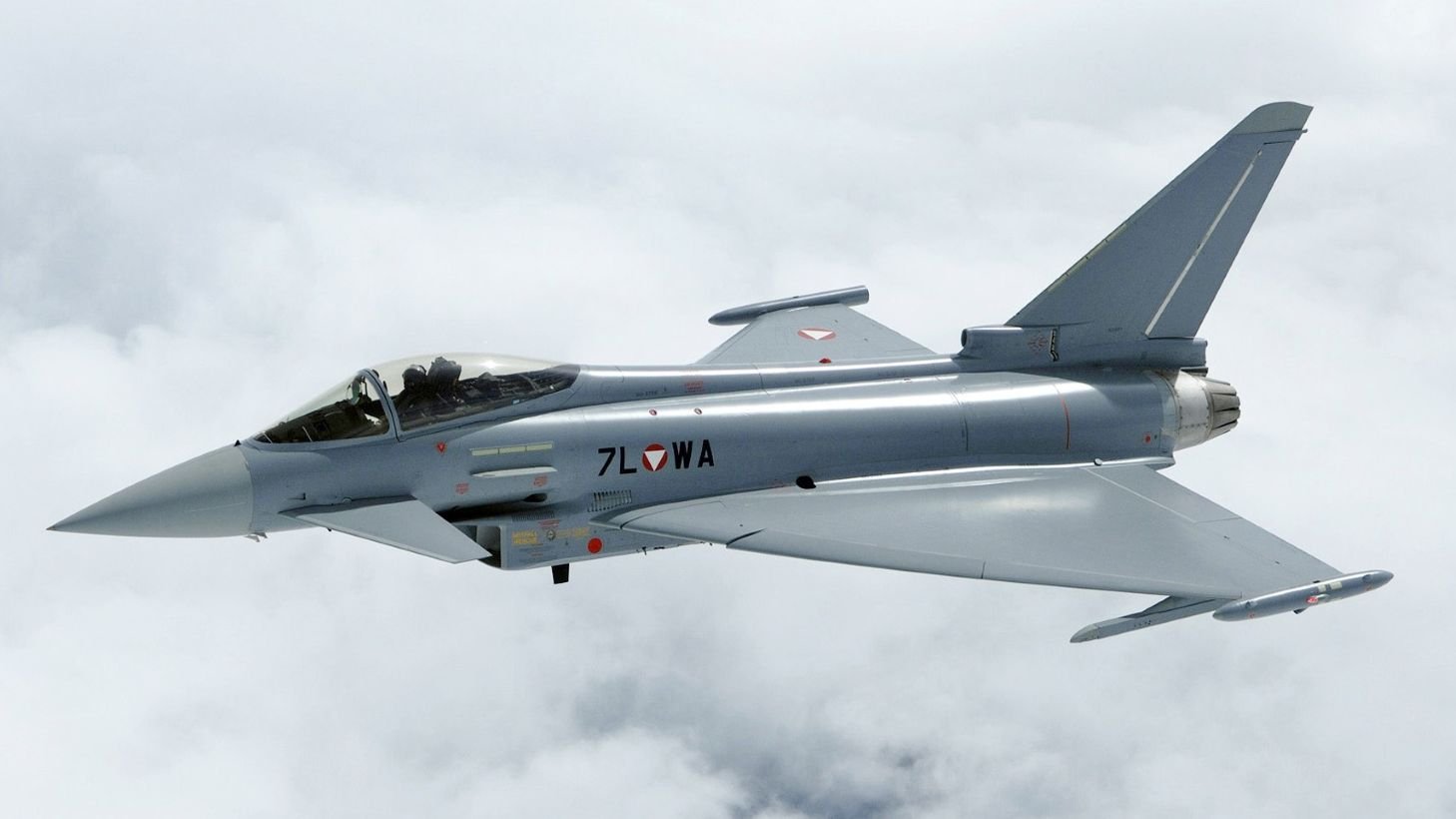
The first interception followed the detection of two U-28A aircraft on May 10. A second scramble took place at 12:31 local time on May 11, when two Eurofighters were launched to identify two USAF PC-12s, according to Defence Ministry spokesperson Michael Bauer.
In both cases, Austrian Quick Reaction Alert fighters carried out visual identification after radar detection and contact procedures. The U.S. aircraft were then directed to reverse course toward Munich. Austrian authorities said the incidents would be handled through bilateral diplomatic channels rather than criminal proceedings.
Officials did not release callsigns, serial numbers, transponder data, routing details, or operating altitudes. Austria also stated that the aircraft showed no hostile intent, visible weapons, or electronic warfare activity, but the flights were still treated as sovereignty violations.
Why the Area Matters
The overflights occurred along major Central European transit corridors connecting Germany, northern Italy, the Balkans, and Eastern Europe. The Totes Gebirge area also presents a demanding air-surveillance environment, where mountainous terrain can complicate low-altitude radar tracking and create terrain-masking opportunities for turboprop aircraft.
Austria’s air-policing doctrine treats unauthorized military aircraft, radio contact failures, transponder irregularities, and unidentified tracks as grounds for immediate interception. Standard procedures include radar shadowing, radio calls, visual identification, nationality verification, and escort until the aircraft leaves Austrian-controlled airspace.
Austria’s Interception Capability
Austria’s air-defense posture is built around permanent QRA coverage supported by the Goldhaube radar and command network. Its combat fleet consists of 15 Eurofighter Typhoon Tranche 1 aircraft delivered between 2007 and 2009 and assigned to Überwachungsgeschwader at Fliegerhorst Hinterstoisser in Zeltweg.
The Tranche 1 aircraft are configured mainly for air-sovereignty missions rather than broader multirole operations. Austrian Typhoons use the CAPTOR-M mechanically scanned radar and can carry IRIS-T air-to-air missiles as well as the internal 27 mm Mauser BK-27 cannon. Powered by two Eurojet EJ200 engines, the aircraft can exceed Mach 2 and operate above 55,000 feet.
U-28A Draco and Diplomatic Context
The U-28A Draco is a military intelligence version of the Pilatus PC-12 turboprop used by the U.S. Air Force Special Operations Command. Derived from a civilian design and militarized by Sierra Nevada Corporation, it is valued for endurance, austere-field operation, and persistent surveillance. Some aircraft in the fleet incorporate SIGINT geolocation, synthetic aperture radar, and GPS-denied navigation upgrades under the EQ+ configuration. A typical crew includes two pilots, a Combat Systems Officer, and a Tactical Systems Operator.
The interceptions came amid closer Austrian scrutiny of foreign military transit tied to U.S. contingency planning involving Iran. Austria’s 1955 neutrality law bars participation in military alliances and requires approval for foreign military overflights. In April 2026, Austria reportedly denied several U.S. overflight requests linked to Iran-related operations. Over the same period, Switzerland confirmed nine approved U.S. Air Force overflights without unauthorized entries, suggesting the Austrian cases were tied to clearances.
Recommended Comments