




-
TL;DR: USS Cleveland (LCS 31) caps the Freedom-class littoral combat ship program as its final vessel, marking both the end of a controversial effort to field fast, shallow-water warships and a symbolic transition in U.S. naval strategy. While the class delivered speed, modularity, and experimentation with distributed and networked warfare concepts, it was hampered by cost overruns, reliability issues, and limited combat power in the face of rising threats like China’s advanced anti-ship systems. Cleveland’s commissioning highlights a shift away from lightly armed coastal ships toward more survivable, heavily armed frigates, even as the program’s technological and industrial contributions continue shaping the Navy’s future fleet.
Final Freedom-Class Ship Delivered
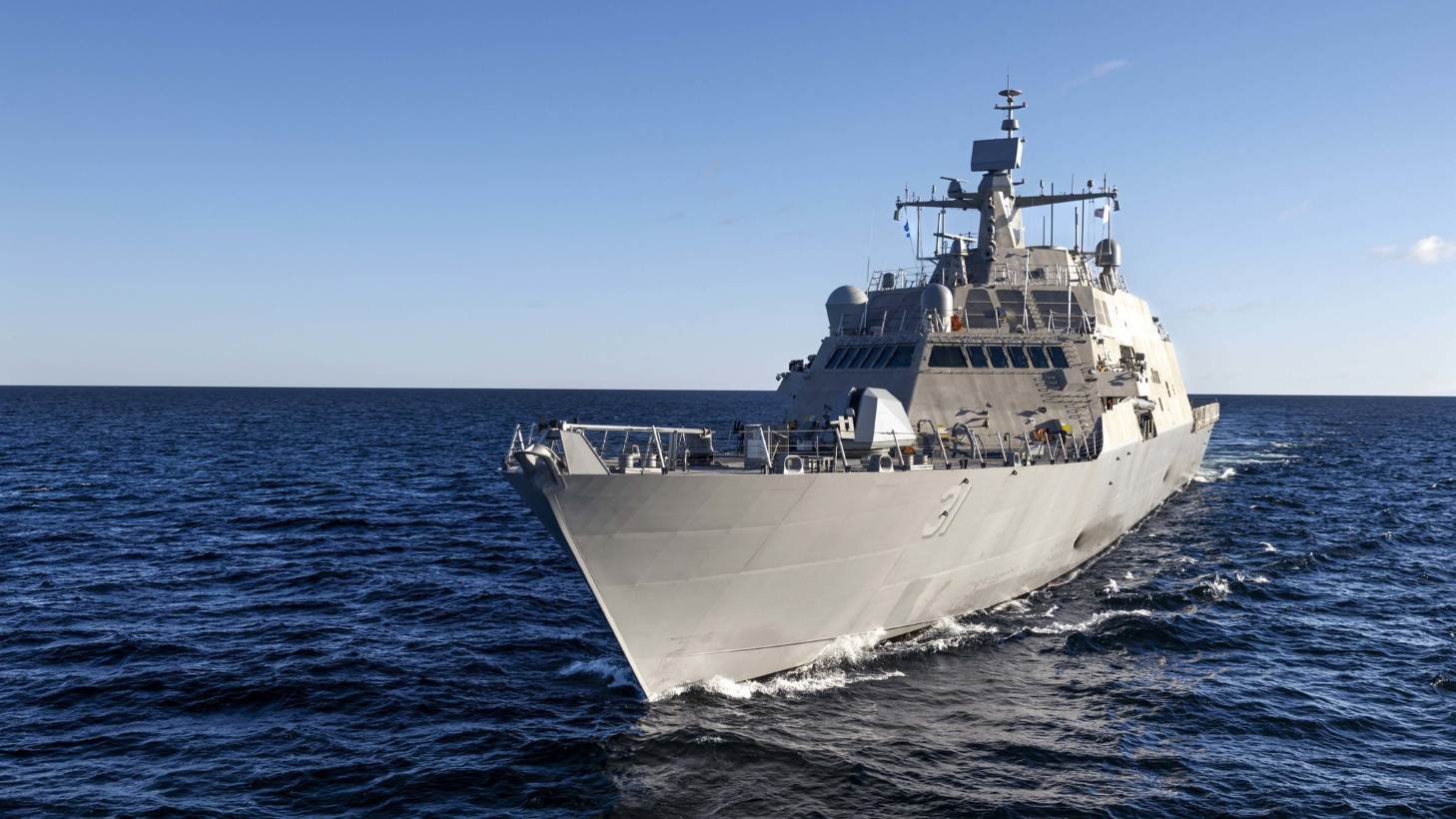
The future USS Cleveland (LCS 31) has arrived in Ohio ahead of its scheduled commissioning on May 16, 2026, concluding the U.S. Navy’s Freedom-class littoral combat ship production run. Cleveland is the 16th and final Freedom-variant ship built for the Navy by Lockheed Martin and Fincantieri Marinette Marine, and the fourth Navy vessel to bear the Cleveland name.
Its commissioning will also set a precedent: the Navy says Cleveland will be the first U.S. Navy ship commissioned in the state of Ohio. The ship’s arrival closes a program launched in the early 2000s to field fast, shallow-draft combatants for operations in coastal waters.
Program Background and Build History
The littoral combat ship program began in 2002, with the Navy pursuing two designs: the Freedom-class monohull from Lockheed Martin and the Independence-class trimaran from General Dynamics. Odd-numbered LCS hulls used the Freedom design, while even-numbered ships followed the Independence variant.
Marinette Marine received Cleveland’s construction contract on January 15, 2019. The ship was launched on April 15, 2023. During that sideways launch, Cleveland was involved in a minor collision with a tugboat. No injuries were reported, and damage was described as limited and above the waterline. The yard later indicated future launches would use a shiplift for greater control.
Capabilities and Operational Role
As delivered, Cleveland adds one more fast surface combatant optimized for patrol, maritime security, and operations in confined or shallow waters. Freedom-class ships use a combined diesel and gas-turbine propulsion system driving four waterjets, allowing speeds above 40 knots and a shallow draft suited to chokepoints and near-shore environments.
The class was equipped with a 57mm Mk 110 gun, a Rolling Airframe Missile launcher, radar, and electronic warfare systems, and aviation support for MH-60R Seahawk helicopters and MQ-8 Fire Scout unmanned aircraft. Later ships also gained over-the-horizon strike capability through the Naval Strike Missile. Their COMBATSS-21 combat management system, derived from Aegis architecture, improved integration with wider fleet and allied networks.
Criticism and Strategic Reassessment
The LCS program faced sustained criticism over cost growth, mechanical issues, survivability concerns, and limited firepower. Several early hulls are already slated for early retirement as the Navy weighs maintenance costs against changing operational demands.
Those concerns intensified as China expanded the People’s Liberation Army Navy and fielded layered anti-access systems, including long-range anti-ship missiles, submarines, drones, and modern surface combatants. In that environment, the Navy increasingly questioned the suitability of lightly armed coastal warfare ships for contested Pacific operations.
Transition to a Different Fleet Mix
Even so, the Freedom-class served as an important testbed for distributed maritime operations, validating concepts centered on dispersing sensors, missiles, unmanned systems, and reconnaissance assets across more numerous platforms.
Cleveland, therefore, arrives at a transition point in Navy force design. The Pentagon is shifting toward more heavily armed and survivable warships, particularly the Constellation-class guided missile frigate, which is expected to provide more vertical launch capacity, stronger anti-submarine warfare, improved radar performance, and greater endurance for high-intensity conflict.
Industrial and Doctrinal Legacy
The Freedom-class program sustained shipbuilding jobs and preserved industrial expertise now feeding into next-generation frigate production. That industrial continuity remains strategically important as the United States seeks to expand naval output.
USS Cleveland marks the end of a divisive acquisition program, but also a bridge between eras. While debate over the class’s value is likely to continue, its contribution to modular mission systems, unmanned integration, and networked distributed operations remains part of the Navy’s evolving approach to Indo-Pacific warfare.
Recommended Comments