Advertisement
Advertisement
News
-
Ten-Year F-35 Framework The U.S. Department of War and Lockheed Martin finalized a 10-year framework agreement on Oct. 22, 2026, covering at least 850 F-35 Lightning II fighters for the U.S. military. The plan spans production Lots 21 through 30 and includes initial spare parts, modification kits, and sustainment of the global F-35 fleet. Lockheed Martin will self-fund at least $7 billion in initiatives supporting the program. Execution remains subject to congressional authorization and appropri
- Text Only
-
Smith & Wesson Completes $160 Million Savage Arms Acquisition Smith & Wesson Brands completed its acquisition of Savage Arms from an indirect subsidiary of JDH Capital I on October 21, 2026. The merger values Savage at $160 million, subject to customary adjustments, and expands Smith & Wesson’s portfolio into additional hunting, competition, and target-shooting firearms. Savage, headquartered in Westfield, Massachusetts, manufactures centerfire and rimfire rifles and shotguns. Its pr
- Text Only
-
Ukrainian Drones Drive Early Exercise Losses Ukrainian drone operators contributed to about 70% of the simulated casualties suffered by the U.S. Army’s 3rd Armored Brigade Combat Team, 1st Cavalry Division, during the first three days of Combined Resolve 26-07 in Hohenfels, Germany. The ten-day exercise, held in April and May 2026, pitted the Greywolf brigade against an opposing force reinforced by Ukraine’s 412th Nemesis formation, whose personnel brought combat experience against Russian armor
- Text Only
-
Pentagon Orders 6,000 Striker Drones The U.S. Department of Defense awarded XTEND AI Robotics a $40.5 million order for 6,000 Striker attack-drone systems on October 13, 2026. The procurement follows competitive Gauntlet II evaluations at Fort Carson, Colorado, and supports the Pentagon’s $1.1 billion Drone Dominance Program. The order averages $6,750 per system, although included equipment and support may differ from other awards. XTEND CEO Aviv Shapira said the order reflects the company’s abi
- Text Only
-
First Carrier Group Deployment The U.S. Navy has deployed an ocean-going autonomous vessel with an aircraft carrier strike group for the first time. Acting Navy Secretary Hung Cao confirmed on October 14, 2026, that the USS Theodore Roosevelt Carrier Strike Group left San Diego with Leidos’ Seahawk medium unmanned surface vessel. The carrier departed September 27 under Rear Adm. Marcos Jasso, bound for the Western Pacific before a planned Middle East deployment. The Theodore Roosevelt, cruiser U
- Text Only
-
Belgium Expands F-16 Transfer Belgium will transfer 10 F-16 fighter jets to Ukraine by December 31, 2026, Prime Minister Bart De Wever announced on October 15 following talks with President Volodymyr Zelenskyy at a European summit in Brussels. The commitment expands Belgium’s previous 2026 allocation of seven aircraft: three combat-capable fighters and four non-flying airframes intended for spare parts. De Wever did not specify how many of the 10 aircraft will be operational or whether the three
- Text Only
-
Ukraine Reports Gains in Lyman Sector Ukraine’s Third Army Corps said on Oct. 14 that its forces and attached units had retaken 101 square kilometers in the Lyman sector of Donetsk Oblast during the fourth stage of Operation Vivaldi. The corps reported liberating Zelena Dolyna, Lypove and Kolodiazi, with Russian forces losing about 3,000 troops during this stage. The claims have not been independently verified. Corps commander Brig. Gen. Andrii Biletskyi said the operation prevented Russian forc
- Text Only
-
Three Echelon Pro Comp Models Launched Springfield Armory has introduced three 9mm Echelon Pro Comp pistols: the compact 4.0C, full-grip 4.0FC, and 4.5F. Each carries an MSRP of $899 and ships in a double-zipper handgun case with three extended magazines. The Pro series adds an integrally compensated slide assembly, ported barrel, textured grip module, steel magwell, stainless steel guide rod, and upgraded sights to the modular Echelon platform. All three models use a black and Springfield Grey
- Text Only
-
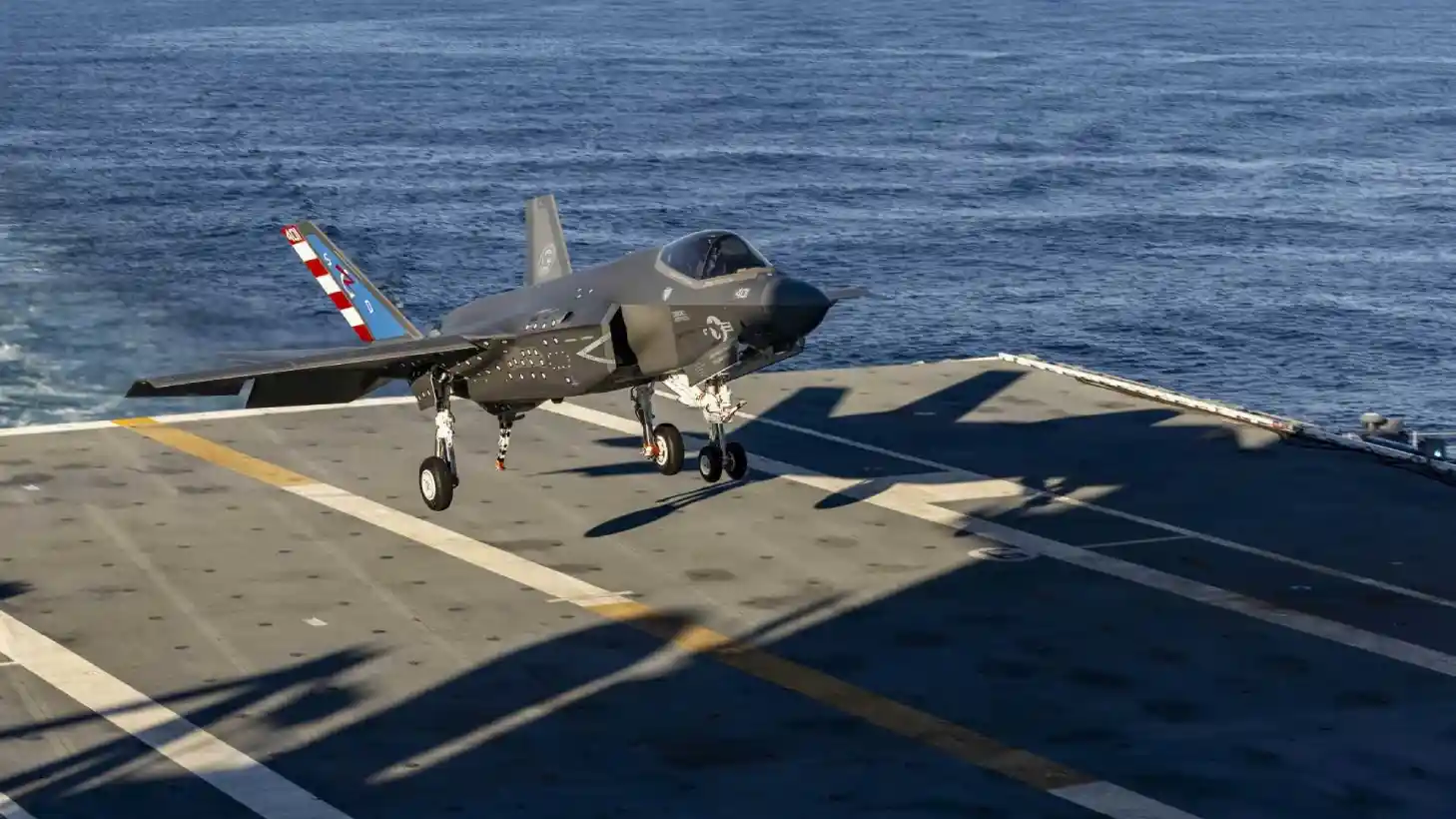
First F-35C Recovery on a Ford-Class Carrier The U.S. Navy completed the first arrested landing of an F-35C Lightning II on a Ford-class aircraft carrier during Aircraft Compatibility Testing aboard the future USS John F. Kennedy (CVN-79) in the Western Atlantic. The October 13, 2026, recovery confirmed initial compatibility between the carrier-based stealth fighter and the ship’s Advanced Arresting Gear (AAG). Test pilots from Air Test and Evaluation Squadron 23 (VX-23), based at Naval Air Stat
- Text Only
-
Two U.S. Carriers Operating in Arabian Sea The U.S. Navy has deployed two carrier strike groups to the Arabian Sea, expanding its available air power near Iran and the Strait of Hormuz. According to the Fleet and Marine Tracker published by USNI News on October 13, 2026, USS George H.W. Bush is operating in the region alongside USS George Washington. The report does not specify the carriers’ positions, their distance from one another, or whether their air wings are conducting coordinated mission
- Text Only
-
Pentagon Revises Iran War Death Toll to 21 The Pentagon has raised the number of U.S. service members who have died during the war with Iran to 21 after adding two previously uncounted deaths to its casualty database. The Defense Casualty Analysis System update, posted late Friday with figures dated Oct. 9, was the first revision since Sept. 29. Both newly added deaths were classified as non-hostile. The additions include a New York Army National Guard officer whose death had previously been ann
- Text Only
-
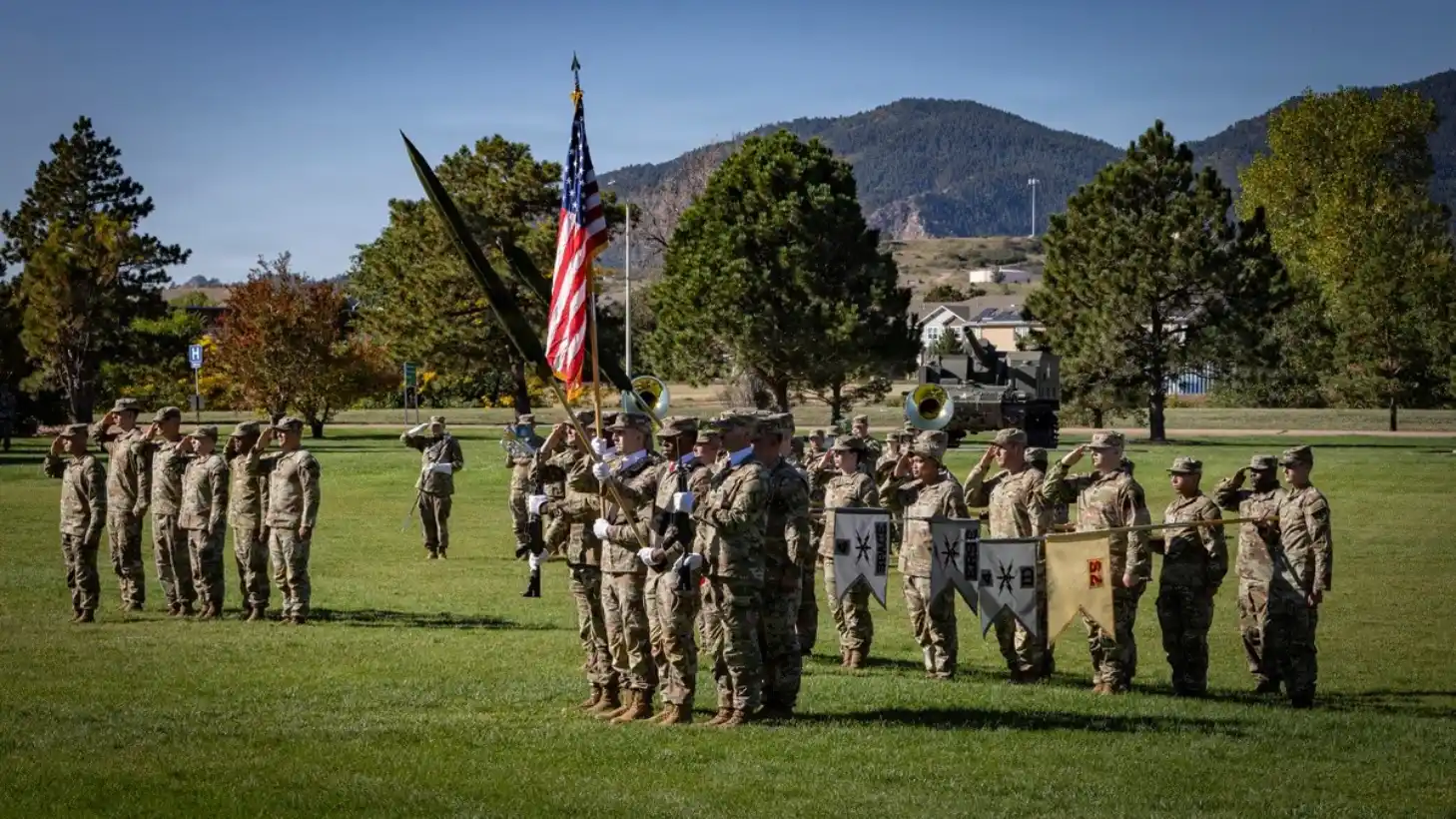
Army Activates Fourth Multi-Domain Task Force The Army activated the 4th Multi-Domain Task Force at Fort Carson, Colorado, on Oct. 8, 2026, adding a new formation focused on operations in the Indo-Pacific. Commanded by Col. Hugh W. A. Jones, the task force is expected to include nearly 2,100 soldiers. It will combine long-range precision fires, cyber and electronic warfare, intelligence, surveillance, air defense, and sustainment capabilities. The 4th MDTF will report to the 7th Infantry Divisio
- Text Only






Prepping Guides
-
You’re standing in the kitchen, halfway through making dinner, when you hear a long trail of sirens rushing down the main road. It’s not unusual — accidents happen often enough — so you glance out the window, shrug it off, and go back to stirring the pot. Then your phone buzzes. A Wireless Emergency Alert flashes across the screen: Before you can even process it, your phone buzzes again — this time an emergency broadcast override forces your smart TV to switch channels: You fr

Community Posts
-
The Tudor Style House is characterized by its steep roofs, brick walls, woodwork, and traditional windows. This is a popular style among many homeowners, as it offers a blend of traditional aesthetics and a comfortable atmosphere. It is important to know the materials, layout, maintenance requirements and the cost of constructing a home in this style before planning one. Home owners get great information on home design, home construction planning and home renovation. If you are planning on starting a home project, you might want to read this guide to find out what you should take into consideration and what some of the Tudors did in their homes.
Read more - https://houseura.com/blog/tudor-style-house-guide/ -
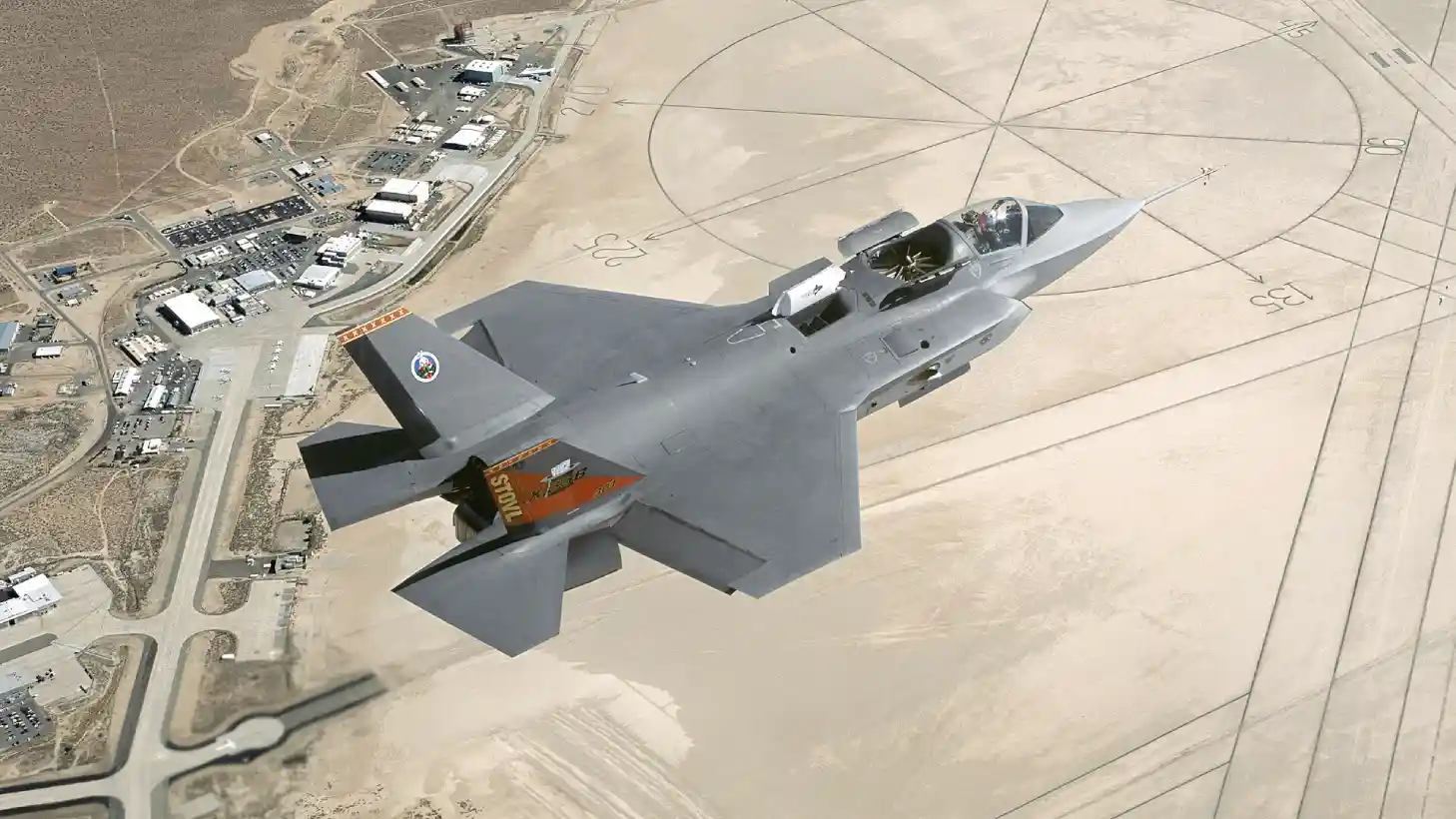
Ten-Year F-35 Framework
The U.S. Department of War and Lockheed Martin finalized a 10-year framework agreement on Oct. 22, 2026, covering at least 850 F-35 Lightning II fighters for the U.S. military. The plan spans production Lots 21 through 30 and includes initial spare parts, modification kits, and sustainment of the global F-35 fleet.
Lockheed Martin will self-fund at least $7 billion in initiatives supporting the program. Execution remains subject to congressional authorization and appropriations, while aircraft pricing and delivery schedules have not been established.
The agreement provides a minimum U.S. procurement level of 85 aircraft annually. Overall manufacturing is expected to remain at 156 aircraft per year, potentially totaling 1,560 over the decade if production is uninterrupted and all available positions are filled. That would leave capacity for 710 international orders or additional U.S. purchases.
Production and Deliveries
Annual F-35 deliveries rose from nine aircraft in 2011 to 134 in 2019. Lockheed Martin subsequently delivered 120 in 2020, 142 in 2021, 141 in 2022, 98 in 2023 and 110 in 2024.
Deliveries reached a record 191 in 2025, but about 93 of those aircraft had been built earlier and held pending acceptance. This backlog means the figure did not represent the program’s regular annual manufacturing output.
Lockheed Martin delivered 94 aircraft through September 2026, down from 143 during the same period of 2025. Total production deliveries reached 1,387 aircraft by Sept. 27, 2026.
Manufacturing involves Lockheed Martin’s Fort Worth assembly plant, Northrop Grumman center fuselages, BAE Systems components, Pratt & Whitney F135 engines, and final assembly facilities in Cameri, Italy, and Nagoya, Japan.
Upgrade Delays and Readiness
The principal recent disruption involved the Technology Refresh 3 upgrade, which introduces processors, memory, and cockpit displays providing approximately 25 times the computing capability of the previous architecture. The Pentagon suspended acceptance of newly built TR-3 aircraft in July 2023 because of software instability, allowing more than 100 fighters to accumulate.
Deliveries resumed in July 2024 under an interim configuration. Stored aircraft required maintenance, software updates, and four inspection stages before acceptance. TR-3 also underpins planned Block 4 improvements to sensors, electronic warfare systems, weapons integration and cooling.
The framework links production more directly with sustainment as U.S. fleet availability has declined. Mission-capable rates fell from 67% in fiscal 2021 to 44% in fiscal 2025, while fully mission-capable rates dropped from 38% to 25%. Spare-parts shortages, depot backlogs, and repair delays contributed to the agreement’s emphasis on replacement components, modification kits, and inventory management.
Three F-35 Variants
The conventional F-35A uses the F135-PW-100 engine. The short-takeoff and vertical-landing F-35B combines an F135-PW-600 engine with a lift fan and swiveling exhaust nozzle. The carrier-based F-35C has larger folding wings, reinforced landing gear, and arresting equipment.
The Marine Corps declared initial operational capability for the F-35B in 2015, followed by the Air Force’s F-35A in 2016 and the Navy’s F-35C in 2019. Because the variants share major computing systems, software problems can affect deliveries across all three.
Chinese Production Context
The agreement comes as China expands production of the J-20 and develops the carrier-capable J-35. Estimated J-20 output increased from about 20 annually in 2020 to 100–120 by late 2025, while estimates placed its inventory at 300 by mid-2025. No verified annual production rate is available for the J-35.
F-35 production is divided among three U.S. services and international customers, while Chinese aircraft are primarily assigned within the Indo-Pacific. Operational strength also depends on deployment locations, airfield and carrier access, tanker support, weapons stocks, maintenance capacity, and sortie generation rather than worldwide inventory totals alone.
View full article -
Smith & Wesson Completes $160 Million Savage Arms Acquisition
Smith & Wesson Brands completed its acquisition of Savage Arms from an indirect subsidiary of JDH Capital I on October 21, 2026. The merger values Savage at $160 million, subject to customary adjustments, and expands Smith & Wesson’s portfolio into additional hunting, competition, and target-shooting firearms.
Savage, headquartered in Westfield, Massachusetts, manufactures centerfire and rimfire rifles and shotguns. Its product range adds an established bolt-action and hunting-rifle business to Smith & Wesson’s handgun, long-gun and suppressor operations.
Purchase Terms
Smith & Wesson paid approximately 9 million shares of its common stock and $37.5 million in cash. The shares were valued at $13.62 each, based on the volume-weighted average price over the 45 consecutive trading days specified in the transaction agreement.
The purchase price represents approximately 7.9 times Savage’s adjusted EBITDA for the 12 months ended September 30, 2026, after accounting for an expected $2.5 million in initial annual run-rate synergies.
D.A. Davidson & Co. served as Smith & Wesson’s financial adviser, while Bass, Berry & Sims provided legal counsel. Latham & Watkins represented JDH and Savage.
Financial Effect
Savage generated approximately $160 million in net sales during the 12-month period ended September 30, 2026. Smith & Wesson expects the acquisition to provide about $18 million in incremental EBITDAS on a full-year basis before additional potential benefits from integration.
Excluding acquisition accounting and transaction costs, Smith & Wesson projects the transaction will add approximately $0.04 per diluted share during the remainder of fiscal 2027. The company estimates full-year accretion of $0.07 per diluted share before initial synergies and about $0.10 after those synergies are realized.
Smith & Wesson reported an estimated pro forma net leverage ratio of 1.16 following the closing. The company noted that Savage’s reported financial results were prepared under Savage’s accounting policies and had not been adjusted to conform to Smith & Wesson’s methods, although it does not consider the differences material.
Ownership and Governance
Following the transaction, JDH owns 16.7% of Smith & Wesson’s outstanding common stock, making it the company’s largest shareholder. Under an investor rights agreement, Smith & Wesson filled an existing board vacancy with a JDH representative. The board now has seven directors.
JDH Managing Director Michael Fertitta said the firm intends to remain involved as a significant Smith & Wesson shareholder.
Portfolio and Integration
Smith & Wesson President and CEO Mark Smith said the acquisition is intended to expand the company’s presence in the hunting market while combining Savage’s rifle and shotgun operations with Smith & Wesson’s handgun and other long-gun categories.
Savage has manufactured firearms for more than 130 years. Smith & Wesson said the combined business will cover a broader range of consumer and professional shooting applications, including handguns, hunting rifles, competition and target rifles, rimfire firearms, shotguns, other long guns and suppressors.
View full article -
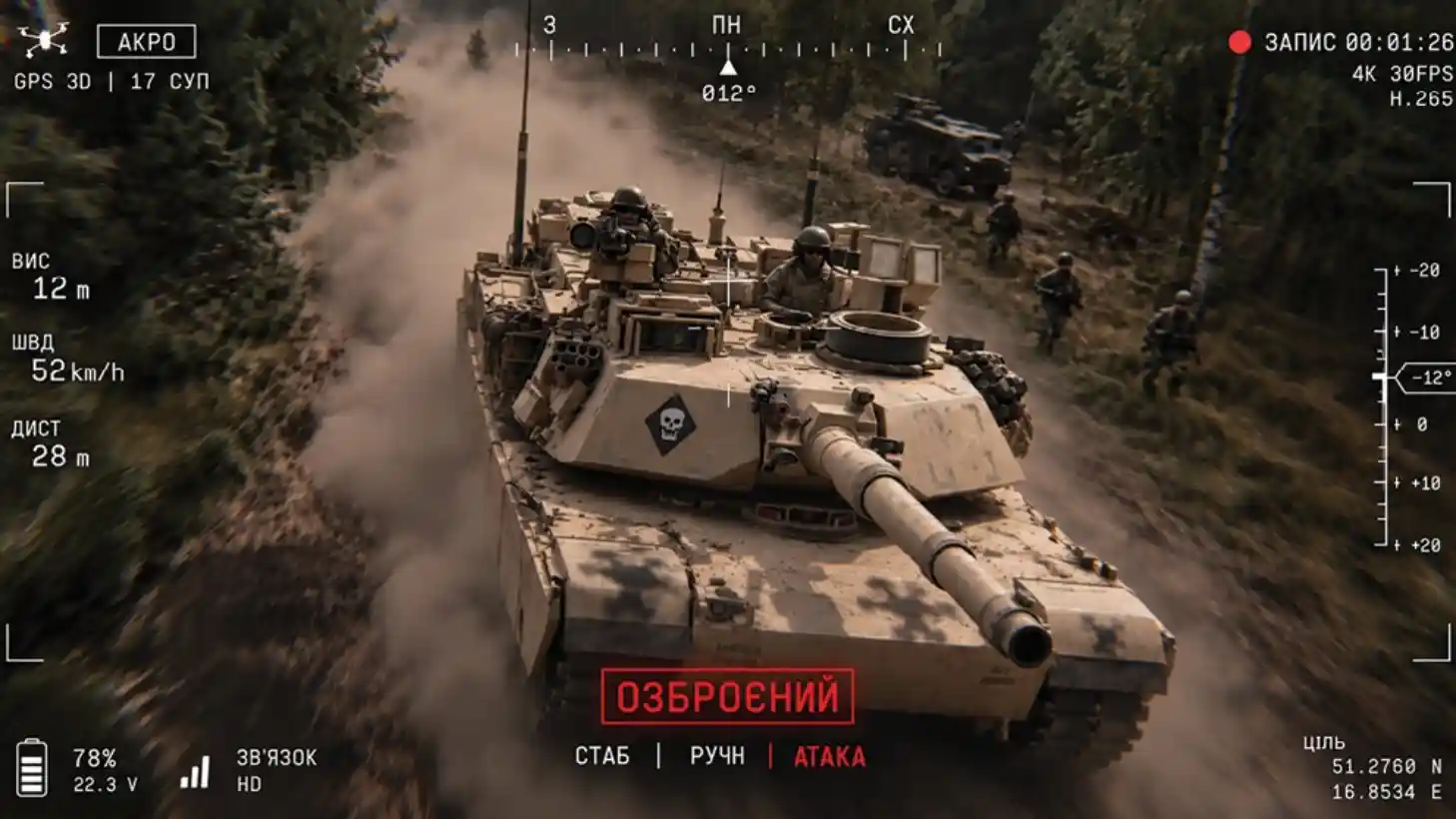
Ukrainian Drones Drive Early Exercise Losses
Ukrainian drone operators contributed to about 70% of the simulated casualties suffered by the U.S. Army’s 3rd Armored Brigade Combat Team, 1st Cavalry Division, during the first three days of Combined Resolve 26-07 in Hohenfels, Germany.
The ten-day exercise, held in April and May 2026, pitted the Greywolf brigade against an opposing force reinforced by Ukraine’s 412th Nemesis formation, whose personnel brought combat experience against Russian armor, artillery and logistics networks. Drones conducted direct attacks and located targets for simulated artillery strikes.
The opposing force initiated more than 750 drone contacts across a 14-by-27-kilometer training area. Ukrainian operators were already observing one mechanized company as its vehicles entered through the training area’s only gate, before they could disperse. The casualty figure refers to the share of simulated losses attributed to drones, not the percentage of U.S. personnel or tanks destroyed.
Fieldcraft Reduces Drone Impact
By the end of the third day, the drone-related share of casualties had fallen below 30% after Greywolf changed its movement, concealment and electronic-warfare procedures. Soldiers increased dispersion, used smaller and less predictable routes, sought overhead cover and moved quickly after detecting drones to avoid follow-on artillery fire.
Officers estimated that fieldcraft and battle drills accounted for roughly 60% of effective counter-drone protection. Static electronic-warfare systems could create protective areas extending up to two kilometers from emplaced positions, but had to be moved sequentially as the brigade advanced. This left vehicles exposed during movement, while fiber-optic drones were less susceptible to radio-frequency jamming.
Crews also reduced their electromagnetic signatures by limiting radio transmissions and, in some cases, disconnecting Blue Force Tracker or Starshield links. Those measures reduced communications reach and friendly-force tracking. Resupply took twice as long as planned because logistics units prioritized concealment and unpredictable routing.
U.S. Brigade Expands Its Own Drone Use
During subsequent offensive operations, Greywolf integrated the 3rd Battalion, 504th Parachute Infantry Regiment, then serving as an experimental drone battalion. More than 700 unmanned aircraft operated from platoon through brigade level, with relay drones extending most ranges to 25–40 kilometers.
The volume of reconnaissance reports, target data, and strike assessments overwhelmed processes designed for smaller numbers of centrally managed systems. The brigade therefore delegated reconnaissance and strike priorities to subordinate commanders rather than directing each aircraft individually. Enemy drone ground-control stations became priority targets.
Airspace procedures also changed. Reserved corridors accommodated helicopters, while altitude separation allowed large numbers of drones to operate elsewhere. The brigade nevertheless could not maintain a complete picture of every unmanned aircraft in flight.
Offensive Operations and Proposed Changes
Greywolf moved its coordinated fire line ahead of the cavalry squadron, allowing drones and artillery to engage targets beyond that boundary with fewer clearance requirements. Additional restrictions were applied when friendly scouts operated forward, reducing the risk of fratricide.
The brigade ultimately completed two simultaneous breaches through forested terrain about six kilometers apart. The opposing force failed to identify the principal attack, and its reserve was defeated before it could be committed.
Based on the exercise, Greywolf proposed multifunctional strike troops with three UAV platoons: one for reconnaissance to at least 40 kilometers, one operating bomber drones carrying four to eight munitions, and one using relay-supported strike drones. The proposal also calls for battalion-level armored strike platoons and a shared operational picture comparable to Ukraine’s Delta system.
Nemesis’ Combat Background
Nemesis began operations in 2023 and conducted its first combat flight on February 8, 2024. It later joined Ukraine’s Unmanned Systems Forces, became a separate regiment in December 2024, and expanded into the 412th Separate Brigade in November 2025.
By March 26, 2025, the unit claimed 10,000 combat sorties, more than 1,000 reconnaissance sorties, over 1,000 targets destroyed, and 5,500 damaged or struck. Those totals remain unit claims, and repeated attacks do not necessarily represent separate equipment losses. Its systems have included FPV aircraft, heavy multicopters carrying adapted anti-tank mines, air-defense strike platforms, and interceptor drones.
View full article -
Pentagon Orders 6,000 Striker Drones
The U.S. Department of Defense awarded XTEND AI Robotics a $40.5 million order for 6,000 Striker attack-drone systems on October 13, 2026. The procurement follows competitive Gauntlet II evaluations at Fort Carson, Colorado, and supports the Pentagon’s $1.1 billion Drone Dominance Program.
The order averages $6,750 per system, although included equipment and support may differ from other awards. XTEND CEO Aviv Shapira said the order reflects the company’s ability to deliver at scale.
The new quantity is 50 times the 120 Striker systems evaluated during Gauntlet II. Contracted specifications such as weight, speed, range, endurance, and warhead mass have not been confirmed.
Close-Quarters Operations
Striker is intended for attacks inside buildings, corridors, and other confined urban spaces where satellite navigation may be unavailable or interrupted. It runs XTEND’s XOS operating system, which supports operator-controlled, AI-assisted navigation and attacks in complex, GNSS-denied environments.
XTEND finished third in Gauntlet II’s Close Quarters Battle category, behind Neros Technologies and Orqa US. The three companies received orders totaling 27,000 drones and $178.5 million: Neros secured $100 million for 14,000 units, Orqa received $38 million for 7,000, and XTEND received $40.5 million for 6,000. Their average order values were approximately $7,143, $5,429, and $6,750 per system, respectively, but the packages are not necessarily equivalent.
Unlike Deep Strike systems evaluated for engagements reaching 20 kilometers, Close Quarters Battle drones are designed to operate against positions inside structures and restricted passages.
Path to Gauntlet III
XTEND’s Gauntlet II performance permits it to bypass the open solicitation and Pitch & Fly stages for Gauntlet III in the Close Quarters Battle mission set. Direct entry remains subject to completion of a 400-system production requirement, and participation does not guarantee another order.
Gauntlet II qualifiers were held at Camp Grayling from June 8-19, with 49 manufacturers, 79 configurations, and 20 drones submitted per company. Nineteen competitors advanced to Fort Carson, where final testing increased the allocation to 120 drones per manufacturer and included night operations and confined-space attacks.
XTEND’s Drone Dominance participation is separate from a U.S. Special Operations Command Modular Kinetic Lethal Drone Phase III award announced September 23, 2026.
Drone Dominance Expansion
The four-phase Drone Dominance Program is intended to acquire more than 200,000 lethal small drones by 2027. Its opening phase allocated $150 million for 30,000 systems, followed by a 60,000-unit Gauntlet II target. Later rounds could reach 150,000 drones each.
The Pentagon aims to reduce average acquisition costs from $5,000 to $3,000. At that target price, 200,000 drones would cost $600 million. Producing 150,000 annually would require an average of 12,500 per month, or about 577 per working day based on 260 production days.
Operator training has also been identified as a distribution constraint. The Defense Innovation Unit is recruiting 100 experienced first-person-view drone operators for Gauntlet III, while the Army is considering a warrant officer specialty focused on robotics instruction and long-term expertise.
Domestic Supply Requirements
Pentagon sourcing changes introduced July 23, 2026, excluded Chinese-origin motors and batteries from Gauntlet II. Restrictions on GPS modules are scheduled for February 2027, with full domestic supply-chain traceability targeted for August 2027.
The transition requires manufacturers to replace established foreign suppliers. To support production expansion, the White House convened representatives from nearly 40 companies in August and connected drone procurement efforts with more than $200 billion in Office of Strategic Capital lending authority.
View full article -
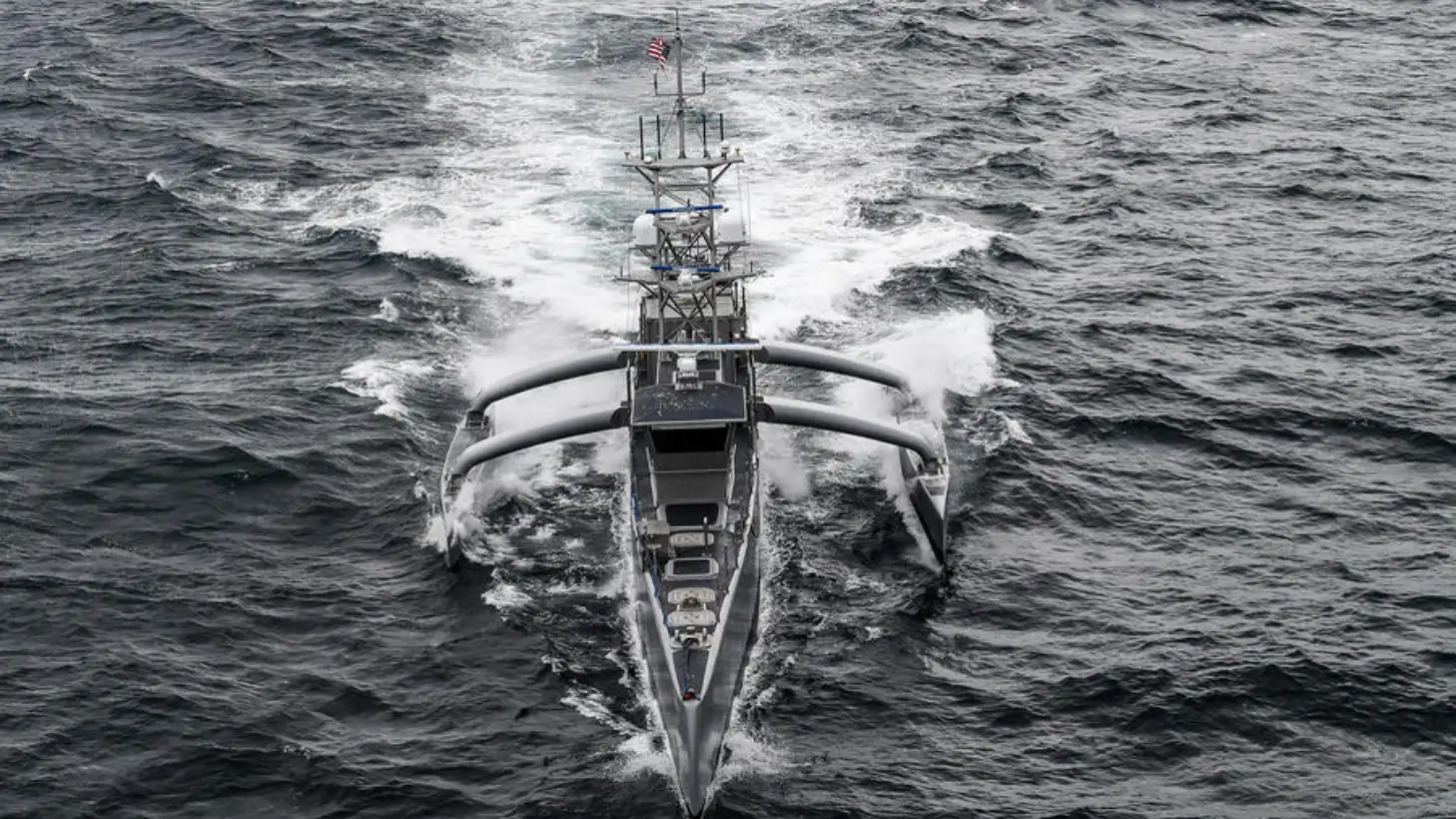
First Carrier Group Deployment
The U.S. Navy has deployed an ocean-going autonomous vessel with an aircraft carrier strike group for the first time. Acting Navy Secretary Hung Cao confirmed on October 14, 2026, that the USS Theodore Roosevelt Carrier Strike Group left San Diego with Leidos’ Seahawk medium unmanned surface vessel.
The carrier departed September 27 under Rear Adm. Marcos Jasso, bound for the Western Pacific before a planned Middle East deployment. The Theodore Roosevelt, cruiser USS Chosin and destroyer USS Decatur arrived at Yokosuka, Japan, on October 16 ahead of Exercise Keen Sword 2027.
The deployment will assess whether Seahawk can maintain navigation, communications, replenishment, and operational availability alongside crewed warships during an extended carrier mission. Theodore Roosevelt personnel previously operated the vessel near Hawaii during RIMPAC 2026.
Vessel Specifications
Seahawk is a roughly 42-meter composite trimaran displacing about 147 metric tonnes. Its two outriggers provide transverse stability, while its diesel propulsion system draws from a 53,000-liter, or 14,000-gallon, fuel capacity.
Its predecessor, Sea Hunter, reached 27 knots, cruised at 12 knots, and had a reference range of 10,000 nautical miles. However, Seahawk’s independently verified maximum speed, fuel consumption with mission equipment, and deployment endurance have not been disclosed, so Sea Hunter’s figures cannot be applied directly.
The program’s original endurance target was 30 to 90 days, with operations in Sea State 5 and survival in Sea State 7, where waves can reach 6.1 meters.
Autonomous Operations
Seahawk’s autonomy system integrates radar, optical sensors, route planning, propulsion controls, and collision avoidance. Onboard computers conduct routine navigation under remote human supervision, while predefined exclusion areas permit automatic course changes near restricted waters.
The vessel has demonstrated waypoint navigation during a loss of GPS and restored satellite positioning without leaving its assigned track. Redundant communications are intended to preserve supervision if a primary link fails, although the duration of the GPS interruption and the associated navigation error were not reported.
Earlier fleet experiments included Integrated Battle Problem events in 2023, trans-Pacific movements and operations near Australia involving Seahawk, Sea Hunter, Ranger and Mariner. Leidos reports more than 200,000 nautical miles and 14,000 operating hours across its autonomous maritime systems, but has not specified Seahawk’s individual share.
Refueling and Fleet Support
Sustained operations still require conventional logistical support. The fleet oiler USNS Guadalupe refueled Seahawk off Southern California in April 2026, followed by a September 11 trial with USS Chafee in the Pacific.
Both tests transferred fuel through a hose and required personnel to board Seahawk temporarily. They demonstrated compatibility with underway replenishment rather than fully autonomous refueling. The Navy has not disclosed the amount transferred or the additional endurance provided.
The deployment will therefore examine not only vessel performance but also the escort maneuvering, personnel transfers, maintenance, and coordination required to keep an unmanned ship operating with a carrier group.
Development and Operational Limits
Seahawk originated from DARPA’s Anti-Submarine Warfare Continuous Trail Unmanned Vessel program, launched in 2010. Leidos received $59 million in 2012 to develop Sea Hunter and a separate $35.5 million contract in 2017 for Seahawk. The combined $94.5 million represents development spending, not a recurring production price.
Delivered on April 7, 2021, Seahawk incorporated more than 300 lessons involving electrical systems, payload integration, and remote controls. It entered the operational fleet in April 2026.
An unmanned surveillance vessel could monitor maritime approaches or suspected submarine areas while armed escorts remain in defensive positions. Seahawk has not, however, demonstrated an operational ability to engage submarines or surface targets independently. Its usefulness depends on installed sensors, communications reliability, tracking accuracy, and the support burden observed during the deployment.
View full article -
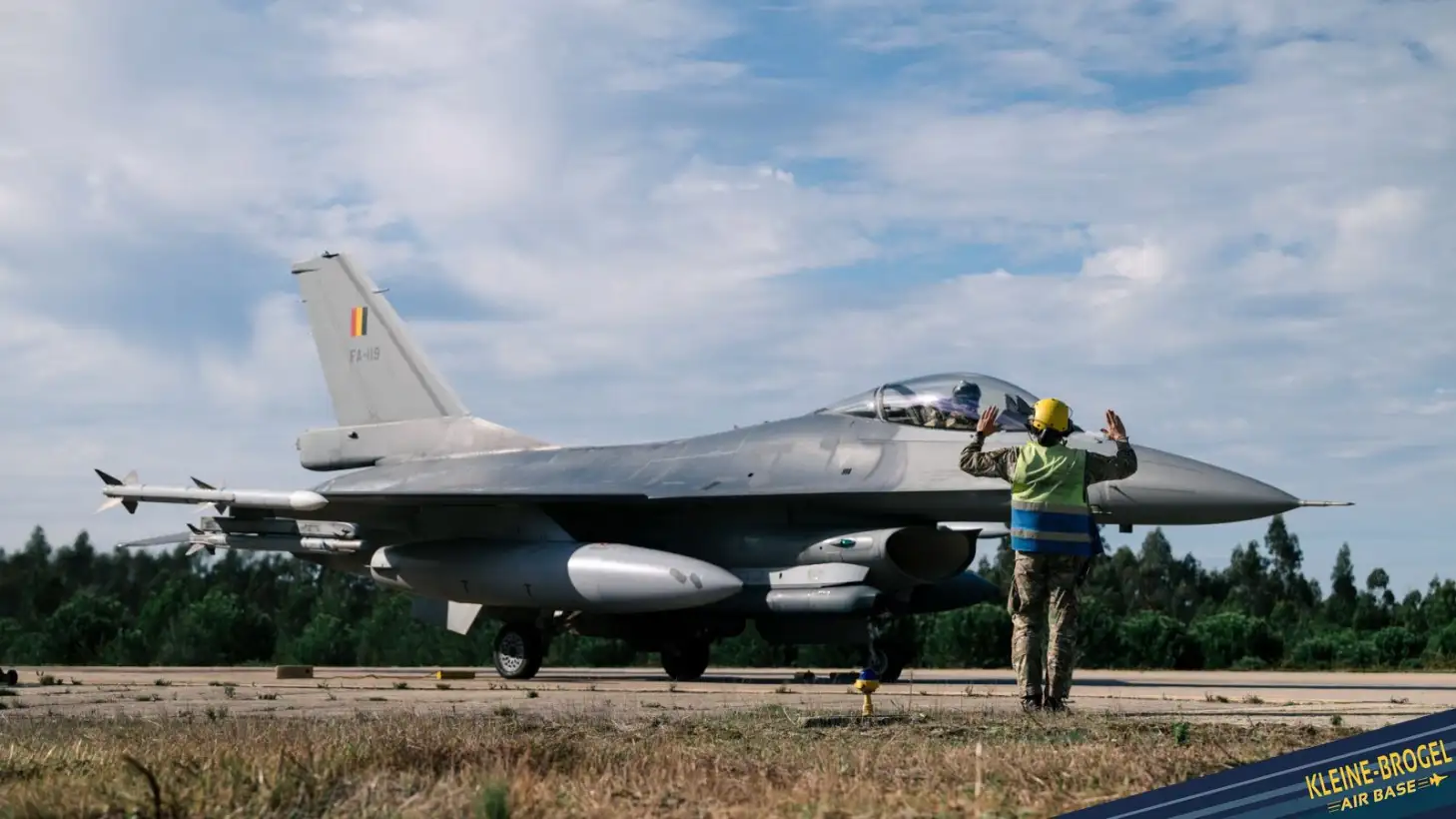
Belgium Expands F-16 Transfer
Belgium will transfer 10 F-16 fighter jets to Ukraine by December 31, 2026, Prime Minister Bart De Wever announced on October 15 following talks with President Volodymyr Zelenskyy at a European summit in Brussels.
The commitment expands Belgium’s previous 2026 allocation of seven aircraft: three combat-capable fighters and four non-flying airframes intended for spare parts. De Wever did not specify how many of the 10 aircraft will be operational or whether the three additional jets will be deducted from later planned deliveries.
Belgium’s broader transfer plan covers 53 F-16s through 2029, up from an original commitment of 30 by 2028. The previous schedule called for seven aircraft in 2026, five in 2027, 14 in 2028, and 27 in 2029.
Ammunition and Delivery Conditions
Belgium is also discussing supplies of Belgian-made 20 mm ammunition for the F-16’s M61A1 Vulcan cannon. Ukraine is seeking cannon rounds as a less costly option for engaging drones while preserving AIM-9 Sidewinder and AIM-120 AMRAAM missiles.
The six-barrel cannon carries 511 rounds and can fire up to 6,000 rounds per minute. Ukrainian estimates indicate that a successful drone interception can require about 150 rounds, allowing approximately three engagements per ammunition load. De Wever did not announce a prospective shipment quantity. Spain and Poland are also involved in ammunition replenishment efforts.
The transfer requires third-party authorizations from the United States and France, including French approval related to electronic warfare equipment. Belgium has supported Ukrainian F-16 maintenance since February 2025, while Sabena Aerospace Engineering holds a $235 million U.S. maintenance and logistics contract. Poland’s WZL-2 facility is also under consideration for servicing.
Response to Faster Russian Drones
Belgium linked the accelerated transfer to Russia’s increasing use of jet-powered Geran drones, which reduce the time available for detection and interception. Reported top speeds range from 300 km/h for the Geran-3 to 500 km/h for the Geran-5, with faster variants approaching 600 km/h.
Current Ukrainian interceptor drones travel at approximately 460 to 500 km/h, limiting their ability to overtake the faster Geran variants. Ukraine has 20 domestic manufacturers working on faster interceptors; 14 are conducting flight tests, and six have intercepted jet-powered targets. The Predator and Khyzhak models have completed military codification, while some developers are pursuing speeds of 700 km/h.
Russian drones also use MESH communications equipment that can support in-flight targeting updates against moving vehicles. Ukrainian intelligence estimates Geran-4 and Geran-5 production capacity at 3,000 units per month, although that figure does not establish actual launch rates.
Aircraft Condition and Replacement
Belgium’s deliveries depend on its transition to the F-35A. Three F-35As arrived at Florennes on September 25, bringing the Belgian-based fleet to seven, while eight additional aircraft remain in the United States for pilot training.
Belgium purchased 160 F-16s between 1979 and 1991, and its youngest airframes are 35 years old in 2026. The country applies an 8,000-flight-hour retirement threshold. The three fighters initially designated for Ukrainian combat operations are approaching that limit, making their remaining certified flight hours and maintenance requirements significant constraints on deployment.
The equipment and weapons accompanying the transferred aircraft have not been specified.
Competing Operational Demands
Ukraine’s F-16 fleet has destroyed more than 3,150 aerial targets and conducted over 650 ground strikes since entering service in August 2024, according to Air Force Commander Lieutenant General Anatolii Kryvonozhko. The reported interceptions include 2,500 unmanned aircraft and 666 cruise missiles.
F-16s are also used against Russian tactical aircraft. U.S. General Dan Caine confirmed an F-16 air-to-air victory connected to the destruction of a Russian Su-35S on July 8, though the missile type and engagement distance were not disclosed.
Using fighters against drones consumes flight hours, ammunition and maintenance capacity otherwise required for cruise-missile defense, air-to-air missions and ground strikes. The effect of Belgium’s expanded commitment will therefore depend on how many transferred aircraft can generate operational sorties.
View full article -
Ukraine Reports Gains in Lyman Sector
Ukraine’s Third Army Corps said on Oct. 14 that its forces and attached units had retaken 101 square kilometers in the Lyman sector of Donetsk Oblast during the fourth stage of Operation Vivaldi.
The corps reported liberating Zelena Dolyna, Lypove and Kolodiazi, with Russian forces losing about 3,000 troops during this stage. The claims have not been independently verified.
Corps commander Brig. Gen. Andrii Biletskyi said the operation prevented Russian forces from cutting a key Ukrainian logistics route in the Donbas and forced Russia to transfer elements of its 1st Tank Army, reducing pressure on Kupiansk-Vuzlovyi.
According to the corps, the full operation returned 16 settlements and 277 square kilometers to Ukrainian control. Ukrainian counterattacks north of Lyman were confirmed publicly in September.
UK Accelerates Air Defense Deliveries
President Volodymyr Zelensky arrived in the United Kingdom on Oct. 14 for meetings with Prime Minister Andy Burnham and King Charles III.
The British government announced a 45-million-pound air defense package, worth about $60 million, intended to help Ukraine counter Russian missiles and drones. Britain said it would accelerate delivery of Lightweight Multirole Missiles, including 10 million pounds’ worth designated for urgent winter needs.
The missiles have been used against jet-powered drones, which are faster and more difficult to intercept than older Shahed models. Burnham also said his government was preparing further military and financial support, along with additional sanctions against Russia.
London reiterated plans for a phased ban on maritime services supporting Russian liquefied natural gas exports beginning in 2026.
Russian Strike Hits Energy Infrastructure
Zelensky accused Russia of violating a proposed halt to attacks on energy infrastructure after an overnight strike against Kyiv, Kyiv Oblast and Kharkiv.
He said Russian forces launched 39 ballistic missiles and more than 120 drones, damaging 26 power facilities and four oil and gas sites. At least 600,000 people were left without electricity, according to the president.
Kyiv Mayor Vitali Klitschko said at least three people were killed and 22 injured after strikes hit a residential building in the capital’s Desnianskyi district and power facilities elsewhere in the city.
U.S. President Donald Trump had announced on Oct. 11 that Ukraine and Russia had agreed to stop attacking each other’s energy infrastructure. Kyiv said it subsequently halted strikes on Russian oil refineries. Zelensky called for additional sanctions against Russia and more Patriot interceptors.
Nord Stream Trial Begins in Germany
Ukrainian citizen Serhii Kuznetsov went on trial in Hamburg on Oct. 14 over the September 2022 sabotage of the Nord Stream pipelines.
German investigators allege that Kuznetsov, a former soldier, led a seven-person group and commanded the yacht Andromeda, from which divers carried out the attack. Three of the four main Nord Stream 1 and 2 gas pipelines linking Russia and Germany through the Baltic Sea were destroyed.
Prosecutors accused Kuznetsov of acting as an accomplice to war crimes by attacking civilian infrastructure. He and the Ukrainian government deny involvement. The trial, the first connected to the pipeline explosions, is expected to continue until February.
SBU Detains Starlink Suspect
Ukraine’s Security Service said it detained an 18-year-old Kyiv resident suspected of attempting to register 148 Starlink terminals for Russian forces operating in the Donetsk and Zaporizhzhia regions.
Investigators allege that an officer from Russia’s Federal Security Service recruited the former college student through Telegram channels advertising quick earnings. The suspect reportedly registered 15 terminals using identification details belonging to relatives and acquaintances and prepared information to activate another 133.
The SBU said officers detained him near a post office before another batch could be activated. The previously registered terminals were blocked. He remains in custody without bail and faces life imprisonment and property confiscation if convicted.
View full article -
Three Echelon Pro Comp Models Launched
Springfield Armory has introduced three 9mm Echelon Pro Comp pistols: the compact 4.0C, full-grip 4.0FC, and 4.5F. Each carries an MSRP of $899 and ships in a double-zipper handgun case with three extended magazines.
The Pro series adds an integrally compensated slide assembly, ported barrel, textured grip module, steel magwell, stainless steel guide rod, and upgraded sights to the modular Echelon platform. All three models use a black and Springfield Grey color scheme.
Compensated Slide and Sighting System
Each pistol has an integral compensator that directs propellant gas upward to reduce muzzle rise. The hammer-forged barrel is ported, treated with a Melonite finish, and uses a 1:10 twist rate. The slide is optics-ready and finished in Springfield Grey Cerakote H-304 for wear and corrosion resistance.
Iron sights consist of a tritium front sight surrounded by an orange luminescent ring and a black, serrated rear sight. The arrangement is intended to provide a front-focused sight picture while retaining support for slide-mounted optics.
A captive stainless steel guide rod adds forward mass and rigidity. The removable machined-steel magwell provides a flared opening for reloads and can be taken off when using flush-fitting magazines.
Modular Chassis and Optics Mounting
The Echelon Pro retains Springfield Armory’s serialized Central Operating Group, a self-contained stainless steel chassis that houses the operating system. It can be removed and transferred between compatible grip modules and slide assemblies, allowing changes in grip size and color.
The Variable Interface System permits compatible optics to mount directly to the slide without an adapter plate. Self-locking pins can be configured for the footprint of the selected optic, providing a low mounting position.
Controls include ambidextrous slide stops and magazine releases. Springfield Armory also states that the Echelon Pro is tested beyond SAAMI drop-test parameters. A secondary sear within the Central Operating Group provides an additional safeguard against an unintentional discharge if the pistol is dropped.
LightForged Badlands Grip
The Echelon Pro introduces Springfield Armory’s LightForged grip treatment. The process uses precision lasers to reshape the grip module’s surface, controlling the geometry and placement of the texture.
Its first pattern, called Badlands, uses an aggressive cracked-earth design intended to replicate the tactile characteristics of custom hand stippling with a repeatable finish. All three pistols have a grip width of 1.2 inches, although grip-module size varies by configuration.
Models and Specifications
The Echelon Pro 4.0C Comp, model ECP9409BY-COMP, uses a 4-inch barrel and small grip module. It measures 7.4 inches long and 5 inches high, weighs 23 ounces, and includes three 18-round magazines for an 18+1 capacity.
The Echelon Pro 4.0FC Comp, model ECP9409BYFC-COMP, combines a 4-inch barrel with a full-size grip module. It is 7.4 inches long and 6.5 inches high, weighs 24 ounces, and includes three 20-round magazines for a 20+1 capacity.
The Echelon Pro 4.5F Comp, model ECP9459BY-COMP, has a 4.5-inch barrel and medium grip module. It measures 8 inches long and 6.5 inches high, weighs 25 ounces, and ships with three 20-round magazines for a 20+1 capacity.
View full article

Conspiracy Theories
-
The Claim A viral image states: The image depicts a large group of people facing Polish security personnel at a fortified border. A prominent “Breaking News” label makes the claim appear to describe a recent development. The underlying law is real. The wording used in the meme, however, removes critical legal conditions and makes the legislation sound like a blanket authorization to shoot anyone attempting to enter Poland illegally. The Law Was Passed in 2024, Not 2026 The Polish parliament appr
-
In recent weeks, the pro-Palestine protests across U.S. universities have not only sparked discussions on geopolitical issues but also given rise to a peculiar scrutiny: the tents at the protest sites. A narrative has emerged suggesting that the presence of identical tents indicates a larger, orchestrated funding behind the movement. This article aims to dissect these claims with a factual lens and encourage a more informed dialogue. The Claim: Identical Tents as Evidence of Conspiracy

New Blogs
-
- 0 Comments
- 213 Views
-
- 0 Comments
- 236 Views