




-
TL;DR: Arquus and John Cockerill unveiled Fenris, a new 26-ton 6x6 armored vehicle carrying a NATO-compatible 105mm gun, designed from Ukraine war lessons to provide mobile direct fire support with drone protection and high survivability. The air-transportable vehicle features a high-accuracy gun, adjustable suspension for mobility and concealment, and could be delivered within 12–16 months, positioning it as a modern replacement for older systems like the AMX10 RC.
New 6x6 direct-fire vehicle unveiled
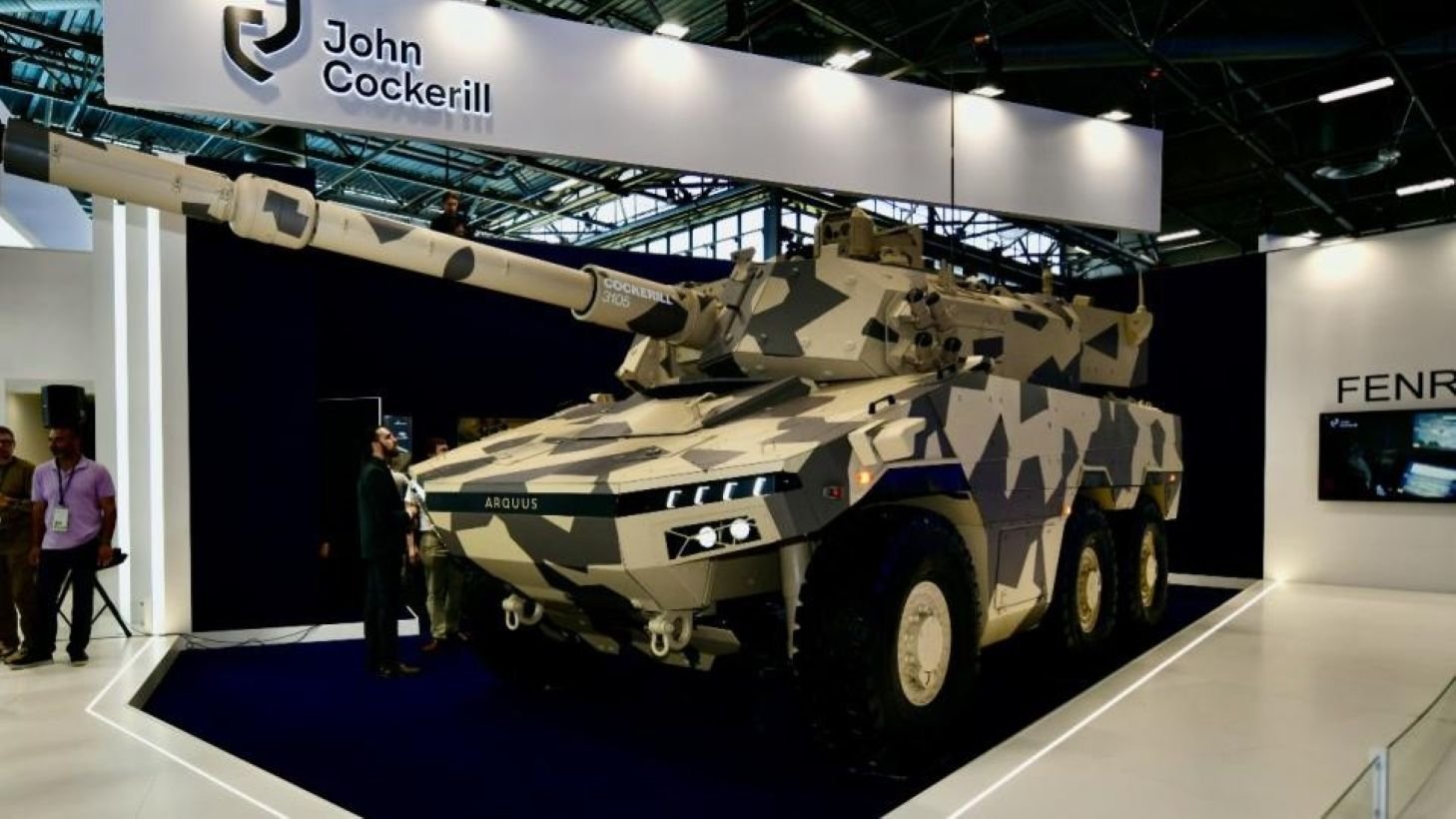
French vehicle maker Arquus has unveiled Fenris, a new 6x6 armored vehicle designed to carry a 105mm gun. The vehicle was presented at the Eurosatory defense exhibition by Arquus and its owner, Belgium’s John Cockerill Group.
Company officials said Fenris was developed in response to battlefield lessons from the war in Ukraine, particularly the continued need for direct fire support on a modern battlefield. The vehicle weighs 26 tonnes and is intended to fill a role that Arquus did not previously cover with a platform able to carry the company’s 105mm turret.
Arquus and John Cockerill officials said Fenris still has some testing to complete. If ordered as an urgent operational requirement, delivery could begin within 12 months; otherwise, the expected lead time is about 16 months.
Armament and firepower
Fenris is fitted with the Cockerill 3105 turret and can use a 105mm gun that company officials said is already in service with the Ukrainian army. Frank Jansens, director general of Cockerill Weapon Systems, said the system is compatible with all NATO munitions.
According to Jansens, the gun can be fired on the move, with a first-hit probability of 95 percent at roughly 2,000 meters. He also said the weapon can elevate to 40 degrees, extending its range from about 2 kilometers to roughly 11 kilometers.
Jansens said Fenris is the only 105mm gun vehicle that can be airlifted, including by the Airbus A400M.
Protection and battlefield survivability
John Cockerill and Arquus said the turret includes native protection against drones, another feature informed by the conflict in Ukraine. The vehicle is protected to NATO STANAG 4 level.
Arquus also emphasized survivability through mobility and vehicle profile management. Joan Gibert, the company’s director of strategy products and services, said Fenris uses active suspension that allows the driver to vary ride height and adjust the vehicle’s pitch relative to the ground.
Gibert said this gives two main advantages: improved mobility over difficult terrain and obstacles, and a lower visual profile in observation or firing positions.
Chassis, mobility, and development
Arquus developed a dedicated 6x6 chassis for the new vehicle. Emmanuel Levacher, the company’s director general, said mobility was treated as a core requirement because it is both a mission asset and a key means of survival on the modern battlefield.
The chassis is powered by what Levacher described as a powerful but very quiet 500 hp engine.
Thierry Renaudin, director general of John Cockerill Defense, said there was previously no Arquus vehicle able to carry the 105mm turret, leading to the development of a specific platform. Company officials also said Fenris was developed in just over a year.
Intended role and replacement context
Arquus positioned Fenris as a potential successor to the AMX10 RC, the French 105mm-armed armored reconnaissance vehicle introduced more than 40 years ago by Nexter, now part of KNDS.
Gibert said Fenris is a natural replacement because the French Army’s newer Jaguar reconnaissance vehicle carries a 40mm gun rather than a 105mm weapon. Fenris is therefore aimed at customers seeking a wheeled armored platform that combines direct fire support, transportability, and modern protection features.
Recommended Comments