




-
TL;DR: Northrop Grumman opened an 845,000-square-foot Utah facility to expand B-21 Raider component production, supporting up to 1,500 jobs and a funded 25% increase in annual capacity. Final assembly remains in California, with the Air Force planning at least 100 bombers and the first operational aircraft due at Ellsworth AFB in 2027.
Utah Facility Expands B-21 Production
Northrop Grumman opened its East Gate 3 manufacturing facility in Layton, Utah, on September 9, 2026, expanding production infrastructure for the U.S. Air Force’s B-21 Raider stealth bomber. Per an Army Recognition report.
The East Gate campus will total 845,000 square feet and is intended to support simultaneous low-rate initial production and flight testing. It will manufacture key B-21 components and support up to 1,500 engineering and manufacturing positions by 2032.
The expansion increases Northrop Grumman’s combined Layton and Clearfield manufacturing footprint to more than two million square feet. Final assembly of the B-21 will remain at Air Force Plant 42 in Palmdale, California.
Funding and Fleet Plans
The project follows $4.5 billion provided through 2025 reconciliation legislation to increase annual B-21 production capacity by 25%. The fiscal 2027 budget request includes $6.109 billion for the program, including $3.246 billion for procurement.
Another $1.006 billion is designated for advance procurement of long-lead airframe, engine, and modernization requirements needed before later aircraft enter final assembly.
The Air Force plans to acquire at least 100 B-21s, while senior Air Force and U.S. Strategic Command officials have discussed a requirement of about 145 aircraft. The service lists an average procurement unit cost of $692 million in fiscal 2022 dollars for a minimum 100-aircraft fleet. That figure includes aircraft, support equipment, training, spares, and engineering changes rather than only the aircraft’s flyaway cost.
Testing and Operational Schedule
The first B-21 flew on November 10, 2023, and a second joined the Edwards Air Force Base test campaign on September 11, 2025. Other aircraft are in production or ground testing.
Testing was preceded by more than 1,000 flight hours using surrogate aircraft for communications, avionics, navigation, and mission software work. One developmental campaign planned for 180 days was completed in 73 days using roughly half the scheduled missions, while digital development methods reduced software certification time by about 50%.
On March 10, 2026, a B-21 completed a 5-hour, 33-minute aerial-refueling sortie, connecting with an Edwards-based NKC-135 at 23,000 feet. The Air Force has not disclosed the amount of fuel transferred, the bomber’s internal fuel capacity, or its hourly consumption.
The first operational B-21 is scheduled to arrive at Ellsworth Air Force Base, South Dakota, in 2027. Dyess Air Force Base in Texas and Whiteman Air Force Base in Missouri are also planned operating locations. Edwards leads flight testing, while Tinker Air Force Base in Oklahoma is responsible for depot planning.
Utah Industrial Network
Layton focuses on sixth-generation aircraft manufacturing, while nearby Clearfield produces composite structures for the B-21, F-35, Sentinel missile, and Airbus A350. The proximity is intended to shorten the movement of composite structures into downstream component production.
Northrop Grumman employs more than 11,000 people in Utah. Its operations involve over 600 suppliers, support more than 46,000 jobs, and generate more than $12.4 billion in statewide economic activity across aircraft, missile, navigation, and propulsion programs.
The broader B-21 program includes more than 400 suppliers in at least 40 states and more than 8,000 Air Force and industry personnel. Northrop Grumman says it has invested more than $5 billion in Raider digital technologies and manufacturing infrastructure.
Aircraft Role and Armament
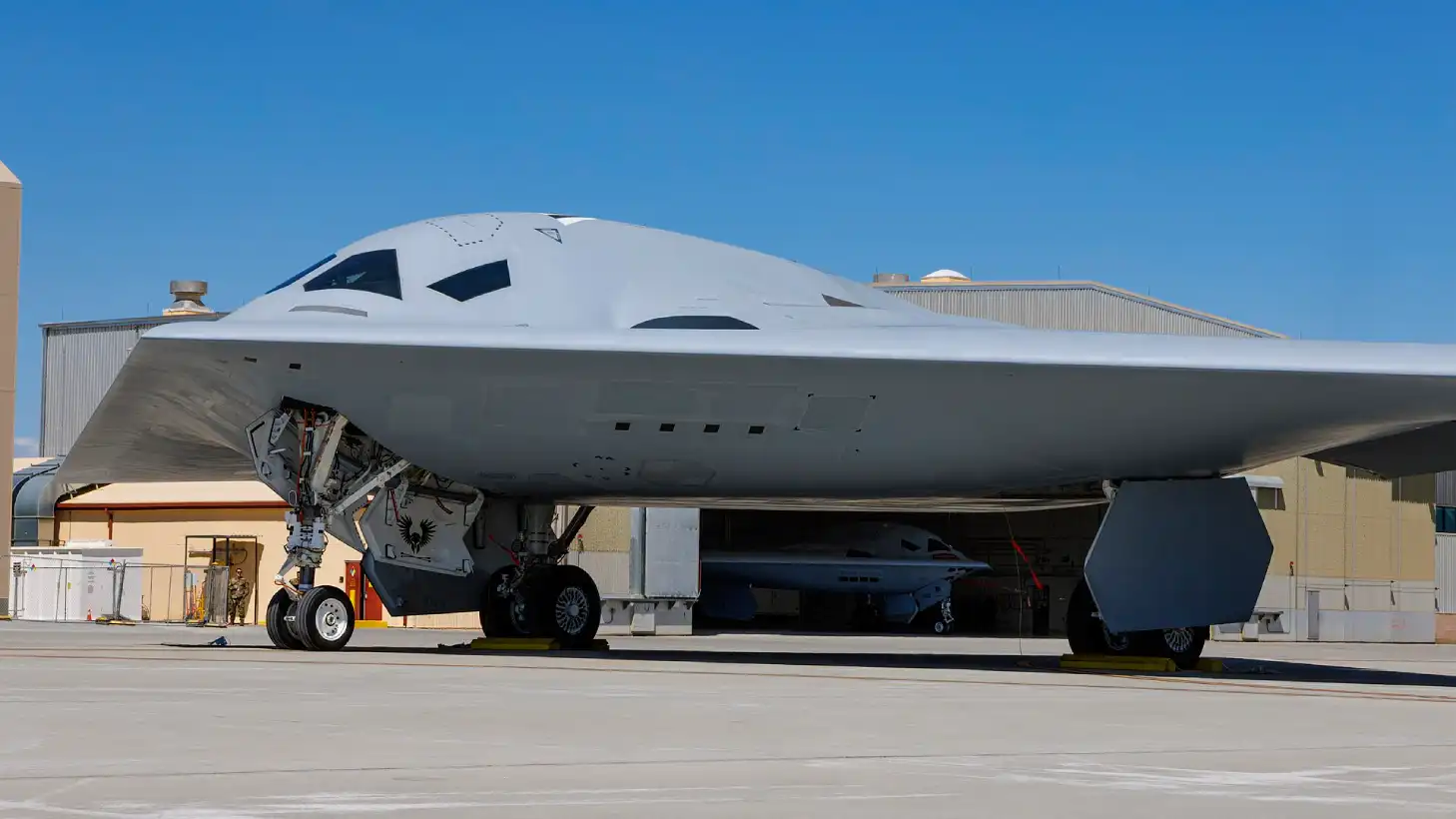
The nuclear-capable, subsonic B-21 is a smaller flying-wing bomber intended to replace the B-1 and B-2 by 2040 and potentially succeed the B-52 later. It retains a two-person crew and is designed for conventional and nuclear missions.
Planned weapons include the AGM-181 Long Range Stand Off nuclear cruise missile, B61-12 and B61-13 nuclear gravity bombs, and conventional weapons such as the JASSM-ER cruise missile. The current U.S. inventory contains 19 B-2 bombers, making the minimum planned B-21 fleet more than five times larger.
Recommended Comments