




-
TL;DR: The U.S. Air Force advanced the $20.2 billion B-52J engine replacement into development and authorized initial production of APQ-188 radars, with 74 radar kits planned. New Rolls-Royce F130 engines, upgraded electrical and flight systems, communications, and weapons integration are intended to keep structurally viable B-52s operational for long-range strike and nuclear deterrence into the 2050s and beyond.
B-52 Engine and Radar Programs Advance
The U.S. Air Force reached two acquisition milestones in 2026 for modernization of the B-52 strategic bomber fleet. The service approved Milestone B for the B-52J Commercial Engine Replacement Program on June 1, moving the engine upgrade into engineering and manufacturing development.
On Aug. 21, the Air Force granted Milestone C approval to the B-52 Radar Modernization Program, authorizing low-rate initial production. The upgrades are intended to support B-52 operations through the 2050s and beyond, including long-range strike and nuclear deterrence missions.
Engine Replacement and Supporting Systems
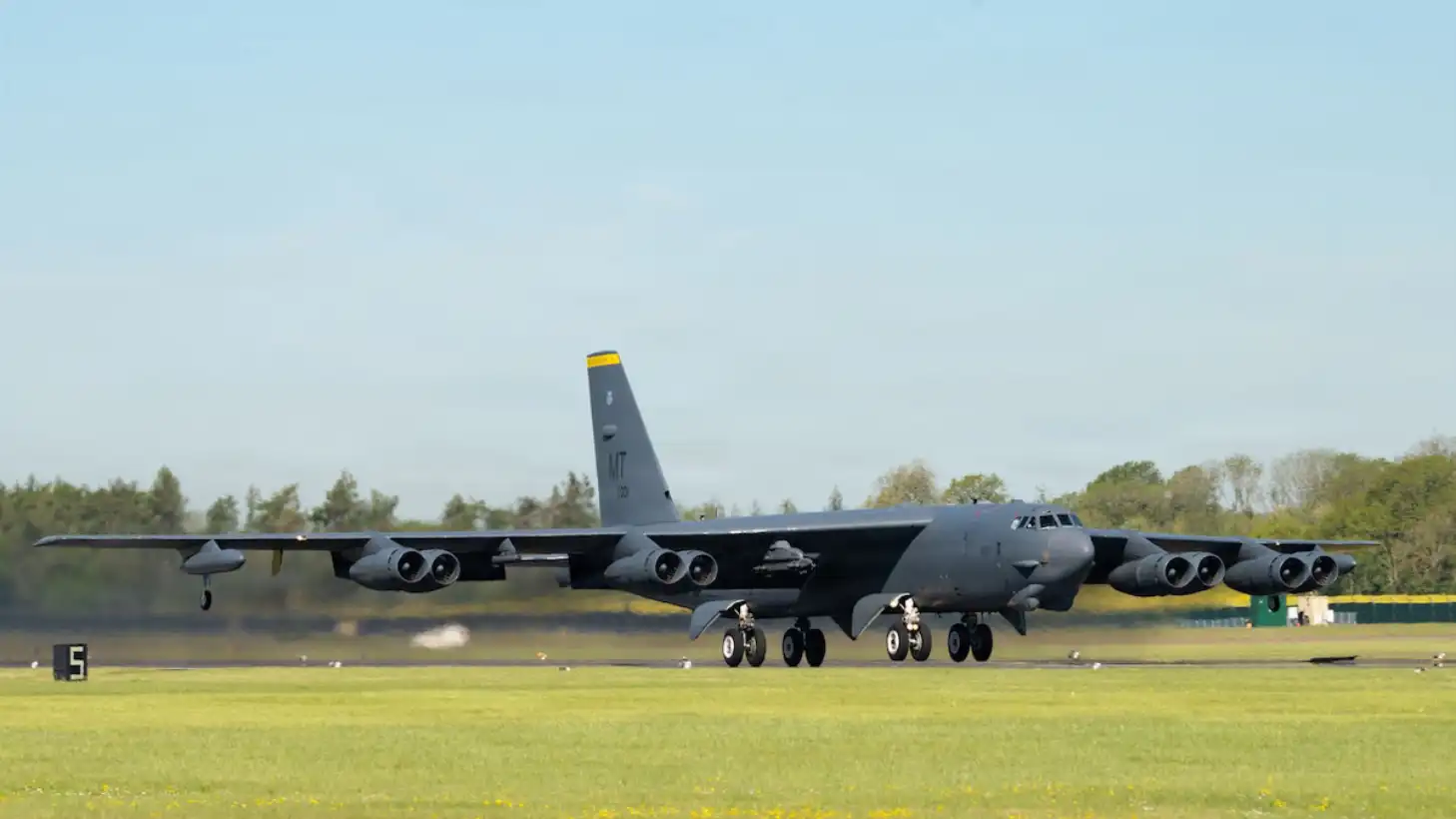
The Commercial Engine Replacement Program will replace the B-52’s original TF33 engines with commercial-derivative Rolls-Royce F130 engines. It also covers changes to hydraulic pumps, cockpit displays, flight systems, and generators, with the latter increasing the aircraft’s electrical power capacity.
Milestone B established the program’s first official Acquisition Program Baseline. Total acquisition cost was set at $20.2 billion, including research, development, testing, evaluation, procurement and military construction. According to the Air Force, $2.6 billion has been spent since 2018.
Early wind-tunnel testing identified airflow distortion at the engine inlet. Engineers subsequently redesigned the nacelle and inlet and conducted additional testing. Boeing and Rolls-Royce completed the critical design review in May 2026, while engine testing remains underway.
Two aircraft designated for testing are scheduled to enter modification at Boeing’s San Antonio facility in the coming months. Both recently completed depot maintenance and are currently flying operational missions. The aircraft will receive engine and radar modifications concurrently.
Radar Production Authorized
The Radar Modernization Program will replace the 1980s-era APQ-166 analog radar with the APQ-188 Active Electronically Scanned Array radar. The Air Force described the new system as a military off-the-shelf radar related to those used by the F-15 and F/A-18.
Following the Aug. 21 production decision, the Air Force awarded low-rate initial production contracts to Raytheon Technologies for radar systems and Boeing for aircraft integration kits. The first lot comprises four kits.
The planned five-lot production effort is expected to provide 74 kits in total. Ground testing evaluated the initial software build and hardware integration, while a Production Readiness Review completed in June 2026 determined that the system was ready for initial production.
Communications and Weapons Integration
Additional B-52 work includes survivable nuclear command-and-control communications and conventional beyond-line-of-sight connectivity. Programs cited by the Air Force include Extremely High Frequency terminals and Hybrid SATCOM.
Weapons integration efforts cover current variants of the Long-Range Anti-Ship Missile and Joint Air-to-Surface Standoff Missile. The B-52 also continues to serve as a test platform for hypersonic weapons.
Airframe Service Life
As part of the engine program’s Milestone B process, the Air Force conducted fleet-wide structural assessments to determine whether the airframes could support the new engines, greater electrical generation, and continued operations.
The B-52 was designed in the late 1940s, with current aircraft built through the early 1960s. Air Force analyses concluded that the airframes retain sufficient fatigue life to continue operating into the 2050s and potentially beyond.
Recommended Comments