




-
TL;DR: The Marine Corps’ Ground Combat Element 2040 roadmap prioritizes squad-level defenses against drones and low-flying aircraft, with more than 80 counter-drone systems already entering service. Through 2040, investments will expand AI, robotics, precision fires, mobility, resilient logistics and distributed command systems while preserving human judgment and conventional combined-arms capabilities for contested littoral and peer-level combat.
Squad-Level Air Defense Prioritized
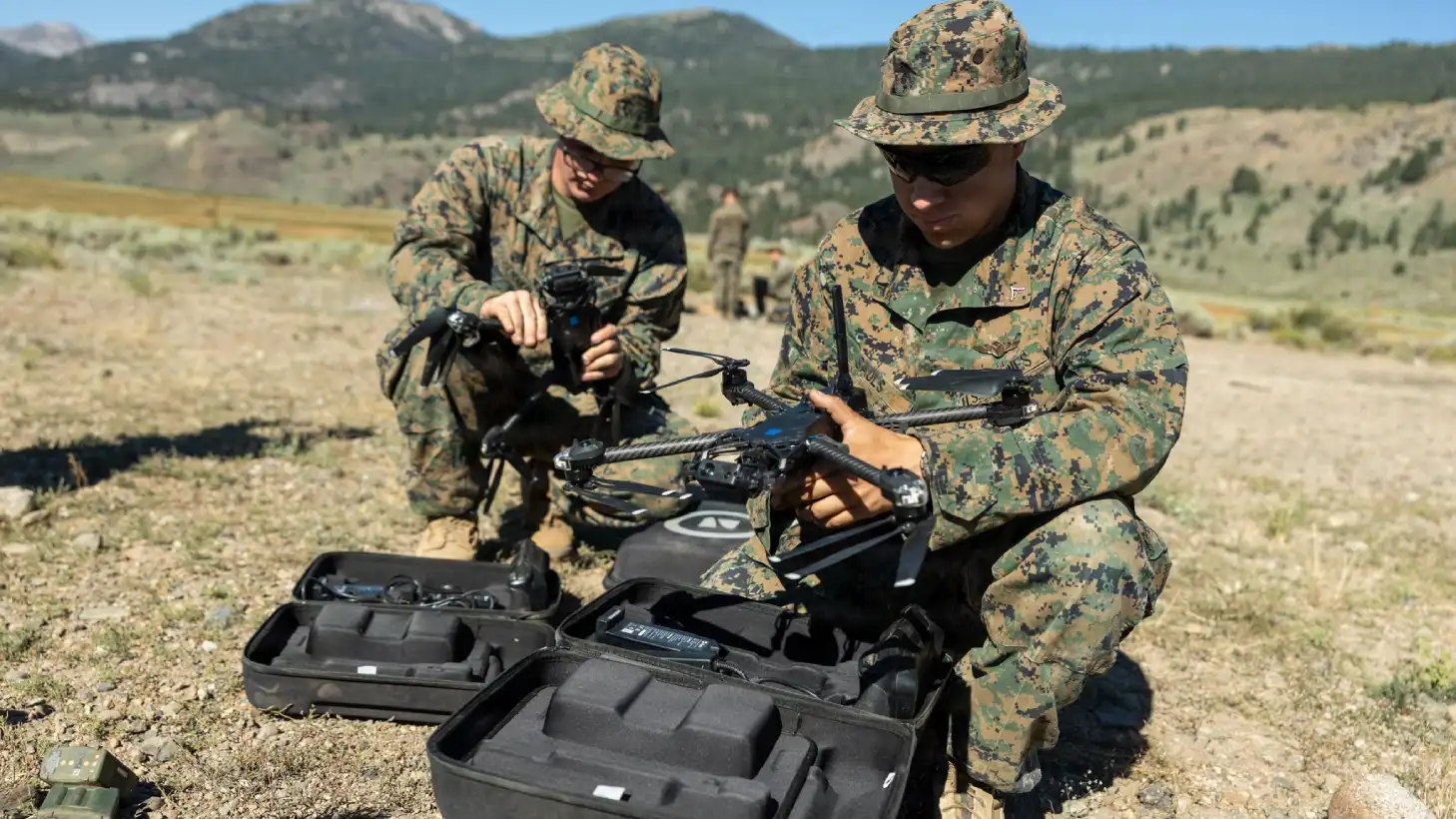
The Marine Corps released Ground Combat Element 2040 on Wednesday, outlining plans to expand air defenses and other advanced capabilities across its ground forces. A central priority is pushing layered ground-based air defense down to the squad level as small drones, pervasive sensors and precision weapons increase the risks facing infantry units.
The service has already begun fielding more than 80 new systems intended to help infantry squads detect and destroy small unmanned aircraft. The roadmap calls for capabilities able to detect, identify, track, and defeat small drones, helicopters, and low-flying fixed-wing aircraft at close and extended ranges.
Three-Phase Modernization Plan
The 40-page FY26 framework will guide investment and force-development decisions through 2040. From 2026 to 2030, the Corps plans to accelerate existing Force Design efforts, address the immediate drone threat, and invest in survivability, command and control, artificial intelligence, and unmanned systems.
Between 2031 and 2035, AI and autonomous systems are expected to assume larger roles in headquarters operations, logistics, reconnaissance, bridging and breaching. Drone formations would supplement rocket and cannon artillery, while active and passive counter-drone measures become increasingly important across the force.
For 2036 to 2040, the roadmap envisions dispersed formations using AI-enabled command systems, edge computing, and widespread human-machine teaming. Robotics could augment or replace personnel in some high-risk maneuver and logistics tasks.
Five Modernization Pillars
The plan organizes development around human-centered warfighting, lethality, endurance, decision advantage and modularity. Although it calls for greater use of AI, robotics, and autonomous platforms, the framework states that technology should enhance rather than replace human judgment. Units must remain effective when networks, sensors, or other technical advantages are disrupted or denied.
Lethality initiatives include improved organic direct and indirect fires, integration with Joint and allied sensors, and kinetic and non-kinetic effects across multiple domains. Endurance efforts cover resilient logistics, tactical deception, camouflage, and signature management. Modularity centers on scalable Marine Air-Ground Task Force formations tailored to particular missions and threats.
Mobility, Fires and Command Systems
The roadmap’s highest-priority capability areas are force structure, multi-domain lethality and targeting, and tactical and littoral mobility. Planned materiel priorities include long- and medium-range surface fires, anti-ship missiles, organic precision fires, small unmanned aircraft, modernized electronic warfare systems and all-weather infantry battalion and regimental fires.
Mobility investments include the Amphibious Combat Vehicle, Advanced Reconnaissance Vehicle, small patrol and coastal vessels, bridging systems and stand-off mine-clearing capabilities. The Corps also seeks resilient command posts, distributed sensing networks and compact command-and-control systems for dispersed units.
Logistics priorities include unmanned ground, air and surface distribution platforms, mobile power, forward-positioned supplies, advanced medical capabilities, expeditionary fuel and water systems, field feeding equipment and additive manufacturing.
Ground Forces in Contested Littorals
Ground Combat Element 2040 builds on changes begun under Force Design 2030, including development of the Marine Littoral Regiment. Those regiments are optimized for reconnaissance, sea denial, and integration with Joint targeting networks, but the roadmap says they do not replace formations needed to seize, hold, and defend terrain.
The future force is intended to operate in contested littoral areas while supporting sea control, amphibious operations and Joint forces. It will rely on dispersion, resilient communications and lower signatures to remain difficult to detect and target, while retaining conventional combined-arms capabilities for peer-level ground combat.
Recommended Comments