




-
TL;DR: Ukrainian drone operators caused about 70% of a U.S. armored brigade’s simulated casualties early in a 2026 exercise, but improved dispersion, concealment, movement and emissions control cut that share below 30% by day three. The brigade then deployed more than 700 drones, forcing decentralized command and new airspace procedures while slowing logistics and straining data systems. The exercise showed that fieldcraft, electronic warfare and adaptable command structures are critical for operating under pervasive drone surveillance and attack.
Ukrainian Drones Drive Early Exercise Losses
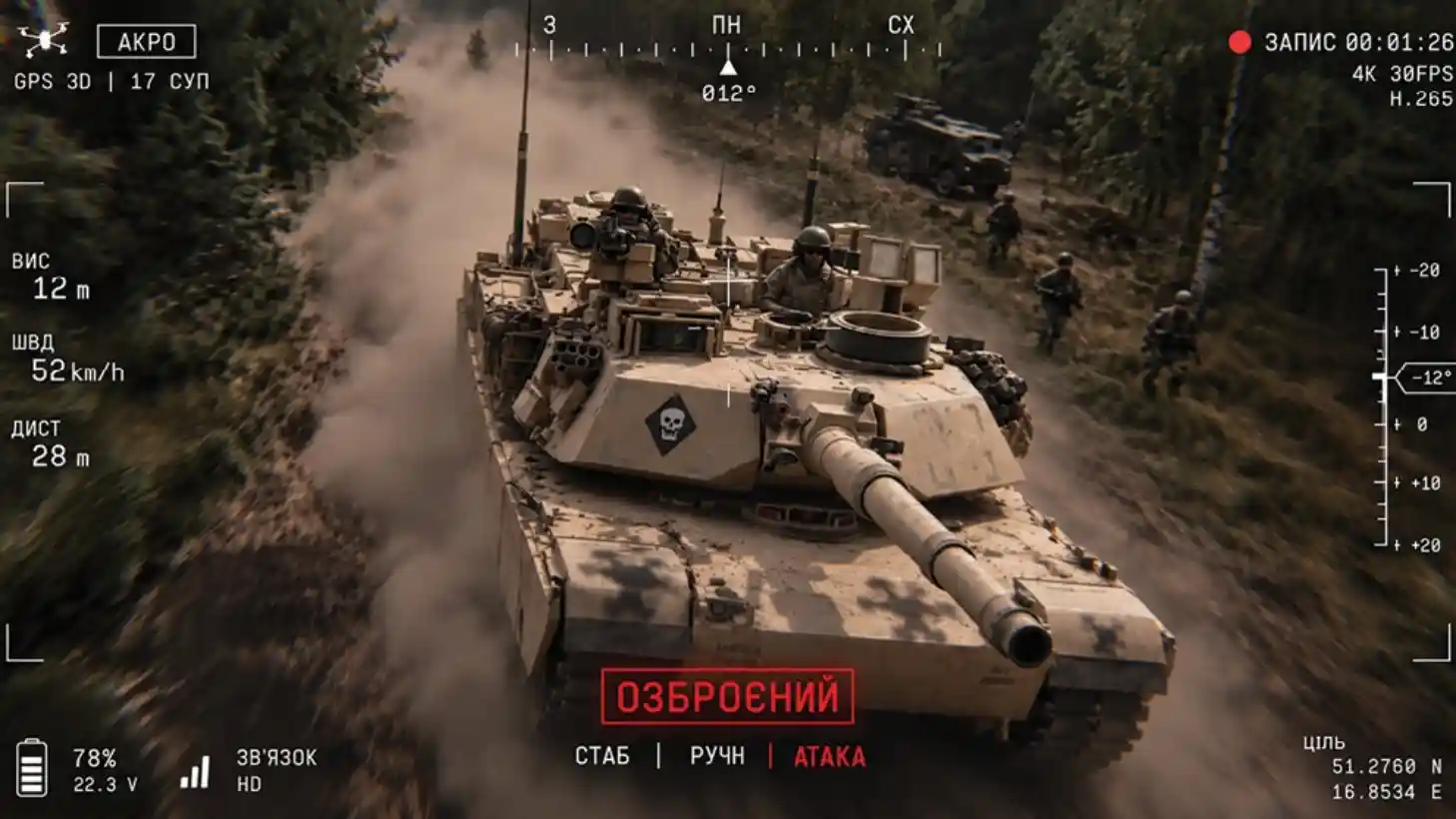
Ukrainian drone operators contributed to about 70% of the simulated casualties suffered by the U.S. Army’s 3rd Armored Brigade Combat Team, 1st Cavalry Division, during the first three days of Combined Resolve 26-07 in Hohenfels, Germany.
The ten-day exercise, held in April and May 2026, pitted the Greywolf brigade against an opposing force reinforced by Ukraine’s 412th Nemesis formation, whose personnel brought combat experience against Russian armor, artillery and logistics networks. Drones conducted direct attacks and located targets for simulated artillery strikes.
The opposing force initiated more than 750 drone contacts across a 14-by-27-kilometer training area. Ukrainian operators were already observing one mechanized company as its vehicles entered through the training area’s only gate, before they could disperse. The casualty figure refers to the share of simulated losses attributed to drones, not the percentage of U.S. personnel or tanks destroyed.
Fieldcraft Reduces Drone Impact
By the end of the third day, the drone-related share of casualties had fallen below 30% after Greywolf changed its movement, concealment and electronic-warfare procedures. Soldiers increased dispersion, used smaller and less predictable routes, sought overhead cover and moved quickly after detecting drones to avoid follow-on artillery fire.
Officers estimated that fieldcraft and battle drills accounted for roughly 60% of effective counter-drone protection. Static electronic-warfare systems could create protective areas extending up to two kilometers from emplaced positions, but had to be moved sequentially as the brigade advanced. This left vehicles exposed during movement, while fiber-optic drones were less susceptible to radio-frequency jamming.
Crews also reduced their electromagnetic signatures by limiting radio transmissions and, in some cases, disconnecting Blue Force Tracker or Starshield links. Those measures reduced communications reach and friendly-force tracking. Resupply took twice as long as planned because logistics units prioritized concealment and unpredictable routing.
U.S. Brigade Expands Its Own Drone Use
During subsequent offensive operations, Greywolf integrated the 3rd Battalion, 504th Parachute Infantry Regiment, then serving as an experimental drone battalion. More than 700 unmanned aircraft operated from platoon through brigade level, with relay drones extending most ranges to 25–40 kilometers.
The volume of reconnaissance reports, target data, and strike assessments overwhelmed processes designed for smaller numbers of centrally managed systems. The brigade therefore delegated reconnaissance and strike priorities to subordinate commanders rather than directing each aircraft individually. Enemy drone ground-control stations became priority targets.
Airspace procedures also changed. Reserved corridors accommodated helicopters, while altitude separation allowed large numbers of drones to operate elsewhere. The brigade nevertheless could not maintain a complete picture of every unmanned aircraft in flight.
Offensive Operations and Proposed Changes
Greywolf moved its coordinated fire line ahead of the cavalry squadron, allowing drones and artillery to engage targets beyond that boundary with fewer clearance requirements. Additional restrictions were applied when friendly scouts operated forward, reducing the risk of fratricide.
The brigade ultimately completed two simultaneous breaches through forested terrain about six kilometers apart. The opposing force failed to identify the principal attack, and its reserve was defeated before it could be committed.
Based on the exercise, Greywolf proposed multifunctional strike troops with three UAV platoons: one for reconnaissance to at least 40 kilometers, one operating bomber drones carrying four to eight munitions, and one using relay-supported strike drones. The proposal also calls for battalion-level armored strike platoons and a shared operational picture comparable to Ukraine’s Delta system.
Nemesis’ Combat Background
Nemesis began operations in 2023 and conducted its first combat flight on February 8, 2024. It later joined Ukraine’s Unmanned Systems Forces, became a separate regiment in December 2024, and expanded into the 412th Separate Brigade in November 2025.
By March 26, 2025, the unit claimed 10,000 combat sorties, more than 1,000 reconnaissance sorties, over 1,000 targets destroyed, and 5,500 damaged or struck. Those totals remain unit claims, and repeated attacks do not necessarily represent separate equipment losses. Its systems have included FPV aircraft, heavy multicopters carrying adapted anti-tank mines, air-defense strike platforms, and interceptor drones.
Recommended Comments