




-
TL;DR: The Carl Vinson Carrier Strike Group's arrival in South Korea underscores the US's commitment to counter North Korea's missile tests and ensuring a free Indo-Pacific. Coinciding with North Korea's recent missile launch, this deployment highlights strategic timing as the carrier group, part of the US Navy’s 7th Fleet, integrates air and maritime abilities in the region. The group's presence, involving joint exercises with global allies like France and Japan, demonstrates a robust response to perceived threats, bolstering security partnerships and reinforcing military readiness in the face of North Korean provocations.
US Navy Carrier Group Strengthens Presence Amid North Korean Missile Tests
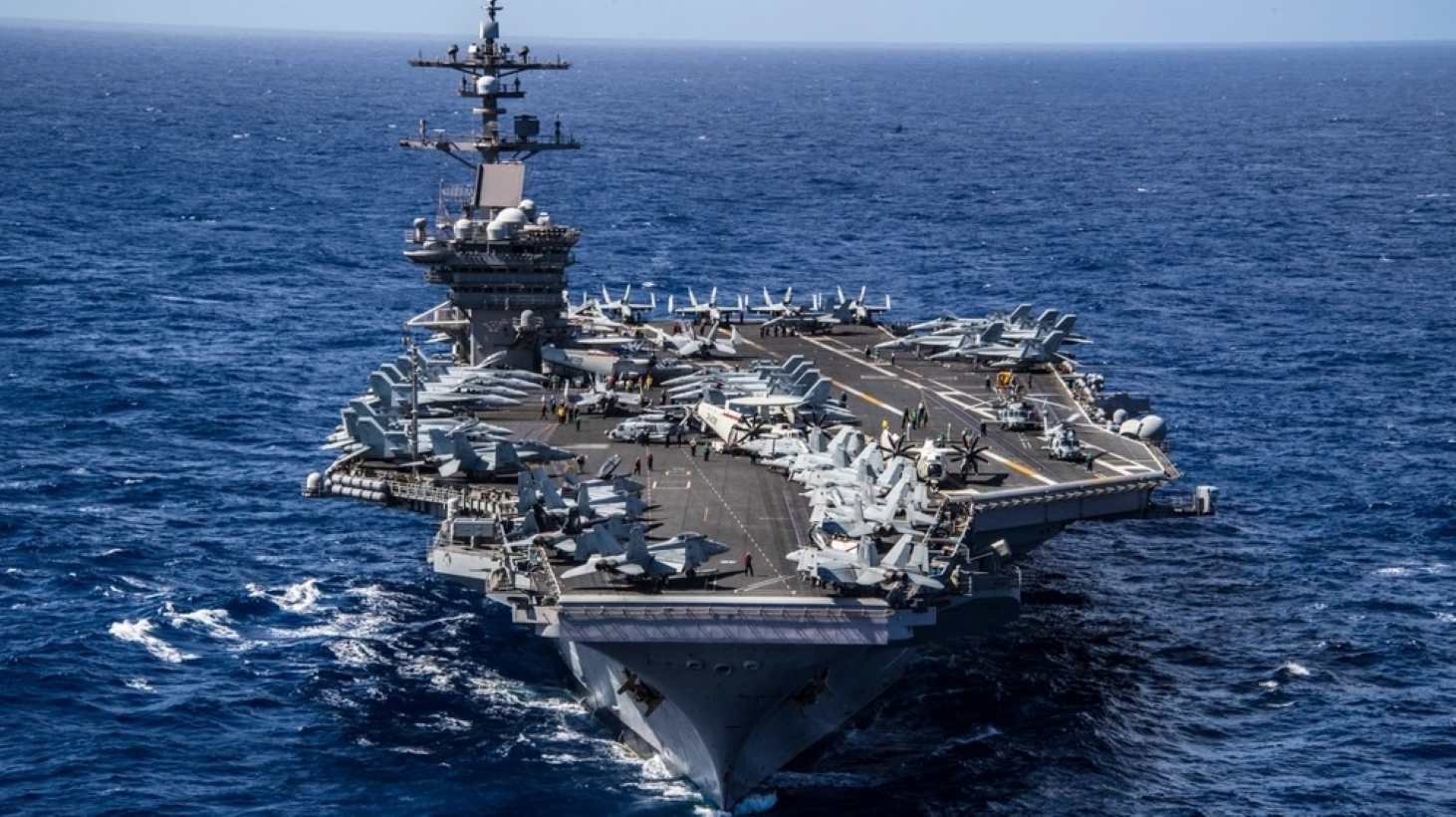
Days after North Korea's fourth missile test this year, the Carl Vinson Carrier Strike Group marked its arrival in South Korea. This event underlines the continuous enforcement of the U.S. military presence, notably against Pyongyang's escalating missile tests.
A Scheduled Visit with Strategic Timing
The USS Carl Vinson aircraft carrier and its support ships from the strike group reached Busan, South Korea, on March 2. The timing, though stated by the Navy as part of a routine schedule, coincides with Pyongyang's latest oceanic missile test, which took place in the Yellow Sea on February 26. North Korean state media reported that the missiles covered a distance of approximately 130 miles under the supervision of leader Kim Jong Un. This development has since been verified by South Korea's military forces. The missile tests were allegedly carried out as a message to the "enemies escalating the confrontation environment", as stated by the North Korean state media.
Reemphasizing Commitment to a Free Indo-Pacific
Recognizing the crucial role of the maritime and air domains, U.S. Forces Korea Commander Gen. Xavier T. Brunson said the presence of Carl Vinson in South Korea reconfirms the commitment to maintaining a free and open Indo-Pacific. Integrating these capabilities into an all-domain approach bolsters the strategic importance of this particular visit.
"The Carl Vinson’s presence here not only underscores the importance of both the maritime and air domains but also reaffirms our commitment to maintaining a free and open Indo-Pacific by integrating these unique capabilities into our comprehensive all-domain approach," stated Brunson during his visit to the carrier.
The first carrier group to visit South Korea since June 2024, the Carl Vinson Carrier Strike Group, operates in the U.S. Navy’s 7th Fleet area. Before arriving in South Korea, the carrier was engaged in the Philippine Sea-based Exercise Pacific Steller 2025, a joint force exercise with the French Navy and the Japanese Maritime Self-Defense Force.
Strengthening the Naval Fleet
The carrier strike group includes the Ticonderoga-class guided-missile cruiser, USS Princeton, and the pair of Arleigh Burke-class guided-missile destroyers – USS Sterett and USS William P. Lawrence. The group also carries the Carrier Air Wing 2, which comprises squadrons flying F-35C Lightning II, F/A-18E/F Super Hornets, and MH-60R/S Seahawks, among other aircraft.
The US Responds to Aggression with Military Exercise
In response to Pyongyang's continued acts of aggression, the United States has orchestrated various military exercises and force projection missions over the Korean Peninsula. This strategic show of strength involves bomber flyovers and joint aircraft exercises with South Korea and Japan, reassuring partners and upholding a free Indo-Pacific.
Recommended Comments