




-
TL;DR: USS Abraham Lincoln returned to San Diego after a 321-day, 93,000-nautical-mile deployment that included nearly 4,000 combat sorties against Iran, two blockades and a record 208 uninterrupted days at sea. Carrier Strike Group 3 received the Presidential Unit Citation after destroying thousands of targets, countering more than 100 attacks and sinking 64 Iranian vessels.
Lincoln Returns After 321-Day Deployment
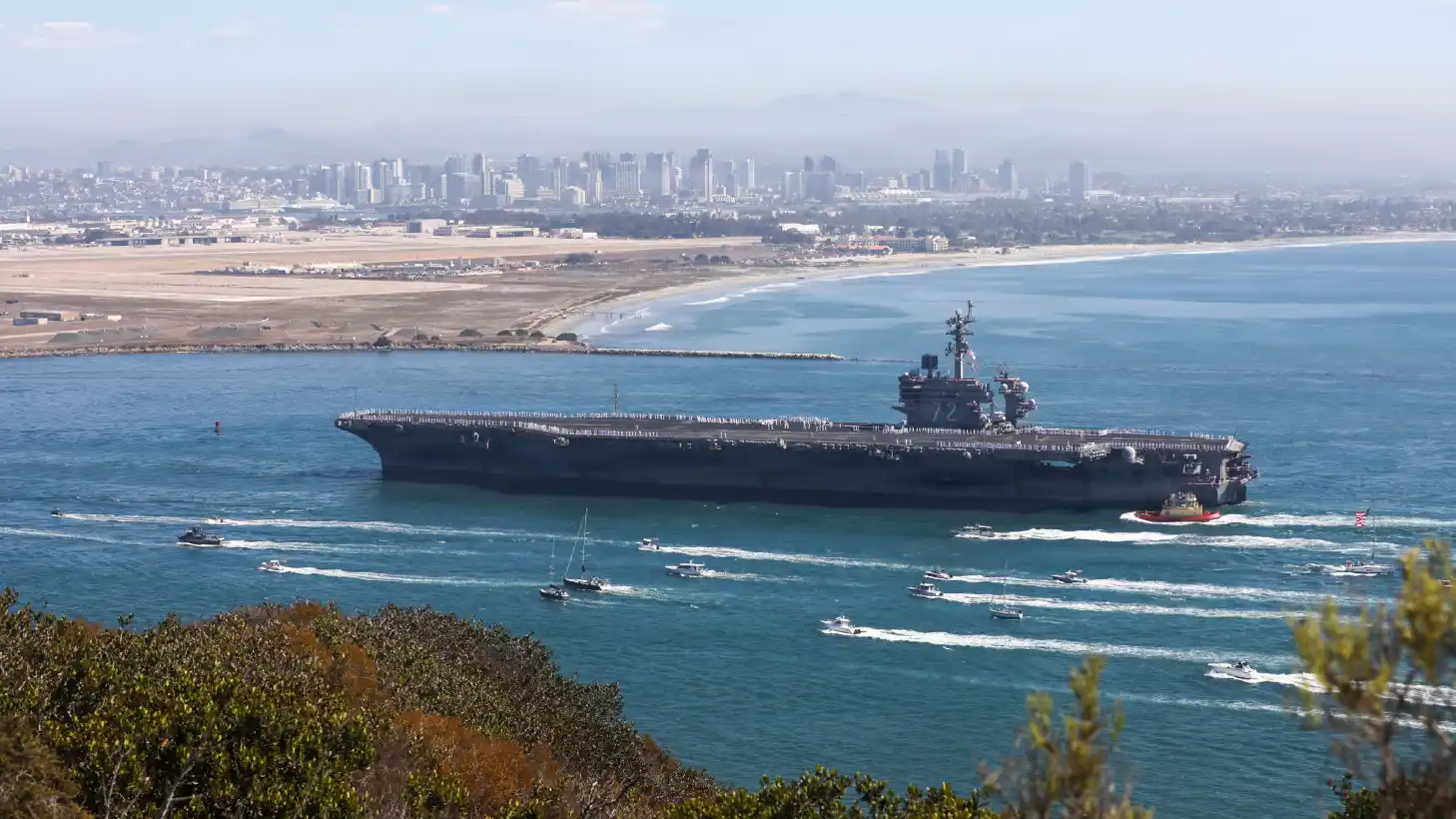
The aircraft carrier USS Abraham Lincoln returned to San Diego after a 321-day deployment that included combat operations against Iran, two naval blockades and extended periods at sea.
The carrier departed its home port Nov. 21, 2025, and traveled more than 93,000 nautical miles across the Pacific and Indian oceans and the Arabian and South China seas. Carrier Air Wing 9 aircraft completed more than 13,000 sorties and 28,500 flight hours during the deployment.
A day before the carrier’s return, Defense Secretary Pete Hegseth announced that the Lincoln and other ships in Carrier Strike Group 3 had received the Presidential Unit Citation, the U.S. military’s highest unit-level award for valor.
Combat Operations Against Iran
The strike group entered the U.S. Central Command area in late January and led Navy operations along Iran’s southern coast as Commander, Task Force 50, during Operation Epic Fury.
Over 40 days of major combat operations, the air wing flew nearly 4,000 combat sorties and delivered more than 1.5 million pounds of ordnance against thousands of targets. Strike group units also destroyed more than 100 Iranian drone, missile and small-boat attacks directed at the force.
According to the award citation, the operation began with 60 consecutive hours of strike missions. The citation credited the group with 3,963 combat sorties and the sinking of 64 Iranian vessels during the deployment.
Blockades and Later Strikes
Following an April 8 ceasefire between the United States and Iran, the strike group shifted to enforcing a blockade of Iranian-flagged vessels in the northern Arabian Sea and Gulf of Oman. The blockade was intended to restrict the movement of Iranian oil and other material.
After Iranian attacks on commercial shipping in the Strait of Hormuz in July, Lincoln aircraft supported strikes on coastal defense systems and cruise missile storage and launch sites. The strike group then reinforced a second blockade of Iranian shipping and ports.
The group departed the Central Command area Aug. 22 to begin its return transit.
Operational Scale and Time at Sea
During the deployment, the Lincoln conducted 72 replenishments at sea and received more than 20.5 million gallons of aviation fuel.
The carrier made overnight supply stops in Guam in December 2025 and again shortly before returning home, as well as in Duqm, Oman, in July. It also made a port call in Pattaya, Thailand.
The Navy described the carrier’s 208 uninterrupted days at sea between Guam and Oman and the 286-day period between departing San Diego and arriving in Thailand as records for modern aircraft carriers.
Presidential Unit Citation
The Lincoln is the second carrier strike group to receive the Presidential Unit Citation for a deployment during the war with Iran. The USS Gerald R. Ford strike group received the award in May, followed by the refueler USNS Kanawha in June.
Previous recipients include Army airborne units involved in the D-Day invasion, Marine units from World War II Pacific campaigns, special operations forces involved in the 2011 mission that killed Osama bin Laden, and Coast Guard units recognized for their response after Hurricane Katrina.
Recommended Comments