




-
TL;DR: Germany pledged about €1 billion in new military aid to Ukraine, including jet-powered drone interceptors, standoff weapons and space-based technology, while German firms reportedly signed €6.6 billion in related agreements. Tens of thousands of interceptors are expected to be produced in Ukraine to protect cities and infrastructure from Russia’s expanding, increasingly resilient drone campaign, though no delivery timeline was announced.
Germany Announces €1 Billion Aid Package
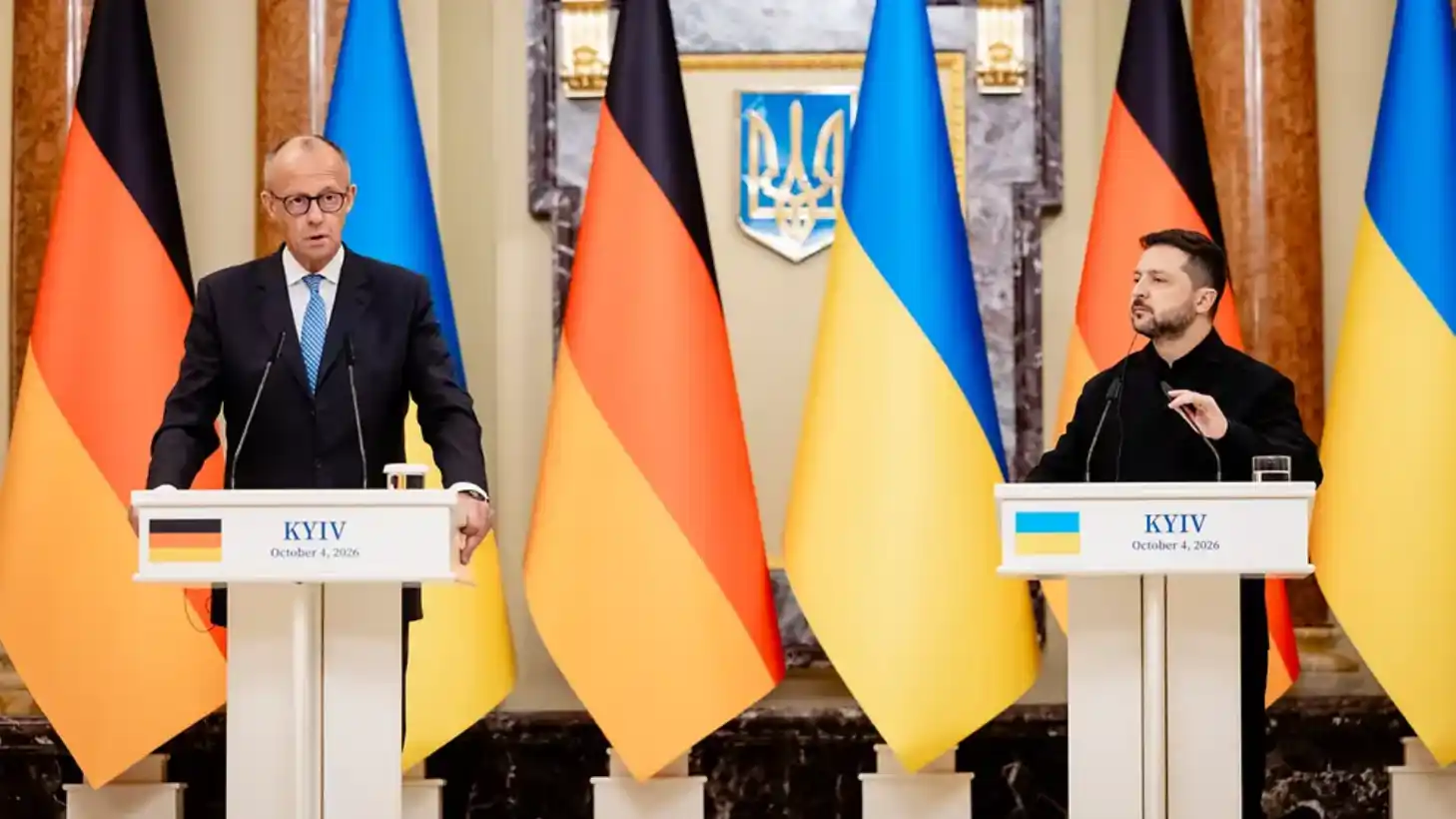
German Chancellor Friedrich Merz announced approximately €1 billion ($1.1 billion) in new military aid for Ukraine during a surprise visit to Kyiv on Sunday. The package includes turbojet-powered drone interceptors, standoff weapons, and space-based technology.
Speaking alongside Ukrainian President Volodymyr Zelenskyy, Merz said recent technical advances in interceptor development were allowing production to accelerate.
“This will strengthen Ukrainian air defenses quickly and noticeably,” he said. No specific delivery schedule was announced.
The visit came after Moscow destroyed a bridge in Kyiv earlier that day. Merz said Germany would not be intimidated by an “escalation of Russia’s war of aggression.”
Wider Agreements and Air Defense Supplies
The Guardian reported that company executives traveling with Merz signed 14 agreements with Kyiv worth a combined €6.6 billion, citing German officials. The reported supplies include IRIS-T air defense missiles produced by Diehl, radar systems from Hensoldt and jet-powered drone interceptors manufactured by Quantum Systems.
Quantum Systems said several tens of thousands of its interceptor drones would be produced in Ukraine and deployed against Russia’s expanding drone campaign. The systems are intended to protect cities, civilian sites and critical infrastructure.
The interceptors were developed by Quantum WIY Industries, a Ukrainian team formed through a joint venture between Quantum Systems and Ukrainian manufacturer WIY Drones. The venture launched in April. The interceptors will also integrate with Quantum Systems’ MOSAIC UXS software suite.
Response to Russia’s Drone Campaign
The new systems are intended to counter weapons including Russia’s Geran turbojet-powered drones. The one-way attack aircraft are license-built variants of Iran’s Shahed drone.
An Institute for Science and International Security analysis found that Russia launched at least 5,166 Shahed-type uncrewed aerial vehicles, including decoys, during August. Ukraine shot down or suppressed about 4,288 of those aircraft, according to the institute’s September report.
Separate analysis from the Center for Strategic and International Studies highlighted the rapid development of Geran satellite-navigation antennas, which have been modified to become more resilient against electronic warfare. The continuing changes have increased pressure on Ukraine to field additional interception methods alongside conventional air defense systems.
Merz Warns Against Hybrid Attacks
Merz also addressed suspected Russian hybrid operations and sabotage elsewhere in Europe, saying Germany would respond to further escalation.
“Russia must know that we will take steps to defend ourselves against any further escalation,” he said. “This applies to the shadow fleet in the Baltic and North Seas. It applies to flights violating our airspace. It applies to drone attacks.”
Berlin has blamed Moscow for an August incident at Leipzig airport in which a Russian drone carrying explosives was found.
Moscow Issues Kyiv Warning
Russia’s Foreign Ministry on Saturday repeated a warning for foreign nationals and diplomatic personnel to leave Kyiv. It said Russia would continue “systematic and sustained strikes against military targets” in Kyiv and other Ukrainian cities, describing them as a response to Ukrainian attacks on Russian civilians and infrastructure.
Western diplomatic officials rejected the warning. Australian Ambassador to Ukraine Geoff Brown said heads of mission in Kyiv had noted the Russian statement with concern but would remain in the capital.
“We stay in Kyiv,” Brown said.
Recommended Comments