




-
TL;DR: The U.S. Navy has deployed the USS George H.W. Bush and USS George Washington carrier strike groups to the Arabian Sea, adding aircraft—including F-35C stealth fighters—and missile-defense ships near Iran and the Strait of Hormuz. Their presence expands U.S. capacity for surveillance, maritime security, air defense and strikes amid attacks on commercial shipping, though their exact locations and whether they are coordinating operations remain unclear.
Two U.S. Carriers Operating in Arabian Sea
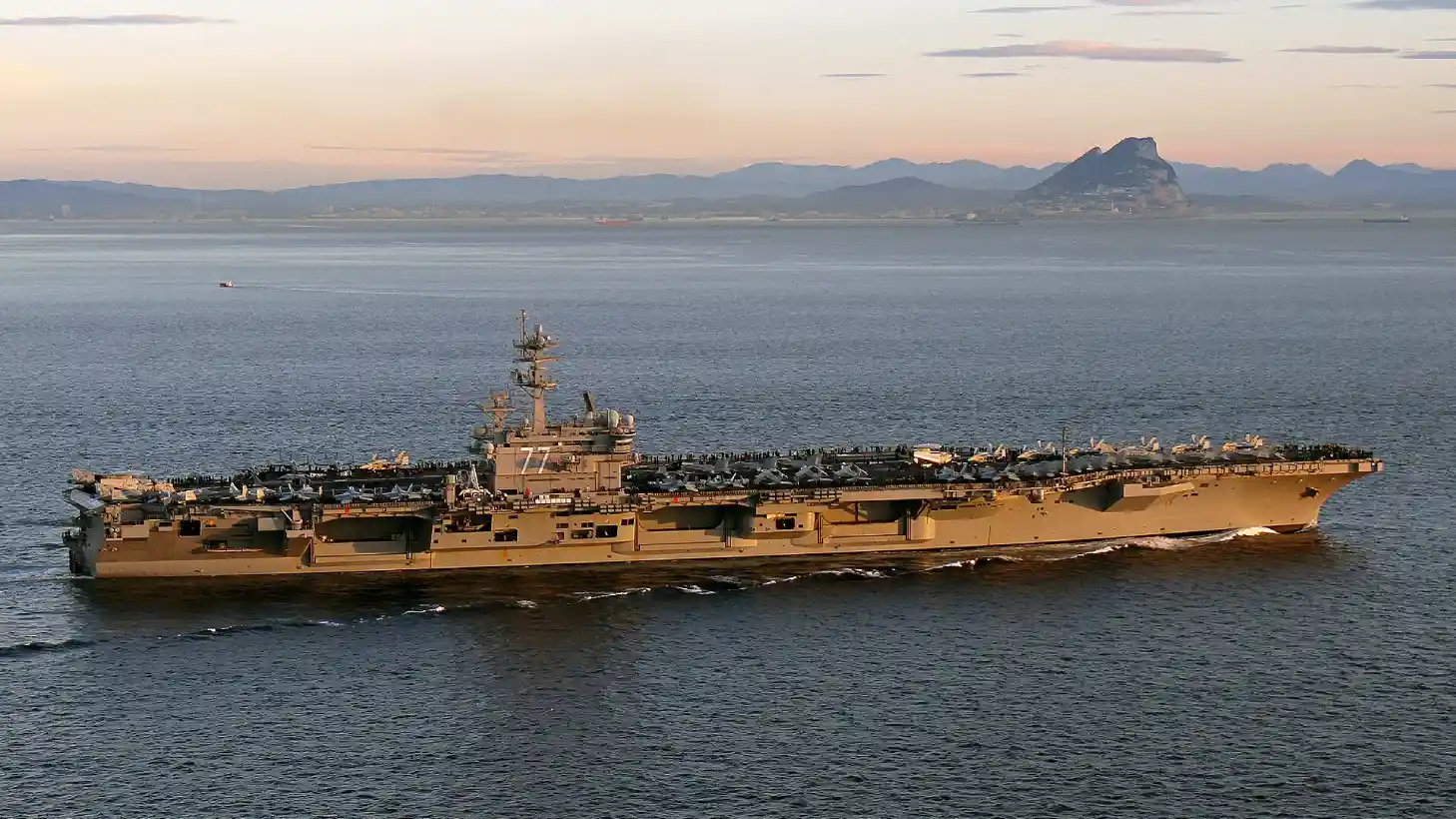
The U.S. Navy has deployed two carrier strike groups to the Arabian Sea, expanding its available air power near Iran and the Strait of Hormuz. According to the Fleet and Marine Tracker published by USNI News on October 13, 2026, USS George H.W. Bush is operating in the region alongside USS George Washington.
The report does not specify the carriers’ positions, their distance from one another, or whether their air wings are conducting coordinated missions. Their simultaneous presence nevertheless gives U.S. commanders two independent naval aviation formations for combat air patrols, maritime interdiction, surveillance and strike operations.
The buildup comes as U.S. forces continue operations intended to restrict Iranian maritime activity and commercial vessels face attacks around the Strait of Hormuz. Shipping continued through the area despite additional strikes reported in early October.
Bush Returns From Seventh Fleet Area
USS George H.W. Bush returned toward the Middle East after a temporary deployment to the U.S. Seventh Fleet area of responsibility. That deployment included a port visit to Phuket, Thailand, which ended October 9.
Homeported at Naval Station Norfolk, Virginia, the carrier leads Carrier Strike Group 10 and embarks Carrier Air Wing 7. Its aviation force includes F/A-18E/F Super Hornets from Strike Fighter Squadrons VFA-103, VFA-83, VFA-105 and VFA-131, as well as EA-18G Growler electronic warfare aircraft from VAQ-140.
The strike group also includes the Arleigh Burke-class guided-missile destroyers USS Donald Cook (DDG-75) and USS Ross (DDG-71), adding air-defense and naval-warfare capacity.
George Washington Adds F-35C Capability
USS George Washington, forward-deployed from Yokosuka Naval Base in Japan, remains in the Arabian Sea with Carrier Air Wing 5 and the destroyer USS Shoup (DDG-86).
Its air wing includes carrier-based F-35C Lightning II stealth fighters in addition to F/A-18E/F Super Hornets, EA-18G Growlers and E-2D Advanced Hawkeye airborne early warning aircraft. This mix supports precision strikes, fleet air defense, electronic warfare, and reconnaissance.
The F-35C combines reduced radar visibility with advanced sensors for operations in contested airspace. Super Hornets can carry air-to-air missiles and precision-guided weapons against land or maritime targets, while Growlers are designed to disrupt hostile radar and communications systems.
Added Capacity and Operational Flexibility
Operating two carriers increases the number of aircraft available and allows flight operations to be distributed between separate ships. That arrangement can provide flexibility during maintenance, aircraft recovery cycles, or periods of increased activity.
The accompanying Arleigh Burke-class destroyers use the Aegis combat system and can support air and missile defense as well as maritime security operations. However, the presence of both carriers in the same general area does not establish that they are operating near each other.
Nimitz-Class Specifications and Support
George H.W. Bush and George Washington are Nimitz-class nuclear-powered aircraft carriers. Each displaces about 97,000 tons, can exceed 30 knots, and uses four steam-powered catapults to launch aircraft.
Nuclear propulsion gives the carriers extended cruising endurance and allows sustained aviation operations without reliance on nearby land bases. Their air wings and crews still require regular replenishment of aviation fuel, ammunition, maintenance supplies, and provisions.
Together, the strike groups increase U.S. capacity for prolonged operations across the Persian Gulf and northern Indian Ocean while maintaining additional air and defensive assets near Iran and the Strait of Hormuz.
Recommended Comments