

Uncrowned Guard
Empire Staff
-
Joined
-
Last visited
Everything posted by Uncrowned Guard
-
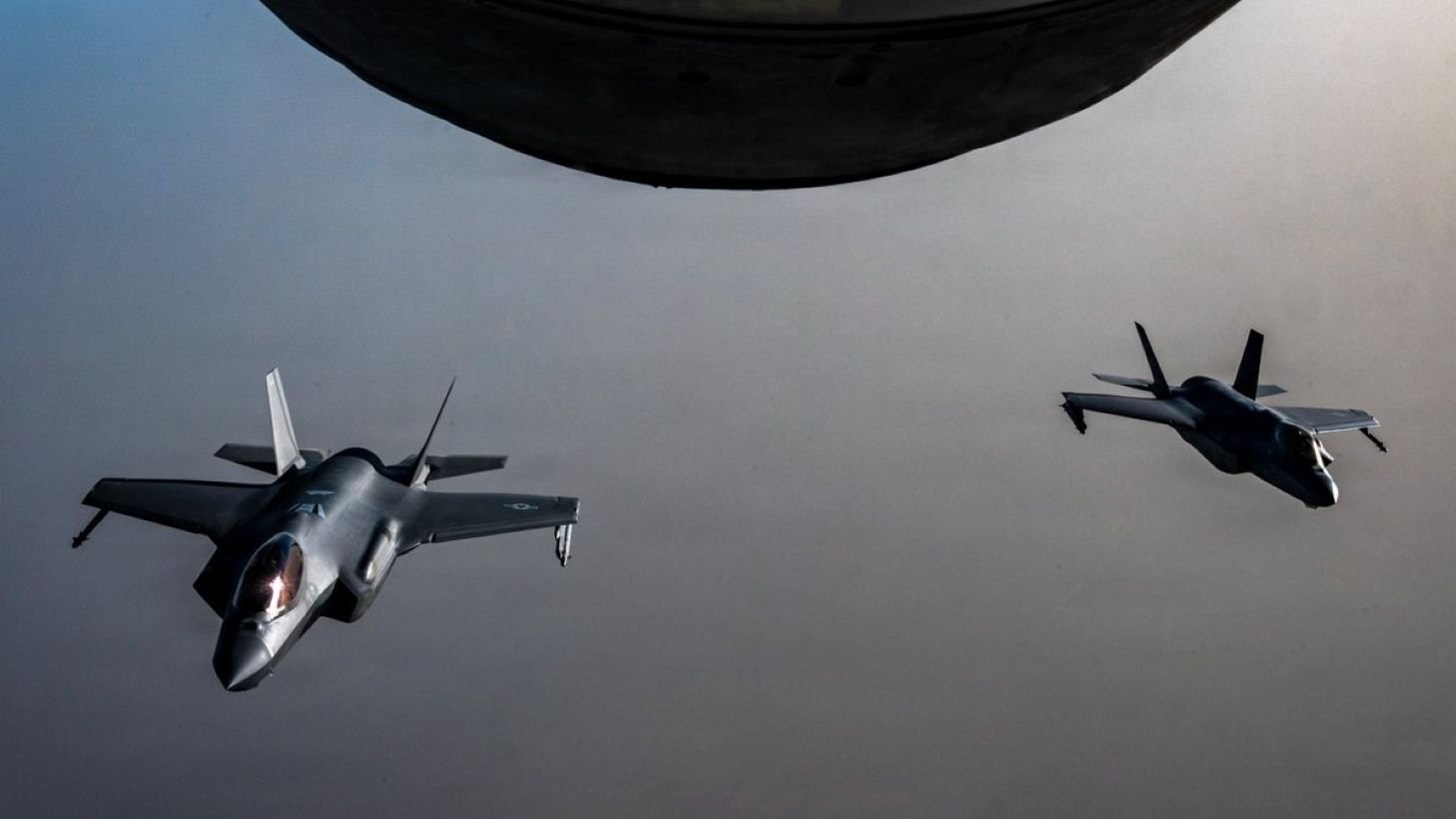 House panel releases FY27 defense spending billThe House Appropriations Committee has released its fiscal 2027 defense bill, described in the provided reports as roughly $1 trillion to $1.1 trillion. The measure covers most of the Pentagon’s $1.15 trillion discretionary request, while military construction funding is handled separately. The Defense subcommittee is scheduled to mark up the bill on Thursday, with full committee consideration set for June 24. According to the bill, it would fund a total end strength of 2,112,200 military personnel, 44,500 above the fiscal 2026 authorized level. It also supports tiered military pay raises requested by the administration: 7% for E-5 and below, 6% for E-6 through O-3, and 5% for O-4 and above. Munitions, procurement, and major Pentagon-wide fundingThe legislation provides about $248 billion for procurement, $221 billion for research and development, $335.3 billion for operations and maintenance, and $204.1 billion for personnel accounts. Munitions production is a central focus. Lawmakers included $10.6 billion for critical weapons such as PAC-3, THAAD, and Tomahawk, along with $836 million for first-time procurement of low-cost munitions. The bill would also authorize about a dozen multiyear procurement deals, allowing the Pentagon to move ahead with longer-term contracting for systems including PAC-3 and THAAD. Other major items include full funding for F-35 procurement at $6.9 billion and roughly $380 million to $400 million for the Golden Dome missile defense effort. The bill also directs more than $7.5 billion to hypersonic weapons and testing, and about $2 billion to drone and counter-drone programs, including $1 billion for the Defense Autonomous Warfare Group and $1.4 billion for Joint Interagency Task Force 401. Air Force and Space Force programsFor the Air Force, the most notable change is the restoration of nearly $1.6 billion for E-7 Wedgetail development after earlier plans to cancel the program again in FY27. The bill also funds 15 KC-46 aircraft at $3.5 billion, 24 F-15EX fighters at $2.6 billion, $2.2 billion for B-21 Raider procurement, and $977 million for Collaborative Combat Aircraft. It also includes $660 million for three Compass Call aircraft, $300 million for additional Air National Guard C-130Js, $5 billion for F-47 development, $2.8 billion for further B-21 development, and $355 million for the Family of Affordable Mass Missiles. For the Space Force, appropriators included $3.7 billion for 20 launch services and $680.9 million for two GPS III Follow-On satellites, plus $200 million for Next Generation Overhead Persistent Infrared Polar spacecraft and $100.7 million for commercial space services. Navy, Marine Corps, and Army fundingThe bill provides $56.7 billion for 21 ships, including 11 battle force ships: one Columbia-class submarine, two Virginia-class submarines, one frigate, one destroyer, one amphibious assault ship, one amphibious transport dock, two oilers, one AS(X) submarine tender, and one T-AGOS SURTASS ship. It also includes $828 million for the submarine industrial base, $1.3 billion for shipyard productivity improvements, and $471 million for wage enhancements. Naval aviation funding includes $2.1 billion for six E-2D aircraft, $771 million for three MQ-25 drones, $3 billion for 22 CH-53K helicopters, and $1.6 billion for 11 KC-130Js for the Marine Corps and Navy Reserve. For the Army, lawmakers added funding for additional UH/HH-60M Black Hawks and CH-47F Block II Chinooks, $661.2 million for M109A7 and M992A3 vehicles, $655 million to upgrade 22 Abrams tanks to the M1A2 SEP v3 standard, $1.1 billion for Armored Multi-Purpose Vehicles, and $2.1 billion for the Future Long Range Assault Aircraft program. Political debate and separate funding requestsRepublican appropriators said the bill strengthens support for service members and addresses lessons from recent conflicts through heavier investment in munitions, weapons, and newer technology. Democratic lawmakers criticized the measure’s size, arguing that record defense spending could come at the expense of domestic priorities.
 -
House panel releases FY27 defense spending billThe House Appropriations Committee has released its fiscal 2027 defense bill, described in the provided reports as roughly $1 trillion to $1.1 trillion. The measure covers most of the Pentagon’s $1.15 trillion discretionary request, while military construction funding is handled separately. The Defense subcommittee is scheduled to mark up the bill on Thursday, with full committee consideration set for June 24. According to the bill, it would fund a total end strength of 2,112,200 military personnel, 44,500 above the fiscal 2026 authorized level. It also supports tiered military pay raises requested by the administration: 7% for E-5 and below, 6% for E-6 through O-3, and 5% for O-4 and above. Munitions, procurement, and major Pentagon-wide fundingThe legislation provides about $248 billion for procurement, $221 billion for research and development, $335.3 billion for operations and maintenance, and $204.1 billion for personnel accounts. Munitions production is a central focus. Lawmakers included $10.6 billion for critical weapons such as PAC-3, THAAD, and Tomahawk, along with $836 million for first-time procurement of low-cost munitions. The bill would also authorize about a dozen multiyear procurement deals, allowing the Pentagon to move ahead with longer-term contracting for systems including PAC-3 and THAAD. Other major items include full funding for F-35 procurement at $6.9 billion and roughly $380 million to $400 million for the Golden Dome missile defense effort. The bill also directs more than $7.5 billion to hypersonic weapons and testing, and about $2 billion to drone and counter-drone programs, including $1 billion for the Defense Autonomous Warfare Group and $1.4 billion for Joint Interagency Task Force 401. Air Force and Space Force programsFor the Air Force, the most notable change is the restoration of nearly $1.6 billion for E-7 Wedgetail development after earlier plans to cancel the program again in FY27. The bill also funds 15 KC-46 aircraft at $3.5 billion, 24 F-15EX fighters at $2.6 billion, $2.2 billion for B-21 Raider procurement, and $977 million for Collaborative Combat Aircraft. It also includes $660 million for three Compass Call aircraft, $300 million for additional Air National Guard C-130Js, $5 billion for F-47 development, $2.8 billion for further B-21 development, and $355 million for the Family of Affordable Mass Missiles. For the Space Force, appropriators included $3.7 billion for 20 launch services and $680.9 million for two GPS III Follow-On satellites, plus $200 million for Next Generation Overhead Persistent Infrared Polar spacecraft and $100.7 million for commercial space services. Navy, Marine Corps, and Army fundingThe bill provides $56.7 billion for 21 ships, including 11 battle force ships: one Columbia-class submarine, two Virginia-class submarines, one frigate, one destroyer, one amphibious assault ship, one amphibious transport dock, two oilers, one AS(X) submarine tender, and one T-AGOS SURTASS ship. It also includes $828 million for the submarine industrial base, $1.3 billion for shipyard productivity improvements, and $471 million for wage enhancements. Naval aviation funding includes $2.1 billion for six E-2D aircraft, $771 million for three MQ-25 drones, $3 billion for 22 CH-53K helicopters, and $1.6 billion for 11 KC-130Js for the Marine Corps and Navy Reserve. For the Army, lawmakers added funding for additional UH/HH-60M Black Hawks and CH-47F Block II Chinooks, $661.2 million for M109A7 and M992A3 vehicles, $655 million to upgrade 22 Abrams tanks to the M1A2 SEP v3 standard, $1.1 billion for Armored Multi-Purpose Vehicles, and $2.1 billion for the Future Long Range Assault Aircraft program. Political debate and separate funding requestsRepublican appropriators said the bill strengthens support for service members and addresses lessons from recent conflicts through heavier investment in munitions, weapons, and newer technology. Democratic lawmakers criticized the measure’s size, arguing that record defense spending could come at the expense of domestic priorities. View full article
-
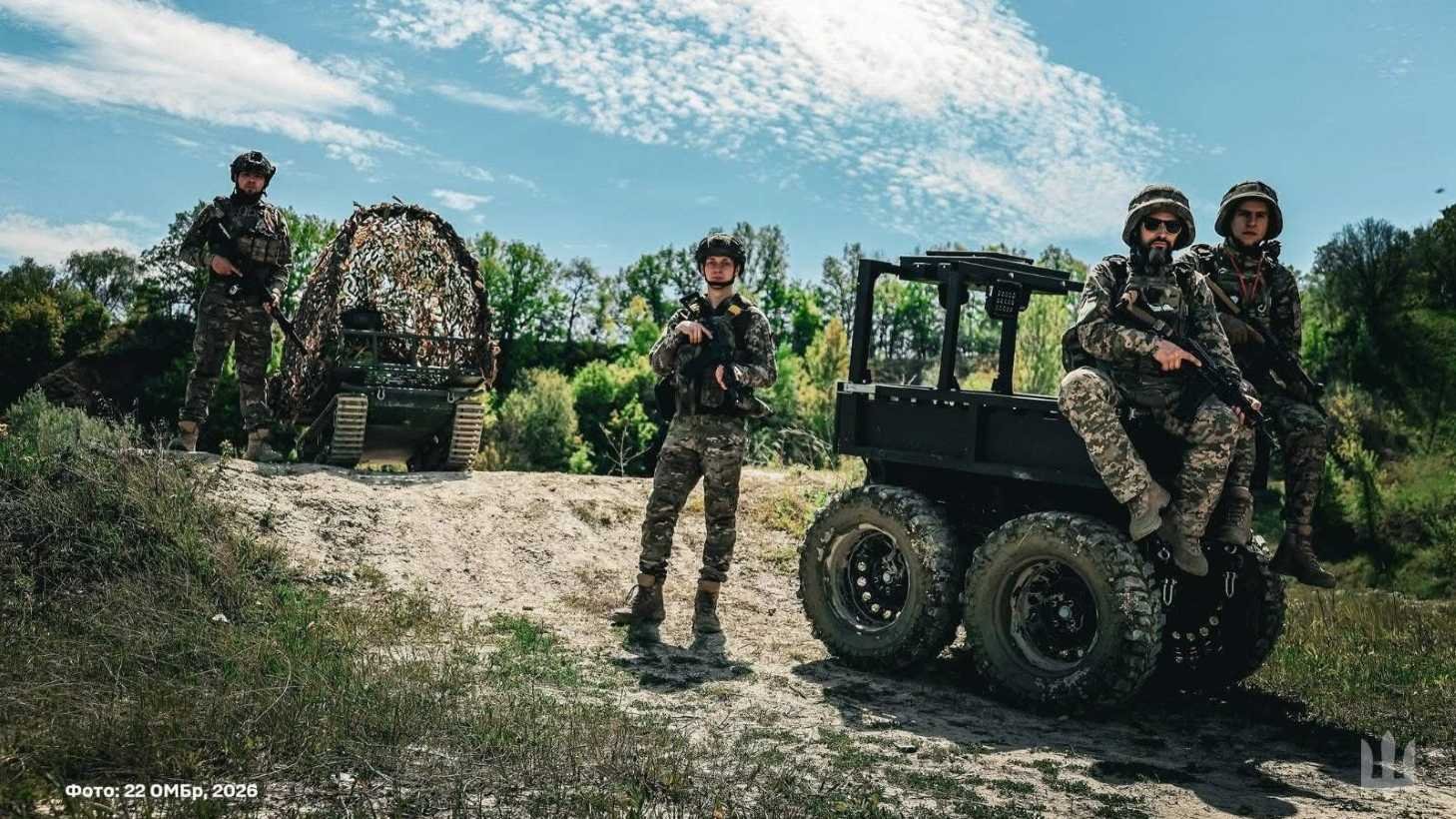 Ukraine Reports Net Territorial Gains in MayUkrainian forces recaptured more territory than they lost along the front in May, Commander-in-Chief Oleksandr Syrskyi said on June 8. He said Ukraine regained nearly 100 square kilometers more than Russia captured during the month, bringing Ukraine’s total gains since the start of 2026 to more than 600 square kilometers. Syrskyi did not specify how much territory was liberated in May. A June 1 assessment by the monitoring group DeepState had also said Ukraine gained more ground than Russia occupied during the month, describing it as the first monthly net decline in Russian advances since 2023. The front remains “complex and fluid,” Syrskyi said, with Russian forces continuing offensive attempts in eastern and southern Ukraine amid increased combat activity. He identified the heaviest fighting in the Pokrovsk sector in Donetsk Oblast, the Oleksandrivka sector at the junction of Donetsk, Zaporizhzhia, and Dnipropetrovsk Oblasts, and the Huliaipole sector in Zaporizhzhia Oblast. He added that Ukrainian forces retain the initiative in some areas. Combat Activity and Rear-Area StrikesSyrskyi said Ukrainian forces struck more than 88,000 Russian military targets in the past month and killed or wounded over 30,500 Russian troops. He also said Ukrainian deep-strike operations hit 111 Russian military-industrial, energy, and oil infrastructure facilities, causing an estimated $1.058 billion in damage. On June 8, Ukraine’s General Staff confirmed overnight strikes on several Russian targets, including the Grushevaya oil depot near Grushevaya Balka in Krasnodar Krai, where a fire was reported, and the Krasny Yar Line Production Dispatch Station in Volgograd Oblast, another oil transport facility where a fire also reportedly broke out. Ukraine also reported a strike on a radar station near Kabardinka in Krasnodar Krai. Additional strikes were reported against Russian drone command posts near Novobohdanivka and Novoivanivka in Zaporizhzhia Oblast, Voskresenka in Donetsk Oblast, and Cherkaska Konopelka in Russia’s Kursk Oblast. Ukraine also reported hits on a drone workshop, logistics depots, and troop concentrations in several locations. Russia’s Defense Ministry said its air defenses shot down 310 Ukrainian drones overnight across Russian regions, occupied Crimea, and the Black Sea and Sea of Azov. Shipping Corridor and Civilian ImpactSyrskyi said the Ukrainian Navy carried out about 1,500 operations in May to secure civilian shipping in the combat zone, enabling 633 vessels to reach ports in Odesa and along the Danube River. At the same time, Russian attacks across Ukraine over the previous day killed at least eight people and injured 52, according to reports. Moscow Rejects New Peace PushSenior Russian officials on June 8 dismissed recent Ukrainian and European proposals to restart negotiations, signaling that Moscow remains focused on battlefield developments. President Volodymyr Zelensky had called for renewed talks with Russia and proposed a meeting with Russian President Vladimir Putin. On June 7, the leaders of France, Germany, the United Kingdom, and Ukraine issued a joint statement calling for an immediate comprehensive ceasefire and negotiations based on the current line of contact. Russian Foreign Minister Sergey Lavrov rejected that approach, saying, “Right now, everything depends not on negotiations, but on the actions of our heroes on the front lines.” Kremlin spokesperson Dmitry Peskov also criticized European governments for calling for peace while continuing military support for Ukraine. According to reports, Kyiv sees freezing the current front as the most realistic basis for a ceasefire, while Russia continues to demand a Ukrainian withdrawal from parts of Donbas. NATO Downs Drone Over LatviaLatvia’s military said French fighter jets participating in NATO’s Baltic Air Policing mission shot down a drone that entered Latvian airspace on June 8. It was described as the first such interception by NATO forces over Latvia. According to Latvia’s military, the drone had been diverted by Russian electronic warfare systems.
 -
Ukraine Reports Net Territorial Gains in MayUkrainian forces recaptured more territory than they lost along the front in May, Commander-in-Chief Oleksandr Syrskyi said on June 8. He said Ukraine regained nearly 100 square kilometers more than Russia captured during the month, bringing Ukraine’s total gains since the start of 2026 to more than 600 square kilometers. Syrskyi did not specify how much territory was liberated in May. A June 1 assessment by the monitoring group DeepState had also said Ukraine gained more ground than Russia occupied during the month, describing it as the first monthly net decline in Russian advances since 2023. The front remains “complex and fluid,” Syrskyi said, with Russian forces continuing offensive attempts in eastern and southern Ukraine amid increased combat activity. He identified the heaviest fighting in the Pokrovsk sector in Donetsk Oblast, the Oleksandrivka sector at the junction of Donetsk, Zaporizhzhia, and Dnipropetrovsk Oblasts, and the Huliaipole sector in Zaporizhzhia Oblast. He added that Ukrainian forces retain the initiative in some areas. Combat Activity and Rear-Area StrikesSyrskyi said Ukrainian forces struck more than 88,000 Russian military targets in the past month and killed or wounded over 30,500 Russian troops. He also said Ukrainian deep-strike operations hit 111 Russian military-industrial, energy, and oil infrastructure facilities, causing an estimated $1.058 billion in damage. On June 8, Ukraine’s General Staff confirmed overnight strikes on several Russian targets, including the Grushevaya oil depot near Grushevaya Balka in Krasnodar Krai, where a fire was reported, and the Krasny Yar Line Production Dispatch Station in Volgograd Oblast, another oil transport facility where a fire also reportedly broke out. Ukraine also reported a strike on a radar station near Kabardinka in Krasnodar Krai. Additional strikes were reported against Russian drone command posts near Novobohdanivka and Novoivanivka in Zaporizhzhia Oblast, Voskresenka in Donetsk Oblast, and Cherkaska Konopelka in Russia’s Kursk Oblast. Ukraine also reported hits on a drone workshop, logistics depots, and troop concentrations in several locations. Russia’s Defense Ministry said its air defenses shot down 310 Ukrainian drones overnight across Russian regions, occupied Crimea, and the Black Sea and Sea of Azov. Shipping Corridor and Civilian ImpactSyrskyi said the Ukrainian Navy carried out about 1,500 operations in May to secure civilian shipping in the combat zone, enabling 633 vessels to reach ports in Odesa and along the Danube River. At the same time, Russian attacks across Ukraine over the previous day killed at least eight people and injured 52, according to reports. Moscow Rejects New Peace PushSenior Russian officials on June 8 dismissed recent Ukrainian and European proposals to restart negotiations, signaling that Moscow remains focused on battlefield developments. President Volodymyr Zelensky had called for renewed talks with Russia and proposed a meeting with Russian President Vladimir Putin. On June 7, the leaders of France, Germany, the United Kingdom, and Ukraine issued a joint statement calling for an immediate comprehensive ceasefire and negotiations based on the current line of contact. Russian Foreign Minister Sergey Lavrov rejected that approach, saying, “Right now, everything depends not on negotiations, but on the actions of our heroes on the front lines.” Kremlin spokesperson Dmitry Peskov also criticized European governments for calling for peace while continuing military support for Ukraine. According to reports, Kyiv sees freezing the current front as the most realistic basis for a ceasefire, while Russia continues to demand a Ukrainian withdrawal from parts of Donbas. NATO Downs Drone Over LatviaLatvia’s military said French fighter jets participating in NATO’s Baltic Air Policing mission shot down a drone that entered Latvian airspace on June 8. It was described as the first such interception by NATO forces over Latvia. According to Latvia’s military, the drone had been diverted by Russian electronic warfare systems. View full article
-
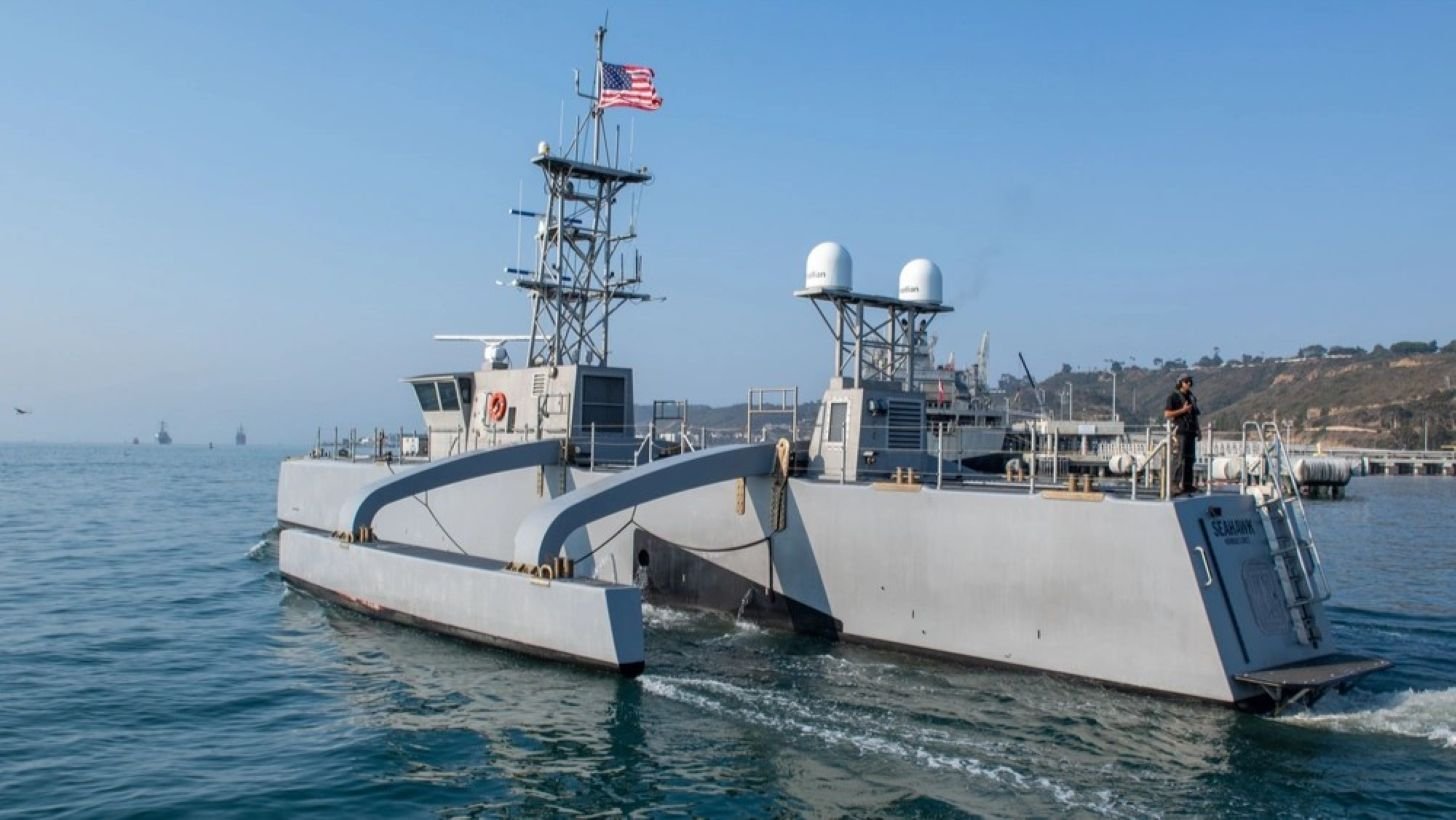 Navy expands MUSV competitionThe U.S. Navy has selected seven companies to advance to prototype testing for its Medium Unmanned Surface Vessel program: Sea Machines, Leidos, Saronic Technologies, Galliano Marine Services, PacMar Technologies, Birdon, and Huntington Ingalls Industries. According to the Navy, vessels that successfully complete at-sea trials will receive $15 million and become eligible for follow-on production. The service said testing is expected to conclude by October, with an initial goal of making MUSVs available to lease or procure in fiscal 2027. After trials, the selected contractor is expected to be prepared to field five to 10 operational MUSVs in FY2027. Shift toward faster acquisitionThe MUSV effort is part of a broader Navy push to expand its unmanned surface fleet, with officials aiming to grow from four to 30 vessels in the Indo-Pacific by 2030. In March, the Navy replaced its Modular Attack Surface Craft program with a new MUSV marketplace intended to move beyond prolonged prototyping and focus on production-ready, mission-capable platforms. The service said the approach is meant to open the field to smaller, non-traditional shipyards and to use mature commercial solutions where possible. Navy Times report said the marketplace received roughly $2.1 billion in funding through President Donald Trump’s “One Big Beautiful Bill.” The Navy has described the marketplace as a recurring process rather than a one-time competition. Seahawk deployment marks operational stepSeparately, per a Breaking Defense report, the Navy has said the aircraft carrier Theodore Roosevelt will deploy with a Seahawk MUSV as part of its strike group, the first such deployment for the vessel in a carrier formation. Seahawk, built by Leidos and derived from the Sea Hunter program, supports anti-submarine warfare and maritime domain awareness. The Navy previously sent four unmanned ships — Sea Hunter, Sea Hawk, Mariner, and Ranger — to the Indo-Pacific for a five-month deployment in 2024, and those vessels remain in use for further development of the program. An earlier Western Pacific deployment in 2023 also included Sea Hunter and Seahawk. Navy leaders have pointed to the Theodore Roosevelt deployment as a way to develop concepts of operations for integrating unmanned systems with crewed ships. Chief of Naval Operations Adm. Daryl Caudle has tied that effort to a broader “hedge force strategy” and has highlighted contested logistics, including moving food and parts without putting sailors at risk, as a major use case. Performance requirementsThe latest solicitation calls for a vessel able to travel 2,500 nautical miles at 25 knots while carrying a 25-ton payload in moderate conditions. The MUSV must operate autonomously day and night, function in moderate to rough seas autonomously, and remain survivable through sea state 7. It must also be able to restrict all radio-frequency emissions on command, continue autonomous operation in a passive no-emissions mode, and monitor and report its own health and status to an offboard command-and-control station. Policy and oversightThe Navy has not publicly detailed exactly how Seahawk will be employed on the Theodore Roosevelt deployment, but officials and analysts cited in the provided reports expect the deployment to inform both fleet tactics and future procurement choices. Congress is also pressing for clearer planning. A House Armed Services Committee proposal released in May would require the Navy to verify that concepts of operations for unmanned systems are in place before accepting a USV and would direct the service to produce a broader fleet integration strategy.
 -
Navy expands MUSV competitionThe U.S. Navy has selected seven companies to advance to prototype testing for its Medium Unmanned Surface Vessel program: Sea Machines, Leidos, Saronic Technologies, Galliano Marine Services, PacMar Technologies, Birdon, and Huntington Ingalls Industries. According to the Navy, vessels that successfully complete at-sea trials will receive $15 million and become eligible for follow-on production. The service said testing is expected to conclude by October, with an initial goal of making MUSVs available to lease or procure in fiscal 2027. After trials, the selected contractor is expected to be prepared to field five to 10 operational MUSVs in FY2027. Shift toward faster acquisitionThe MUSV effort is part of a broader Navy push to expand its unmanned surface fleet, with officials aiming to grow from four to 30 vessels in the Indo-Pacific by 2030. In March, the Navy replaced its Modular Attack Surface Craft program with a new MUSV marketplace intended to move beyond prolonged prototyping and focus on production-ready, mission-capable platforms. The service said the approach is meant to open the field to smaller, non-traditional shipyards and to use mature commercial solutions where possible. Navy Times report said the marketplace received roughly $2.1 billion in funding through President Donald Trump’s “One Big Beautiful Bill.” The Navy has described the marketplace as a recurring process rather than a one-time competition. Seahawk deployment marks operational stepSeparately, per a Breaking Defense report, the Navy has said the aircraft carrier Theodore Roosevelt will deploy with a Seahawk MUSV as part of its strike group, the first such deployment for the vessel in a carrier formation. Seahawk, built by Leidos and derived from the Sea Hunter program, supports anti-submarine warfare and maritime domain awareness. The Navy previously sent four unmanned ships — Sea Hunter, Sea Hawk, Mariner, and Ranger — to the Indo-Pacific for a five-month deployment in 2024, and those vessels remain in use for further development of the program. An earlier Western Pacific deployment in 2023 also included Sea Hunter and Seahawk. Navy leaders have pointed to the Theodore Roosevelt deployment as a way to develop concepts of operations for integrating unmanned systems with crewed ships. Chief of Naval Operations Adm. Daryl Caudle has tied that effort to a broader “hedge force strategy” and has highlighted contested logistics, including moving food and parts without putting sailors at risk, as a major use case. Performance requirementsThe latest solicitation calls for a vessel able to travel 2,500 nautical miles at 25 knots while carrying a 25-ton payload in moderate conditions. The MUSV must operate autonomously day and night, function in moderate to rough seas autonomously, and remain survivable through sea state 7. It must also be able to restrict all radio-frequency emissions on command, continue autonomous operation in a passive no-emissions mode, and monitor and report its own health and status to an offboard command-and-control station. Policy and oversightThe Navy has not publicly detailed exactly how Seahawk will be employed on the Theodore Roosevelt deployment, but officials and analysts cited in the provided reports expect the deployment to inform both fleet tactics and future procurement choices. Congress is also pressing for clearer planning. A House Armed Services Committee proposal released in May would require the Navy to verify that concepts of operations for unmanned systems are in place before accepting a USV and would direct the service to produce a broader fleet integration strategy. View full article
-
 U.K. intelligence chief cites new estimate of Russian war deadAnne Keast-Butler, director of the United Kingdom’s Government Communications Headquarters, said on May 27 that nearly 500,000 Russian soldiers have been killed since the start of Russia’s full-scale invasion of Ukraine in February 2022. In remarks described as based on “new intelligence,” Keast-Butler did not provide a precise casualty figure or detail the methodology behind the estimate. The comments came during her first public speech as head of GCHQ, the U.K. agency responsible for signals intelligence, cyber operations, and security. Estimate exceeds recent independent Russian talliesThe new U.K. assessment is notably higher than estimates published earlier in May by independent Russian outlets Mediazona and Meduza. Their joint analysis estimated that 352,000 Russian men aged 18 to 59 had been killed since the invasion began. Mediazona, working with BBC Russian Service, has separately verified the identities of 221,206 Russian service members killed in Ukraine as of May 22. That count is based on publicly available evidence, including obituaries, cemetery records, and social media posts, and is generally considered a minimum confirmed figure rather than a full accounting. Because Russia does not regularly publish official casualty data, outside estimates rely on intelligence assessments, open-source documentation, and statistical analysis, which can produce wide differences in totals. Speech links battlefield losses to broader security concernsKeast-Butler used the address to outline intelligence challenges facing the United Kingdom, with Russia presented as a central threat. She said Moscow is increasing what she described as hybrid activity targeting the U.K. and Europe across multiple domains. “Russia is scaling up its daily hybrid activity against the UK and Europe, stretching from the seabed to cyberspace,” she said, while also arguing that President Vladimir Putin is “going backwards on the battlefield.” Her comments connected the casualty estimate to a wider assessment of Russian military pressure and non-military operations, including cyber and infrastructure-related threats. Other Western assessments point to heavier Russian lossesIndependent Western studies have also concluded that Russian losses are substantially higher than Ukraine’s, though they use different definitions and timeframes. A January 2026 report by the Center for Strategic and International Studies said Russian casualties were roughly two to 2.5 times greater than Ukrainian losses. The CSIS report estimated that Ukraine suffered between 500,000 and 600,000 total casualties from February 2022 through December 2025, including approximately 100,000 to 140,000 troops killed in action. Those figures refer to total casualties, a military term that can include those killed, wounded, captured, or otherwise removed from combat, making direct comparisons with estimates of deaths alone difficult. Kyiv and Moscow continue to provide limited public dataMoscow has not disclosed a current official death toll for its forces. Ukraine also releases limited information on its own military losses. In an interview with France TV on Feb. 4, President Volodymyr Zelensky said at least 55,000 Ukrainian soldiers had been killed on the battlefield since the start of the full-scale war. Ukraine’s General Staff said on May 27 that Russia had lost about 1,358,950 troops since Feb. 24, 2022. That figure is understood to include personnel killed, injured, captured, and missing, rather than deaths alone. The differing estimates underscore the difficulty of measuring battlefield losses in a war where official reporting is restricted and many assessments depend on either classified intelligence or partial open-source records.
 -
U.K. intelligence chief cites new estimate of Russian war deadAnne Keast-Butler, director of the United Kingdom’s Government Communications Headquarters, said on May 27 that nearly 500,000 Russian soldiers have been killed since the start of Russia’s full-scale invasion of Ukraine in February 2022. In remarks described as based on “new intelligence,” Keast-Butler did not provide a precise casualty figure or detail the methodology behind the estimate. The comments came during her first public speech as head of GCHQ, the U.K. agency responsible for signals intelligence, cyber operations, and security. Estimate exceeds recent independent Russian talliesThe new U.K. assessment is notably higher than estimates published earlier in May by independent Russian outlets Mediazona and Meduza. Their joint analysis estimated that 352,000 Russian men aged 18 to 59 had been killed since the invasion began. Mediazona, working with BBC Russian Service, has separately verified the identities of 221,206 Russian service members killed in Ukraine as of May 22. That count is based on publicly available evidence, including obituaries, cemetery records, and social media posts, and is generally considered a minimum confirmed figure rather than a full accounting. Because Russia does not regularly publish official casualty data, outside estimates rely on intelligence assessments, open-source documentation, and statistical analysis, which can produce wide differences in totals. Speech links battlefield losses to broader security concernsKeast-Butler used the address to outline intelligence challenges facing the United Kingdom, with Russia presented as a central threat. She said Moscow is increasing what she described as hybrid activity targeting the U.K. and Europe across multiple domains. “Russia is scaling up its daily hybrid activity against the UK and Europe, stretching from the seabed to cyberspace,” she said, while also arguing that President Vladimir Putin is “going backwards on the battlefield.” Her comments connected the casualty estimate to a wider assessment of Russian military pressure and non-military operations, including cyber and infrastructure-related threats. Other Western assessments point to heavier Russian lossesIndependent Western studies have also concluded that Russian losses are substantially higher than Ukraine’s, though they use different definitions and timeframes. A January 2026 report by the Center for Strategic and International Studies said Russian casualties were roughly two to 2.5 times greater than Ukrainian losses. The CSIS report estimated that Ukraine suffered between 500,000 and 600,000 total casualties from February 2022 through December 2025, including approximately 100,000 to 140,000 troops killed in action. Those figures refer to total casualties, a military term that can include those killed, wounded, captured, or otherwise removed from combat, making direct comparisons with estimates of deaths alone difficult. Kyiv and Moscow continue to provide limited public dataMoscow has not disclosed a current official death toll for its forces. Ukraine also releases limited information on its own military losses. In an interview with France TV on Feb. 4, President Volodymyr Zelensky said at least 55,000 Ukrainian soldiers had been killed on the battlefield since the start of the full-scale war. Ukraine’s General Staff said on May 27 that Russia had lost about 1,358,950 troops since Feb. 24, 2022. That figure is understood to include personnel killed, injured, captured, and missing, rather than deaths alone. The differing estimates underscore the difficulty of measuring battlefield losses in a war where official reporting is restricted and many assessments depend on either classified intelligence or partial open-source records. View full article
-
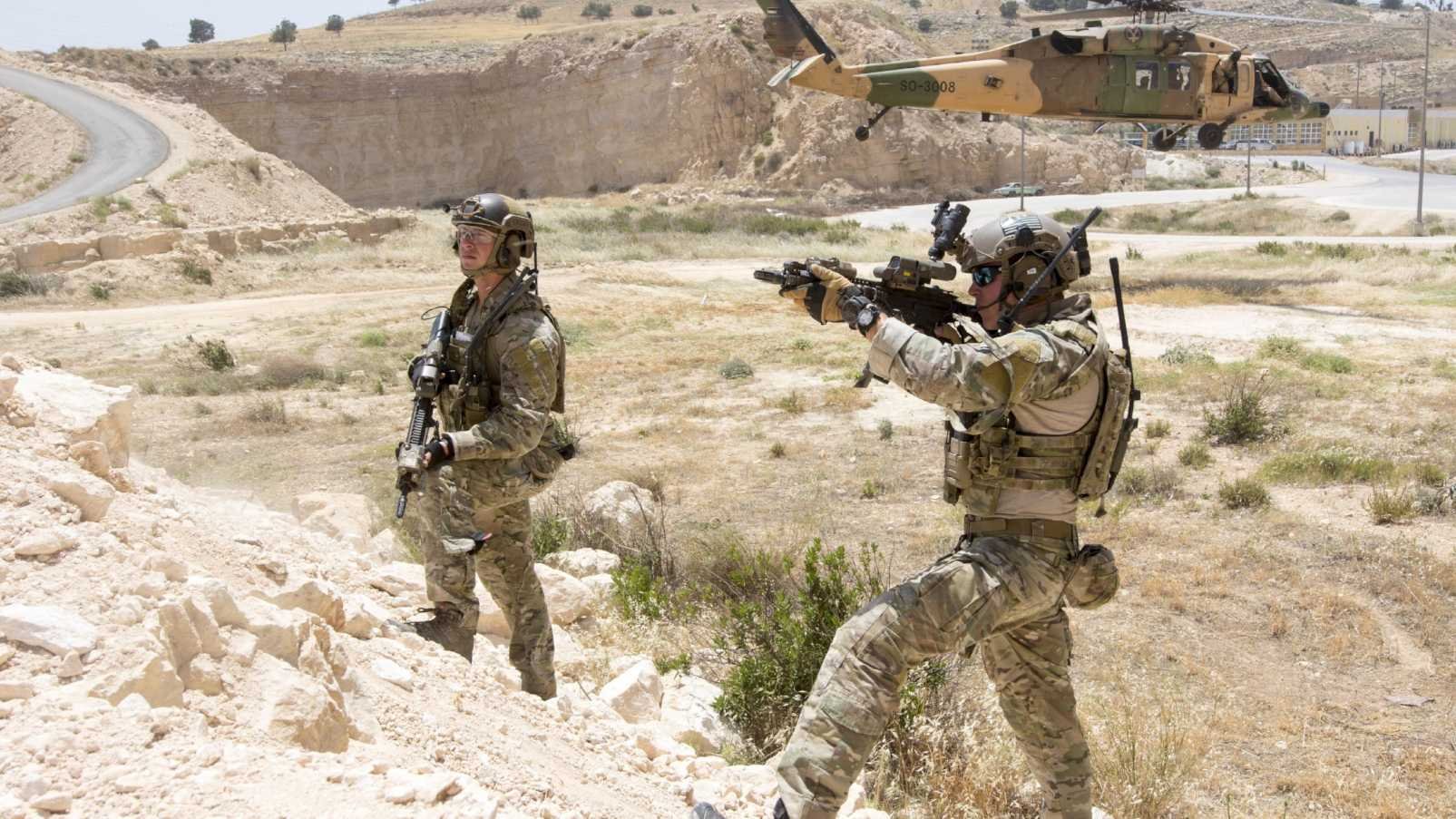 USSOCOM Starts HICAR Effort for Extended-Range M4A1U.S. Special Operations Command on May 18, 2026 released a Naval Surface Warfare Center solicitation for the Hypervelocity Improved Capability Assault Rifle, or HICAR, a pressure-tolerant upper receiver for the M4A1 family. The program aims to extend the practical combat range of URG-I-configured M4 carbines from about 300 meters to 600 meters while preserving the existing 5.56×45mm NATO ecosystem. Rather than moving to the 6.8×51mm cartridge used in the Army’s XM7, HICAR is designed to keep compatibility with current M4A1 lower receivers, STANAG magazines, SOCOM optics, suppressors, laser aiming devices, and support equipment. USSOCOM’s approach reflects a requirement to retain compact handling for close-quarters battle, vehicle use, airborne operations, and maritime missions while avoiding a separate ammunition and sustainment chain. Hypervelocity 5.56 at Much Higher PressureThe key enabler is an experimental M855A1+ hypervelocity round loaded to about 82,000 psi, or 5,654 bar. Standard M855A1 operates at roughly 62,000 psi, or 4,275 bar. USSOCOM expects the higher pressure to increase muzzle velocity from 11- to 12-inch barrels, improving velocity retention, terminal energy, barrier penetration, and supersonic flight at longer distance. The solicitation requires the new upper to fire both standard 5.56 NATO ammunition and the M855A1+ load. By prioritizing velocity growth instead of a larger caliber, USSOCOM is seeking greater lethality without reducing magazine capacity or changing AR-pattern ergonomics and ammunition dimensions. Tight Performance, Size, and Durability RequirementsThe requirement places significant limits on size and mass. Barrel length is fixed at 11 to 12 inches, unloaded weight must stay below 8 pounds without a suppressor, with 6.5 pounds listed as the objective, and overall length is capped at 31 inches, with a 28-inch objective depending on configuration. HICAR rifles must also function with the HUXWRX Flow 556k Black Magic suppressor, remain compatible with Gen3 PMAGs and M1913 rails, and operate after seawater immersion in temperatures from -40 to 165 degrees Fahrenheit. Accuracy standards call for a 1 MOA average mean radius threshold and a 0.5 MOA objective using Black Hills Mk262 ammunition at 100 meters. Reliability targets include 800 mean rounds between stoppages and 5,000 mean rounds between failure, with barrel life set at 8,000 rounds minimum and a 20,000-round objective under sustained M855A1+ use. Engineering Challenge Centers on Pressure ManagementThose targets create a substantial design problem. Sustained 82,000 psi operation increases bolt thrust and cyclic stress on locking lugs, extractor assemblies, bolt faces, barrel extensions, gas systems, suppressors, and receiver interfaces. Short barrels further complicate the issue because extraction begins under higher residual pressure while dwell time is reduced. As a result, vendors are expected to propose new steels, coatings, barrel technologies, revised gas timing, modified recoil systems, and reinforced locking or extension designs. Recent industry work that aligns with the requirement includes high-pressure 5.56 concepts from SIG Sauer, NAS3 steel-alloy case technology from Shell Shock Technologies, and PROOF Research’s PXT barrel technology for roughly 80,000 psi-class cartridges. Timeline and Broader ImplicationsWhite papers are due June 8, 2026, with selected vendors to be notified June 29. Live-fire demonstrations using government-furnished M855A1+ ammunition are scheduled for Sept. 15-16 at the U.S. Army Marksmanship Unit Parks Range at Fort Moore, Georgia. The effort is being managed through Other Transaction Authority and Commercial Solutions Opening procedures intended to shorten development timelines and broaden participation. HICAR is advancing alongside other USSOCOM small-arms efforts, including the 6.5 Creedmoor MRGG-A and limited evaluation of the SIG MG338. If successful, the upper receiver concept could offer a modernization path for a large existing M4/M4A1 inventory without replacing serialized lower receivers, provided...
 -
USSOCOM Starts HICAR Effort for Extended-Range M4A1U.S. Special Operations Command on May 18, 2026 released a Naval Surface Warfare Center solicitation for the Hypervelocity Improved Capability Assault Rifle, or HICAR, a pressure-tolerant upper receiver for the M4A1 family. The program aims to extend the practical combat range of URG-I-configured M4 carbines from about 300 meters to 600 meters while preserving the existing 5.56×45mm NATO ecosystem. Rather than moving to the 6.8×51mm cartridge used in the Army’s XM7, HICAR is designed to keep compatibility with current M4A1 lower receivers, STANAG magazines, SOCOM optics, suppressors, laser aiming devices, and support equipment. USSOCOM’s approach reflects a requirement to retain compact handling for close-quarters battle, vehicle use, airborne operations, and maritime missions while avoiding a separate ammunition and sustainment chain. Hypervelocity 5.56 at Much Higher PressureThe key enabler is an experimental M855A1+ hypervelocity round loaded to about 82,000 psi, or 5,654 bar. Standard M855A1 operates at roughly 62,000 psi, or 4,275 bar. USSOCOM expects the higher pressure to increase muzzle velocity from 11- to 12-inch barrels, improving velocity retention, terminal energy, barrier penetration, and supersonic flight at longer distance. The solicitation requires the new upper to fire both standard 5.56 NATO ammunition and the M855A1+ load. By prioritizing velocity growth instead of a larger caliber, USSOCOM is seeking greater lethality without reducing magazine capacity or changing AR-pattern ergonomics and ammunition dimensions. Tight Performance, Size, and Durability RequirementsThe requirement places significant limits on size and mass. Barrel length is fixed at 11 to 12 inches, unloaded weight must stay below 8 pounds without a suppressor, with 6.5 pounds listed as the objective, and overall length is capped at 31 inches, with a 28-inch objective depending on configuration. HICAR rifles must also function with the HUXWRX Flow 556k Black Magic suppressor, remain compatible with Gen3 PMAGs and M1913 rails, and operate after seawater immersion in temperatures from -40 to 165 degrees Fahrenheit. Accuracy standards call for a 1 MOA average mean radius threshold and a 0.5 MOA objective using Black Hills Mk262 ammunition at 100 meters. Reliability targets include 800 mean rounds between stoppages and 5,000 mean rounds between failure, with barrel life set at 8,000 rounds minimum and a 20,000-round objective under sustained M855A1+ use. Engineering Challenge Centers on Pressure ManagementThose targets create a substantial design problem. Sustained 82,000 psi operation increases bolt thrust and cyclic stress on locking lugs, extractor assemblies, bolt faces, barrel extensions, gas systems, suppressors, and receiver interfaces. Short barrels further complicate the issue because extraction begins under higher residual pressure while dwell time is reduced. As a result, vendors are expected to propose new steels, coatings, barrel technologies, revised gas timing, modified recoil systems, and reinforced locking or extension designs. Recent industry work that aligns with the requirement includes high-pressure 5.56 concepts from SIG Sauer, NAS3 steel-alloy case technology from Shell Shock Technologies, and PROOF Research’s PXT barrel technology for roughly 80,000 psi-class cartridges. Timeline and Broader ImplicationsWhite papers are due June 8, 2026, with selected vendors to be notified June 29. Live-fire demonstrations using government-furnished M855A1+ ammunition are scheduled for Sept. 15-16 at the U.S. Army Marksmanship Unit Parks Range at Fort Moore, Georgia. The effort is being managed through Other Transaction Authority and Commercial Solutions Opening procedures intended to shorten development timelines and broaden participation. HICAR is advancing alongside other USSOCOM small-arms efforts, including the 6.5 Creedmoor MRGG-A and limited evaluation of the SIG MG338. If successful, the upper receiver concept could offer a modernization path for a large existing M4/M4A1 inventory without replacing serialized lower receivers, provided... View full article
-
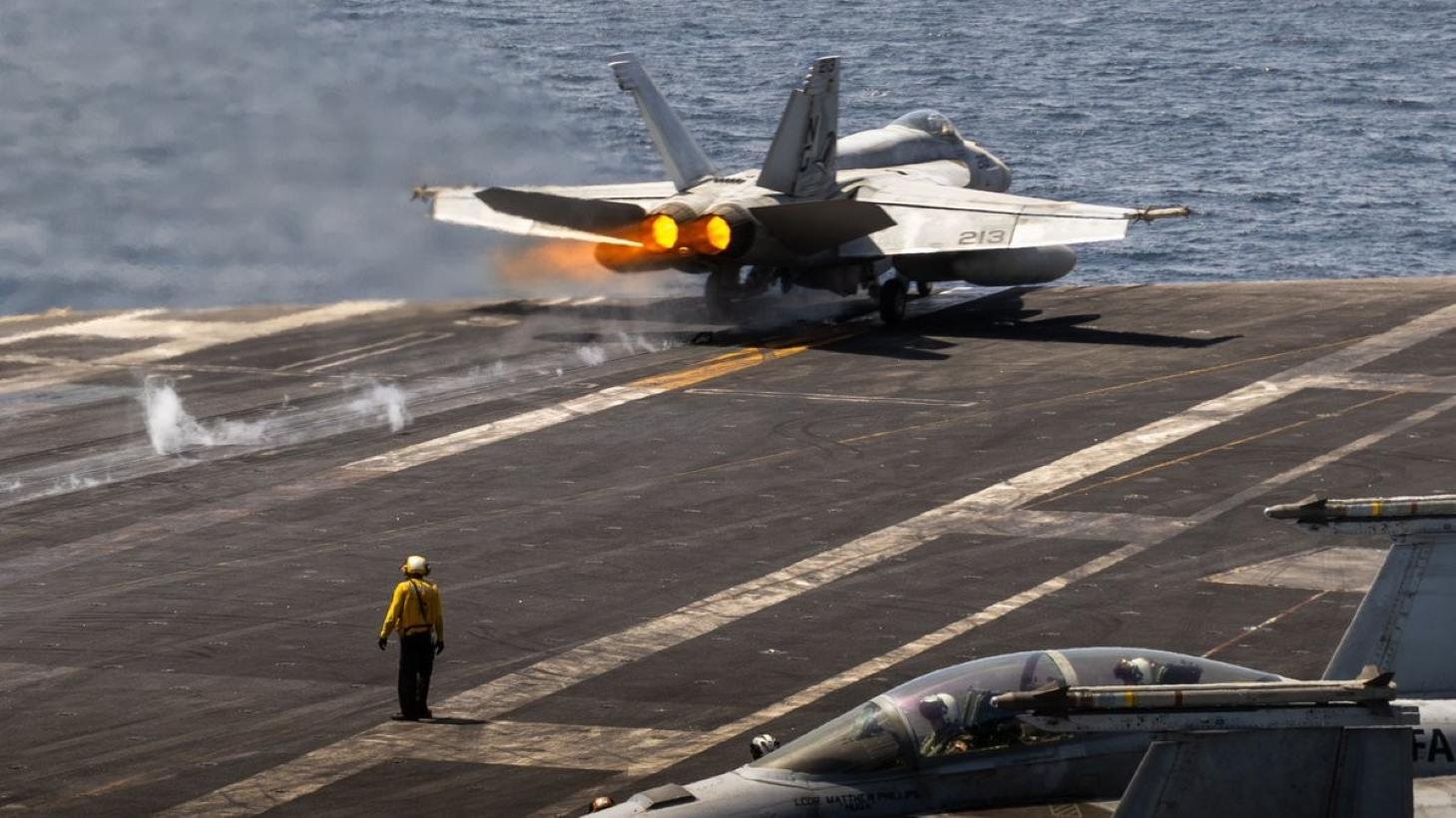 U.S. Reports Self-Defense Strikes Near Bandar AbbasU.S. forces carried out strikes on multiple Iranian targets in southern Iran on Monday night, with U.S. Central Command describing the action as self-defense. According to CENTCOM spokesperson Capt. Tim Hawkins, the operation was intended to protect U.S. troops from what he called threats posed by Iranian forces. In a statement, Hawkins said the targets included missile launch sites and Iranian boats that were attempting to emplace naval mines. He added that CENTCOM “continues to defend our forces while using restraint during the ongoing ceasefire.” Targets Included Launch Sites and Mine-Laying BoatsThe U.S. statement identified two categories of targets: missile launch positions and small Iranian boats operating near the Persian Gulf. CENTCOM did not specify how many launch sites were struck, how many boats were involved, or the extent of the damage. No operational details were released regarding the type of U.S. assets used in the strikes. CENTCOM did not say whether the attacks were carried out by aircraft, naval forces, or a combination of both. The command also did not publicly detail the specific threat indicators that prompted the response. The description of boats attempting to place mines is notable because mining activity in and around the Strait of Hormuz carries immediate implications for commercial shipping and naval movement through one of the world’s most important maritime chokepoints. Explosions Reported in Bandar Abbas AreaIranian media reported several explosions on Monday evening in Bandar Abbas and nearby areas. Bandar Abbas is a major Iranian port city on the Persian Gulf and a key hub for naval and commercial traffic. As of the latest reports, it remained unclear how many people were killed or injured, if any, and Iranian authorities had not provided a detailed casualty or damage assessment. Iran’s Mehr News Agency said the situation in the city was “completely under control,” but did not offer further operational information about the reported strikes or the sites affected. The lack of public detail from both sides left major questions unresolved, including the number of Iranian launchers destroyed and whether any infrastructure beyond the cited military targets was hit. Strait of Hormuz Tensions Remain HighThe strikes took place against a backdrop of continuing military tension in and around the Strait of Hormuz. The United States and Iran both maintain blockades affecting the strait, and their naval forces have been involved in repeated standoffs. In recent months, U.S. forces have shot down Iranian drones in waters near the strait and intercepted dozens of vessels, including some seized by force. The waterway remains strategically significant because it connects the Persian Gulf to global shipping lanes and is central to regional energy transit. Any indication of missile activity or mine placement in the area is therefore closely watched by military planners and commercial operators alike. First Direct Strikes in Weeks During CeasefireMonday’s operation marked the first direct U.S. strikes on Iranian territory in weeks, following the start of a tense ceasefire in April. Although open hostilities have eased compared with earlier phases of the conflict, the ceasefire has not eliminated military friction between the two sides. The strikes also came as Washington and Tehran continue negotiations aimed at ending the war. Earlier Monday, President Donald Trump said talks with Iran were “proceeding nicely,” underscoring the contrast between ongoing diplomacy and renewed military action. With few official details released beyond CENTCOM’s statement, the full significance of the strikes may depend on whether either side reports follow-on military activity or provides additional evidence about the threats cited by the United States.
 -
U.S. Reports Self-Defense Strikes Near Bandar AbbasU.S. forces carried out strikes on multiple Iranian targets in southern Iran on Monday night, with U.S. Central Command describing the action as self-defense. According to CENTCOM spokesperson Capt. Tim Hawkins, the operation was intended to protect U.S. troops from what he called threats posed by Iranian forces. In a statement, Hawkins said the targets included missile launch sites and Iranian boats that were attempting to emplace naval mines. He added that CENTCOM “continues to defend our forces while using restraint during the ongoing ceasefire.” Targets Included Launch Sites and Mine-Laying BoatsThe U.S. statement identified two categories of targets: missile launch positions and small Iranian boats operating near the Persian Gulf. CENTCOM did not specify how many launch sites were struck, how many boats were involved, or the extent of the damage. No operational details were released regarding the type of U.S. assets used in the strikes. CENTCOM did not say whether the attacks were carried out by aircraft, naval forces, or a combination of both. The command also did not publicly detail the specific threat indicators that prompted the response. The description of boats attempting to place mines is notable because mining activity in and around the Strait of Hormuz carries immediate implications for commercial shipping and naval movement through one of the world’s most important maritime chokepoints. Explosions Reported in Bandar Abbas AreaIranian media reported several explosions on Monday evening in Bandar Abbas and nearby areas. Bandar Abbas is a major Iranian port city on the Persian Gulf and a key hub for naval and commercial traffic. As of the latest reports, it remained unclear how many people were killed or injured, if any, and Iranian authorities had not provided a detailed casualty or damage assessment. Iran’s Mehr News Agency said the situation in the city was “completely under control,” but did not offer further operational information about the reported strikes or the sites affected. The lack of public detail from both sides left major questions unresolved, including the number of Iranian launchers destroyed and whether any infrastructure beyond the cited military targets was hit. Strait of Hormuz Tensions Remain HighThe strikes took place against a backdrop of continuing military tension in and around the Strait of Hormuz. The United States and Iran both maintain blockades affecting the strait, and their naval forces have been involved in repeated standoffs. In recent months, U.S. forces have shot down Iranian drones in waters near the strait and intercepted dozens of vessels, including some seized by force. The waterway remains strategically significant because it connects the Persian Gulf to global shipping lanes and is central to regional energy transit. Any indication of missile activity or mine placement in the area is therefore closely watched by military planners and commercial operators alike. First Direct Strikes in Weeks During CeasefireMonday’s operation marked the first direct U.S. strikes on Iranian territory in weeks, following the start of a tense ceasefire in April. Although open hostilities have eased compared with earlier phases of the conflict, the ceasefire has not eliminated military friction between the two sides. The strikes also came as Washington and Tehran continue negotiations aimed at ending the war. Earlier Monday, President Donald Trump said talks with Iran were “proceeding nicely,” underscoring the contrast between ongoing diplomacy and renewed military action. With few official details released beyond CENTCOM’s statement, the full significance of the strikes may depend on whether either side reports follow-on military activity or provides additional evidence about the threats cited by the United States. View full article
-
 FY26 active-duty goal reached ahead of scheduleThe U.S. Army said May 23 that it has met its fiscal year 2026 active-duty recruiting target, signing contracts with more than 61,500 future soldiers. According to the Army, the goal was reached four months before the end of the fiscal year. The announcement was issued by Army Public Affairs and applies specifically to active-duty enlisted recruiting. Factors cited in recruitment resultsIn the release, the Army attributed the result to a combination of outreach efforts, expanded career incentives, and an emphasis on recruiting for critical technical skills. Army officials said those measures supported enlistment efforts during FY26 and helped fill active-duty requirements earlier than planned. The service framed the outcome as part of its effort to maintain a force-sized and trained for current and emerging security demands. Statements from Army recruiting leadersBrig. Gen. Sara Dudley, commanding general of the U.S. Army Recruiting Division, said the result reflected the work of Army recruiters and their focus on bringing in qualified applicants. “I’m incredibly proud of our U.S. Army Recruiters,” Dudley said. “Their dedication to recruiting the best, most qualified talent is the reason we achieved this momentous milestone.” Command Sgt. Maj. Danny Basham, USARD command sergeant major, said the new recruits had chosen national service and highlighted the role of commitment and character in that decision. “The men and women who chose to serve are our nation are actively showing their commitment to something larger than themselves,” Basham said. “The nation depends on their strength, character and commitment.” USARD’s role in the recruiting structureThe U.S. Army Recruiting Division, or USARD, was activated in August 2025, less than a year before the FY26 recruiting goal was announced as complete. Its creation followed what the Army described as a transformational split with the U.S. Army Recruiting Command. Under that structure, USARD is focused solely on the Army’s enlisted recruiting mission. Division of responsibilities with USARECThe Army said U.S. Army Recruiting Command, or USAREC, continues to oversee the broader force generation pipeline. That portfolio includes marketing, recruiting, high school JROTC, college ROTC, and the process of transforming civilians into soldiers through initial military training. The May 23 announcement, therefore, marks an enlisted active-duty recruiting benchmark under the Army’s newer organizational arrangement, while the larger recruiting and accession enterprise remains split between USARD and USAREC.
 -
FY26 active-duty goal reached ahead of scheduleThe U.S. Army said May 23 that it has met its fiscal year 2026 active-duty recruiting target, signing contracts with more than 61,500 future soldiers. According to the Army, the goal was reached four months before the end of the fiscal year. The announcement was issued by Army Public Affairs and applies specifically to active-duty enlisted recruiting. Factors cited in recruitment resultsIn the release, the Army attributed the result to a combination of outreach efforts, expanded career incentives, and an emphasis on recruiting for critical technical skills. Army officials said those measures supported enlistment efforts during FY26 and helped fill active-duty requirements earlier than planned. The service framed the outcome as part of its effort to maintain a force-sized and trained for current and emerging security demands. Statements from Army recruiting leadersBrig. Gen. Sara Dudley, commanding general of the U.S. Army Recruiting Division, said the result reflected the work of Army recruiters and their focus on bringing in qualified applicants. “I’m incredibly proud of our U.S. Army Recruiters,” Dudley said. “Their dedication to recruiting the best, most qualified talent is the reason we achieved this momentous milestone.” Command Sgt. Maj. Danny Basham, USARD command sergeant major, said the new recruits had chosen national service and highlighted the role of commitment and character in that decision. “The men and women who chose to serve are our nation are actively showing their commitment to something larger than themselves,” Basham said. “The nation depends on their strength, character and commitment.” USARD’s role in the recruiting structureThe U.S. Army Recruiting Division, or USARD, was activated in August 2025, less than a year before the FY26 recruiting goal was announced as complete. Its creation followed what the Army described as a transformational split with the U.S. Army Recruiting Command. Under that structure, USARD is focused solely on the Army’s enlisted recruiting mission. Division of responsibilities with USARECThe Army said U.S. Army Recruiting Command, or USAREC, continues to oversee the broader force generation pipeline. That portfolio includes marketing, recruiting, high school JROTC, college ROTC, and the process of transforming civilians into soldiers through initial military training. The May 23 announcement, therefore, marks an enlisted active-duty recruiting benchmark under the Army’s newer organizational arrangement, while the larger recruiting and accession enterprise remains split between USARD and USAREC. View full article
-
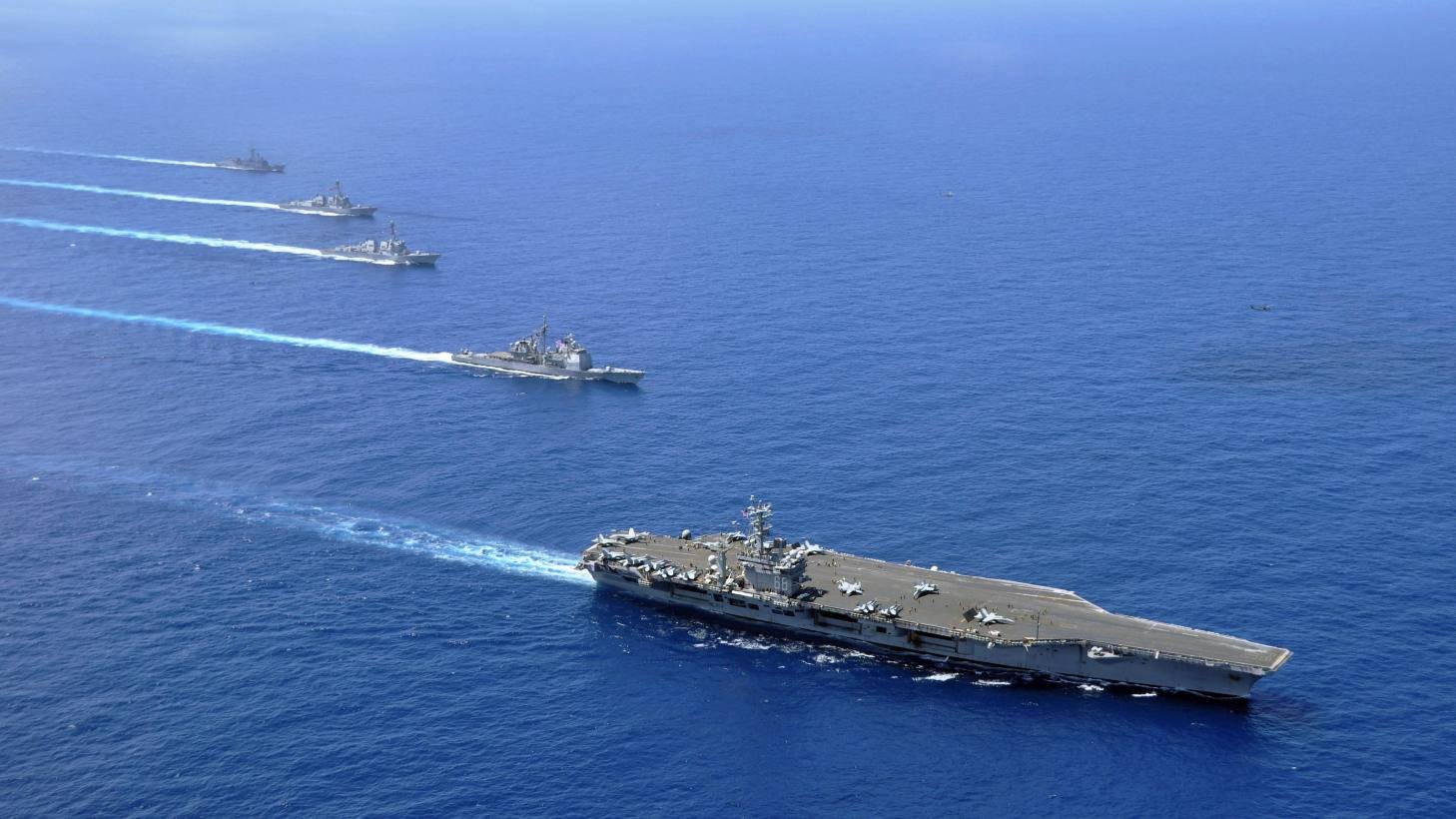 Carrier Enters Caribbean Following South Atlantic OperationsThe aircraft carrier USS Nimitz entered the Caribbean this week, expanding the U.S. naval presence in Latin American waters as Washington increases pressure on Cuba. U.S. Southern Command said the carrier and elements of its strike group moved into the region after conducting operations with Brazil. The deployment includes the destroyer USS Gridley, the oiler USS Patuxent, and Carrier Air Wing 17 embarked aboard Nimitz. SOUTHCOM confirmed the movement in social media posts on Wednesday. Nimitz is operating during a transit from the Pacific to its new home port at Naval Station Norfolk, Virginia. The ship has been sailing around Central and South America as part of that move. First Carrier Presence Since Ford RedeploymentThe arrival marks the first reported U.S. carrier presence in the Caribbean since February, when USS Gerald R. Ford was redirected to the Middle East. Ford later took part in combat operations against Iran during an 11-month deployment, leaving no carrier in the region. Nimitz joins other U.S. naval forces that have remained in or near the Caribbean since the second half of 2025. Those include the Iwo Jima Amphibious Ready Group and its embarked 22nd Marine Expeditionary Unit. USNI News fleet tracking has also listed the guided-missile cruiser USS Lake Erie and the littoral combat ship USS Billings operating in regional waters. Deployment Coincides With Cuba Pressure CampaignThe carrier’s arrival comes the same week the Justice Department announced indictments against several Cuban officials, including former Cuban President Raúl Castro. The Trump administration has tightened sanctions on Havana and moved to restrict oil shipments to the island, steps that have compounded Cuba’s energy crisis. The New York Times, citing a U.S. official, reported that Nimitz is expected to remain in the area for several days as part of a show of force. President Donald Trump has also publicly raised the possibility of military action against Cuba, adding to scrutiny of the carrier’s timing and location. Long-Serving Nuclear Carrier on Extended Final TransitUSS Nimitz (CVN-68), the lead ship of its class, was commissioned in 1975 and is the Navy’s oldest active aircraft carrier. Earlier this month, it became the longest-serving U.S. carrier, surpassing the service life of USS Enterprise. The ship departed Naval Base Kitsap in March for what was initially described as its final voyage before decommissioning. Four days after departure, however, the Navy extended Nimitz’s service through March 2027 to help maintain the statutory 11-carrier force while USS John F. Kennedy continues preparations for active service. Route Includes Southern Seas EngagementsAs part of its transit, Nimitz has participated in Southern Seas 2026 activities and conducted engagements with partner nations, including Panama and Ecuador. Earlier in the voyage, it rounded Cape Horn and carried out bilateral training with Argentina. The carrier is named for Fleet Admiral Chester W. Nimitz and remains one of the largest warships in the world. Its current movement into the Caribbean adds a high-end naval aviation and strike capability to an already substantial U.S. maritime posture in the region.
 -
Carrier Enters Caribbean Following South Atlantic OperationsThe aircraft carrier USS Nimitz entered the Caribbean this week, expanding the U.S. naval presence in Latin American waters as Washington increases pressure on Cuba. U.S. Southern Command said the carrier and elements of its strike group moved into the region after conducting operations with Brazil. The deployment includes the destroyer USS Gridley, the oiler USS Patuxent, and Carrier Air Wing 17 embarked aboard Nimitz. SOUTHCOM confirmed the movement in social media posts on Wednesday. Nimitz is operating during a transit from the Pacific to its new home port at Naval Station Norfolk, Virginia. The ship has been sailing around Central and South America as part of that move. First Carrier Presence Since Ford RedeploymentThe arrival marks the first reported U.S. carrier presence in the Caribbean since February, when USS Gerald R. Ford was redirected to the Middle East. Ford later took part in combat operations against Iran during an 11-month deployment, leaving no carrier in the region. Nimitz joins other U.S. naval forces that have remained in or near the Caribbean since the second half of 2025. Those include the Iwo Jima Amphibious Ready Group and its embarked 22nd Marine Expeditionary Unit. USNI News fleet tracking has also listed the guided-missile cruiser USS Lake Erie and the littoral combat ship USS Billings operating in regional waters. Deployment Coincides With Cuba Pressure CampaignThe carrier’s arrival comes the same week the Justice Department announced indictments against several Cuban officials, including former Cuban President Raúl Castro. The Trump administration has tightened sanctions on Havana and moved to restrict oil shipments to the island, steps that have compounded Cuba’s energy crisis. The New York Times, citing a U.S. official, reported that Nimitz is expected to remain in the area for several days as part of a show of force. President Donald Trump has also publicly raised the possibility of military action against Cuba, adding to scrutiny of the carrier’s timing and location. Long-Serving Nuclear Carrier on Extended Final TransitUSS Nimitz (CVN-68), the lead ship of its class, was commissioned in 1975 and is the Navy’s oldest active aircraft carrier. Earlier this month, it became the longest-serving U.S. carrier, surpassing the service life of USS Enterprise. The ship departed Naval Base Kitsap in March for what was initially described as its final voyage before decommissioning. Four days after departure, however, the Navy extended Nimitz’s service through March 2027 to help maintain the statutory 11-carrier force while USS John F. Kennedy continues preparations for active service. Route Includes Southern Seas EngagementsAs part of its transit, Nimitz has participated in Southern Seas 2026 activities and conducted engagements with partner nations, including Panama and Ecuador. Earlier in the voyage, it rounded Cape Horn and carried out bilateral training with Argentina. The carrier is named for Fleet Admiral Chester W. Nimitz and remains one of the largest warships in the world. Its current movement into the Caribbean adds a high-end naval aviation and strike capability to an already substantial U.S. maritime posture in the region. View full article
-
 GAO Finds Gaps in Military Suicide Prevention Training OversightA Government Accountability Office report released Wednesday found that the Army, Navy, and Marine Corps generally do not regularly track completion of required annual suicide prevention training or fully assess whether the instruction is effective. The Air Force was the only service identified as tracking completion data and maintaining an evaluation plan, though the GAO said that the effort still contains significant gaps. Service members are required to complete suicide prevention training each year to learn warning signs, risk factors, referral procedures, and available mental health resources. According to the report, the Army, Navy, and Marine Corps headquarters offices do not routinely monitor training completion, while the National Guard Bureau was the only organization cited as taking action to help ensure compliance. Effectiveness Reviews Remain LimitedBeyond completion rates, the GAO said most services have not fully evaluated whether the training achieves intended outcomes, such as improving awareness of suicide risk factors, promoting help-seeking behavior, and teaching intervention techniques for at-risk personnel. The Air Force’s evaluation plan was described as more developed than those of the other services, but it met only three of 11 policy requirements for assessing training impact. The Army, Marine Corps, and Air Force use some post-training surveys, but the GAO said those efforts do not thoroughly measure the extent to which expected outcomes are achieved. The Navy, according to the report, has not developed a plan to evaluate the effectiveness of its suicide prevention program. The GAO also said the Defense Department office responsible for suicide prevention policy and training does not require the services to report this information. Requiring such reporting, the watchdog said, would help the department make more informed oversight decisions. Findings Come Amid Rising Suicide RatesThe report comes as military suicide rates have risen since 2011, according to a recent Pentagon annual review. The GAO characterized suicide prevention training as a core element of the department’s broader prevention effort, intended to ensure service members understand risk factors, know how to seek help, and can refer others for support. The agency recommended stronger data collection to track how many personnel complete required instruction and more formal service-level plans for evaluating training effectiveness. Brandon Act Awareness Draws AttentionMental health advocates Patrick and Teri Caserta said the report reinforces long-standing concerns about education and awareness across the force. Their son, active-duty sailor Brandon Caserta, died by suicide in 2018 after they say he was repeatedly denied mental health care by his command. Following his death, the family pushed for the Brandon Act, a federal law allowing troops to self-refer or confidentially request a mental health evaluation. The Casertas said many service members still do not know those rights exist and are working with lawmakers on legislation that would require Brandon Act information to be included in annual training. Staffing Cuts May Affect Reform EffortsThe GAO also said civilian workforce reductions could hinder planned updates to suicide prevention training. In 2022, an independent panel established by then-Defense Secretary Lloyd Austin recommended replacing a uniform, large-auditorium training model with audience-specific instruction delivered in smaller groups and with varied duration and frequency. DoD estimated implementation would cost $163 million and require 318 additional full-time civilian personnel. But in March 2025, the military began cutting civilian positions not deemed directly tied to operational priorities, including through a hiring freeze and deferred resignation program. Navy and Air Force officials told the GAO those changes have affected efforts to hire staff needed for reforms, though the services have not yet quantified the impact on suicide prevention programs.
 -
GAO Finds Gaps in Military Suicide Prevention Training OversightA Government Accountability Office report released Wednesday found that the Army, Navy, and Marine Corps generally do not regularly track completion of required annual suicide prevention training or fully assess whether the instruction is effective. The Air Force was the only service identified as tracking completion data and maintaining an evaluation plan, though the GAO said that the effort still contains significant gaps. Service members are required to complete suicide prevention training each year to learn warning signs, risk factors, referral procedures, and available mental health resources. According to the report, the Army, Navy, and Marine Corps headquarters offices do not routinely monitor training completion, while the National Guard Bureau was the only organization cited as taking action to help ensure compliance. Effectiveness Reviews Remain LimitedBeyond completion rates, the GAO said most services have not fully evaluated whether the training achieves intended outcomes, such as improving awareness of suicide risk factors, promoting help-seeking behavior, and teaching intervention techniques for at-risk personnel. The Air Force’s evaluation plan was described as more developed than those of the other services, but it met only three of 11 policy requirements for assessing training impact. The Army, Marine Corps, and Air Force use some post-training surveys, but the GAO said those efforts do not thoroughly measure the extent to which expected outcomes are achieved. The Navy, according to the report, has not developed a plan to evaluate the effectiveness of its suicide prevention program. The GAO also said the Defense Department office responsible for suicide prevention policy and training does not require the services to report this information. Requiring such reporting, the watchdog said, would help the department make more informed oversight decisions. Findings Come Amid Rising Suicide RatesThe report comes as military suicide rates have risen since 2011, according to a recent Pentagon annual review. The GAO characterized suicide prevention training as a core element of the department’s broader prevention effort, intended to ensure service members understand risk factors, know how to seek help, and can refer others for support. The agency recommended stronger data collection to track how many personnel complete required instruction and more formal service-level plans for evaluating training effectiveness. Brandon Act Awareness Draws AttentionMental health advocates Patrick and Teri Caserta said the report reinforces long-standing concerns about education and awareness across the force. Their son, active-duty sailor Brandon Caserta, died by suicide in 2018 after they say he was repeatedly denied mental health care by his command. Following his death, the family pushed for the Brandon Act, a federal law allowing troops to self-refer or confidentially request a mental health evaluation. The Casertas said many service members still do not know those rights exist and are working with lawmakers on legislation that would require Brandon Act information to be included in annual training. Staffing Cuts May Affect Reform EffortsThe GAO also said civilian workforce reductions could hinder planned updates to suicide prevention training. In 2022, an independent panel established by then-Defense Secretary Lloyd Austin recommended replacing a uniform, large-auditorium training model with audience-specific instruction delivered in smaller groups and with varied duration and frequency. DoD estimated implementation would cost $163 million and require 318 additional full-time civilian personnel. But in March 2025, the military began cutting civilian positions not deemed directly tied to operational priorities, including through a hiring freeze and deferred resignation program. Navy and Air Force officials told the GAO those changes have affected efforts to hire staff needed for reforms, though the services have not yet quantified the impact on suicide prevention programs. View full article
-
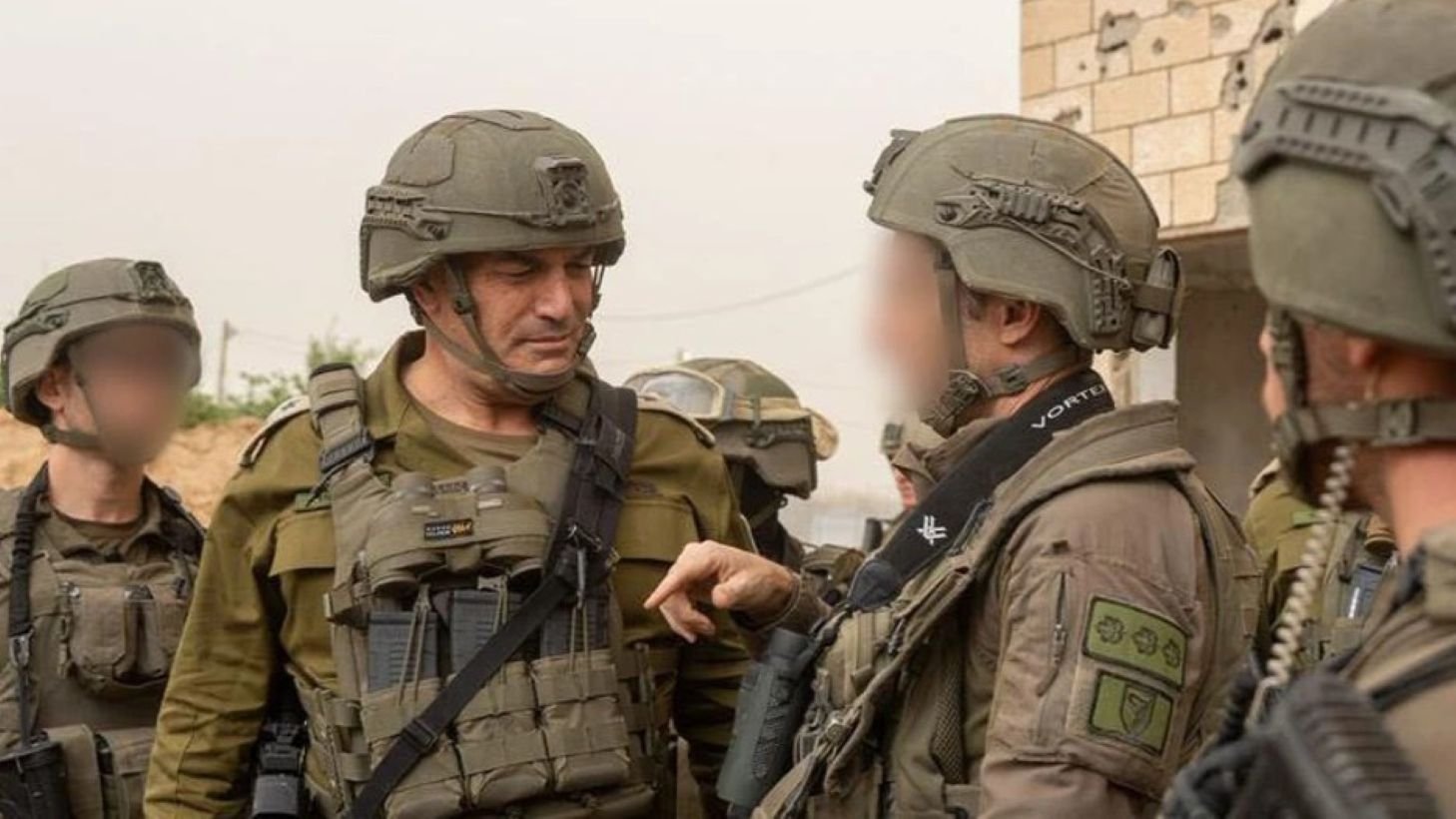 Covert Israeli Sites Reported in Western IraqA New York Times report says Israel operated at least two covert outposts in Iraq’s western desert for more than a year, using one site to support operations against Iran. Iraqi officials cited by the NYT confirmed a second base in addition to one previously reported by The Wall Street Journal. According to regional security officials, Israel began preparing the main makeshift site in late 2024, selecting remote desert terrain for potential use in a future conflict. The outpost was later used during the 12-day war with Iran in June 2025. Officials said the base supported air operations, refueling, and medical treatment, while reducing flight distance for Israeli aircraft traveling toward Iran. Shepherd’s Discovery and Fatal March 3 IncidentThe report centers on Awad al-Shammari, a 29-year-old shepherd from the al-Nukhaib area, who disappeared on March 3 after leaving to buy groceries. His family and Iraqi military officials told the Times that he had contacted local command after seeing soldiers, helicopters, tents, and a landing strip in the desert. Three witnesses from a nearby Bedouin encampment said a helicopter later fired repeatedly on al-Shammari’s pickup truck as it returned through the area. His family said they found his burned vehicle and body two days later. Israel’s military declined repeated requests for comment on both the alleged camps and al-Shammari’s killing. Iraqi Military Response and Parliamentary BriefingIraqi commanders said Bedouin communities had reported unusual military activity in the desert for weeks before al-Shammari’s death. Maj. Gen. Ali al-Hamdani said the army had suspected an Israeli presence for more than a month and monitored the site from a distance. A day after al-Shammari’s report, Iraqi forces sent a reconnaissance mission to the area. Iraq’s Joint Operations Command later said “foreign” forces attacked the unit, killing one soldier, wounding two others, and striking two vehicles, prompting a withdrawal. On March 8, Iraq’s parliament ordered a confidential military briefing. Lawmaker Hassan Fadaam later said the al-Nukhaib site was not the only outpost. A second Iraqi official also confirmed another base in a western desert region, though no location was disclosed. Questions Over U.S. Awareness and Iraqi SovereigntyThe report says at least one of the Israeli sites was likely known to Washington by June 2025, and possibly earlier. Former U.S. commanders, Pentagon officials, and diplomats cited by the Times said it would be difficult to imagine U.S. Central Command was unaware, given close operational ties with Israel. CENTCOM declined to comment and referred questions to the Israel Defense Forces. Regional officials also said U.S. security arrangements shaped Israel’s calculations, including periods when Iraq’s radars were shut down to protect U.S. aircraft. Under Iraqi protocol, senior Iraqi officials said Washington is expected to inform Baghdad about activity on Iraqi soil. Lt. Gen. Saad Maan, a spokesman for Iraq’s security forces, told the Times that Iraq has “no information” about Israeli military base locations. Iraqi lawmakers and analysts said the disclosures raise questions about whether Iraqi authorities were unaware of the presence or failed to act, either of which would underscore Baghdad’s limited control over parts of its territory. Political and Strategic FalloutIraq has no diplomatic relations with Israel, and public acknowledgement of Israeli outposts would carry significant domestic and regional consequences. Analysts told the Times the revelations could complicate U.S. efforts to limit Iranian influence in Iraq, while giving Iran-aligned militias another argument against disarmament. The Times reported that the al-Nukhaib site is no longer operating. The status of the second reported outpost remains unknown. Al-Shammari’s family has called for a formal investigation into his death and the circumstances surrounding the desert operation.
 -
Covert Israeli Sites Reported in Western IraqA New York Times report says Israel operated at least two covert outposts in Iraq’s western desert for more than a year, using one site to support operations against Iran. Iraqi officials cited by the NYT confirmed a second base in addition to one previously reported by The Wall Street Journal. According to regional security officials, Israel began preparing the main makeshift site in late 2024, selecting remote desert terrain for potential use in a future conflict. The outpost was later used during the 12-day war with Iran in June 2025. Officials said the base supported air operations, refueling, and medical treatment, while reducing flight distance for Israeli aircraft traveling toward Iran. Shepherd’s Discovery and Fatal March 3 IncidentThe report centers on Awad al-Shammari, a 29-year-old shepherd from the al-Nukhaib area, who disappeared on March 3 after leaving to buy groceries. His family and Iraqi military officials told the Times that he had contacted local command after seeing soldiers, helicopters, tents, and a landing strip in the desert. Three witnesses from a nearby Bedouin encampment said a helicopter later fired repeatedly on al-Shammari’s pickup truck as it returned through the area. His family said they found his burned vehicle and body two days later. Israel’s military declined repeated requests for comment on both the alleged camps and al-Shammari’s killing. Iraqi Military Response and Parliamentary BriefingIraqi commanders said Bedouin communities had reported unusual military activity in the desert for weeks before al-Shammari’s death. Maj. Gen. Ali al-Hamdani said the army had suspected an Israeli presence for more than a month and monitored the site from a distance. A day after al-Shammari’s report, Iraqi forces sent a reconnaissance mission to the area. Iraq’s Joint Operations Command later said “foreign” forces attacked the unit, killing one soldier, wounding two others, and striking two vehicles, prompting a withdrawal. On March 8, Iraq’s parliament ordered a confidential military briefing. Lawmaker Hassan Fadaam later said the al-Nukhaib site was not the only outpost. A second Iraqi official also confirmed another base in a western desert region, though no location was disclosed. Questions Over U.S. Awareness and Iraqi SovereigntyThe report says at least one of the Israeli sites was likely known to Washington by June 2025, and possibly earlier. Former U.S. commanders, Pentagon officials, and diplomats cited by the Times said it would be difficult to imagine U.S. Central Command was unaware, given close operational ties with Israel. CENTCOM declined to comment and referred questions to the Israel Defense Forces. Regional officials also said U.S. security arrangements shaped Israel’s calculations, including periods when Iraq’s radars were shut down to protect U.S. aircraft. Under Iraqi protocol, senior Iraqi officials said Washington is expected to inform Baghdad about activity on Iraqi soil. Lt. Gen. Saad Maan, a spokesman for Iraq’s security forces, told the Times that Iraq has “no information” about Israeli military base locations. Iraqi lawmakers and analysts said the disclosures raise questions about whether Iraqi authorities were unaware of the presence or failed to act, either of which would underscore Baghdad’s limited control over parts of its territory. Political and Strategic FalloutIraq has no diplomatic relations with Israel, and public acknowledgement of Israeli outposts would carry significant domestic and regional consequences. Analysts told the Times the revelations could complicate U.S. efforts to limit Iranian influence in Iraq, while giving Iran-aligned militias another argument against disarmament. The Times reported that the al-Nukhaib site is no longer operating. The status of the second reported outpost remains unknown. Al-Shammari’s family has called for a formal investigation into his death and the circumstances surrounding the desert operation. View full article
-
 Pentagon names five winners in Drone Dominance lethality challengeThe Department of Defense has selected Bravo Ordnance, Kela Defense, Kraken Kinetics, Mountain Horse, and Northrop Grumman as winners of its Drone Dominance “Lethality Prize Challenge,” a competition intended to identify weapon payloads for Group 1 unmanned aircraft systems weighing 20 pounds or less. The award, posted on the competition website, may give the five companies an advantage as the Pentagon moves to equip large numbers of small drones under its broader Drone Dominance initiative. The department has not released additional details on the evaluation process or on the specific submissions from all five winners. Focus on scalable, low-cost payloadsWhen the challenge was announced on Sam.gov in early April, the government said it was seeking payload solutions that could be produced at scale and at low cost as small drone procurement expands. According to the solicitation, “Solutions must be scalable to match the rapid growth of Drone Dominance platforms and cost-effective to enable mass production and fielding.” The notice added that lethal payload systems currently account for a significant share of total drone cost, making affordability and manufacturability key design requirements. The challenge centers on arming low-cost, attritable drones, including one-way attack systems that the military wants to buy in large quantities over a compressed timeline. Companies describe faster contracting and certification pathsAlthough the Pentagon declined to elaborate publicly, two winning companies said the designation could accelerate both procurement and safety approvals. Northrop Grumman said in a statement that its selection establishes the company as a “preferred” provider for advanced payloads to support rising small-drone production. The company said it plans to offer its Common UAS Payload, described as an off-the-shelf fuze and effects module. Bravo Ordnance said it submitted its HitchHiker payload, a 2.5-kilogram, or 5.5-pound, munition designed to comply with the Picatinny Common Lethality Integration Kit standard for arming low-cost drones. Kevin Landtroop, Bravo’s chief strategy officer and general counsel, said the challenge selection could shorten the safety review timeline to roughly eight weeks rather than months or years. Landtroop also said the Drone Dominance Program plans to purchase 60,000 units in its second phase, and that the company now sees a clearer pathway to orders in the thousands or tens of thousands. Bravo, he noted, is an 18-month-old hardware startup, and the HitchHiker is its first scaled product. Broader $1 billion small-drone pushThe lethality competition is one part of a larger Pentagon effort to expand the use of small unmanned systems and increase industrial capacity to build them. In mid-2025, Defense Secretary Pete Hegseth issued directives aimed at accelerating the adoption of small drones and strengthening the defense industrial base. Under Drone Dominance, the department intends to spend about $1 billion on small lethal drones within two years. Army leaders are also working toward an Oct. 1 deadline to field some one-way attack drones to every squad. Previous airframe competition and near-term ordersThe payload challenge follows the program’s earlier “gauntlet” competition focused on the aircraft themselves. In February, the DoD said 11 firms that took part in that gauntlet would receive orders, and another round is planned later this year. In March, Travis Metz, the Pentagon’s Drone Dominance program manager, told lawmakers the department was preparing to order 30,000 one-way attack drones within days as it determined the first winners of the initiative. The remaining three lethality challenge winners — Kela Defense, Kraken Kinetics, and Mountain Horse — did not publicly detail the payloads they entered.
 -
Pentagon names five winners in Drone Dominance lethality challengeThe Department of Defense has selected Bravo Ordnance, Kela Defense, Kraken Kinetics, Mountain Horse, and Northrop Grumman as winners of its Drone Dominance “Lethality Prize Challenge,” a competition intended to identify weapon payloads for Group 1 unmanned aircraft systems weighing 20 pounds or less. The award, posted on the competition website, may give the five companies an advantage as the Pentagon moves to equip large numbers of small drones under its broader Drone Dominance initiative. The department has not released additional details on the evaluation process or on the specific submissions from all five winners. Focus on scalable, low-cost payloadsWhen the challenge was announced on Sam.gov in early April, the government said it was seeking payload solutions that could be produced at scale and at low cost as small drone procurement expands. According to the solicitation, “Solutions must be scalable to match the rapid growth of Drone Dominance platforms and cost-effective to enable mass production and fielding.” The notice added that lethal payload systems currently account for a significant share of total drone cost, making affordability and manufacturability key design requirements. The challenge centers on arming low-cost, attritable drones, including one-way attack systems that the military wants to buy in large quantities over a compressed timeline. Companies describe faster contracting and certification pathsAlthough the Pentagon declined to elaborate publicly, two winning companies said the designation could accelerate both procurement and safety approvals. Northrop Grumman said in a statement that its selection establishes the company as a “preferred” provider for advanced payloads to support rising small-drone production. The company said it plans to offer its Common UAS Payload, described as an off-the-shelf fuze and effects module. Bravo Ordnance said it submitted its HitchHiker payload, a 2.5-kilogram, or 5.5-pound, munition designed to comply with the Picatinny Common Lethality Integration Kit standard for arming low-cost drones. Kevin Landtroop, Bravo’s chief strategy officer and general counsel, said the challenge selection could shorten the safety review timeline to roughly eight weeks rather than months or years. Landtroop also said the Drone Dominance Program plans to purchase 60,000 units in its second phase, and that the company now sees a clearer pathway to orders in the thousands or tens of thousands. Bravo, he noted, is an 18-month-old hardware startup, and the HitchHiker is its first scaled product. Broader $1 billion small-drone pushThe lethality competition is one part of a larger Pentagon effort to expand the use of small unmanned systems and increase industrial capacity to build them. In mid-2025, Defense Secretary Pete Hegseth issued directives aimed at accelerating the adoption of small drones and strengthening the defense industrial base. Under Drone Dominance, the department intends to spend about $1 billion on small lethal drones within two years. Army leaders are also working toward an Oct. 1 deadline to field some one-way attack drones to every squad. Previous airframe competition and near-term ordersThe payload challenge follows the program’s earlier “gauntlet” competition focused on the aircraft themselves. In February, the DoD said 11 firms that took part in that gauntlet would receive orders, and another round is planned later this year. In March, Travis Metz, the Pentagon’s Drone Dominance program manager, told lawmakers the department was preparing to order 30,000 one-way attack drones within days as it determined the first winners of the initiative. The remaining three lethality challenge winners — Kela Defense, Kraken Kinetics, and Mountain Horse — did not publicly detail the payloads they entered. View full article
-
 On-Chain Investigation Flags High-Accuracy Iran War BetsA cluster of nine linked Polymarket accounts generated roughly $2.4 million by placing highly accurate wagers on U.S. military actions tied to Iran, according to a Decrypt report citing blockchain analytics firm Bubblemaps. Bubblemaps said the accounts appeared coordinated and won about 98% of their bets. The wallets were created only days before the United States’ initial bombardment of Iran in late February, the firm said, and then proceeded to make a string of successful trades on sensitive geopolitical outcomes. Pattern of Trading Raised Insider ConcernsAccording to Bubblemaps, the accounts rarely lost, and when they did, losses were limited to a few hundred dollars. Analysts at the firm told Decrypt they believe those small losing trades may have been placed deliberately to reduce suspicion. On larger positions, Bubblemaps said the accounts traded with near-perfect timing. The reported wagers included markets tied to the timing of U.S. strikes on Iran, the ousting of Iranian Supreme Leader Ali Khamenei, and the establishment of a temporary ceasefire between Iran and the United States. The firm said those trades produced more than $2.4 million in profits on Polymarket, fueling suspicions that the users may have acted on privileged information. Limited Clues About Who Controlled the WalletsBubblemaps CEO Nicolas Vaiman told Decrypt there is little direct evidence linking the accounts to any specific country or identity. He said one circumstantial detail was that one account used the name “whopperlover,” but added that this does not meaningfully establish who was behind the activity. Vaiman noted that the users focused heavily on U.S. military markets related to Iran, but said that alone does not prove the traders were American. Bubblemaps further reported that the proceeds were ultimately off-ramped to Bybit, a Dubai-based centralized exchange. The funds also moved through Binance and HTX, and analysts said a third-party service may have been used during that process. Case Emerges After Earlier Polymarket ProsecutionThe new findings follow a recent federal case involving Gannon Ken Van Dyke, a U.S. soldier stationed at Fort Bragg, North Carolina. Prosecutors allege Van Dyke used classified intelligence to place Polymarket wagers related to America’s attack on Venezuela and the capture of Venezuelan President Nicolás Maduro, earning more than $400,000. Van Dyke was arrested last month and has pleaded not guilty, according to the report. The Bubblemaps investigation was first revealed on 60 Minutes. Prediction Markets Face Renewed Regulatory ScrutinyThe report adds to a broader debate over insider trading on prediction market platforms. In recent months, the issue has drawn attention in Washington as some lawmakers push for tighter restrictions on the sector, while the Trump administration has argued that existing laws are sufficient. Supporters of prediction markets have long argued that insider participation can improve market accuracy, even as critics contend it undermines fairness and creates incentives for misuse of confidential information. The suspected Iran-related trades are likely to intensify that dispute, particularly as regulators and lawmakers weigh how these platforms should be monitored when wagers intersect with military and national security events.
 -
On-Chain Investigation Flags High-Accuracy Iran War BetsA cluster of nine linked Polymarket accounts generated roughly $2.4 million by placing highly accurate wagers on U.S. military actions tied to Iran, according to a Decrypt report citing blockchain analytics firm Bubblemaps. Bubblemaps said the accounts appeared coordinated and won about 98% of their bets. The wallets were created only days before the United States’ initial bombardment of Iran in late February, the firm said, and then proceeded to make a string of successful trades on sensitive geopolitical outcomes. Pattern of Trading Raised Insider ConcernsAccording to Bubblemaps, the accounts rarely lost, and when they did, losses were limited to a few hundred dollars. Analysts at the firm told Decrypt they believe those small losing trades may have been placed deliberately to reduce suspicion. On larger positions, Bubblemaps said the accounts traded with near-perfect timing. The reported wagers included markets tied to the timing of U.S. strikes on Iran, the ousting of Iranian Supreme Leader Ali Khamenei, and the establishment of a temporary ceasefire between Iran and the United States. The firm said those trades produced more than $2.4 million in profits on Polymarket, fueling suspicions that the users may have acted on privileged information. Limited Clues About Who Controlled the WalletsBubblemaps CEO Nicolas Vaiman told Decrypt there is little direct evidence linking the accounts to any specific country or identity. He said one circumstantial detail was that one account used the name “whopperlover,” but added that this does not meaningfully establish who was behind the activity. Vaiman noted that the users focused heavily on U.S. military markets related to Iran, but said that alone does not prove the traders were American. Bubblemaps further reported that the proceeds were ultimately off-ramped to Bybit, a Dubai-based centralized exchange. The funds also moved through Binance and HTX, and analysts said a third-party service may have been used during that process. Case Emerges After Earlier Polymarket ProsecutionThe new findings follow a recent federal case involving Gannon Ken Van Dyke, a U.S. soldier stationed at Fort Bragg, North Carolina. Prosecutors allege Van Dyke used classified intelligence to place Polymarket wagers related to America’s attack on Venezuela and the capture of Venezuelan President Nicolás Maduro, earning more than $400,000. Van Dyke was arrested last month and has pleaded not guilty, according to the report. The Bubblemaps investigation was first revealed on 60 Minutes. Prediction Markets Face Renewed Regulatory ScrutinyThe report adds to a broader debate over insider trading on prediction market platforms. In recent months, the issue has drawn attention in Washington as some lawmakers push for tighter restrictions on the sector, while the Trump administration has argued that existing laws are sufficient. Supporters of prediction markets have long argued that insider participation can improve market accuracy, even as critics contend it undermines fairness and creates incentives for misuse of confidential information. The suspected Iran-related trades are likely to intensify that dispute, particularly as regulators and lawmakers weigh how these platforms should be monitored when wagers intersect with military and national security events. View full article
-
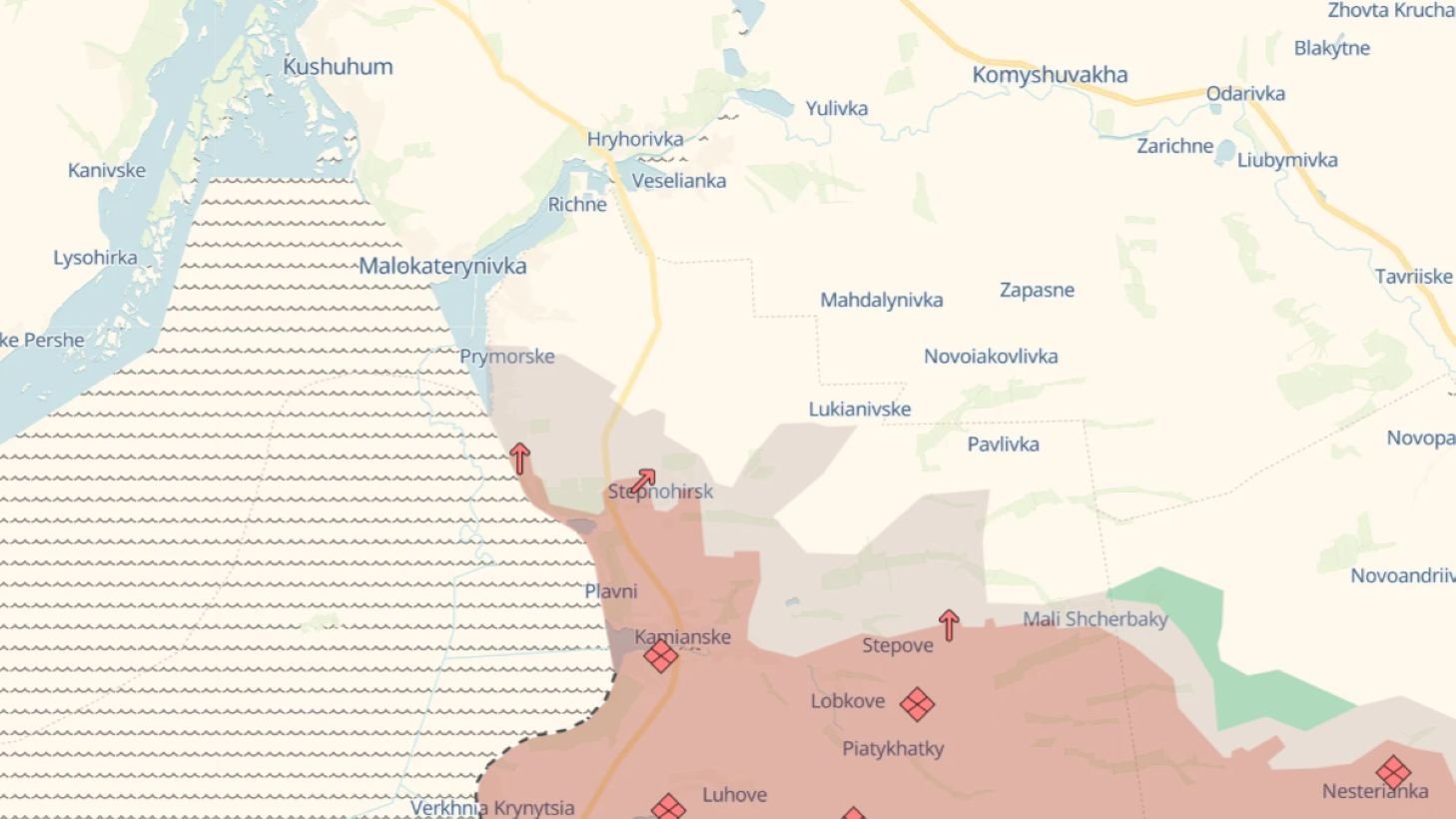 Ukrainian Intelligence Reports Gains in StepnohirskUkraine’s military intelligence agency, HUR, said on May 18 that Ukrainian forces had pushed Russian troops out of key positions in Stepnohirsk, a town in Zaporizhzhia Oblast about 30 kilometers south of the regional capital. The operation was attributed to the Artan special unit, which said it acted in coordination with adjacent units to “oust the Russian occupiers” and stabilize the situation in the settlement. According to the unit’s statement, Ukrainian troops conducted a series of offensive actions in difficult urban conditions and took control of important locations in the town. The statement described Russian positions there as fortified and said the operation was intended to restore local control rather than open a broader new axis of advance. Video Evidence and Battlefield MappingHUR published footage showing Ukrainian troop movements and combat activity in Stepnohirsk. Geolocated video reviewed by open-source observers showed Ukrainian armored vehicles moving through a crossroads on the E105 highway toward the town center. Those areas had previously been marked by the Ukrainian battlefield monitoring project DeepState as under firm Russian control. The published video does not by itself establish the full extent of Ukrainian control across the entire town, but it supports HUR’s claim that Ukrainian forces were operating in central Stepnohirsk. The footage also indicated close-range urban combat and the use of armored mobility to reinforce or exploit newly secured positions. Strategic Role of Stepnohirsk and the E105Stepnohirsk holds tactical importance because it lies on the north-south E105 highway, a significant route in the sector. Control of the town affects movement between frontline positions and influences Russia’s ability to pressure areas closer to Zaporizhzhia city. Ukrainian officials say Russia has been trying to seize Stepnohirsk to advance toward the regional capital. Retaining or regaining control of the town would complicate those efforts, particularly as Russian forces continue operations elsewhere along the southeastern front. The settlement also sits near Kamianske, roughly five kilometers to the south, which has been cited as a source area for Russian infiltration attempts. Differing Descriptions of the SituationVladyslav Voloshyn, spokesperson for Ukraine’s Southern Defense Forces, said Russian troops had not fully occupied Stepnohirsk, but that Russian infiltration groups had repeatedly entered the town from Kamianske. He declined to comment directly on HUR’s statement because it was issued by a different branch of the military. That distinction suggests a more complex picture than a simple transfer of control. HUR presented the action as a successful clearing operation against Russian elements in the town, while Southern Defense Forces messaging emphasized recurring Russian incursions rather than a prior complete occupation. Counterattacks and Likely Next StepsPasi Paroinen of the Finland-based Black Bird Group told the Kyiv Independent that Ukrainian forces had been conducting a series of counterattacks in the Stepnohirsk direction. He said it was possible Ukraine could stabilize the area in the near term. Artan commander Viktor Torkotiuk said the assault was coordinated with aerial reconnaissance and “pinpoint fire,” adding that troops checked houses for remaining Russian personnel and hidden threats. He also said Ukrainian forces expect Russia may try to re-enter the town. The battle around Stepnohirsk forms part of a wider contest in southern Ukraine, where Russian forces have also been advancing along the eastern bank of the Dnipro River toward Prymorske in an apparent effort to move artillery pressure closer to Zaporizhzhia.