Advertisement
Advertisement
News
-
SIG Sauer Introduces P385 Pistol Family SIG Sauer unveiled the P385, a new family of modular, striker-fired 9mm pistols, at its SIG NEXT event on September 22. The lineup consists of the P385-CARRY, P385-COMP, P385-FULL, P385-COMPACT, and P385-MACH3D. The P385 is a separate platform rather than another P320 configuration. It uses a new serialized fire-control unit, interchangeable slides and barrels, and a grip module incorporating SIG’s recoil-dampening system. SIG previously indicated that the
- Text Only
-
Ukraine Gains Access to Daybreak OpenAI will provide the Ukrainian government with access to Daybreak, an AI-based cyber-defense program designed to identify software vulnerabilities and help teams develop and test fixes more quickly. The initiative will support the Ministry of Digital Transformation’s efforts to protect civilian infrastructure, including hospital systems, energy networks, telecommunications and government services. OpenAI announced the arrangement on September 23, 2026, on the
- Text Only
-
F-35 Components Diverted to Hong Kong The Pentagon is investigating how components from an Australian-operated F-35 fighter jet were unexpectedly diverted to Hong Kong while being shipped to the United States. The F-35 Joint Program Office confirmed a “shipment issue” involving unserviceable parts and said it is working with U.S. authorities and industry partners to recover them. “We are actively working with U.S. authorities and industry partners to retrieve these components, investigate the in
- Text Only
-
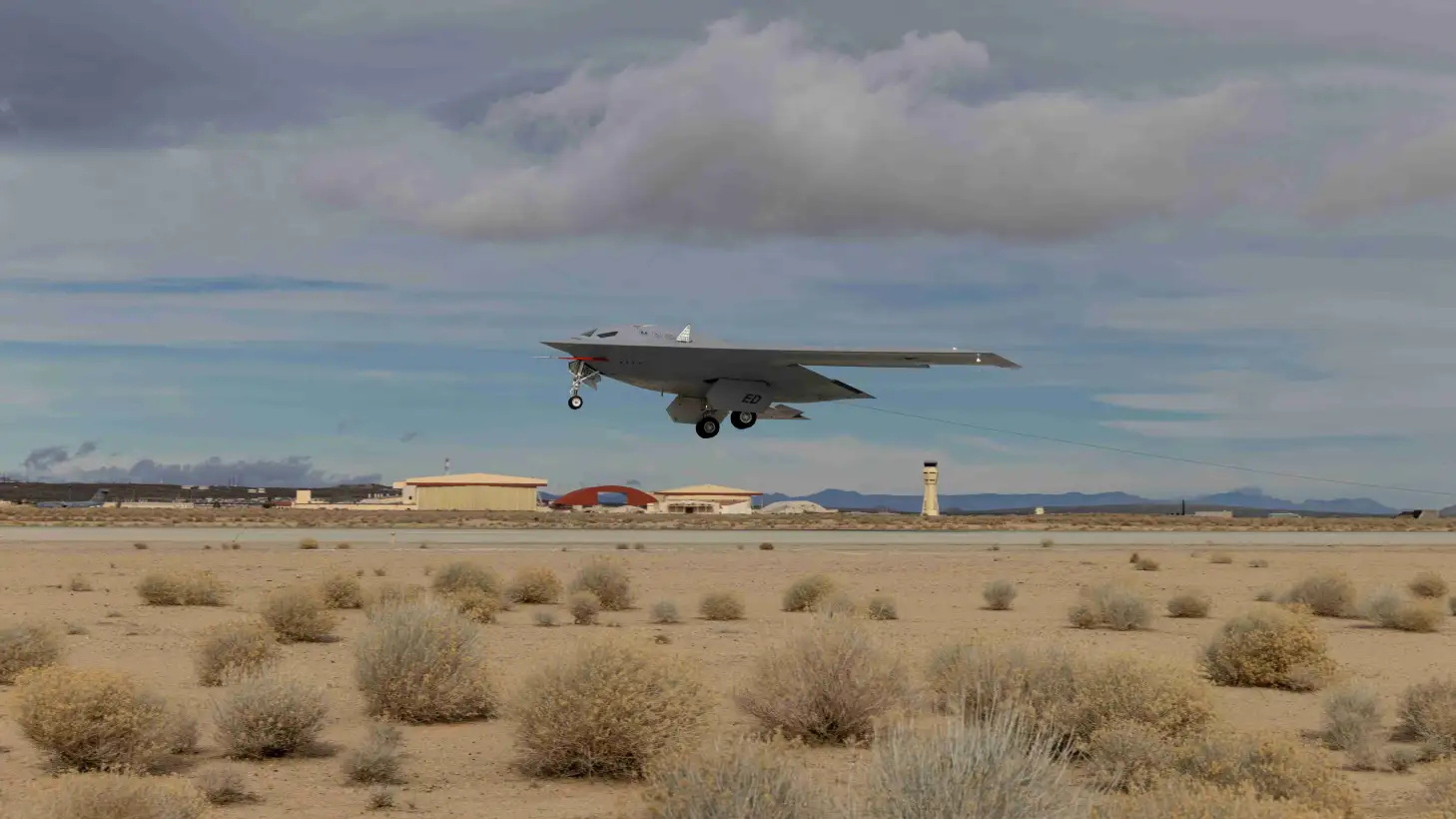
Whiteman Adds B-21 Weapons Facility The United States is building a weapons and release-system facility at Whiteman Air Force Base in Missouri to support the arrival of the B-21 Raider while maintaining B-2 Spirit operations. Air Force documentation states that Whiteman lacks sufficient space for the munitions-related parts and equipment expected with the B-21. The new facility will store and test armament-system accessories while freeing existing space for B-2 support during the transition betw
- Text Only
-
First Mobile Brigade Begins CENTCOM Deployment Approximately 1,200 Virginia and Kentucky National Guard soldiers began federal active duty on Sept. 19, 2026, for a deployment to the U.S. Central Command area of operations. The 116th Mobile Brigade Combat Team will support Combined Joint Task Force–Operation Inherent Resolve. The mobilization, marked by a departure ceremony in Richmond, Virginia, is the first by an Army National Guard brigade organized under the new Mobile Brigade Combat Team str
- Text Only
-
Abraham Lincoln Arrives in Guam The Nimitz-class aircraft carrier USS Abraham Lincoln (CVN 72) arrived at Naval Base Guam on September 19, 2026, for a brief logistics stop after nearly seven months of operations in the U.S. Central Command area. The visit marks Carrier Strike Group 3’s return to the Indo-Pacific and the U.S. 7th Fleet area of operations. The strike group is expected to resume routine operations in the region rather than conclude its deployment in Guam. The stop is also the first
- Text Only
-
Arctic Security Agreement Expected Next Week The United States, Denmark and Greenland are expected to sign a security agreement during the United Nations General Assembly next week, according to the Danish Prime Minister’s Office on September 18, 2026. The three governments say the arrangement will strengthen security in the Arctic and North Atlantic. However, the agreement has not been published, so no new U.S. basing rights, expanded military access, force-posture changes or additional weapons
- Text Only
-
US Approves Potential $24.3 Billion Saudi F-35 Sale The US State Department on September 17, 2026, approved the possible sale of up to 48 F-35A stealth fighters to Saudi Arabia through the Foreign Military Sales process. The package, valued at up to $24.3 billion, includes 49 Pratt & Whitney F135-PW-100 engines, with 48 installed and one supplied as a complete spare. It also covers training, support equipment, software, spare parts, modifications, and logistics needed to establish the Royal
- Text Only
-
Russian Frigate Fires Flares Near Danish Helicopter An unidentified Russian frigate fired two pyrotechnic flares toward a Royal Danish Air Force AS550 Fennec during a photographic identification mission in international waters south of Gedser on September 14, 2026. One flare passed close to the helicopter, prompting it to break away. No crew members were injured, and no damage was reported. Denmark has not disclosed the aircraft’s altitude, speed, flight path, closest approach to the ship or min
- Text Only
-
F-16s Deploy for Arctic Operation The Alaskan North American Aerospace Defense Command Region deployed F-16 Fighting Falcons from Eielson Air Force Base, Alaska, to Goose Bay, Newfoundland and Labrador, for Operation Arctic Vanguard 26-4.2. The NORAD operation runs from Sept. 13 through Sept. 26, 2026, with the Alaskan NORAD Region operating alongside the Canadian NORAD Region on defense missions across the Arctic. Forward Operations in Greenland NORAD personnel and aircraft are scheduled to dep
- Text Only
-
B-52 Engine and Radar Programs Advance The U.S. Air Force reached two acquisition milestones in 2026 for modernization of the B-52 strategic bomber fleet. The service approved Milestone B for the B-52J Commercial Engine Replacement Program on June 1, moving the engine upgrade into engineering and manufacturing development. On Aug. 21, the Air Force granted Milestone C approval to the B-52 Radar Modernization Program, authorizing low-rate initial production. The upgrades are intended to support B
- Text Only
-
Navy Awards Initial Production Contract The U.S. Navy awarded Boeing a $562 million fixed-price incentive contract for the first low-rate initial production lot of MQ-25A Stingray carrier-based unmanned aircraft. The contract funds three Lot 1 aircraft and advance acquisition of long-lead components for three additional MQ-25As under Lot 2. Initial Lot 1 deliveries are expected to begin in 2029. The award follows approval in May 2026 for the MQ-25A program to enter the production and deployment
- Text Only










Prepping Guides
-
You’re standing in the kitchen, halfway through making dinner, when you hear a long trail of sirens rushing down the main road. It’s not unusual — accidents happen often enough — so you glance out the window, shrug it off, and go back to stirring the pot. Then your phone buzzes. A Wireless Emergency Alert flashes across the screen: Before you can even process it, your phone buzzes again — this time an emergency broadcast override forces your smart TV to switch channels: You fr

Community Posts
-
SIG Sauer Introduces P385 Pistol Family
SIG Sauer unveiled the P385, a new family of modular, striker-fired 9mm pistols, at its SIG NEXT event on September 22. The lineup consists of the P385-CARRY, P385-COMP, P385-FULL, P385-COMPACT, and P385-MACH3D.
The P385 is a separate platform rather than another P320 configuration. It uses a new serialized fire-control unit, interchangeable slides and barrels, and a grip module incorporating SIG’s recoil-dampening system.
SIG previously indicated that the Carry and Comp would lead the rollout, with availability expected during the fall and early winter. Its product listings currently mark all five models as “coming soon.” Firm shipping dates and suggested retail prices have not been announced. SIG also plans compliant versions for states with additional requirements.
Carry and Comp Specifications
The P385-CARRY has a 4-inch barrel, an overall length of 7.22 inches, and a listed weight of 28.94 ounces with a magazine. Standard versions include one 17-round and one 21-round magazine.
The P385-COMP also uses a 4-inch barrel but adds an integrally compensated slide. It measures 7.9 inches overall and weighs 29.12 ounces with a magazine. Standard configurations ship with one 17-round and two 21-round magazines.
SIG lists 10-round configurations, optional manual safeties, and black or coyote finishes. Specifications and release details for the Full, Compact, and MACH3D versions remain limited. The company says the MACH3D compensator reduces muzzle rise by more than 30 percent, though that performance claim has not been independently verified here.
New Modular Grip and FCU
The removable P385 fire-control unit is specific to the platform. SIG’s interchangeable Magstrap system adjusts grip length, circumference, and trigger reach without replacing the complete grip module. It can also convert the same module between full-size and compact grip lengths.
Available Magstrap circumferences are listed as 1.95 inches for small, 2.15 inches for medium, and 2.25 inches for large. Approximate trigger reach is 2.9 inches, depending on the installed Magstrap. The grip also uses SIG’s laser-cut ReActive texture.
Controls are fully ambidextrous, including the slide catch, magazine catch, and optional manual thumb safety. A shielded slide catch is intended to reduce unintended activation during handling or firing.
Recoil and Safety Systems
The P385 places the bore lower relative to the shooter’s hand and incorporates the SIG Recoil Dampening System in the grip module. SIG says SRDS absorbs vibration and works with the low bore axis to reduce felt recoil, muzzle movement, and sight-recovery time. Compensated variants add further recoil mitigation.
A new Trigger Block sits flush with the trigger face instead of protruding like a conventional trigger-safety tab. SIG describes it as a redundant drop-safety mechanism and says the P385 meets applicable commercial, professional, military, and law-enforcement testing requirements. These manufacturer claims have not been independently tested here.
Magazines, Optics and Parts Compatibility
The P385 accepts standard P320 magazines. Older P320 magazines with rounded basepads also work, but the P385’s metal magwell must first be removed. The P320 AXG magwell and P-Series dovetail iron sights are compatible; other P320 and P365 components are not.
All five models use the SIG-LOC PRO optic-mounting system, which directly accepts Trijicon RMR- and Leupold DeltaPoint Pro-pattern optics without an adapter plate. Base configurations use XRAY3 day/night sights.
P320 and P365 holsters do not fit the P385. SIG identifies Safariland, ANR, and BlackPoint among the companies offering initial P385-specific holsters. No calibers beyond 9mm have been announced, while SIG says the P320 family will remain available.
View full article -
Ukraine Gains Access to Daybreak
OpenAI will provide the Ukrainian government with access to Daybreak, an AI-based cyber-defense program designed to identify software vulnerabilities and help teams develop and test fixes more quickly.
The initiative will support the Ministry of Digital Transformation’s efforts to protect civilian infrastructure, including hospital systems, energy networks, telecommunications and government services. OpenAI announced the arrangement on September 23, 2026, on the sidelines of the UN General Assembly.
Dmytro Kushneruk, Ukraine’s consul general in San Francisco, and Sasha Baker, OpenAI’s head of national security policy, jointly announced the offer. Financial terms and a deployment schedule were not disclosed.
Focus on Civilian Infrastructure
Ukraine continues to face cyberattacks alongside physical attacks on its infrastructure. CERT-UA, the country’s national cyber incident response team, handled nearly 6,000 cyber incidents during 2025.
Daybreak is intended for authorized defensive security work. Ukrainian teams will be able to use it to review older software, investigate suspicious activity, locate coding flaws, assess whether suspected vulnerabilities can be exploited, and verify that proposed patches close the identified gaps.
“We are proud to support Ukraine’s cyber defenders, who are protecting essential services against attacks every day,” Baker said. “Ukraine is already on the front line, and its defenders need support now.”
AI-Assisted Vulnerability Testing
Daybreak uses OpenAI’s GPT-5.6 Sol large language model to analyze software and code. Its functions cover multiple stages of vulnerability management, including finding potential weaknesses, validating whether they pose a practical threat, and testing fixes before deployment.
George Osborne, OpenAI’s head for countries, said the project would help Ukraine defend infrastructure against both digital and physical threats. “We’re now putting our technology and resources behind that effort, helping the Ukrainian government strengthen its cyber defenses with AI,” he said.
The program follows OpenAI’s September 3 pledge to provide $1 billion in subsidized Daybreak access to resource-constrained cyber defenders worldwide. The company said at the time that access would expand to partner countries within weeks.
Previous European Deployments
OpenAI has already provided cyber agencies and defenders in France, Germany, Poland and other European countries with access to its models.
The European Union Agency for Cybersecurity, ENISA, used the technology to identify vulnerabilities in software deployed across EU institutions. Those flaws have since been fixed.
Poland’s national cyber agency, CERT Polska, also used OpenAI models to discover six vulnerabilities in third-party commercial router software. The vendor released patches, and CERT Polska confirmed that the fixes prevented the attacks it had observed.
OpenAI’s Changing Security Role
The Ukraine initiative reflects OpenAI’s growing involvement in government and national-security cybersecurity programs. Until January 2024, the company’s usage policy prohibited military and warfare activity. That language was removed shortly before executives disclosed that OpenAI was developing cybersecurity tools with the Pentagon.
Some researchers have noted that technology companies supporting Ukraine may also gain information from operating in an active conflict environment. Jamie MacColl of the Royal United Services Institute told the BBC that it was “no surprise that OpenAI is now also providing defensive cybersecurity services.” The announced Daybreak access is specifically directed at protecting Ukraine’s civilian infrastructure.
View full article -
F-35 Components Diverted to Hong Kong
The Pentagon is investigating how components from an Australian-operated F-35 fighter jet were unexpectedly diverted to Hong Kong while being shipped to the United States. The F-35 Joint Program Office confirmed a “shipment issue” involving unserviceable parts and said it is working with U.S. authorities and industry partners to recover them.
“We are actively working with U.S. authorities and industry partners to retrieve these components, investigate the incident, and place safeguards to avoid a future occurrence,” the office said.
The shipment was being transported by an intermediary on behalf of F-35 manufacturer Lockheed Martin. It is unclear why the cargo was rerouted or who currently possesses the equipment.
Canopy and Weapons-Bay Door Reported Missing
The shipment originated in Australia and was headed to the United States for repair or possible disposal. Bloomberg reported that it contained a cockpit canopy and a weapons-bay door and that China had obtained the components. Other reporting confirmed the canopy but did not establish the present location or ownership of the parts.
The canopy covers the cockpit and, according to people familiar with congressional briefings, incorporates stealth technology available only to the United States and its allies. Physical access could allow an adversary to examine the component and compare it with previously obtained technical information.
Australian Defense Minister Richard Marles confirmed that the components ended up in Hong Kong but rejected suggestions that they were sensitive.
“My understanding is that there is a sense of comfort, and we’re not talking about sensitive equipment here or sensitive parts,” Marles said. He added that Australia was working with the United States and Lockheed Martin, while responsibility for managing the incident rested with those parties.
Congressional Inquiry Underway
The diversion has prompted an inquiry on Capitol Hill and briefings for staff on national security committees. State Department and Pentagon officials first briefed congressional staff in June, with additional sessions expected.
China’s Foreign Ministry said it was unaware of the incident. The Hong Kong government declined to comment on a specific case, and Lockheed Martin did not immediately respond to a request for comment.
Hong Kong is a special administrative region of China. Beijing has tightened its control over the territory in recent years, including through national security laws. Hong Kong does not maintain its own military or conduct independent diplomacy.
Security Concerns
The F-35 Lightning II is a fifth-generation fighter incorporating stealth coatings, advanced radar, sensors, and networking systems designed to share information with allied aircraft and ground forces. More than 1,200 have been produced, and 19 countries have placed orders, according to the Congressional Research Service.
China has previously been accused of seeking information about the aircraft. A 2013 Defense Science Board report alleged that Chinese cyberattacks accessed data from multiple Pentagon programs, including the Joint Strike Fighter.
J.J. Gertler, a former House Armed Services Committee staff member and military aviation analyst, said possession of an actual component could provide information beyond stolen specifications. A physical part, he said, could help verify or refine data already obtained through electronic espionage.
View full article -
Whiteman Adds B-21 Weapons Facility
The United States is building a weapons and release-system facility at Whiteman Air Force Base in Missouri to support the arrival of the B-21 Raider while maintaining B-2 Spirit operations.
Air Force documentation states that Whiteman lacks sufficient space for the munitions-related parts and equipment expected with the B-21. The new facility will store and test armament-system accessories while freeing existing space for B-2 support during the transition between the two stealth bomber fleets.
Its location near the flight line is intended to allow equipment to move efficiently among storage areas, maintenance shops and aircraft. The arrangement is expected to support sortie generation by reducing delays between maintenance, weapons loading and an aircraft’s return to operational status.
Contract and Construction Details
According to a U.S. Department of War bulletin published Sept. 21, 2026, K & K Industries received a contract valued at $13,649,923. The cumulative announced value is $14,993,485.
The Kansas City District of the U.S. Army Corps of Engineers is responsible for the contract, with construction taking place in Knob Noster, Missouri.
The project includes a new 1,580-square-meter weapons and release-system shop and alterations covering another 674 square meters. Associated work includes utilities, communications, access routes, site preparation, and cybersecurity measures for the building’s control systems.
Supporting Two Bomber Fleets
Whiteman will need to support the B-2 and B-21 simultaneously as the Raider enters service. The aircraft have different maintenance, weapons-integration, and support requirements, increasing demand for specialized work and storage space.
The new shop is intended to reduce reliance on shared facilities and help maintenance personnel test and prepare weapons-system equipment without disrupting ongoing B-2 activities. This infrastructure is designed as an operational support facility rather than solely as storage.
Keeping the B-2 available during the transition will preserve an existing penetrating-strike capability while the Air Force fields the B-21 in larger numbers. The project is intended to reduce the risk of an operational gap during that process.
B-21 Mission and Design
Developed by Northrop Grumman, the B-21 uses a flying-wing configuration similar in principle to the B-2, with additional emphasis on reducing radar signature and using radar-absorbing materials. It is intended for long-range conventional strike and nuclear deterrence missions in environments where modern air defenses restrict the use of less stealthy aircraft.
The Raider’s open architecture is designed to simplify the integration of new sensors, software, munitions, and other capabilities over its service life. It is also described as combining multi-sensor fusion, electronic warfare and networked combat systems.
Available information indicates a crew of two, a wingspan of about 44.5 meters, and an estimated maximum range near 12,000 kilometers. Exact engine arrangements, payload, and some performance figures remain undisclosed or are based on estimates.
B-2 Role During the Transition
The B-2’s current mission illustrates the capability the B-21 is expected to assume. In June 2025, seven B-2s departing from the United States participated in Operation Midnight Hammer against Iranian nuclear facilities.
The operation involved multiple aerial refuellings and the use of 14 GBU-57 Massive Ordnance Penetrator bombs against heavily protected targets. It demonstrated the bomber force’s ability to operate over intercontinental distances, penetrate defended airspace, and strike high-value targets with specialized weapons.
The B-21 is intended to continue that role with a newer platform designed to adapt to evolving radar systems, integrated air-defense networks, and electronic warfare capabilities.
View full article -
First Mobile Brigade Begins CENTCOM Deployment
Approximately 1,200 Virginia and Kentucky National Guard soldiers began federal active duty on Sept. 19, 2026, for a deployment to the U.S. Central Command area of operations. The 116th Mobile Brigade Combat Team will support Combined Joint Task Force–Operation Inherent Resolve.
The mobilization, marked by a departure ceremony in Richmond, Virginia, is the first by an Army National Guard brigade organized under the new Mobile Brigade Combat Team structure. Announced Sept. 21 by Virginia National Guard Public Affairs, the deployment was planned in advance and follows more than a year of modernization, experimentation, and mission preparation.
The assignment moves the 116th MBCT from domestic testing and combat-training validation into its first operational mission under the new design.
Drones, Electronic Warfare and Mobility
The Mobile Brigade Combat Team concept combines ground maneuver forces with unmanned aircraft, electronic warfare, counter-unmanned aircraft capabilities and modern command-and-control systems. The structure is intended to improve mobility, detect threats at longer ranges, and accelerate battlefield decision-making.
During modernization exercises, the brigade integrated reconnaissance teams, drones and electronic warfare equipment to locate and respond to simulated threats. Brigade leaders reported that unmanned aircraft detected opposing forces several kilometers ahead of friendly positions and helped support mortar engagements. Electronic warfare systems also provided warning of unmanned aircraft activity.
In the CENTCOM region, those capabilities could support surveillance, force protection, and operations across widely separated locations. The mission will allow the Army to assess how the brigade’s sensor and command systems function in an operational environment and how effectively they can be sustained and integrated with the broader joint force.
Deployment Equipment Not Fully Disclosed
The Army has not publicly released the complete equipment package the 116th MBCT will operate during the deployment. Brigade officials have previously said that systems assigned to an overseas mission would depend on operational requirements and could differ from equipment tested in the United States.
During training, the brigade worked with Teal Black Widow and Teal 2 reconnaissance drones, Anduril Ghost X aircraft, Performance Drone Works C100 systems, and a contractor-operated Redwire VXE 30 for longer-range reconnaissance. Soldiers also trained with AeroVironment Switchblade loitering munitions.
Those systems demonstrate the range of technologies evaluated by the unit, but their use during the CENTCOM deployment has not been confirmed. Unmanned aerial systems and electronic warfare capabilities are, however, established elements of the MBCT structure.
Training and Operational Validation
Before mobilization, the brigade completed extensive training and validation at one of the Army’s primary combat training centers. It has served as an early test formation for Infantry Squad Vehicles, unmanned aerial systems, counter-UAS equipment, electronic warfare, and updated command-and-control tools.
The operational deployment will test more than individual platforms. The central question is whether the brigade can connect reconnaissance, maneuver, electronic warfare, and targeting capabilities quickly enough to improve awareness and decision-making while operating as a distributed force.
Experience from the mission will also help determine how the design adapts to operational requirements that may differ from training scenarios.
Implications for the National Guard
The 116th MBCT’s deployment is part of a broader National Guard force-structure transition. Brigade leadership said in July that the Guard plans to convert 25 of its 27 ground combat brigades to the Mobile Brigade Combat Team model.
Lessons from the 116th’s CENTCOM mission could therefore influence how other Guard brigades are organized, trained, and equipped. The deployment will provide practical information on sustaining new systems, integrating them with joint forces, and employing a more mobile, sensor-focused formation during an established U.S. operation.
View full article -
Abraham Lincoln Arrives in Guam
The Nimitz-class aircraft carrier USS Abraham Lincoln (CVN 72) arrived at Naval Base Guam on September 19, 2026, for a brief logistics stop after nearly seven months of operations in the U.S. Central Command area.
The visit marks Carrier Strike Group 3’s return to the Indo-Pacific and the U.S. 7th Fleet area of operations. The strike group is expected to resume routine operations in the region rather than conclude its deployment in Guam.
The stop is also the first return to American soil in nine months for Carrier Strike Group 3 personnel, who are being given on-base liberty during the visit.
Strike Group Units
Abraham Lincoln, the flagship of Carrier Strike Group 3, arrived with the Arleigh Burke-class guided-missile destroyer USS Frank E. Petersen Jr. (DDG 121). The embarked staffs of Carrier Air Wing 9 and Destroyer Squadron 21 are also part of the formation.
Carrier Air Wing 9 provides the group’s carrier-based aviation capabilities, while Frank E. Petersen Jr. contributes air-defense, surface-warfare and escort capabilities. Together, the units form a carrier force designed to conduct sustained operations across wide geographic areas.
Before reaching Guam, Abraham Lincoln and Frank E. Petersen Jr. made separate port visits to Laem Chabang and Si Racha, Thailand, from September 2 to 6. Both ships had previously visited Guam in December 2025 before beginning their extended period in the Central Command region.
Guam’s Logistics Role
Guam provides a U.S.-controlled location for replenishment, maintenance support and readiness work without requiring the strike group to leave the broader Indo-Pacific theater. Supporting a carrier formation requires fuel, stores, spare parts, equipment and maintenance services for the carrier, its aircraft and accompanying surface ships.
The island’s location and military infrastructure allow the Navy to sustain forward-deployed forces deep in the Western Pacific. U.S. Pacific Fleet describes Guam as an important center for command and control, logistics and power projection, as well as a base for supporting responses to regional crises.
Although the Navy characterized Abraham Lincoln’s visit as brief, the stop enables the strike group to restore supplies and address maintenance needs during its transition between operational theaters.
Supporting Carrier Operations
Guam has regularly supported carrier strike groups operating in the Western Pacific. Recent visits have included formations centered on USS Carl Vinson and USS Nimitz, as well as Abraham Lincoln’s December 2025 stop.
During the Carl Vinson Carrier Strike Group’s March 2025 visit, the Navy highlighted Guam’s capacity to provide ships with supplies, maintenance parts and equipment. Such support helps carrier groups remain operational thousands of miles from the continental United States.
Aircraft, weapons, sensors and escort ships provide a carrier strike group’s combat capabilities, but continued deployment depends on a logistics network able to sustain ships, crews and aviation units over long distances.
Return to 7th Fleet Operations
Carrier Strike Group 3’s movement from the Middle East through Southeast Asia to Guam demonstrates the Navy’s ability to reposition a major naval formation between theaters while maintaining readiness.
U.S. 7th Fleet is the Navy’s largest forward-deployed numbered fleet and provides the command structure for persistent naval operations across the region. With Abraham Lincoln back in its area of operations, Guam is serving as a forward sustainment point as the strike group continues its Indo-Pacific deployment.
View full article -
Arctic Security Agreement Expected Next Week
The United States, Denmark and Greenland are expected to sign a security agreement during the United Nations General Assembly next week, according to the Danish Prime Minister’s Office on September 18, 2026.
The three governments say the arrangement will strengthen security in the Arctic and North Atlantic. However, the agreement has not been published, so no new U.S. basing rights, expanded military access, force-posture changes or additional weapons deployments can be confirmed. Its operational impact will remain unclear until the text is released.
The agreement comes as Greenland assumes greater importance for U.S. homeland defense, NATO operations and surveillance of the northern approaches to the Atlantic.
Pituffik’s Missile-Warning Role
The primary U.S. military capability in Greenland is Pituffik Space Base in the island’s northwest. The U.S. Space Force’s 12th Space Warning Squadron operates the Upgraded Early Warning Radar there, supplying warning and assessment data on intercontinental and sea-launched ballistic missiles that could threaten the United States and Canada.
Its missions include missile warning, missile-defense support and space-domain awareness. Greenland’s location beneath northern approaches to North America allows the radar to monitor potential long-range missile trajectories.
The base’s significance therefore extends beyond the number of U.S. personnel stationed there. Its central function is to detect launches, assess trajectories and rapidly transmit warning information to NORAD and national command authorities.
North Atlantic and Submarine Surveillance
Greenland also sits near the northern approaches to the Greenland-Iceland-United Kingdom corridor, a key passage between Arctic waters and the wider Atlantic. Russia maintains substantial naval forces in its northern regions, including strategic and attack submarines associated with the Northern Fleet.
In a major NATO confrontation, Russian submarines entering the Atlantic could threaten warships, logistics vessels and maritime routes used to move U.S. and Canadian forces and equipment to Europe.
Monitoring those approaches requires coordinated use of maritime patrol aircraft, submarines, surface combatants, acoustic sensors and intelligence systems. Greenland’s position makes it relevant to that broader anti-submarine surveillance network, although no specific anti-submarine warfare provisions have been disclosed for the forthcoming agreement.
Air Operations and Arctic Logistics
Pituffik has also demonstrated its ability to support advanced combat aircraft. On September 10, 2026, F-35A Lightning II fighters from the Wisconsin Air National Guard’s 115th Fighter Wing operated from the base during Operation Arctic Vanguard.
The deployment provided experience operating in severe weather, across long distances and with limited alternative infrastructure. Sustained fighter operations in the Arctic depend on fuel, maintenance, secure communications, aerial refueling, airborne surveillance and search-and-rescue coverage. Airfields, storage sites and communications systems consequently determine how quickly forces can deploy and how long they can remain operational.
NATO Coordination and Regional Risks
NATO’s Arctic Sentry initiative is intended to place national and alliance activities within a broader operational framework while improving coordination with NORAD, U.S. Northern Command and U.S. European Command. The objective is to connect North American aerospace defense with protection of NATO territory and the North Atlantic reinforcement routes to Europe.
Russia is the most immediate military factor because of its northern submarines, long-range aviation and access toward North America and the Atlantic. China is described as a longer-term consideration rather than an equivalent current military presence. NATO has cited Beijing’s Arctic interest and cooperation with Moscow, including concerns about future access to infrastructure, information and northern routes.
The new agreement may alter how the three governments organize these missions, but its specific military consequences cannot yet be determined.
View full article -
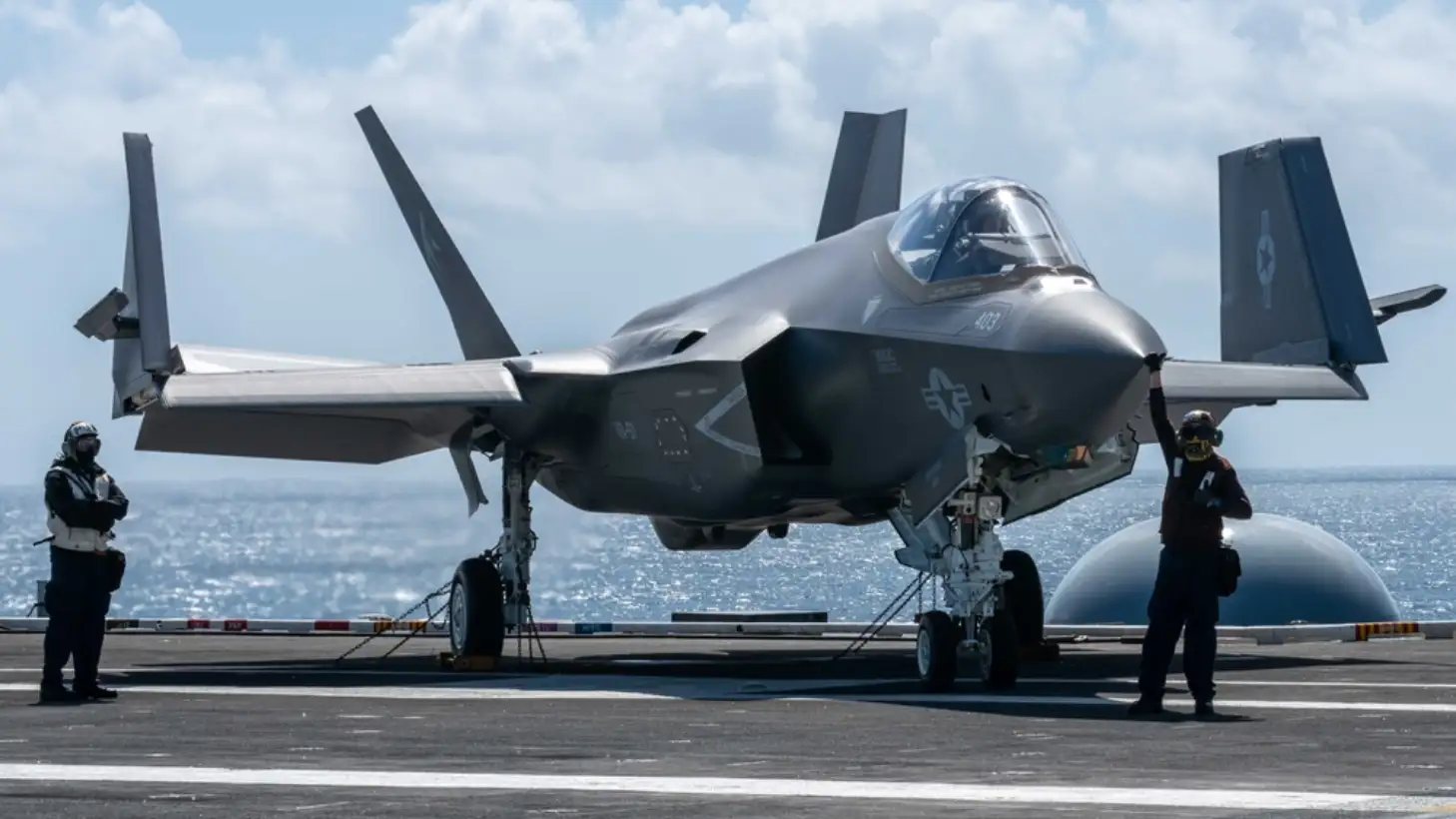
US Approves Potential $24.3 Billion Saudi F-35 Sale
The US State Department on September 17, 2026, approved the possible sale of up to 48 F-35A stealth fighters to Saudi Arabia through the Foreign Military Sales process.
The package, valued at up to $24.3 billion, includes 49 Pratt & Whitney F135-PW-100 engines, with 48 installed and one supplied as a complete spare. It also covers training, support equipment, software, spare parts, modifications, and logistics needed to establish the Royal Saudi Air Force’s first fifth-generation fighter capability.
Lockheed Martin would be the principal aircraft contractor, while Pratt & Whitney would supply the engines. The ceiling price is not final, and quantities and costs could change during negotiations.
Congressional Review and Security Concerns
The notification begins a 30-day congressional review period. Congress has the authority to block the transaction, although it is unclear whether opponents have sufficient support to do so.
Some lawmakers have raised concerns that operating the F-35 in Saudi Arabia could expose sensitive aircraft technology to China. The fighter and its support infrastructure involve classified software, cryptographic material, electronic warfare data and low-observable maintenance information.
Potential safeguards could affect foreign access to Saudi F-35 facilities, communications networks, mission-planning areas and procedures for handling software and cryptographic systems. The approval does not specify the final technology-protection conditions.
President Donald Trump confirmed in November 2025 that Washington intended to permit the sale. The proposed transfer is part of a broader US-Saudi defense relationship.
Aircraft, Training and Support Package
The request includes secure communications and navigation equipment, AN/PYQ-10 key loaders, KIV-78 cryptographic equipment, electronic warfare database support, and classified and unclassified software services.
It also covers simulators, pilot and maintainer instruction, repair-and-return services, consumables, training devices, publications, site surveys, ferry support and US engineering, technical and logistics assistance. Saudi Arabia would need to develop pilots, instructors, maintainers, mission planners and other personnel to operate the fleet.
No delivery schedule, basing plan or squadron structure has been announced. Forty-eight aircraft could equip two squadrons, but the final organization remains unspecified.
Role in the Saudi Air Force
The F-35As would operate alongside Saudi Arabia’s existing F-15 and Eurofighter Typhoon fleets rather than replace them. The aircraft combines a reduced radar signature, internal weapons carriage, electronic warfare systems and fused sensor data for air combat, precision strike and operations against functioning air defenses.
A representative internal configuration can carry two AIM-120 air-to-air missiles and two 2,000-pound GBU-31 Joint Direct Attack Munitions. When low observability is less important, the F-35 can use external stations and carry up to 18,000 pounds of weapons.
The proposed package would make Saudi Arabia one of 20 international F-35 operators, including the United States.
Israel’s Qualitative Military Edge
US law requires regional arms transfers to be assessed for their effect on Israel’s qualitative military edge. The State Department said the Saudi sale would not alter the regional military balance and would improve the security of a major non-NATO ally.
Israel had received 48 of its initial 50 F-35Is by January 2026 and has contracted for 25 more, with deliveries scheduled to begin in 2028. It has also approved plans for a fourth squadron that would eventually bring its fleet toward 100 aircraft.
Israel remains the only foreign F-35 operator authorized to integrate nationally developed systems, software, electronic warfare equipment and weapons. The configuration, training, maintenance capacity, and upgrade access granted to Saudi Arabia will therefore be significant factors in assessing the two fleets when Saudi aircraft enter service.
View full article -
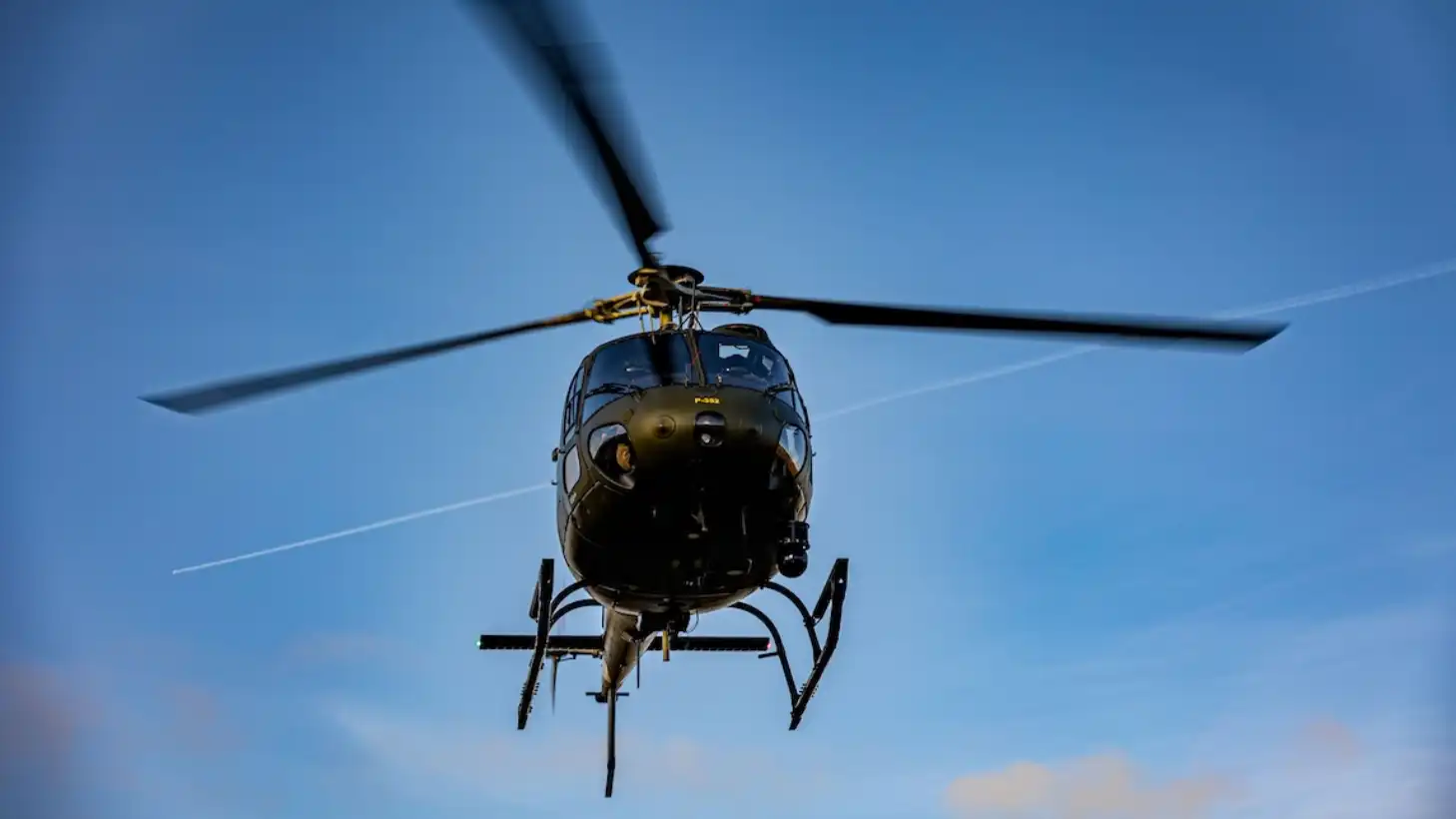
Russian Frigate Fires Flares Near Danish Helicopter
An unidentified Russian frigate fired two pyrotechnic flares toward a Royal Danish Air Force AS550 Fennec during a photographic identification mission in international waters south of Gedser on September 14, 2026.
One flare passed close to the helicopter, prompting it to break away. No crew members were injured, and no damage was reported. Denmark has not disclosed the aircraft’s altitude, speed, flight path, closest approach to the ship or minimum separation from the flare, preventing a precise reconstruction of the encounter.
Defence Minister Jeppe Bruus said the helicopter operated “relatively close” to the frigate, but described that proximity as normal for Danish monitoring missions. Russian ambassador Vladimir Barbin said Danish helicopters had previously conducted low-altitude passes and hovered near Russian warships.
No Radio Contact Before Launches
No radio exchange preceded the flare launches, although Bruus said established communication channels were available. The Danish Armed Forces described flares as pyrotechnics normally used as an attention signal at sea.
The Fennec’s task was to obtain photographic identification, requiring it to close with the frigate. Danish authorities have not identified the vessel or provided further operational details.
The incident occurred amid routine Danish surveillance of naval traffic around the Baltic approaches and Danish Straits, where military and civilian vessels operate in constrained shipping corridors.
Surface Tracking Preceded Helicopter Mission
Earlier that day, Danish patrol vessel P523 Najaden and German offshore patrol vessel Neustadt were monitoring activity south of Falster. Sentinel-1 imagery acquired at approximately 07:32 showed two unidentified vessels measuring an estimated 90–110 metres nearby. Neither was transmitting Automatic Identification System data.
One contact moved east, while the other occupied a westbound traffic lane toward waters south of Falster and the area of the later Gedser encounter. Najaden, which had arrived from the Bornholm area, subsequently reversed course while Neustadt continued west.
The movements were consistent with a geographic surveillance handover, but the available length, direction and location data do not establish that either contact was the frigate later approached by the Fennec. Military vessels are not required to transmit civilian AIS continuously, so the lack of a signal also does not establish nationality. Another unidentified 90–110-metre vessel without AIS was recorded south of Lolland at 07:24 on September 15.
Aircraft and Patrol Vessel Roles
Denmark’s AS550 Fennec C2 is used for observation, reconnaissance and light transport. Denmark bought 12 Fennecs in 1987 and received the first in August 1990. The fleet transferred from Army Aviation to the Air Force in 2003, with eight aircraft active by 2006, primarily under Eskadrille 724.
Originally configured for anti-armour operations, the helicopters later lost their anti-tank weapons. The Fennec has an empty weight of 1,220 kg, a maximum takeoff weight of 2,250 kg, and a normal capacity for two crew and four passengers. Published AS550 C3 performance figures include a maximum cruise speed of 246 km/h, a range of 648 km and a ceiling of 5,280 metres.
Najaden provides the persistent surface component of such monitoring. The 43-metre Diana-class patrol vessel can reach 25 knots and has a range exceeding 1,000 nautical miles. It carries navigation radars, a rigid-hulled inflatable boat and two 12.7 mm machine guns. In surveillance operations, the patrol ship can maintain contact while a helicopter closes rapidly for imagery and identification.
Wider Maritime Activity
The Gedser area lies on the route used by Russian naval vessels and tankers travelling from Baltic ports through the Danish Straits toward the North Sea and English Channel. European states increased inspections, boardings and seizures linked to Russian oil exports and sanctions evasion during 2026, while Russian naval deployments extended along the same corridor.
The September encounter followed a separate June 16 incident south of the Isle of Wight involving the Russian frigate Admiral Grigorovich and British yacht Bright Future. The yacht’s crew reported warning horn blasts followed by several small-arms rounds fired nearby. Russia placed the closest approach at 150 metres, while the British figure was 457 metres.
View full article
Conspiracy Theories
-
The Claim A viral image states: The image depicts a large group of people facing Polish security personnel at a fortified border. A prominent “Breaking News” label makes the claim appear to describe a recent development. The underlying law is real. The wording used in the meme, however, removes critical legal conditions and makes the legislation sound like a blanket authorization to shoot anyone attempting to enter Poland illegally. The Law Was Passed in 2024, Not 2026 The Polish parliament appr
-
In recent weeks, the pro-Palestine protests across U.S. universities have not only sparked discussions on geopolitical issues but also given rise to a peculiar scrutiny: the tents at the protest sites. A narrative has emerged suggesting that the presence of identical tents indicates a larger, orchestrated funding behind the movement. This article aims to dissect these claims with a factual lens and encourage a more informed dialogue. The Claim: Identical Tents as Evidence of Conspiracy

New Blogs
-
- 0 Comments
- 179 Views
-
- 0 Comments
- 211 Views