Advertisement
Advertisement
News
-
CBO Projects $275 Billion Cost The Congressional Budget Office estimates that the Navy’s planned fleet of 15 nuclear-powered Trump-class battleships would cost $275 billion. The lead ship, USS Defiant, would cost about $23.4 billion, while the remaining 14 vessels would average approximately $18 billion each. The estimate assumes the first ship is ordered in 2028 and all 15 are purchased through 2056 at the rate outlined in the Navy’s shipbuilding plan. CBO described its projections as “highly u
- Text Only
-
Auto-Ordnance Launches M1 Carbine SBR Auto-Ordnance announced a short-barreled version of its M1 Carbine on July 14, 2026. The .30 Carbine firearm combines a 12-inch threaded barrel and modern accessory mounting provisions with a walnut stock and handguard patterned after the company’s full-length M1 Carbine reproductions. The M1 Carbine SBR is available now with a manufacturer’s suggested retail price of $1,870. Auto-Ordnance offers it in two configurations: the AOM230 with a 15-round magazine
- Text Only
-
KelTec Introduces Folding SUB-SDP Pistol KelTec has introduced the SUB-SDP “Nub Sub,” the first pistol variant of its folding SUB2000 platform. Chambered in 9mm Luger, the brace-equipped firearm measures 17.7 inches when deployed and folds to 10 inches for storage or transport. The SUB-SDP uses a 6-inch barrel, substantially shortening the platform compared with the GEN3 SUB2000 rifle. KelTec classifies it as a pistol, and every configuration includes an integrated stabilizing brace. Two version
- Text Only
-
Pentagon Raises Iran War Casualty Total The Pentagon has updated its official casualty database to show that 18 U.S. service members have been killed and 624 wounded since the war with Iran began on February 28. The Defense Casualty Analysis System listed 420 wounded troops as of Friday, meaning the Saturday revision added more than 200 previously undisclosed injuries. The Pentagon also divided the casualties between Operation Epic Fury and a newly created category called “Overseas Operations,”
- Text Only
-
Romania Downs Third Drone in Three Days A Romanian Air Force F-16 shot down a drone that entered Romanian airspace on July 26, the third such interception in three consecutive days. The aircraft was destroyed at 10:13 a.m. over Romanian territorial waters in the Sulina–Chilia area of the Danube Delta, near the Ukrainian border. Two F-16s operating from Fetești Air Base under NATO command were involved in the July 26 response. Romanian reporting placed the engagement about 12 kilometers northeast
- Text Only
-
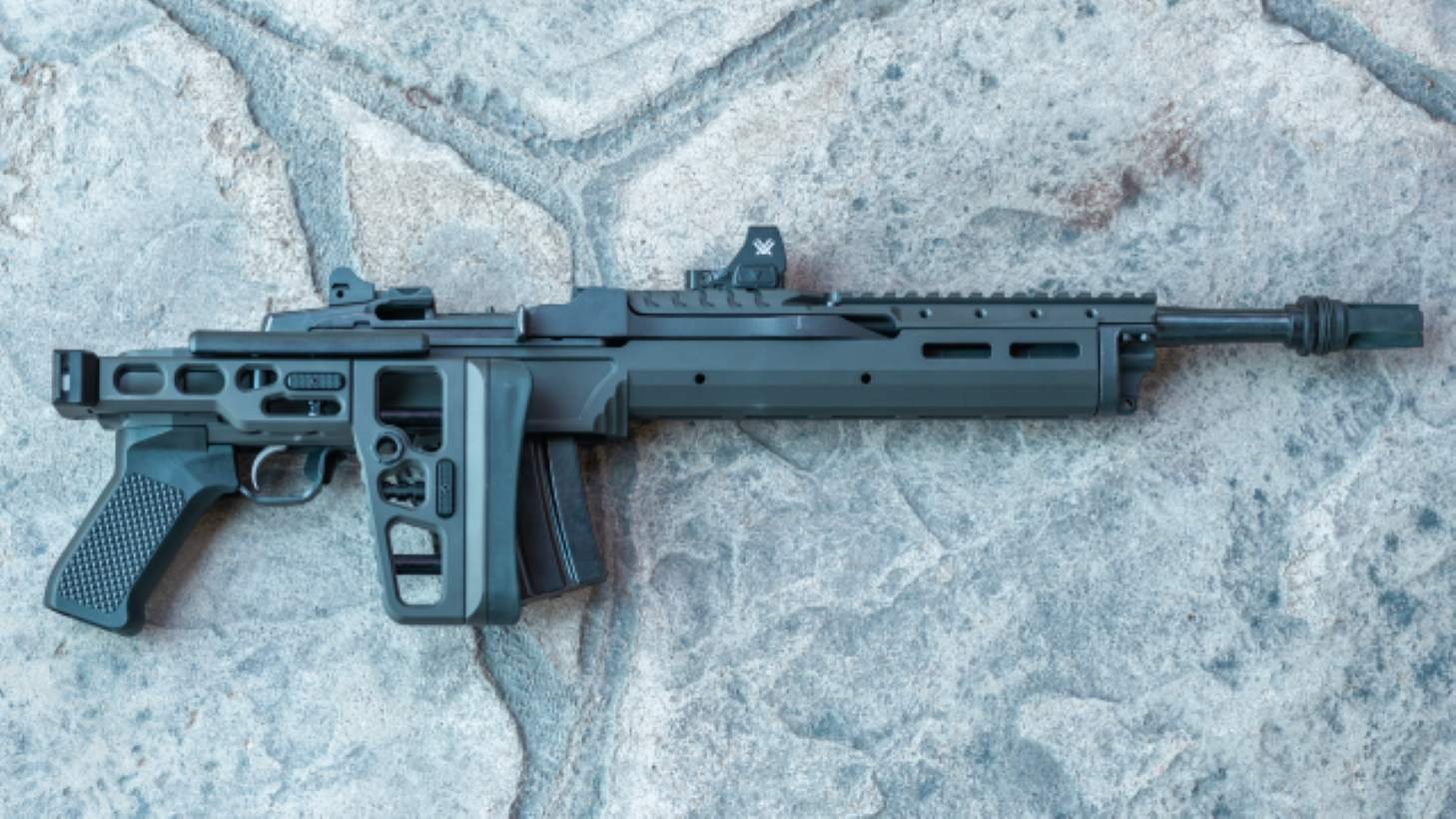
Samson Releases SAS-14 Folding Chassis for Ruger Mini Rifles Samson Manufacturing has released the SAS-14, a folding chassis system for compatible Ruger Mini-14 and Mini Thirty rifles. The chassis is available directly from Samson for $650. The company warns that lead times may exceed 30 days because of order volume. Orders remain pending until they are ready to ship, and payment is not captured until the product has been made, packed, and prepared for shipment. Orders are fulfilled in the order
- Text Only
-
Smith & Wesson Expands M&P15 AXE Line Smith & Wesson announced .300 Blackout versions of its M&P15 AXE platform on July 21, 2026, including an 8-inch braced pistol and a short-barreled rifle. The M&P15 AXE Pistol carries an MSRP of $1,479, while the AXE SBR is listed at $1,499. Both are gas-operated, optic-ready firearms with 30-round capacities and threaded barrels. The pistol is configured for the civilian market with a Magpul BTR arm brace, while the SBR uses a Magpul CTR
- Text Only
-
Saudi Tanker Struck Near Jizan Yemen’s Iran-aligned Houthi movement has claimed attacks on two Saudi oil tankers, while Saudi authorities have confirmed that at least one vessel was struck near the port of Jizan on the southern Red Sea coast. The Saudi-flagged Encelia was hit near the port’s outer approaches, causing a fire near its bow. The crew was reported safe, the tanker was secured, and no environmental damage was initially reported. A maritime-security source said the vessel issued a dist
- Text Only
-
A declared blockade against Saudi ports is already diverting tankers and threatening the main alternative to the Strait of Hormuz. Yemen’s Iran-aligned Houthi movement is threatening to open a second maritime front in the U.S.–Iran war, declaring what it describes as a naval blockade against Saudi Arabia and warning commercial shipping companies to avoid Saudi ports. The threat is already affecting vessel movements. Tankers carrying Saudi crude have reversed course rather than pass through the B
- Text Only
-
Eleven consecutive nights of U.S. attacks have failed to end Iranian retaliation or restore commercial passage through the Strait of Hormuz. The U.S.–Iran war remains locked in an active escalation cycle, with American forces completing an eleventh consecutive night of strikes while Iran continues missile and drone attacks against U.S. and allied positions across the region. The conflict has now moved well beyond the opening campaign of airstrikes. It is increasingly defined by sustained militar
- Text Only
-
SK Guns Opens Pre-Orders for Julius Caesar 1911 SK Guns has introduced the Julius Caesar 1911, the third release in its historically themed Conquerors Series. Built on a Colt 1911 and chambered in .38 Super, the limited-edition pistol uses engraved scenes to depict events from Caesar’s military and political career. Production is limited to 200 units. Pre-orders are open at $2,900, with shipping expected to begin in late October 2026. SK Guns says the price will increase to the standard MSRP wh
- Text Only
-
Zelensky Appoints New Military Chief President Volodymyr Zelensky dismissed Armed Forces Commander-in-Chief Oleksandr Syrskyi on July 21 and appointed Joint Forces Commander Mykhailo Drapatyi as his replacement, per a Kyiv Independent Report. Zelensky thanked Syrskyi for his service and credited him with contributing to the defense of Kyiv, the 2022 Kharkiv counteroffensive, and Ukraine’s operation in Russia’s Kursk region. “A significant path has been traveled. The defense of Ukraine continues,
- Text Only





Prepping Guides
-
You’re standing in the kitchen, halfway through making dinner, when you hear a long trail of sirens rushing down the main road. It’s not unusual — accidents happen often enough — so you glance out the window, shrug it off, and go back to stirring the pot. Then your phone buzzes. A Wireless Emergency Alert flashes across the screen: Before you can even process it, your phone buzzes again — this time an emergency broadcast override forces your smart TV to switch channels: You fr

Community Posts
-
CBO Projects $275 Billion Cost
The Congressional Budget Office estimates that the Navy’s planned fleet of 15 nuclear-powered Trump-class battleships would cost $275 billion. The lead ship, USS Defiant, would cost about $23.4 billion, while the remaining 14 vessels would average approximately $18 billion each.
The estimate assumes the first ship is ordered in 2028 and all 15 are purchased through 2056 at the rate outlined in the Navy’s shipbuilding plan. CBO described its projections as “highly uncertain,” noting that they rely on preliminary assessments of the ship’s design and the broader acquisition program.
A conventionally powered lead ship would cost an estimated $21.3 billion, with a 15-ship conventional fleet totaling about $243 billion. The nuclear-powered program would therefore cost approximately 13 percent more to build. Nuclear propulsion could reduce operating expenses by eliminating conventional fuel purchases, but CBO said it lacked enough information to calculate those savings.
Funding and Construction Schedule
The Navy is seeking approximately $1 billion in advance procurement funding and $837 million for research and development in its fiscal 2027 budget request. Budget documents indicate plans to request about $17 billion in procurement funding for the first ship in fiscal 2028 and roughly $13 billion in 2030 for the second.
Construction of the lead ship was expected to begin in 2028, with delivery projected for 2036. The program was announced by President Donald Trump in December 2025 as part of the administration’s “Golden Fleet” initiative. While the initial announcement called for two ships followed by a 10-ship fleet and potentially 20 to 25 vessels, the current CBO estimate is based on the Navy’s 15-ship plan.
CBO assumes one shipyard would conduct final assembly while other yards build portions or sections. Navy officials have indicated that Newport News Shipbuilding is the most likely location because of the ship’s nuclear propulsion.
Size and Nuclear Propulsion
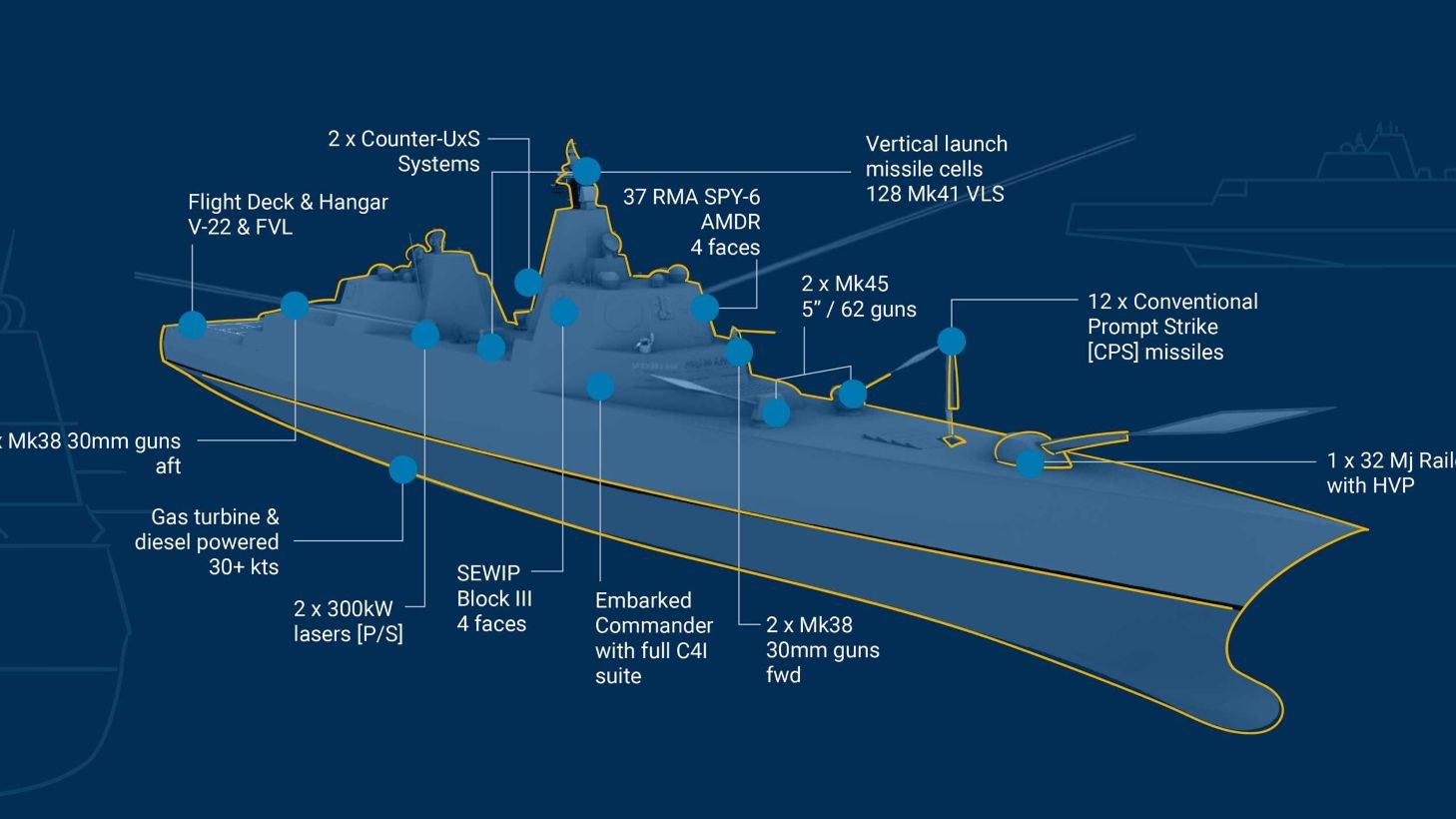
At an estimated 35,000 tons, the Trump class would be roughly three and a half times the size of an Arleigh Burke-class destroyer and would become the world’s largest surface combatant. Navy budget documents provide a broader projected full-load displacement of 35,000 to 41,000 tons.
CBO said increasing displacement to 41,000 tons would raise the lead ship’s cost by 16 percent. The Navy has confirmed that the class will be nuclear-powered, using the same reactor design as the Gerald R. Ford-class aircraft carrier.
The House Armed Services Committee has directed the Navy to provide an acquisition report by March 2027, including plans to mitigate possible effects on Ford-class carrier construction.
Planned Weapons and Capabilities
The ships are intended to carry the nuclear-armed sea-launched cruise missile, known as SLCM-N. CBO said the number aboard would probably be small but remains unknown. Its inclusion would give the ship more firepower than any Navy vessel other than the 14 Ohio-class ballistic missile submarines.
Other planned systems include Conventional Prompt Strike hypersonic missiles, Mark 41 vertical-launch cells, 5-inch guns, railguns, laser weapons and short-range defensive launchers. Acting Navy Secretary Hung Cao said in May 2026 that the ship would have 200 vertical-launch cells. Plans also call for an enclosed hangar supporting helicopters, V-22 Ospreys and future crewed or uncrewed vertical-lift aircraft.
Program Background and Uncertainty
The Trump class, also designated BBG(X) or BBGN, emerged from the Navy’s work on a successor to the DDG(X) large surface combatant. Officials concluded that the DDG(X) hull was too small to accommodate the desired combination of hypersonic missiles and a gun mount.
The Navy has not operated a battleship since USS Missouri retired in 1992. The Trump class would differ from historical battleships by relying primarily on guided missiles rather than heavy armor and large-caliber guns, leading some analysts to question its classification. Analysts have also raised concerns about funding, development costs, shipyard capacity, and the skilled workforce needed for the unprecedented design.
View full article -
Uncrowned Gaming has rolled out an updated version of the information boxes displayed at the bottom of its news articles, improving both their appearance and their usefulness for readers.
The redesigned boxes continue to provide quick access to key information about the subject of an article, but they now support three distinct formats: The Game, The Platform, and The Community.
Game-specific articles can display the title, release year, studio, relevant community forum, and direct links to supported storefronts. These links now use cleaner, standardized icons and can point readers directly to services such as Steam, PlayStation, Xbox, the App Store, Google Play, Epic Games Store, GOG, and Nintendo.
Platform-focused news can instead use The Platform, allowing articles about PlayStation, Xbox, Nintendo, PC gaming, mobile gaming, virtual reality, cloud gaming, and major storefronts or launchers to provide more relevant information. Depending on the selected platform, these boxes may include links to current consoles, launcher downloads, stores, major cloud-gaming services, or prominent VR headsets.
When an article does not require a dedicated game or platform box, The Community now takes its place. Rather than leaving an empty space at the bottom of the article, the community box invites readers to continue the discussion on the Uncrowned Gaming forums.
The updated system also replaces many externally hosted image icons with Font Awesome icons, creating a more consistent design while making the boxes easier to maintain and expand.
These changes are part of Uncrowned Gaming’s continued effort to make its news coverage more useful, connected, and human. Readers can move directly from an article to the game, platform, storefront, or community most relevant to the story without needing to search for those destinations separately and without getting sent to landing pages or other nonsense many outlets use to capture clicks.
Read on Uncrowned Empire -
Auto-Ordnance Launches M1 Carbine SBR
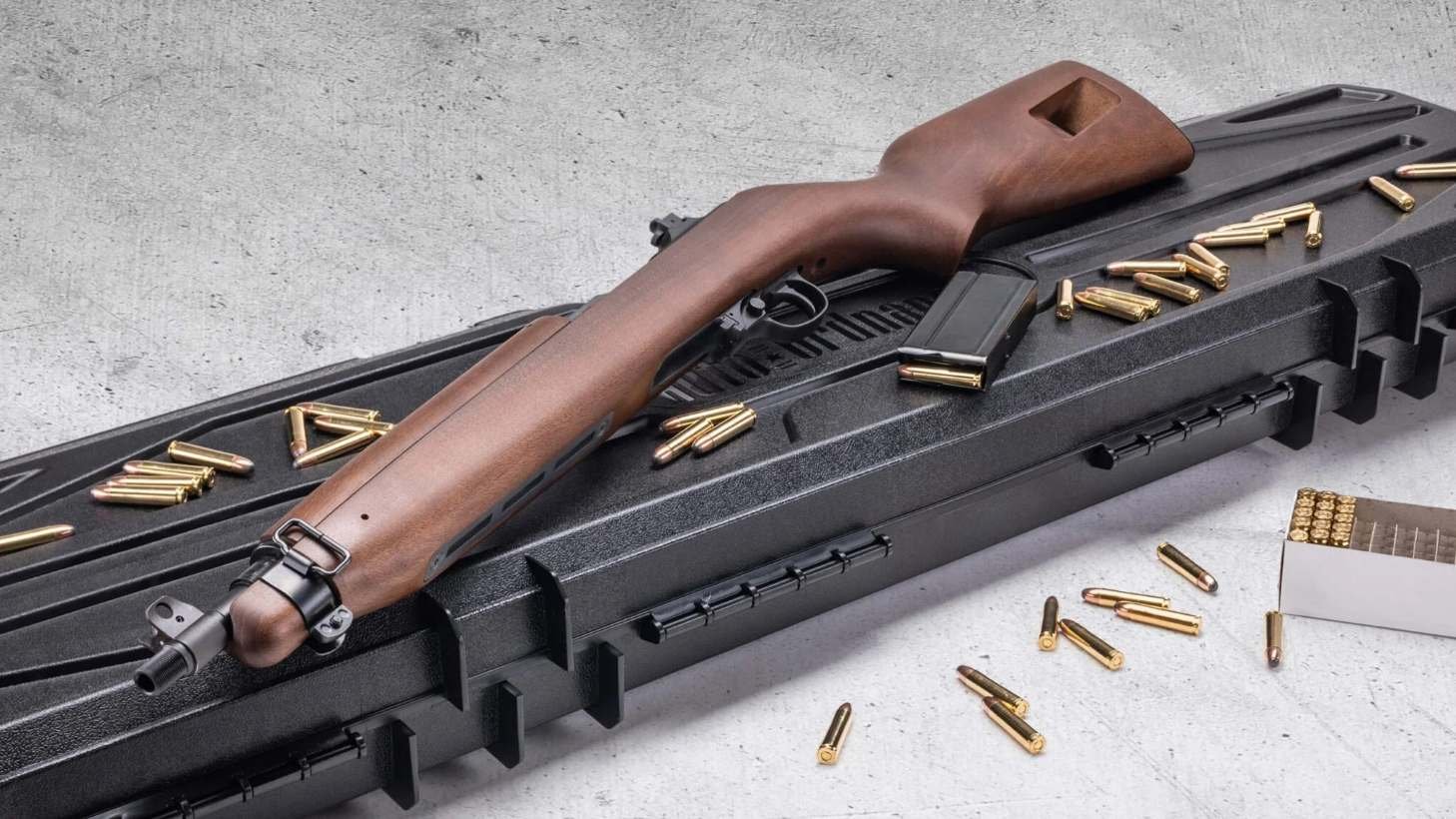
Auto-Ordnance announced a short-barreled version of its M1 Carbine on July 14, 2026. The .30 Carbine firearm combines a 12-inch threaded barrel and modern accessory mounting provisions with a walnut stock and handguard patterned after the company’s full-length M1 Carbine reproductions.
The M1 Carbine SBR is available now with a manufacturer’s suggested retail price of $1,870. Auto-Ordnance offers it in two configurations: the AOM230 with a 15-round magazine and the AOM240 with a 10-round magazine.
Threaded Barrel and Accessory Support
The 12-inch barrel has standard 1/2-28 muzzle threads for mounting a compatible suppressor or compensator. Overall length is 30 inches, while listed weight is 4.75 pounds without a magazine.
M-Lok slots are integrated into the bottom of the walnut forearm for attaching compatible accessories. These additions are intended to provide current mounting options while retaining the general appearance of the World War II-era M1 Carbine.
Sights, Furniture and Finish
The SBR uses a blade front sight and flip-style rear sight. Its furniture consists of a walnut stock and matching wood handguard.
Auto-Ordnance’s announcement describes the firearm as having a non-reflective matte-black finish, while the accompanying specification table lists the finish as blued. The release does not clarify whether these descriptions refer to the same treatment or separate configurations.
Manufacturing and Warranty
According to Auto-Ordnance, its M1 Carbine reproductions are assembled from newly manufactured parts produced with computerized machinery at the company’s Greeley, Pennsylvania, facility. The SBR continues the company’s reproduction format while adding the shorter threaded barrel and M-Lok interface.
Both magazine-capacity variants carry a one-year warranty.
View full article -
KelTec Introduces Folding SUB-SDP Pistol
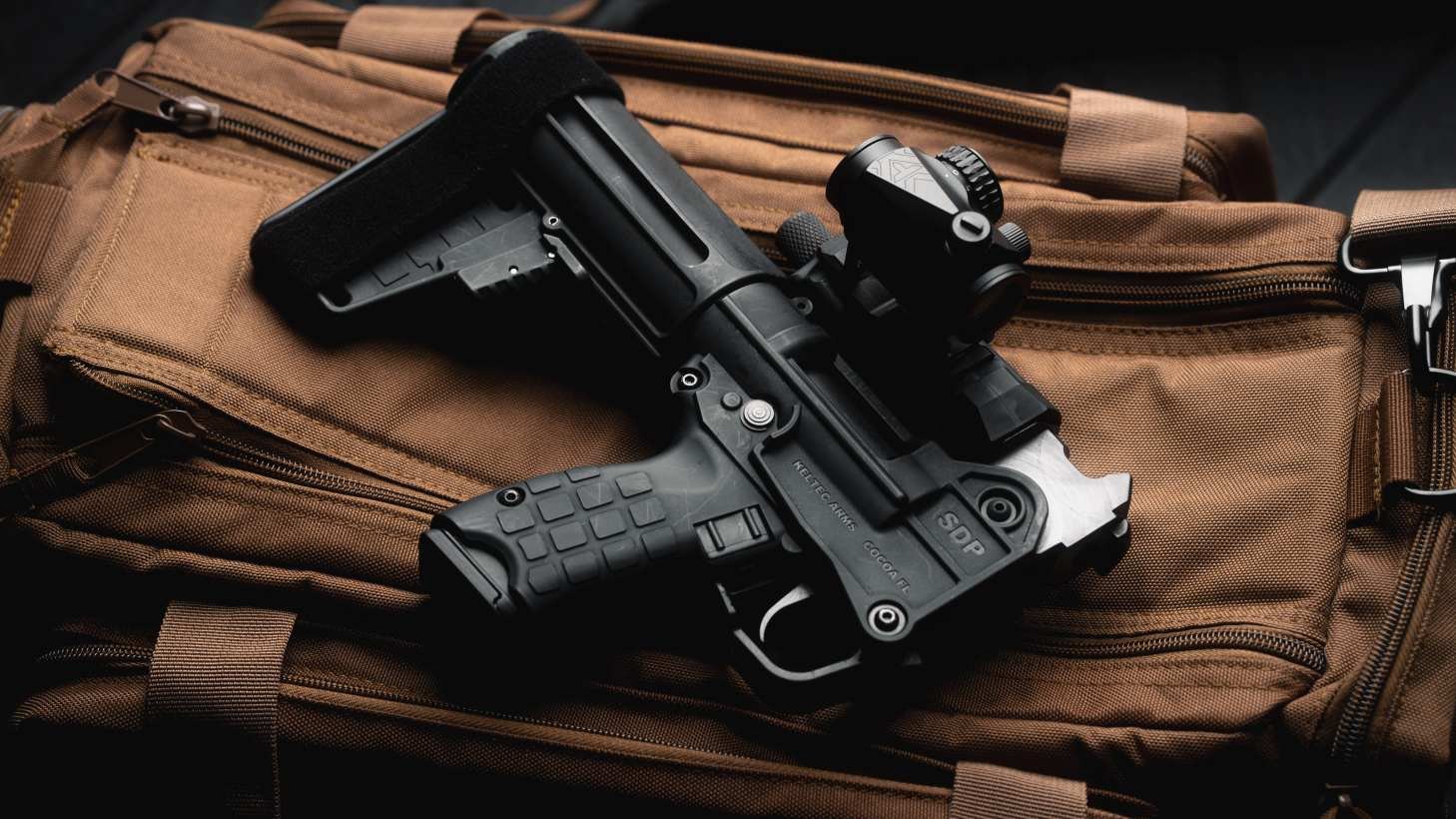
KelTec has introduced the SUB-SDP “Nub Sub,” the first pistol variant of its folding SUB2000 platform. Chambered in 9mm Luger, the brace-equipped firearm measures 17.7 inches when deployed and folds to 10 inches for storage or transport.
The SUB-SDP uses a 6-inch barrel, substantially shortening the platform compared with the GEN3 SUB2000 rifle. KelTec classifies it as a pistol, and every configuration includes an integrated stabilizing brace.
Two versions are offered: a standard SUB-SDP with a $599 manufacturer’s suggested retail price and a Defender package priced at $799.
Standard and Defender Packages
The standard SUB-SDP ships with the integrated brace and a 15-round Glock-pattern magazine. It weighs 3.57 pounds unloaded and accepts compatible higher-capacity magazines where permitted.
The Defender adds a pre-mounted Vortex Crossfire optic, two 27-round Magpul PMAG magazines, a compensator and a front M-LOK magazine holder. Its listed unloaded weight is 4.21 pounds with the packaged equipment. The Defender is available exclusively through KelTec Direct.
Both versions share the same principal dimensions, barrel and trigger specifications.
Folding and Accessory Configuration
The SUB-SDP retains the SUB2000 platform’s folding design while reducing its folded footprint to 10 inches. Deployed length is 17.7 inches, with a height of 6 inches and width of 1.94 inches.
An M-LOK rail runs along the receiver to provide mounting positions for accessories such as lights and lasers. The 6-inch barrel has 1/2-28 muzzle threads, allowing installation of compatible muzzle devices. A compensator is included only with the Defender package.
The integrated brace is intended to provide additional contact and control while preserving the compact folded dimensions. Listed trigger pull is 5 pounds on both models.
Core Specifications
The SUB-SDP is chambered exclusively in 9mm Luger. The standard model has a listed magazine capacity of 15 rounds, while the Defender is supplied with 27-round magazines.
Key measurements and specifications include:
Barrel length: 6 inches
Barrel threads: 1/2-28
Overall length: 17.7 inches
Folded length: 10 inches
Height: 6 inches
Width: 1.94 inches
Trigger pull: 5 pounds
Standard unloaded weight: 3.57 pounds
Defender unloaded weight: 4.21 pounds
Position Within the SUB2000 Line
The SUB-SDP adapts KelTec’s folding-carbine design into its smallest configuration to date. Its shorter barrel and pistol classification distinguish it from the GEN3 SUB2000 rifle, while retaining the established folding mechanism and pistol-caliber format.
The standard model is intended as the baseline brace-equipped configuration. The Defender bundles an optic, extended magazines, compensator, and magazine holder for buyers seeking a factory-equipped package. Availability may remain subject to applicable restrictions on magazines, braces and firearm configurations.
View full article -
Pentagon Raises Iran War Casualty Total
The Pentagon has updated its official casualty database to show that 18 U.S. service members have been killed and 624 wounded since the war with Iran began on February 28.
The Defense Casualty Analysis System listed 420 wounded troops as of Friday, meaning the Saturday revision added more than 200 previously undisclosed injuries. The Pentagon also divided the casualties between Operation Epic Fury and a newly created category called “Overseas Operations,” covering casualties from July 7 onward.
Operation Epic Fury now accounts for 14 deaths and more than 400 wounded. The remaining four deaths and 207 wounded are classified under Overseas Operations.
Injuries and Service Breakdown
Most of the newly categorized casualties are Army personnel. Of the 207 troops wounded since July 7, 182 are soldiers, 21 are sailors, and four are airmen.
Chief Pentagon spokesperson Sean Parnell said 96% of injured service members had returned to duty and described most of the injuries as “minor concussions.” The military generally does not identify personnel wounded in combat or publicly detail their injuries.
The revised figures follow reports that the number of wounded personnel exceeded previously published Pentagon totals. Other reporting found that nearly 100 service members had been injured in multiple Iranian airstrikes during the month.
Four Deaths Reclassified
The Pentagon moved four July deaths from Operation Epic Fury to Overseas Operations. They include three soldiers killed in an Iranian attack in Jordan on July 17 and a soldier killed during a controlled detonation of a downed Iranian drone in Iraq.
Those deaths had briefly disappeared from the official Operation Epic Fury count, drawing criticism from affected families. All four service members had previously been identified by name and memorialized by the Pentagon as combat casualties.
The other U.S. deaths include six soldiers killed in an attack at Port Shuaiba, Kuwait; one soldier killed in Saudi Arabia; six airmen killed in a KC-135 crash in Iraq; and a Navy helicopter pilot from the USS George H.W. Bush who died in a crash in the Arabian Sea.
New Categories and War Powers Dispute
The administration considers July 7 the end of Operation Epic Fury following the announcement of a short-lived ceasefire. It has treated subsequent hostilities as a separate period, although U.S. bombing missions and Iranian missile and drone attacks continued in largely similar forms.
The classification is connected to the War Powers Act of 1973, which generally requires a president to end military operations within 60 days unless Congress authorizes them. The administration has argued that ceasefire periods paused or reset that timeline. Lawmakers from both parties have disputed that interpretation.
Republican Representative Thomas Massie of Kentucky called the division “an absurd ruse,” arguing that the Pentagon was treating the conflict as two wars separated by a brief ceasefire.
Earlier Revisions and Explanations
The update followed several unexplained changes to the casualty database. Days earlier, the Pentagon removed four deaths and 65 wounded personnel from its published totals. Officials initially linked the changes to reclassification after the ceasefire, while a Pentagon statement later attributed the shifting figures to “temporary data disruptions.”
A defense official separately cited operational security as a reason casualty information may be delayed or inconsistent. U.S. Central Command said it does not manage the database, while the Pentagon office responsible for maintaining it did not initially explain the revisions.
Former Pentagon spokesperson David Lapan said casualty reporting provides the public with one of the few available measures for assessing military operations when detailed information is limited.
View full article -
Romania Downs Third Drone in Three Days
A Romanian Air Force F-16 shot down a drone that entered Romanian airspace on July 26, the third such interception in three consecutive days. The aircraft was destroyed at 10:13 a.m. over Romanian territorial waters in the Sulina–Chilia area of the Danube Delta, near the Ukrainian border.
Two F-16s operating from Fetești Air Base under NATO command were involved in the July 26 response. Romanian reporting placed the engagement about 12 kilometers northeast of Sulina and said roughly five minutes elapsed between the drone’s entry and interception.
An investigation confirmed that the drone downed on July 24 was a Shahed-type unmanned aircraft used by Russia against Ukraine. Investigations into the July 25 and July 26 incidents remain underway. NATO said the latest drone appeared to be of Russian origin.
Diplomatic Response
President Nicușor Dan called the repeated violations “inadmissible and intolerable,” noting that Romanian airspace is also NATO and European Union airspace.
“Such actions are unacceptable, and we treat them with the utmost seriousness, together with our allies,” Dan said. He added that Romania’s diplomatic protest would be based on the investigations’ findings.
Romania’s Foreign Ministry subsequently summoned the Russian ambassador over the repeated breaches. Russia had not publicly commented on the three incidents.
Incursions and Legal Authority
Romania’s Defense Ministry has recorded 33 Russian drone incursions since Russia began its full-scale invasion of Ukraine in February 2022. Most were monitored until they left Romanian airspace or crashed. Earlier incidents were also recorded in January and February 2025 and April 2026.
On May 29, a Russian drone struck a residential building in Galați, injuring two people. Many incursions have occurred near the Danube Delta as Russia attacks Ukrainian port infrastructure around Izmayil and Reni, close to Romanian territory and Black Sea shipping routes.
Romanian legislation now authorizes the military to destroy, neutralize, or take control of unauthorized drones entering national airspace. The law established the legal basis for active interceptions after years in which intruding aircraft were generally tracked rather than engaged.
Counter-Drone Defenses
Romania integrated the MEROPS counter-drone system into its national air defense network on June 24, 2026, deploying it primarily along the Danube corridor. Officials have not confirmed that MEROPS participated in the July interceptions, which were attributed to F-16 fighters.
MEROPS uses the AS3 Surveyor, an AI-guided fixed-wing interceptor equipped with thermal imaging, radio-frequency detection and radar. The approximately 0.9-meter aircraft can reach 282 km/h, compared with the Shahed-136’s speed of about 185 km/h, and is designed to operate in GPS- or radio-jammed environments.
Each Surveyor is reported to cost approximately $14,500 to $15,000. A missed interceptor can deploy a parachute for recovery and reuse. The mobile system requires a four-person crew and can be transported by pickup truck.
Romania also signed a June 2026 agreement worth more than €2 billion with Israel’s Rafael Advanced Defense Systems for a layered short- and medium-range air defense package. NATO separately announced a five-year, $40 billion Drone Edge Initiative covering counter-drone systems, aircraft procurement and operator training.
Shahed-136 Characteristics
The Iranian-designed Shahed-136, manufactured by Russia as the Geran-2, is a one-way attack drone measuring about 3.5 meters long with a 2.5-meter wingspan and a mass near 200 kilograms. Its standard warhead weighs approximately 50 kilograms, while Russia has also deployed a 90-kilogram version.
Its low altitude, limited radar signature and relatively slow speed can complicate detection by systems designed for aircraft and missiles. Russia’s upgraded variants reportedly incorporate satellite navigation, communications equipment and computer-vision capabilities intended to improve accuracy and resistance to jamming.
View full article -
Samson Releases SAS-14 Folding Chassis for Ruger Mini Rifles
Samson Manufacturing has released the SAS-14, a folding chassis system for compatible Ruger Mini-14 and Mini Thirty rifles. The chassis is available directly from Samson for $650.
The company warns that lead times may exceed 30 days because of order volume. Orders remain pending until they are ready to ship, and payment is not captured until the product has been made, packed, and prepared for shipment. Orders are fulfilled in the order received.
Compatibility and Configuration
The SAS-14 fits Ruger Mini-14 rifles with serial numbers beginning at 181 and higher, as well as all Mini Thirty models. It builds on Samson’s A-TM folding-stock design while adding an aluminum M-LOK handguard and the company’s SAS-K tactical folding stock.
The chassis is also compatible with Samson Hannibal Rails using Multi and T-1 optic footprints. Buyers must select the appropriate Hannibal Rail version for their rifle’s barrel type and production range.
Mini-14 rifles with a factory flange barrel and serial numbers beginning at 580 or higher require the “2008/Later/All Mini Thirty” rail. Mini-14 rifles with a factory straight pencil barrel and serial numbers from 181 through 579 require the “2007/Earlier” version. All Mini Thirty rifles use the “2008/Later/All Mini Thirty” model.
Samson advises owners who are unsure of their rifle’s production year to consult Ruger’s serial-number lookup. Installation should stop if fitment concerns arise, as the rail and barrel type must be correctly matched.
Stock, Sling and Accessory Features
The integrated SAS-K stock folds for storage and transport. It provides an adjustable length of pull from 11.25 to 12.25 inches, along with an adjustable cheek riser.
Quick-detach sling attachment points are positioned on the left side of the chassis, while the stock includes ambidextrous QD points. The handguard uses M-LOK accessory slots and is supplied with polymer rail covers.
The SAS-14 is intended to provide a more contemporary accessory interface than Samson’s A-TM stock, which was patterned after an earlier Ruger folding-stock design.
Dimensions and Construction
The chassis measures 19 inches with the stock folded and between 27 and 28 inches unfolded. When installed on a rifle with a 16-inch barrel, overall length is listed as 26 inches folded and 34 to 35 inches unfolded.
The SAS-14 weighs 2.8 pounds by itself and 3.3 pounds when equipped with a Hannibal Rail. It is manufactured from 6061-T6 aluminum and finished with MIL-A-8625 Type III, Class 2 anodizing.
Production takes place in Keene, New Hampshire.
Included Components and Purchase Notes
The $650 listing covers the folding chassis system. The barrel, receiver, trigger assembly, Hannibal Rail, optics, and other pictured accessories are not included. Buyers selecting an optional Hannibal Rail must choose the version corresponding to their Mini-14 or Mini Thirty configuration before ordering.
View full article -
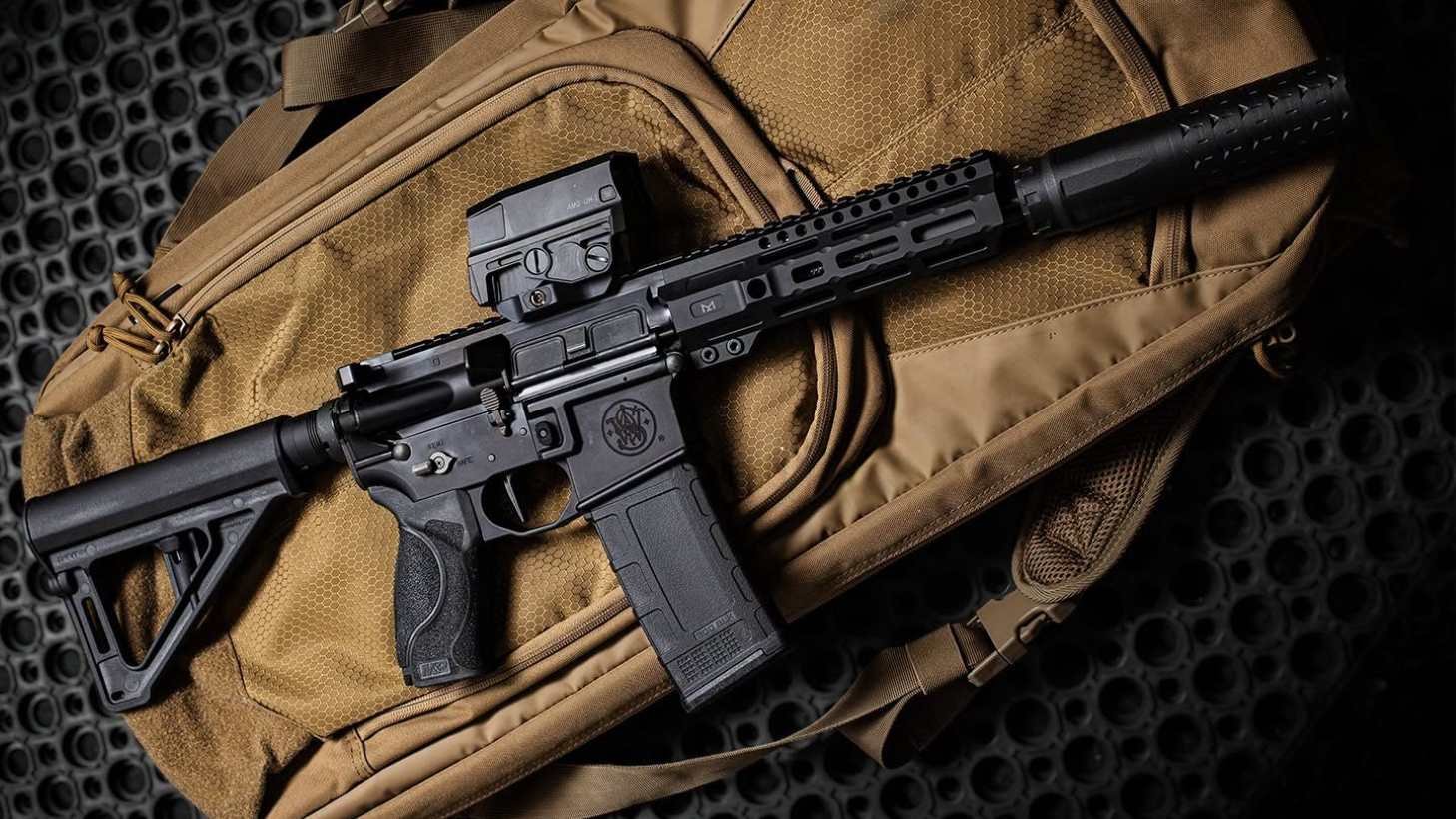
Smith & Wesson Expands M&P15 AXE Line
Smith & Wesson announced .300 Blackout versions of its M&P15 AXE platform on July 21, 2026, including an 8-inch braced pistol and a short-barreled rifle. The M&P15 AXE Pistol carries an MSRP of $1,479, while the AXE SBR is listed at $1,499.
Both are gas-operated, optic-ready firearms with 30-round capacities and threaded barrels. The pistol is configured for the civilian market with a Magpul BTR arm brace, while the SBR uses a Magpul CTR adjustable stock and includes Williams folding adjustable sights.
Compact Configurations
The M&P15 AXE Pistol measures 23.25 inches long, 2.75 inches wide, and weighs 87.04 ounces. It has a 7075-T6 aluminum frame and ships with one 30-round Magpul PMAG. No sights are included.
The SBR measures 25 inches long, shares the 2.75-inch width, and weighs 90.4 ounces. Its listed specifications include an aluminum frame, adjustable stock, folding sights, and one 30-round magazine.
Both models are chambered in .300 Blackout and use an 8-inch, stress-relieved 4150 CMV steel barrel. The barrel has a 1:7.5-inch twist rate, 5R rifling, and an Armornite finish intended to improve corrosion resistance and service life. A nickel-boron-coated barrel extension is used for heat resistance and smoother feeding and cycling.
Suppressed-Fire Gas System
The AXE models use Gemtech’s GVAC direct-impingement gas system, which Smith & Wesson says was designed to reduce gas directed toward the shooter when firing suppressed.
The system incorporates an expansion chamber in the gas block. Gas needed to cycle the bolt carrier group is diverted through the operating system, while excess gas collects in the chamber and vents forward through the muzzle after the projectile exits. Smith & Wesson describes this arrangement as a way to reduce blowback without changing the platform’s direct-impingement operation.
The barrel is threaded 5/8x24 and ships with a thread protector, allowing installation of compatible muzzle devices or suppressors.
Controls and Furniture
Both configurations feature a 7-inch Midwest Industries Combat free-float handguard with a seven-sided M-LOK mounting layout. Other shared components include an enhanced bolt carrier group and a Radian Raptor ambidextrous charging handle.
The controls are also ambidextrous, including the bolt release, magazine catch and safety selector. An M&P polymer pistol grip is supplied with four interchangeable backstraps to adjust the grip fit.
Key Differences
The primary distinction between the two AXE models is their rear furniture and legal configuration. The pistol is classified as a braced pistol and uses the Magpul BTR brace. The SBR is configured as a rifle with the Magpul CTR stock and is subject to requirements applicable to short-barreled rifles.
The SBR’s folding sights also distinguish it from the pistol, which is sold without sights but includes an optic-ready upper. Smith & Wesson did not provide separate availability timing in the announcement.
View full article -
Saudi Tanker Struck Near Jizan
Yemen’s Iran-aligned Houthi movement has claimed attacks on two Saudi oil tankers, while Saudi authorities have confirmed that at least one vessel was struck near the port of Jizan on the southern Red Sea coast.
The Saudi-flagged Encelia was hit near the port’s outer approaches, causing a fire near its bow. The crew was reported safe, the tanker was secured, and no environmental damage was initially reported.
A maritime-security source said the vessel issued a distress call reporting that it had been hit by a missile and was on fire. The United Kingdom Maritime Trade Operations center received a report of a tanker struck by an unidentified projectile in the same general area, with its crew fighting an onboard fire.
Saudi Arabia confirmed the incident but did not initially identify the attacker. The Houthis separately claimed responsibility.
Second Claimed Attack Unconfirmed
The Houthis said they targeted the Encelia and another Saudi-flagged tanker, the Layla, using ballistic missiles, cruise missiles and drones. The group said the vessels were attacked for violating its declared blockade against Saudi ports.
No comparable distress call, damage report or official Saudi confirmation concerning the Layla had emerged at the time of reporting. One tanker strike has therefore been confirmed, while the claimed second attack remains unverified.
The Houthis also claimed that about 10 vessels had been forced to turn back because of the blockade. That figure has not been independently confirmed.
Blockade Moves Beyond Warnings
The Encelia incident appears to be the first confirmed use of force directly associated with the Houthis’ recently declared blockade of Saudi Arabia.
The group had warned shipping companies against loading or discharging cargo at Saudi ports and said vessels could remain targets after leaving the immediate Red Sea region. Several tankers subsequently changed course, including vessels carrying Saudi crude near Bab el-Mandeb and others reportedly redirecting toward the Suez Canal.
The confirmed strike indicates that ships approaching Saudi Red Sea facilities may face risks beyond the narrow Bab el-Mandeb chokepoint. The attack’s location near Jizan could require operators to assess threats across a wider part of the southern Red Sea.
Pressure on Alternative Oil Routes
The Strait of Hormuz remains the principal maritime front in the U.S.–Iran war, with traffic reduced amid Iranian threats, attacks, naval warnings and continuing U.S. strikes.
Saudi Arabia has increasingly used its east–west pipeline to move oil from fields near the Persian Gulf to the Red Sea port of Yanbu, allowing some exports to bypass Hormuz. Attacks near Saudi Red Sea ports or along routes through Bab el-Mandeb could weaken that alternative without requiring either waterway to be physically closed.
Sustained risk could raise insurance and freight costs, delay deliveries and encourage longer voyages around Africa. Hormuz is the main outlet for Persian Gulf oil and liquefied natural gas, while Bab el-Mandeb links the Indian Ocean with the Red Sea and Suez Canal.
Scale of Campaign Remains Unclear
It is not yet known whether the Encelia strike was an isolated action or the start of a sustained Houthi campaign. Saudi Arabia has not announced a major military response, and the United States has not detailed whether it will treat the attack as part of the broader conflict with Iran.
Repeated attacks could increase pressure for stronger naval escorts, expanded air defenses, or military action against Houthi launch sites. Such measures could place additional demands on forces already operating around Hormuz and increase the risk of direct involvement by Saudi Arabia and the United States.
For now, the available evidence establishes one confirmed tanker strike linked by the Houthis to their blockade declaration. The claimed attack on the Layla, the campaign’s duration, and its broader effect on commercial shipping remain unresolved.
View full article

Conspiracy Theories
-
The Claim A viral image states: The image depicts a large group of people facing Polish security personnel at a fortified border. A prominent “Breaking News” label makes the claim appear to describe a recent development. The underlying law is real. The wording used in the meme, however, removes critical legal conditions and makes the legislation sound like a blanket authorization to shoot anyone attempting to enter Poland illegally. The Law Was Passed in 2024, Not 2026 The Polish parliament appr
-
In recent weeks, the pro-Palestine protests across U.S. universities have not only sparked discussions on geopolitical issues but also given rise to a peculiar scrutiny: the tents at the protest sites. A narrative has emerged suggesting that the presence of identical tents indicates a larger, orchestrated funding behind the movement. This article aims to dissect these claims with a factual lens and encourage a more informed dialogue. The Claim: Identical Tents as Evidence of Conspiracy

New Blogs
-
- 0 Comments
- 114 Views
-
- 0 Comments
- 134 Views