

Uncrowned Guard
Empire Staff
-
Joined
-
Last visited
Everything posted by Uncrowned Guard
-
White House Opens Path to Foreign-Built Navy ShipsPresident Donald Trump has directed the United States to consider building limited numbers of Navy ships in foreign shipyards, provided the builders commit to shifting subsequent production to the United States. The National Security Presidential Memorandum expands the “Finland model” used for the Coast Guard’s Arctic Security Cutters, under which initial vessels are built in Finland, and later ships are constructed domestically. Foreign companies could build up to two ships in each of three classes at their parent shipyards before transferring follow-on work to US facilities. Eligible classes include surface combatants capable of anti-submarine warfare, surface warfare and convoy escort; Consolidated Cargo Replenishment at Sea tankers; and roll-on, roll-off vessels. Congressional Approval Remains UncertainThe administration had already asked Congress to authorize four foreign-built vessels through the fiscal 2027 National Defense Authorization Act. It also requested $1.85 billion in reconciliation funding to study foreign construction and potentially purchase an initial vessel from Japan or South Korea. Congress has proposed restrictions. The House-passed NDAA bars foreign shipyards from constructing warships or combat logistics vessels. The Senate Armed Services Committee’s version also restricts overseas warship construction but permits up to two foreign-built auxiliary ships if their builders invest in the US maritime industrial base for later production. The White House Office of Management and Budget said the House prohibition would limit the government’s ability to use specialized foreign technology and attract investment into domestic shipyards. Senate Democrats have prevented their chamber’s bill from reaching the floor, citing concerns about defense spending and the conflict with Iran. US law generally limits construction of armed-forces vessels in foreign yards. A national security waiver could be used, as it was for the icebreaker agreements with Finland. Design and Systems IntegrationAnalysts said foreign ships would need to be designed from the outset for US weapons, survivability standards, redundancy requirements and communications systems. Retrofitting those capabilities after construction could create delays and integration problems. Allied ships already operate with US carrier strike groups, but their connections are not always seamless. Some NATO vessels lack networks such as Cooperative Engagement Capability, which shares missile-defense targeting data. Compatible networks and datalinks could be added, but combat-system differences would be more difficult to resolve. Spanish, South Korean and Japanese ships use versions of Aegis, though their configurations differ from those aboard US ships. Undersea-warfare systems may also be entirely different. The Navy would additionally have to incorporate foreign hull, mechanical and electrical components into its logistics network. Testing, Maintenance and Fleet OperationsForeign-built ships would face decisions over US post-delivery testing and certification, including shock-resistance requirements. Because overseas yards may use different technical standards, the Navy, administration, and Congress would have to determine which US requirements to retain or revise. Similar design adaptation complicated the Constellation-class frigate program, which was based on an Italian Fincantieri design. Fincantieri Marinette Marine received the initial contract in 2020, but the Navy said in December 2025 that it would end the program after accepting the two ships already under construction following delays, cost increases and design changes. A class limited to two or three vessels could require costly, unique training, maintenance and spare-parts systems. Analysts recommended securing critical parts in advance. Foreign designs may offer maintainability benefits, but some are built around lower operating rates than the US Navy’s 36-month cycle, under which ships can spend about half their time at sea. View full article
-
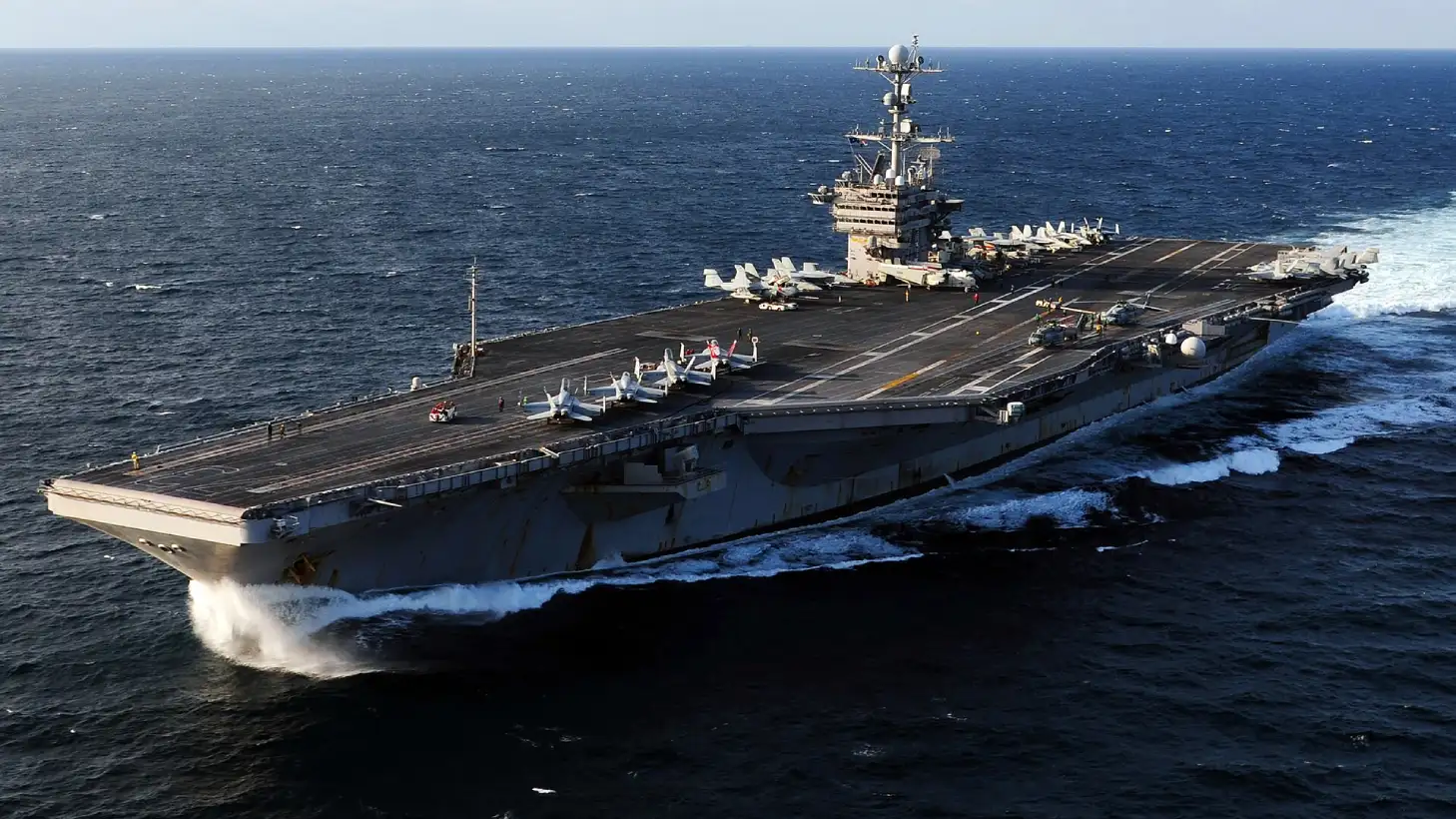 Carrier Systems Ordered Back to SteamPresident Donald Trump has signed a National Security Presidential Memorandum directing the Navy to return to steam-powered aircraft catapults and hydraulic aircraft elevators on Ford-class carriers. The order also calls for a fifth public shipyard and a new component repair center intended to reduce submarine maintenance delays. The carrier provisions apply to ships such as the future Doris Miller, now under construction at HII’s Newport News Shipbuilding. They would replace the class’s Electromagnetic Aircraft Launch System, or EMALS, with traditional steam catapults and use elevator hydraulics similar to those aboard Nimitz-class carriers. The USS Ford, the first ship in its class, currently uses EMALS to launch aircraft. Trump previewed the policy aboard the aircraft carrier George Washington in October, saying future carriers would use “steam for the catapults” and “hydraulic for the elevators.” Cost and Schedule ConcernsGeneral Atomics, which builds EMALS, said changing the Doris Miller’s launch system warrants reconsideration because production is nearly halfway complete. “With nearly 50% of production complete, changing course now would introduce significant cost, schedule, and integration risks,” the company said. It also warned of broader effects on carrier readiness, technological capabilities, workforce stability and the supplier base. Bryan Clark, director of the Hudson Institute’s Center for Defense Concepts and Technology, said Ford-class carriers use electricity for functions that relied on steam aboard earlier classes, including cooking, heating and water purification, as well as catapults and arresting gear. Restoring steam lines for the catapults would therefore require an extensive redesign, Clark said. He also noted that the Navy has not purchased a steam catapult in more than 20 years, meaning suppliers may need substantial investment and time to restart production. Fifth Public Shipyard ProposalThe memorandum directs Defense Secretary Pete Hegseth to submit a carrier and submarine readiness plan within 120 days. The proposal must examine expanded use of the private sector and the establishment of an additional public shipyard. The fifth yard plan must provide enough drydock capacity to support projected growth in the fast-attack submarine fleet over the next two decades. Potential locations are to be near the U.S. Pacific Fleet and may include the continental United States, Alaska, Hawaii and U.S. territories. Site options must consider as many as three new drydocks capable of accommodating every current and projected submarine class. The report must also address construction schedules, resource requirements, and financing options, including public-private partnerships. Existing Maintenance NetworkThe United States currently operates four public shipyards in Virginia, Maine, Washington, and Hawaii. Although private yards also maintain military vessels, the public facilities typically conduct major overhauls and modernization work on the Navy’s nuclear-powered submarines and aircraft carriers. Office of Management and Budget Director Russ Vought said in June that the administration was “pushing hard for an additional public shipyard” to support a growing fleet. He said private maintenance contracts would continue, but argued that sufficient public capacity was necessary to operate at scale. Workforce and Repair CapacityChief of Naval Operations Adm. Daryl Caudle said in April that the Navy had been examining a fifth public shipyard, while cautioning that construction alone would not resolve maintenance constraints. “A new yard is expensive, and so is that infrastructure worth it if I can’t get the workforce there?” Caudle said, pointing to questions about recruiting and sustaining enough personnel to operate another facility. The memorandum’s separate component repair center is also intended to address submarine repair delays, though further details about its location, cost, and timeline were not provided.
-
Carrier Systems Ordered Back to SteamPresident Donald Trump has signed a National Security Presidential Memorandum directing the Navy to return to steam-powered aircraft catapults and hydraulic aircraft elevators on Ford-class carriers. The order also calls for a fifth public shipyard and a new component repair center intended to reduce submarine maintenance delays. The carrier provisions apply to ships such as the future Doris Miller, now under construction at HII’s Newport News Shipbuilding. They would replace the class’s Electromagnetic Aircraft Launch System, or EMALS, with traditional steam catapults and use elevator hydraulics similar to those aboard Nimitz-class carriers. The USS Ford, the first ship in its class, currently uses EMALS to launch aircraft. Trump previewed the policy aboard the aircraft carrier George Washington in October, saying future carriers would use “steam for the catapults” and “hydraulic for the elevators.” Cost and Schedule ConcernsGeneral Atomics, which builds EMALS, said changing the Doris Miller’s launch system warrants reconsideration because production is nearly halfway complete. “With nearly 50% of production complete, changing course now would introduce significant cost, schedule, and integration risks,” the company said. It also warned of broader effects on carrier readiness, technological capabilities, workforce stability and the supplier base. Bryan Clark, director of the Hudson Institute’s Center for Defense Concepts and Technology, said Ford-class carriers use electricity for functions that relied on steam aboard earlier classes, including cooking, heating and water purification, as well as catapults and arresting gear. Restoring steam lines for the catapults would therefore require an extensive redesign, Clark said. He also noted that the Navy has not purchased a steam catapult in more than 20 years, meaning suppliers may need substantial investment and time to restart production. Fifth Public Shipyard ProposalThe memorandum directs Defense Secretary Pete Hegseth to submit a carrier and submarine readiness plan within 120 days. The proposal must examine expanded use of the private sector and the establishment of an additional public shipyard. The fifth yard plan must provide enough drydock capacity to support projected growth in the fast-attack submarine fleet over the next two decades. Potential locations are to be near the U.S. Pacific Fleet and may include the continental United States, Alaska, Hawaii and U.S. territories. Site options must consider as many as three new drydocks capable of accommodating every current and projected submarine class. The report must also address construction schedules, resource requirements, and financing options, including public-private partnerships. Existing Maintenance NetworkThe United States currently operates four public shipyards in Virginia, Maine, Washington, and Hawaii. Although private yards also maintain military vessels, the public facilities typically conduct major overhauls and modernization work on the Navy’s nuclear-powered submarines and aircraft carriers. Office of Management and Budget Director Russ Vought said in June that the administration was “pushing hard for an additional public shipyard” to support a growing fleet. He said private maintenance contracts would continue, but argued that sufficient public capacity was necessary to operate at scale. Workforce and Repair CapacityChief of Naval Operations Adm. Daryl Caudle said in April that the Navy had been examining a fifth public shipyard, while cautioning that construction alone would not resolve maintenance constraints. “A new yard is expensive, and so is that infrastructure worth it if I can’t get the workforce there?” Caudle said, pointing to questions about recruiting and sustaining enough personnel to operate another facility. The memorandum’s separate component repair center is also intended to address submarine repair delays, though further details about its location, cost, and timeline were not provided. View full article
-
WHO Warehouse Destroyed in DniproA World Health Organization warehouse in Dnipro was destroyed during a Russian attack on Aug. 7, WHO Director-General Tedros Adhanom Ghebreyesus confirmed on Aug. 9. The facility in Ukraine’s fourth-largest city stored emergency medical supplies intended for hospitals and communities near the front line. The destruction sent much of the remaining stock up in smoke. No information about casualties was provided. Staff Evacuated Part of Aid StockWHO personnel evacuated 130 of approximately 300 pallets of humanitarian aid before the warehouse was struck. The status of the evacuated supplies was not specified. Ukraine’s Ombudsman Dmytro Lubinets said the attack affected essential medicines meant for hospitals and people living closest to active fighting. “This is a blow to essential medicines intended for hospitals and people closest to the front line,” Lubinets wrote on Telegram. He described the strike as a “cynical” attack intended to deprive vulnerable people of lifesaving resources. WHO Calls for Protection of Health CareGhebreyesus condemned attacks on medical facilities and supplies, emphasizing that health care remains protected under the rules of war. “I cannot say loudly enough: attacks on health care MUST STOP,” he wrote on X. “Even wars have rules. One of those is that health must be protected.” Although WHO confirmed that the warehouse was destroyed during the Russian attack, Ghebreyesus did not identify Russia by name in his statement. Previous Attacks on Humanitarian OperationsThe Dnipro strike follows other attacks affecting United Nations humanitarian work in Ukraine. In May, a UN convoy delivering supplies to civilians in Kherson Oblast was severely damaged in two Russian drone strikes. WHO has also documented heightened risks faced by ambulance drivers and health transport personnel during Russia’s full-scale war. These workers operate along routes and in communities regularly exposed to attacks. On July 30, the UN Office for the Coordination of Humanitarian Affairs explicitly identified Russia when condemning an attack on Ukrainian civilian targets. An EU diplomat said colleagues in Brussels were considering whether that approach could signal a change in how UN organizations publicly attribute such incidents. Investigations Into Alleged CrimesUkrainian authorities continue to investigate alleged violations of international law committed during the war. According to a European Commission webpage last updated in May 2026, Ukraine is investigating more than 200,000 incidents of alleged international crimes. The commission said the actual number of potential atrocities is believed to be higher. Russian forces have been accused of repeated attacks on civilian targets and numerous war crimes in Ukraine. View full article
-
 WHO Warehouse Destroyed in DniproA World Health Organization warehouse in Dnipro was destroyed during a Russian attack on Aug. 7, WHO Director-General Tedros Adhanom Ghebreyesus confirmed on Aug. 9. The facility in Ukraine’s fourth-largest city stored emergency medical supplies intended for hospitals and communities near the front line. The destruction sent much of the remaining stock up in smoke. No information about casualties was provided. Staff Evacuated Part of Aid StockWHO personnel evacuated 130 of approximately 300 pallets of humanitarian aid before the warehouse was struck. The status of the evacuated supplies was not specified. Ukraine’s Ombudsman Dmytro Lubinets said the attack affected essential medicines meant for hospitals and people living closest to active fighting. “This is a blow to essential medicines intended for hospitals and people closest to the front line,” Lubinets wrote on Telegram. He described the strike as a “cynical” attack intended to deprive vulnerable people of lifesaving resources. WHO Calls for Protection of Health CareGhebreyesus condemned attacks on medical facilities and supplies, emphasizing that health care remains protected under the rules of war. “I cannot say loudly enough: attacks on health care MUST STOP,” he wrote on X. “Even wars have rules. One of those is that health must be protected.” Although WHO confirmed that the warehouse was destroyed during the Russian attack, Ghebreyesus did not identify Russia by name in his statement. Previous Attacks on Humanitarian OperationsThe Dnipro strike follows other attacks affecting United Nations humanitarian work in Ukraine. In May, a UN convoy delivering supplies to civilians in Kherson Oblast was severely damaged in two Russian drone strikes. WHO has also documented heightened risks faced by ambulance drivers and health transport personnel during Russia’s full-scale war. These workers operate along routes and in communities regularly exposed to attacks. On July 30, the UN Office for the Coordination of Humanitarian Affairs explicitly identified Russia when condemning an attack on Ukrainian civilian targets. An EU diplomat said colleagues in Brussels were considering whether that approach could signal a change in how UN organizations publicly attribute such incidents. Investigations Into Alleged CrimesUkrainian authorities continue to investigate alleged violations of international law committed during the war. According to a European Commission webpage last updated in May 2026, Ukraine is investigating more than 200,000 incidents of alleged international crimes. The commission said the actual number of potential atrocities is believed to be higher. Russian forces have been accused of repeated attacks on civilian targets and numerous war crimes in Ukraine.
-
Joint S-300 Effort Targets Late 2026The United States and Ukraine are working to restore and expand Ukraine’s supply of S-300 air-defense missiles, retired U.S. Army Col. Robert Hamilton said on PBS. The initiative covers refurbishment of existing interceptors and development of a newly manufactured missile compatible with surviving S-300 launchers, radars and fire-control systems. Initial operational capability is targeted for late 2026. Estimated annual output ranges from about 100 to several hundred missiles, equivalent to roughly eight to 25 rounds per month if production reaches 100–300 annually. The project is intended to return more of Ukraine’s S-300 infrastructure to sustained service and reduce the use of scarce Patriot interceptors against aircraft, cruise missiles and other targets that older systems can engage. Patriot Inventories Drive DemandHamilton estimated that the United States held about 2,330 Patriot missiles before the conflict with Iran and approximately 800 afterward, a reduction of about 1,530 interceptors. Current U.S. production is about 600 missiles annually, while Germany and Japan also manufacture Patriot missiles under license at lower rates. A $58 billion expansion is intended to raise annual production to approximately 2,000 missiles. However, the first interceptors associated with that expansion are not expected until early 2029, with contract execution continuing through 2032. Ukraine has received about 600 Patriot interceptors over 4.5 years of war, according to Hamilton. An S-300-compatible line producing 100–300 missiles annually would not replace Patriot, particularly for ballistic-missile defense, but could preserve higher-tier interceptors for targets such as Iskander-M and Kinzhal missiles. Refurbishment and New ProductionOne engineering path involves restoring older S-300 rounds by replacing motors, electronics, seals, guidance components and other life-limited parts. The second would produce a new interceptor that functions with the S-300’s existing mechanical, electrical and command interfaces. Ukraine has prior experience with this work. Ukrainian industry was repairing 5V55 missiles and testing a domestically produced replacement for the original 48D6 solid-fuel motor by 2020. Ukroboronservice has conducted S-300 repairs and service-life extensions since 2004. Washington also possesses S-300 equipment acquired for evaluation during the 1990s, including S-300P and S-300V components. That hardware can support interface and compatibility testing without removing Ukrainian combat systems from service. Missiles and Existing InfrastructureMuch of Ukraine’s prewar S-300PT/PS force used the 5V55 family. The 5V55K has an effective range of about 47 km, while the 5V55R reaches approximately 75 km. The later 48N6 has a nominal range of about 150 km. Ukraine entered 2022 with roughly 25–30 S-300PT/PS battalions in varying condition. Even an annual output of 300 missiles would therefore remain limited relative to the size of the original force, making concentrated allocation to operational batteries and priority areas more practical than equal distribution. The program was under development before Hamilton’s disclosure. In September 2024, then-U.S. Defense Secretary Lloyd Austin said the United States, Ukraine and several European companies were developing substitutes for the S-300 surface-to-air missile and R-27 air-to-air missile. A Layered Air-Defense StructureThe S-300 project forms part of a broader effort to assign different target classes to different systems. Patriot and PAC-3 MSE interceptors remain focused on ballistic missiles and other demanding threats, while SAMP/T adds long-range coverage. France plans to transfer two SAMP/T batteries to Ukraine in 2026. FrankenSAM projects have also adapted Soviet-origin systems to Western ammunition, including Buk-M1 launchers modified for RIM-7 Sea Sparrow missiles and configurations using AIM-9M Sidewinders. Norway allocated slightly more than NOK 500 million, about $45 million, in December 2025 for S-300 missile procurement while compatible local production is developed. View full article
-
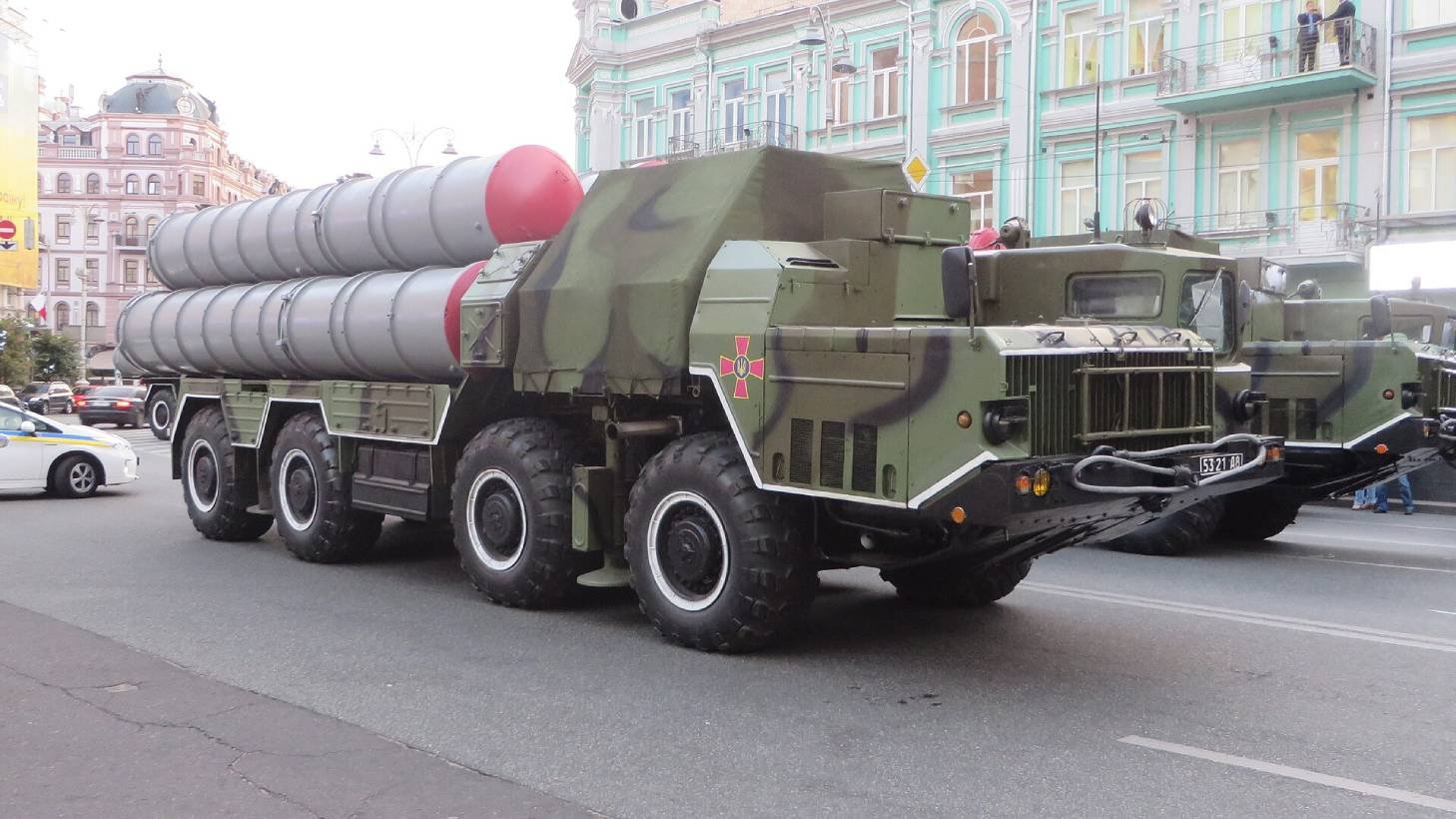 Joint S-300 Effort Targets Late 2026The United States and Ukraine are working to restore and expand Ukraine’s supply of S-300 air-defense missiles, retired U.S. Army Col. Robert Hamilton said on PBS. The initiative covers refurbishment of existing interceptors and development of a newly manufactured missile compatible with surviving S-300 launchers, radars and fire-control systems. Initial operational capability is targeted for late 2026. Estimated annual output ranges from about 100 to several hundred missiles, equivalent to roughly eight to 25 rounds per month if production reaches 100–300 annually. The project is intended to return more of Ukraine’s S-300 infrastructure to sustained service and reduce the use of scarce Patriot interceptors against aircraft, cruise missiles and other targets that older systems can engage. Patriot Inventories Drive DemandHamilton estimated that the United States held about 2,330 Patriot missiles before the conflict with Iran and approximately 800 afterward, a reduction of about 1,530 interceptors. Current U.S. production is about 600 missiles annually, while Germany and Japan also manufacture Patriot missiles under license at lower rates. A $58 billion expansion is intended to raise annual production to approximately 2,000 missiles. However, the first interceptors associated with that expansion are not expected until early 2029, with contract execution continuing through 2032. Ukraine has received about 600 Patriot interceptors over 4.5 years of war, according to Hamilton. An S-300-compatible line producing 100–300 missiles annually would not replace Patriot, particularly for ballistic-missile defense, but could preserve higher-tier interceptors for targets such as Iskander-M and Kinzhal missiles. Refurbishment and New ProductionOne engineering path involves restoring older S-300 rounds by replacing motors, electronics, seals, guidance components and other life-limited parts. The second would produce a new interceptor that functions with the S-300’s existing mechanical, electrical and command interfaces. Ukraine has prior experience with this work. Ukrainian industry was repairing 5V55 missiles and testing a domestically produced replacement for the original 48D6 solid-fuel motor by 2020. Ukroboronservice has conducted S-300 repairs and service-life extensions since 2004. Washington also possesses S-300 equipment acquired for evaluation during the 1990s, including S-300P and S-300V components. That hardware can support interface and compatibility testing without removing Ukrainian combat systems from service. Missiles and Existing InfrastructureMuch of Ukraine’s prewar S-300PT/PS force used the 5V55 family. The 5V55K has an effective range of about 47 km, while the 5V55R reaches approximately 75 km. The later 48N6 has a nominal range of about 150 km. Ukraine entered 2022 with roughly 25–30 S-300PT/PS battalions in varying condition. Even an annual output of 300 missiles would therefore remain limited relative to the size of the original force, making concentrated allocation to operational batteries and priority areas more practical than equal distribution. The program was under development before Hamilton’s disclosure. In September 2024, then-U.S. Defense Secretary Lloyd Austin said the United States, Ukraine and several European companies were developing substitutes for the S-300 surface-to-air missile and R-27 air-to-air missile. A Layered Air-Defense StructureThe S-300 project forms part of a broader effort to assign different target classes to different systems. Patriot and PAC-3 MSE interceptors remain focused on ballistic missiles and other demanding threats, while SAMP/T adds long-range coverage. France plans to transfer two SAMP/T batteries to Ukraine in 2026. FrankenSAM projects have also adapted Soviet-origin systems to Western ammunition, including Buk-M1 launchers modified for RIM-7 Sea Sparrow missiles and configurations using AIM-9M Sidewinders. Norway allocated slightly more than NOK 500 million, about $45 million, in December 2025 for S-300 missile procurement while compatible local production is developed.
-
Fighting Remains Concentrated in DonetskAs of August 9, 2026, Russia continues to apply its strongest ground pressure around Pokrovsk, Dobropillia, and the Kostiantynivka–Druzhkivka area. Ukrainian reporting recorded more than 200 combat engagements in one day, with the Pokrovsk and Kostiantynivka sectors seeing the heaviest fighting. The Institute for the Study of War assesses that Russia is moving north and northwest around Pokrovsk and Dobropillia, potentially preparing a broader attempt to envelop Ukraine’s remaining fortified belt in Donetsk: Kostiantynivka, Druzhkivka, Sloviansk and Kramatorsk. However, Russia’s current advance remains too slow to threaten the belt’s capture in the near term. Small-unit infiltration increasingly characterizes combat along the roughly 1,200-kilometer front. Reconnaissance and first-person-view drones make concentrated armored formations vulnerable, leading Russian troops to use small groups to exploit gaps in Ukraine’s thinly staffed defenses. Russia Targets Logistics and EnergyRussia has increased strikes on roads, bridges, railways and other infrastructure supporting Sloviansk and Kramatorsk, while also using more glide bombs in the area. The campaign appears intended to weaken supply and reinforcement routes before a possible future ground offensive. An overnight attack into August 8 involved six ballistic missiles and 151 drones, according to Ukrainian authorities. Four people were killed in and around Kyiv, including a three-year-old child and his grandparents. Ukraine’s limited supply of ballistic-missile interceptors is becoming a major vulnerability. President Volodymyr Zelenskyy said allied interceptor deliveries in 2026 had fallen to about one-third of their 2025 level, with Patriot systems particularly affected. Ukraine intercepted 29 of 195 Russian ballistic missiles launched in July, he said. Ukraine also expects renewed attacks on its power grid during winter. Officials say strikes during the previous winter damaged or destroyed facilities representing about 80% of the country’s generating capacity. Ukraine Expands Deep StrikesUkraine has broadened its long-range campaign against Russian energy, military and transportation infrastructure. Drones struck the Slavneft-Yanos refinery in Yaroslavl, about 250 kilometers northeast of Moscow, causing a large fire after the August 6 attack. Ukraine also confirmed strikes on the Ilsky and Syzran refineries during the August 8 exchange. Other targets have included fuel facilities, air bases, air-defense systems, command posts, rail infrastructure, warships, tankers and commercial warehouses. ISW assesses that the refinery attacks have reduced Russian processing activity, prompting Moscow to export unusually large volumes of crude oil rather than refine it domestically. Black Sea Risks IncreaseRussia and Ukraine have intensified attacks on ports, tankers, cargo ships and export infrastructure in the Black Sea, disrupting grain and energy shipments while raising shipping and insurance costs. Russia continues to strike Ukrainian port infrastructure around Odesa and Mykolaiv. Ukraine has targeted Russian oil tankers, terminals and shipping linked to Moscow’s energy trade. Turkey has called for a moratorium on attacks against commercial vessels after ships from third countries were increasingly affected. North Korean Role ExpandsA North Korean missile unit of about 90 personnel is reportedly deploying to Russia’s Voronezh region with up to six launchers and as many as 120 ballistic missiles. At least 40 missiles were reportedly delivered, including two linked to a recent Russian strike. North Korea has already sent approximately 14,000–15,000 troops, mainly connected to operations around Kursk, while supplying millions of artillery rounds and ballistic missiles. Zelenskyy said Russia may be preparing to receive tens of thousands more North Korean personnel, although their number and role remain uncertain. Sanctions Advance as War ContinuesThe U.S. Senate approved a new Russia sanctions bill by an 86–11 vote on August 8. The legislation targets Russian energy revenue, banks, officials, and companies and could penalize countries purchasing large quantities of Russian oil and gas. It now moves to the House. Neither side appears close to a decisive operational victory or an agreement over territorial demands. Russia retains the ground initiative in Donetsk but is advancing incrementally, while Ukraine is increasingly using long-range strikes to offset disadvantages in manpower and artillery. View full article
-
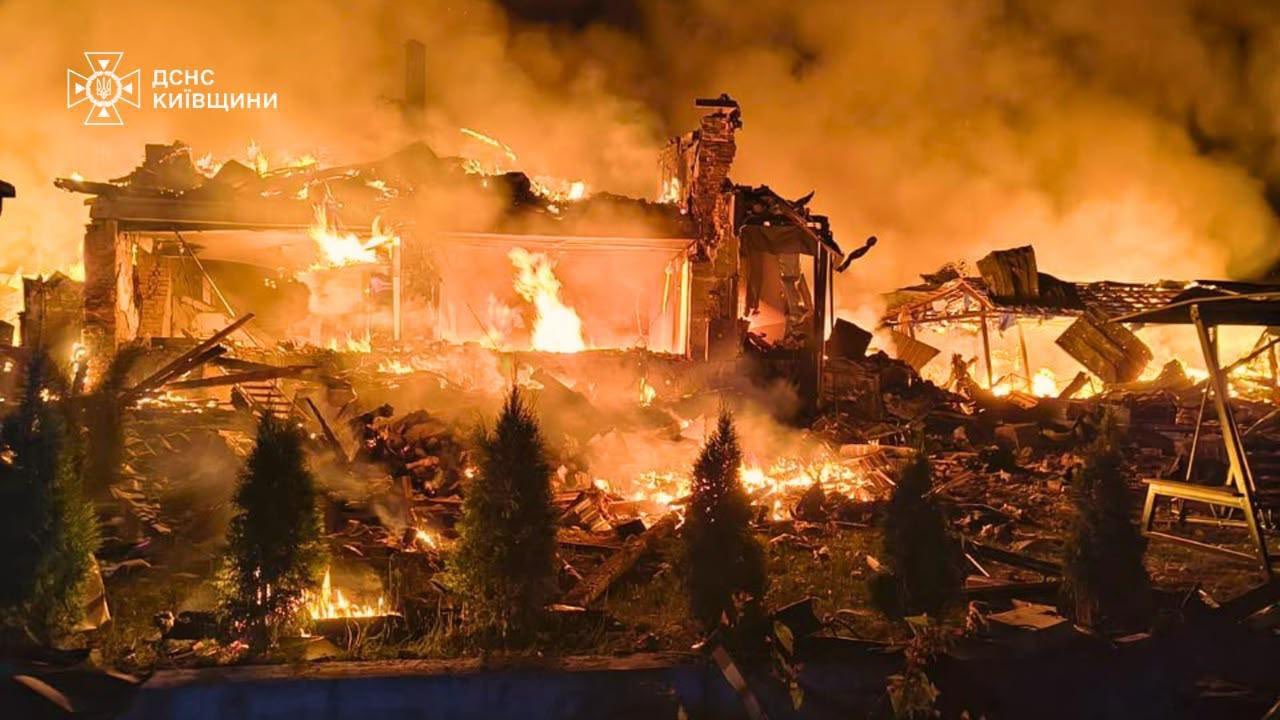 Fighting Remains Concentrated in DonetskAs of August 9, 2026, Russia continues to apply its strongest ground pressure around Pokrovsk, Dobropillia, and the Kostiantynivka–Druzhkivka area. Ukrainian reporting recorded more than 200 combat engagements in one day, with the Pokrovsk and Kostiantynivka sectors seeing the heaviest fighting. The Institute for the Study of War assesses that Russia is moving north and northwest around Pokrovsk and Dobropillia, potentially preparing a broader attempt to envelop Ukraine’s remaining fortified belt in Donetsk: Kostiantynivka, Druzhkivka, Sloviansk and Kramatorsk. However, Russia’s current advance remains too slow to threaten the belt’s capture in the near term. Small-unit infiltration increasingly characterizes combat along the roughly 1,200-kilometer front. Reconnaissance and first-person-view drones make concentrated armored formations vulnerable, leading Russian troops to use small groups to exploit gaps in Ukraine’s thinly staffed defenses. Russia Targets Logistics and EnergyRussia has increased strikes on roads, bridges, railways and other infrastructure supporting Sloviansk and Kramatorsk, while also using more glide bombs in the area. The campaign appears intended to weaken supply and reinforcement routes before a possible future ground offensive. An overnight attack into August 8 involved six ballistic missiles and 151 drones, according to Ukrainian authorities. Four people were killed in and around Kyiv, including a three-year-old child and his grandparents. Ukraine’s limited supply of ballistic-missile interceptors is becoming a major vulnerability. President Volodymyr Zelenskyy said allied interceptor deliveries in 2026 had fallen to about one-third of their 2025 level, with Patriot systems particularly affected. Ukraine intercepted 29 of 195 Russian ballistic missiles launched in July, he said. Ukraine also expects renewed attacks on its power grid during winter. Officials say strikes during the previous winter damaged or destroyed facilities representing about 80% of the country’s generating capacity. Ukraine Expands Deep StrikesUkraine has broadened its long-range campaign against Russian energy, military and transportation infrastructure. Drones struck the Slavneft-Yanos refinery in Yaroslavl, about 250 kilometers northeast of Moscow, causing a large fire after the August 6 attack. Ukraine also confirmed strikes on the Ilsky and Syzran refineries during the August 8 exchange. Other targets have included fuel facilities, air bases, air-defense systems, command posts, rail infrastructure, warships, tankers and commercial warehouses. ISW assesses that the refinery attacks have reduced Russian processing activity, prompting Moscow to export unusually large volumes of crude oil rather than refine it domestically. Black Sea Risks IncreaseRussia and Ukraine have intensified attacks on ports, tankers, cargo ships and export infrastructure in the Black Sea, disrupting grain and energy shipments while raising shipping and insurance costs. Russia continues to strike Ukrainian port infrastructure around Odesa and Mykolaiv. Ukraine has targeted Russian oil tankers, terminals and shipping linked to Moscow’s energy trade. Turkey has called for a moratorium on attacks against commercial vessels after ships from third countries were increasingly affected. North Korean Role ExpandsA North Korean missile unit of about 90 personnel is reportedly deploying to Russia’s Voronezh region with up to six launchers and as many as 120 ballistic missiles. At least 40 missiles were reportedly delivered, including two linked to a recent Russian strike. North Korea has already sent approximately 14,000–15,000 troops, mainly connected to operations around Kursk, while supplying millions of artillery rounds and ballistic missiles. Zelenskyy said Russia may be preparing to receive tens of thousands more North Korean personnel, although their number and role remain uncertain. Sanctions Advance as War ContinuesThe U.S. Senate approved a new Russia sanctions bill by an 86–11 vote on August 8. The legislation targets Russian energy revenue, banks, officials, and companies and could penalize countries purchasing large quantities of Russian oil and gas. It now moves to the House. Neither side appears close to a decisive operational victory or an agreement over territorial demands. Russia retains the ground initiative in Donetsk but is advancing incrementally, while Ukraine is increasingly using long-range strikes to offset disadvantages in manpower and artillery.
-
Direct Strikes Pause as Maritime Attacks ContinueAs of August 9, 2026, large-scale direct strikes between the United States and Iran have slowed, but fighting and disruption continue around two major shipping routes. The last publicly confirmed major U.S. strike package occurred July 29, when U.S. Central Command said it targeted dozens of Islamic Revolutionary Guard Corps command centers, missile and drone facilities, coastal defenses and maritime capabilities. The strikes followed an Iranian ballistic missile launch against U.S. forces; CENTCOM said the missiles were intercepted. President Donald Trump announced another halt to strikes on August 1 while intermediaries pursued a provisional diplomatic arrangement. No comparable U.S. bombing campaign has since been announced, but the pause has not produced a broader settlement. Vessel Struck in Strait of HormuzThe United Arab Emirates said Iran fired a missile on August 8 at a vessel affiliated with state-owned ADNOC while it transited the Strait of Hormuz. No injuries were reported, and authorities said the situation aboard the vessel was brought under control. The United Kingdom Maritime Trade Operations separately reported that a ship in the area was hit by an unidentified projectile and caught fire. The fire was extinguished without reported environmental damage. Iran did not immediately respond to the UAE’s accusation. ADNOC said 15 of its vessels have been attacked by missiles or drones since the war began, including three during the past week. The attacks have killed one crew member and wounded 20 others. Iran Sets Conditions for Reopening HormuzIran and Oman say they are close to an agreement establishing a new shipping route through the strait, and Washington has expressed optimism that an arrangement could be announced. Iranian officials, however, say an agreement with Oman alone would not reopen Hormuz. Iran’s reported demands include compensation for wartime damage, removal of U.S. sanctions and the blockade of Iranian ports, release of frozen Iranian assets, an end to U.S. threats, and an end to military operations against Iran and its allies in Lebanon, Yemen, Iraq and the Palestinian territories. The IRGC said August 8 that the strait would reopen only if Washington accepted Iran’s conditions. Reuters reported that one version of the proposed Iran-Oman arrangement would also give Tehran some authority over vessels entering the Persian Gulf. The United States has opposed allowing Iran to control international access through the waterway. Iran has imposed tolls on tankers and fired on vessels attempting to transit without its approval. The dispute therefore concerns both reopening the strait and determining the rules under which ships may use it. Commercial Traffic Remains DisruptedAt least 70 ships remain trapped inside the Persian Gulf, including 29 tankers, according to an August 7 USNI report. Another 65 vessels that entered during a June ceasefire period have not departed. Traffic increased during the latest reporting week, but Lloyd’s List Intelligence said a single week of data did not demonstrate that shipowners considered the crisis over. Transit levels remain well below prewar norms. The United States and Iran are enforcing competing maritime restrictions. CENTCOM said it had permitted more than 30 humanitarian vessels to pass during the U.S. blockade while turning away 53 ships, disabling two and boarding two others. U.S. Forces Remain Positioned NearbyThe United States has maintained a large regional force despite the pause in airstrikes. As of an August 3 fleet assessment, the USS Abraham Lincoln and USS George H.W. Bush carrier strike groups were operating in the Arabian Sea. The Lincoln was supporting Operation Epic Fury. The USS Boxer Amphibious Ready Group and the 11th Marine Expeditionary Unit were also in the area, alongside independently deployed destroyers and cruisers. CENTCOM said July 29 that more than 50,000 U.S. service members were deployed across the Middle East. View full article
-
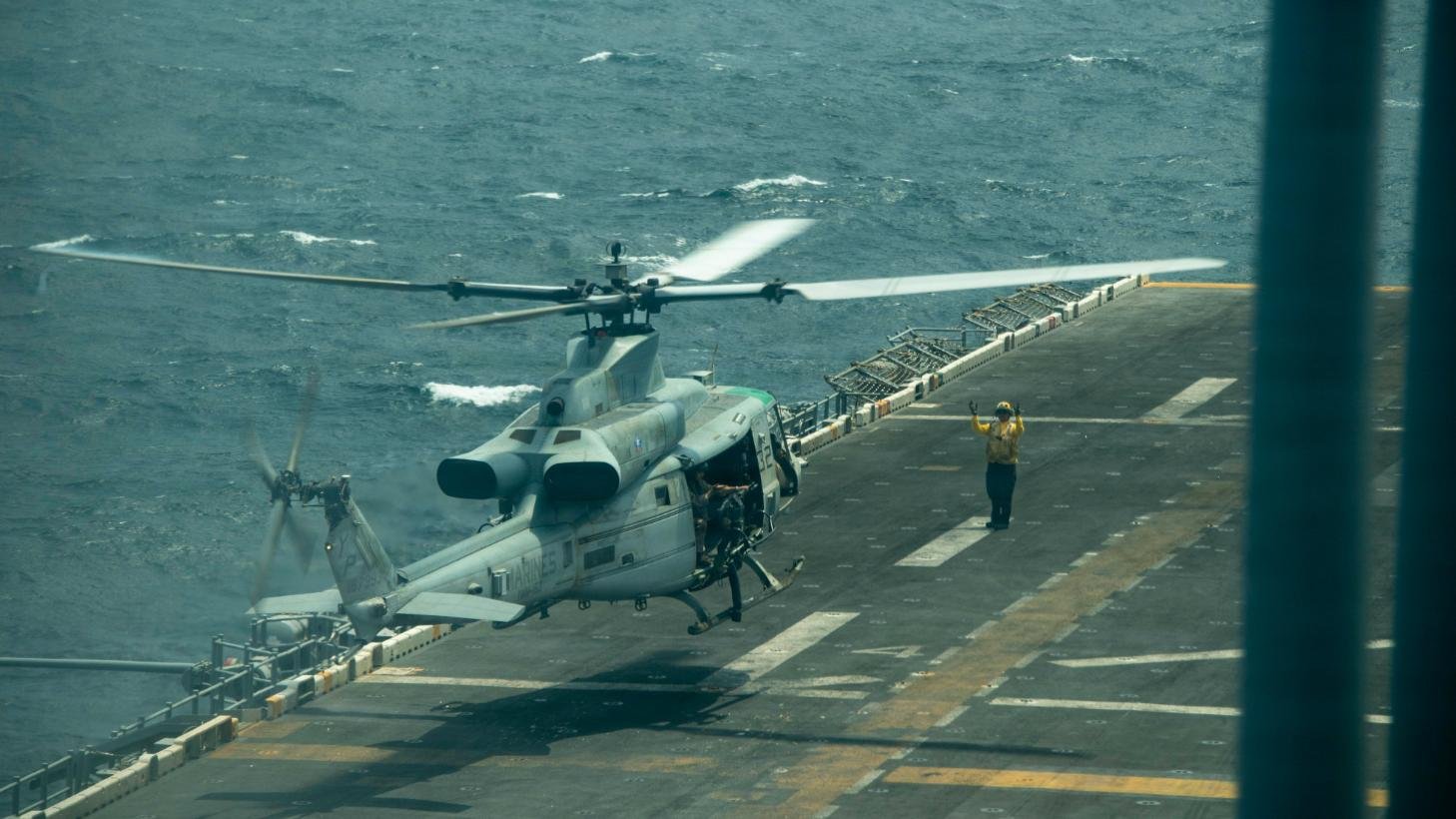 Direct Strikes Pause as Maritime Attacks ContinueAs of August 9, 2026, large-scale direct strikes between the United States and Iran have slowed, but fighting and disruption continue around two major shipping routes. The last publicly confirmed major U.S. strike package occurred July 29, when U.S. Central Command said it targeted dozens of Islamic Revolutionary Guard Corps command centers, missile and drone facilities, coastal defenses and maritime capabilities. The strikes followed an Iranian ballistic missile launch against U.S. forces; CENTCOM said the missiles were intercepted. President Donald Trump announced another halt to strikes on August 1 while intermediaries pursued a provisional diplomatic arrangement. No comparable U.S. bombing campaign has since been announced, but the pause has not produced a broader settlement. Vessel Struck in Strait of HormuzThe United Arab Emirates said Iran fired a missile on August 8 at a vessel affiliated with state-owned ADNOC while it transited the Strait of Hormuz. No injuries were reported, and authorities said the situation aboard the vessel was brought under control. The United Kingdom Maritime Trade Operations separately reported that a ship in the area was hit by an unidentified projectile and caught fire. The fire was extinguished without reported environmental damage. Iran did not immediately respond to the UAE’s accusation. ADNOC said 15 of its vessels have been attacked by missiles or drones since the war began, including three during the past week. The attacks have killed one crew member and wounded 20 others. Iran Sets Conditions for Reopening HormuzIran and Oman say they are close to an agreement establishing a new shipping route through the strait, and Washington has expressed optimism that an arrangement could be announced. Iranian officials, however, say an agreement with Oman alone would not reopen Hormuz. Iran’s reported demands include compensation for wartime damage, removal of U.S. sanctions and the blockade of Iranian ports, release of frozen Iranian assets, an end to U.S. threats, and an end to military operations against Iran and its allies in Lebanon, Yemen, Iraq and the Palestinian territories. The IRGC said August 8 that the strait would reopen only if Washington accepted Iran’s conditions. Reuters reported that one version of the proposed Iran-Oman arrangement would also give Tehran some authority over vessels entering the Persian Gulf. The United States has opposed allowing Iran to control international access through the waterway. Iran has imposed tolls on tankers and fired on vessels attempting to transit without its approval. The dispute therefore concerns both reopening the strait and determining the rules under which ships may use it. Commercial Traffic Remains DisruptedAt least 70 ships remain trapped inside the Persian Gulf, including 29 tankers, according to an August 7 USNI report. Another 65 vessels that entered during a June ceasefire period have not departed. Traffic increased during the latest reporting week, but Lloyd’s List Intelligence said a single week of data did not demonstrate that shipowners considered the crisis over. Transit levels remain well below prewar norms. The United States and Iran are enforcing competing maritime restrictions. CENTCOM said it had permitted more than 30 humanitarian vessels to pass during the U.S. blockade while turning away 53 ships, disabling two and boarding two others. U.S. Forces Remain Positioned NearbyThe United States has maintained a large regional force despite the pause in airstrikes. As of an August 3 fleet assessment, the USS Abraham Lincoln and USS George H.W. Bush carrier strike groups were operating in the Arabian Sea. The Lincoln was supporting Operation Epic Fury. The USS Boxer Amphibious Ready Group and the 11th Marine Expeditionary Unit were also in the area, alongside independently deployed destroyers and cruisers. CENTCOM said July 29 that more than 50,000 U.S. service members were deployed across the Middle East.
-
Three States Sign Collective-Defence PactSaudi Arabia, Turkey and Pakistan signed the Makkah Joint Defence Agreement on August 7, 2026, establishing a trilateral commitment to treat an armed attack against any member as an attack against all three. Saudi Crown Prince Mohammed bin Salman, Turkish President Recep Tayyip Erdoğan and Pakistani Prime Minister Shehbaz Sharif concluded the agreement at the Makkah Al-Mukarramah Summit for Joint Defence at Al-Safa Palace in Mecca. A joint statement said the pact is intended to strengthen collective deterrence and enhance “all aspects of defence cooperation” among the countries. It did not specify the forces, equipment or other military support each state would be required to provide in response to an attack. Scope and Existing CommitmentsA Turkish official described the agreement as defensive and not directed at a particular country. The official also said it remains open to other regional states and does not replace existing bilateral or multilateral arrangements involving the signatories. The pact expands upon the Strategic Mutual Defence Agreement signed by Saudi Arabia and Pakistan on September 17, 2025. That earlier accord formalized a long-running military relationship in which Pakistan has provided training and technical assistance to Saudi forces. Reports differ on the nuclear implications of the arrangements. The Saudi-Pakistani agreement has been characterized as placing Riyadh under Pakistan’s nuclear umbrella, but defence analyst Mansoor Ahmed of the Australian National University said Pakistan’s nuclear posture remains focused on India and that the trilateral pact is unlikely to extend its nuclear deterrent to the other parties. Agreement Follows Regional AttacksThe signing took place during a wider conflict involving Iran, Israel and the United States that began after US and Israeli strikes on Iranian targets on February 28, 2026. Iran and allied forces, including Houthi fighters in Yemen and Shiite militias in Iraq, subsequently carried out missile and drone attacks against Saudi Arabia and other regional states. Hours before the agreement was signed, a senior Saudi official said the kingdom was preparing for possible attacks by Iran-backed forces in Yemen and Iraq, citing intelligence gathered domestically and from regional allies and the United States. Pakistan has also participated in diplomatic efforts concerning the Iran conflict. Turkey, a NATO member, has been less directly exposed to the fighting but shares concerns about the security and economic effects of broader regional instability. Established Defence RelationshipsThe three countries had expanded bilateral military and industrial cooperation before forming the new grouping. Turkey and Pakistan have exchanged warships and training aircraft, while Saudi Arabia agreed in 2023 to buy Turkish-made drones in what Ankara then described as its largest defence export contract. By mid-2026, Pakistan had reportedly deployed several thousand troops, fighter aircraft, drones and an air-defence system to Saudi Arabia. Pakistan also opened discussions with Kuwait in July on a broader security arrangement. Ahmed said the pact could provide a framework combining the established defence industries of Pakistan and Turkey with potential Saudi financial and technological investment. He argued that it is better understood as a regional security and defence-cooperation framework than as an alliance directly comparable with NATO. Implementation Remains UnspecifiedThe joint statement emphasized historical ties, Islamic solidarity and shared strategic interests but provided no detailed command structure, deployment plan or automatic military-response mechanism. Michael Kugelman of the Atlantic Council described the pact as a logical result of deepening security ties and said its focus on regional burden-sharing could be welcomed in Washington. H. A. Hellyer of the Royal United Services Institute cautioned that the signing alone does not establish how quickly or fully the collective-defence provision would be implemented during a crisis. Turkey has previously sought to include Egypt in a broader regional defence arrangement, but no expansion beyond the three signatories has been announced. View full article
-
 Three States Sign Collective-Defence PactSaudi Arabia, Turkey and Pakistan signed the Makkah Joint Defence Agreement on August 7, 2026, establishing a trilateral commitment to treat an armed attack against any member as an attack against all three. Saudi Crown Prince Mohammed bin Salman, Turkish President Recep Tayyip Erdoğan and Pakistani Prime Minister Shehbaz Sharif concluded the agreement at the Makkah Al-Mukarramah Summit for Joint Defence at Al-Safa Palace in Mecca. A joint statement said the pact is intended to strengthen collective deterrence and enhance “all aspects of defence cooperation” among the countries. It did not specify the forces, equipment or other military support each state would be required to provide in response to an attack. Scope and Existing CommitmentsA Turkish official described the agreement as defensive and not directed at a particular country. The official also said it remains open to other regional states and does not replace existing bilateral or multilateral arrangements involving the signatories. The pact expands upon the Strategic Mutual Defence Agreement signed by Saudi Arabia and Pakistan on September 17, 2025. That earlier accord formalized a long-running military relationship in which Pakistan has provided training and technical assistance to Saudi forces. Reports differ on the nuclear implications of the arrangements. The Saudi-Pakistani agreement has been characterized as placing Riyadh under Pakistan’s nuclear umbrella, but defence analyst Mansoor Ahmed of the Australian National University said Pakistan’s nuclear posture remains focused on India and that the trilateral pact is unlikely to extend its nuclear deterrent to the other parties. Agreement Follows Regional AttacksThe signing took place during a wider conflict involving Iran, Israel and the United States that began after US and Israeli strikes on Iranian targets on February 28, 2026. Iran and allied forces, including Houthi fighters in Yemen and Shiite militias in Iraq, subsequently carried out missile and drone attacks against Saudi Arabia and other regional states. Hours before the agreement was signed, a senior Saudi official said the kingdom was preparing for possible attacks by Iran-backed forces in Yemen and Iraq, citing intelligence gathered domestically and from regional allies and the United States. Pakistan has also participated in diplomatic efforts concerning the Iran conflict. Turkey, a NATO member, has been less directly exposed to the fighting but shares concerns about the security and economic effects of broader regional instability. Established Defence RelationshipsThe three countries had expanded bilateral military and industrial cooperation before forming the new grouping. Turkey and Pakistan have exchanged warships and training aircraft, while Saudi Arabia agreed in 2023 to buy Turkish-made drones in what Ankara then described as its largest defence export contract. By mid-2026, Pakistan had reportedly deployed several thousand troops, fighter aircraft, drones and an air-defence system to Saudi Arabia. Pakistan also opened discussions with Kuwait in July on a broader security arrangement. Ahmed said the pact could provide a framework combining the established defence industries of Pakistan and Turkey with potential Saudi financial and technological investment. He argued that it is better understood as a regional security and defence-cooperation framework than as an alliance directly comparable with NATO. Implementation Remains UnspecifiedThe joint statement emphasized historical ties, Islamic solidarity and shared strategic interests but provided no detailed command structure, deployment plan or automatic military-response mechanism. Michael Kugelman of the Atlantic Council described the pact as a logical result of deepening security ties and said its focus on regional burden-sharing could be welcomed in Washington. H. A. Hellyer of the Royal United Services Institute cautioned that the signing alone does not establish how quickly or fully the collective-defence provision would be implemented during a crisis. Turkey has previously sought to include Egypt in a broader regional defence arrangement, but no expansion beyond the three signatories has been announced.
-
CBO Projects $275 Billion CostThe Congressional Budget Office estimates that the Navy’s planned fleet of 15 nuclear-powered Trump-class battleships would cost $275 billion. The lead ship, USS Defiant, would cost about $23.4 billion, while the remaining 14 vessels would average approximately $18 billion each. The estimate assumes the first ship is ordered in 2028 and all 15 are purchased through 2056 at the rate outlined in the Navy’s shipbuilding plan. CBO described its projections as “highly uncertain,” noting that they rely on preliminary assessments of the ship’s design and the broader acquisition program. A conventionally powered lead ship would cost an estimated $21.3 billion, with a 15-ship conventional fleet totaling about $243 billion. The nuclear-powered program would therefore cost approximately 13 percent more to build. Nuclear propulsion could reduce operating expenses by eliminating conventional fuel purchases, but CBO said it lacked enough information to calculate those savings. Funding and Construction ScheduleThe Navy is seeking approximately $1 billion in advance procurement funding and $837 million for research and development in its fiscal 2027 budget request. Budget documents indicate plans to request about $17 billion in procurement funding for the first ship in fiscal 2028 and roughly $13 billion in 2030 for the second. Construction of the lead ship was expected to begin in 2028, with delivery projected for 2036. The program was announced by President Donald Trump in December 2025 as part of the administration’s “Golden Fleet” initiative. While the initial announcement called for two ships followed by a 10-ship fleet and potentially 20 to 25 vessels, the current CBO estimate is based on the Navy’s 15-ship plan. CBO assumes one shipyard would conduct final assembly while other yards build portions or sections. Navy officials have indicated that Newport News Shipbuilding is the most likely location because of the ship’s nuclear propulsion. Size and Nuclear PropulsionAt an estimated 35,000 tons, the Trump class would be roughly three and a half times the size of an Arleigh Burke-class destroyer and would become the world’s largest surface combatant. Navy budget documents provide a broader projected full-load displacement of 35,000 to 41,000 tons. CBO said increasing displacement to 41,000 tons would raise the lead ship’s cost by 16 percent. The Navy has confirmed that the class will be nuclear-powered, using the same reactor design as the Gerald R. Ford-class aircraft carrier. The House Armed Services Committee has directed the Navy to provide an acquisition report by March 2027, including plans to mitigate possible effects on Ford-class carrier construction. Planned Weapons and CapabilitiesThe ships are intended to carry the nuclear-armed sea-launched cruise missile, known as SLCM-N. CBO said the number aboard would probably be small but remains unknown. Its inclusion would give the ship more firepower than any Navy vessel other than the 14 Ohio-class ballistic missile submarines. Other planned systems include Conventional Prompt Strike hypersonic missiles, Mark 41 vertical-launch cells, 5-inch guns, railguns, laser weapons and short-range defensive launchers. Acting Navy Secretary Hung Cao said in May 2026 that the ship would have 200 vertical-launch cells. Plans also call for an enclosed hangar supporting helicopters, V-22 Ospreys and future crewed or uncrewed vertical-lift aircraft. Program Background and UncertaintyThe Trump class, also designated BBG(X) or BBGN, emerged from the Navy’s work on a successor to the DDG(X) large surface combatant. Officials concluded that the DDG(X) hull was too small to accommodate the desired combination of hypersonic missiles and a gun mount. The Navy has not operated a battleship since USS Missouri retired in 1992. The Trump class would differ from historical battleships by relying primarily on guided missiles rather than heavy armor and large-caliber guns, leading some analysts to question its classification. Analysts have also raised concerns about funding, development costs, shipyard capacity, and the skilled workforce needed for the unprecedented design. View full article
-
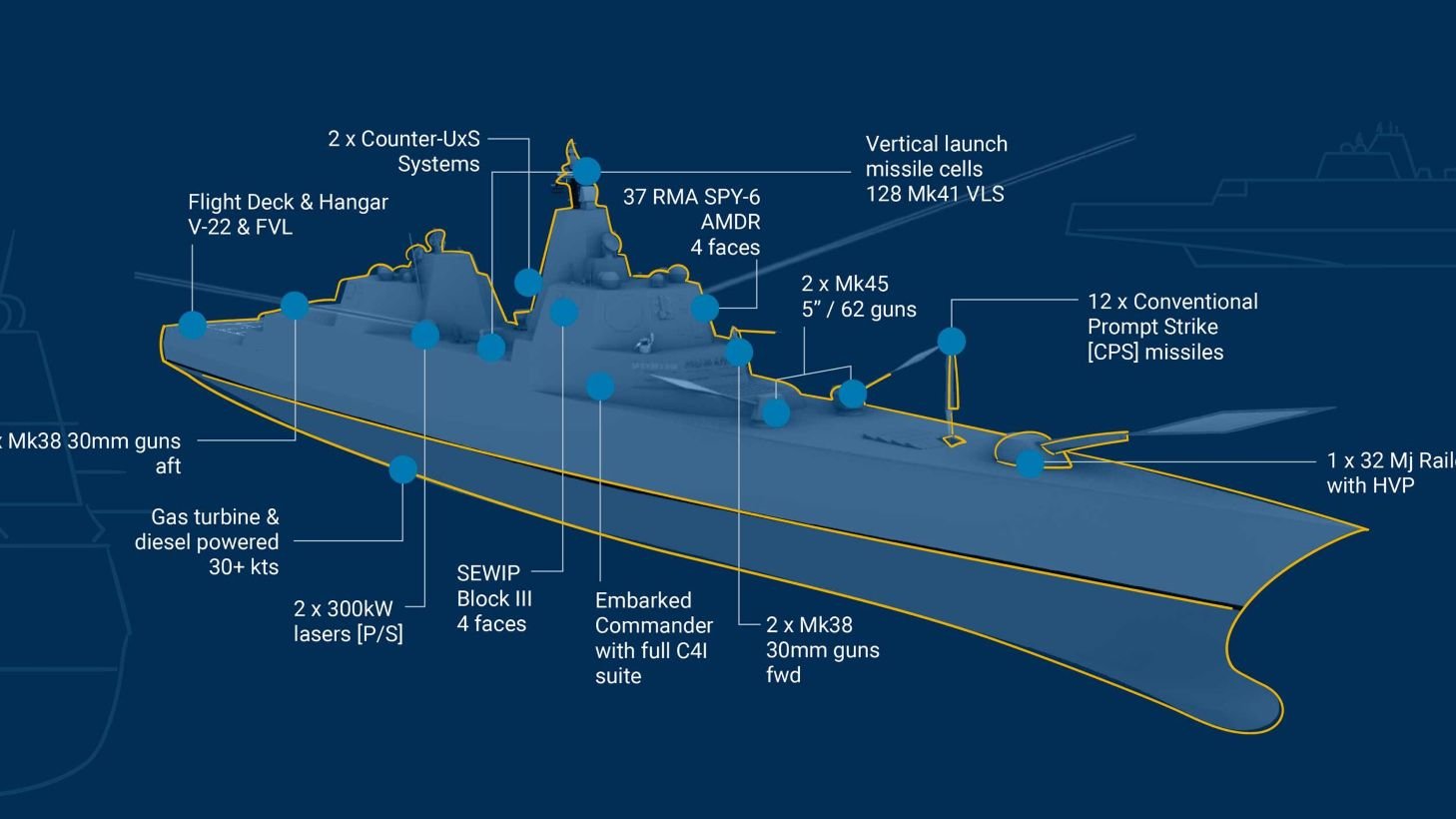 CBO Projects $275 Billion CostThe Congressional Budget Office estimates that the Navy’s planned fleet of 15 nuclear-powered Trump-class battleships would cost $275 billion. The lead ship, USS Defiant, would cost about $23.4 billion, while the remaining 14 vessels would average approximately $18 billion each. The estimate assumes the first ship is ordered in 2028 and all 15 are purchased through 2056 at the rate outlined in the Navy’s shipbuilding plan. CBO described its projections as “highly uncertain,” noting that they rely on preliminary assessments of the ship’s design and the broader acquisition program. A conventionally powered lead ship would cost an estimated $21.3 billion, with a 15-ship conventional fleet totaling about $243 billion. The nuclear-powered program would therefore cost approximately 13 percent more to build. Nuclear propulsion could reduce operating expenses by eliminating conventional fuel purchases, but CBO said it lacked enough information to calculate those savings. Funding and Construction ScheduleThe Navy is seeking approximately $1 billion in advance procurement funding and $837 million for research and development in its fiscal 2027 budget request. Budget documents indicate plans to request about $17 billion in procurement funding for the first ship in fiscal 2028 and roughly $13 billion in 2030 for the second. Construction of the lead ship was expected to begin in 2028, with delivery projected for 2036. The program was announced by President Donald Trump in December 2025 as part of the administration’s “Golden Fleet” initiative. While the initial announcement called for two ships followed by a 10-ship fleet and potentially 20 to 25 vessels, the current CBO estimate is based on the Navy’s 15-ship plan. CBO assumes one shipyard would conduct final assembly while other yards build portions or sections. Navy officials have indicated that Newport News Shipbuilding is the most likely location because of the ship’s nuclear propulsion. Size and Nuclear PropulsionAt an estimated 35,000 tons, the Trump class would be roughly three and a half times the size of an Arleigh Burke-class destroyer and would become the world’s largest surface combatant. Navy budget documents provide a broader projected full-load displacement of 35,000 to 41,000 tons. CBO said increasing displacement to 41,000 tons would raise the lead ship’s cost by 16 percent. The Navy has confirmed that the class will be nuclear-powered, using the same reactor design as the Gerald R. Ford-class aircraft carrier. The House Armed Services Committee has directed the Navy to provide an acquisition report by March 2027, including plans to mitigate possible effects on Ford-class carrier construction. Planned Weapons and CapabilitiesThe ships are intended to carry the nuclear-armed sea-launched cruise missile, known as SLCM-N. CBO said the number aboard would probably be small but remains unknown. Its inclusion would give the ship more firepower than any Navy vessel other than the 14 Ohio-class ballistic missile submarines. Other planned systems include Conventional Prompt Strike hypersonic missiles, Mark 41 vertical-launch cells, 5-inch guns, railguns, laser weapons and short-range defensive launchers. Acting Navy Secretary Hung Cao said in May 2026 that the ship would have 200 vertical-launch cells. Plans also call for an enclosed hangar supporting helicopters, V-22 Ospreys and future crewed or uncrewed vertical-lift aircraft. Program Background and UncertaintyThe Trump class, also designated BBG(X) or BBGN, emerged from the Navy’s work on a successor to the DDG(X) large surface combatant. Officials concluded that the DDG(X) hull was too small to accommodate the desired combination of hypersonic missiles and a gun mount. The Navy has not operated a battleship since USS Missouri retired in 1992. The Trump class would differ from historical battleships by relying primarily on guided missiles rather than heavy armor and large-caliber guns, leading some analysts to question its classification. Analysts have also raised concerns about funding, development costs, shipyard capacity, and the skilled workforce needed for the unprecedented design.
-
 The ClaimA viral image states: The image depicts a large group of people facing Polish security personnel at a fortified border. A prominent “Breaking News” label makes the claim appear to describe a recent development. The underlying law is real. The wording used in the meme, however, removes critical legal conditions and makes the legislation sound like a blanket authorization to shoot anyone attempting to enter Poland illegally. The Law Was Passed in 2024, Not 2026The Polish parliament approved the legislation on July 26, 2024. It was published in Poland’s official Journal of Laws on August 16 and, with limited exceptions, entered into force on August 31, 2024. The law remains in force, but it is not a new development. Recirculating it under a “Breaking News” banner in August 2026 creates the false impression that Poland has just adopted a new policy. (Source: Journal of Laws of the Republic of Poland) Its formal title translates approximately to the Act Amending Certain Laws to Improve the Operations of the Armed Forces of the Republic of Poland, the Police and the Border Guard in the Event of a Threat to State Security. That title reflects the law’s actual scope. It was a broader security and military-authority measure, not simply a bill authorizing border guards to shoot migrants. (Source: Full text of the July 26, 2024 act) What the Law Actually PermitsThe legislation amended Poland’s rules governing direct coercive measures and firearms. Under the revised provisions, firearms may be used to repel a direct and unlawful attack on the integrity of the state border when someone forces a crossing using: A vehicle A firearm Another dangerous object Another method that directly threatens someone’s life, health, or freedom Assistance from another person using such a weapon, object, or dangerous method This is a consequential expansion and clarification of firearm authority. It is also considerably narrower than the meme’s phrase “attempt to forcefully cross the border.” (Source: Full text of the July 26, 2024 act) The difference matters. “Forcefully crossing” could be interpreted by the average reader as climbing a fence, pushing through a gate, ignoring orders, or running past an officer. The law’s firearm provision instead connects the forced crossing to dangerous equipment, weapons, cooperation with an armed person, or conduct that directly threatens life, health, or freedom. An unauthorized crossing by itself is not listed as sufficient justification for firing a weapon. Does the Law Allow Lethal Force?The law permits the use of firearms and other military weapons, meaning that lethal force is possible. It would therefore be inaccurate to dismiss the legislation as merely authorizing harmless warning shots. At the same time, it is not a general shoot-to-kill policy. For military units participating in peacetime domestic operations, the law states that weapons may generally be used only on a commander’s prior order and as a special and final measure. (Source: Full text of the July 26, 2024 act) The law also allows soldiers to depart from parts of the normal firearm procedure—including the warning-shot requirement—when completing those procedures would create an immediate danger to the life or health of the soldier or another person. That provision allows personnel to react immediately to a lethal or seriously dangerous threat. It does not mean every forced crossing automatically permits personnel to fire without warning. (Source: Full text of the July 26, 2024 act) The Law Was About More Than Ordinary Self-DefenseIt would also be too simplistic to say the law merely gave Polish soldiers a basic right to defend themselves. Polish soldiers were not previously required to allow themselves to be killed without resisting, and general self-defense principles did not disappear simply because they were on duty. The real issue was the legal framework governing military personnel performing domestic border-security duties during peacetime. Soldiers are trained, organized, and equipped for military operations. They do not automatically possess every law-enforcement authority held by police or Border Guard officers. The legislation established a clearer category of military operations conducted inside Poland during peacetime and set rules governing soldiers’ use of direct coercion, firearms, and other military equipment during those operations. (Source: Full text of the July 26, 2024 act) The law also states that operational guidelines must account for Poland’s international obligations while protecting soldiers’ “inalienable right to self-defense.” That language reinforces self-defense as an important objective of the law, but the statute did considerably more than simply recognize a right that had never previously existed. (Source: Full text of the July 26, 2024 act) Poland Was Already Permitted to Use Its Military at the BorderThe claim that Poland categorically could not use its military for domestic border security is also too broad. Polish law already allowed military units to be called upon to assist the Border Guard when the Border Guard’s personnel and resources were insufficient, particularly when there was a threat to the integrity of the border, public safety, human life, or Border Guard facilities. (Source: Office of the President of Poland — Armed Forces and internal-security authority) The complication was not that soldiers were illegally standing at the border simply by being there. It was that military support increasingly overlapped with policing activities such as stopping people, using coercive force, apprehending suspects, and responding to disorder during peacetime. The 2024 law clarified that soldiers could apprehend people in the specified circumstances but required them to transfer those individuals promptly to the Military Police, regular police, or Border Guard. (Source: Full text of the July 26, 2024 act) A more accurate description would therefore be: The Most Controversial Part of the LawThe law did not merely clarify when weapons could be used. It also established circumstances in which police, Border Guard officers, military police, and soldiers would not commit a criminal offense even when they violated the normal rules governing coercive measures or firearms. Those protections apply when personnel must act immediately to repel or prevent a direct unlawful attack on someone’s life, health, or freedom; confront someone refusing to abandon a weapon, explosive, or dangerous object; or stop someone attempting to seize an authorized person’s weapon. (Source: Full text of the July 26, 2024 act) This is not unlimited immunity. The action must still fall within the circumstances established by the statute, including the need for immediate intervention. Nevertheless, it was a major legal protection for personnel who might otherwise face prosecution for violating firearm procedures. This provision—not simply the acknowledgment of self-defense—was one of the law’s most significant and controversial changes. The Helsinki Foundation for Human Rights argued that the protections could permit disproportionate force, weaken accountability, and make it harder to investigate incidents in which personnel departed from established firearm procedures. (Source: Helsinki Foundation for Human Rights — Opinion on the firearm provisions) The Polish government argued that personnel facing violent incidents required stronger legal protection and clearer authority to react without fearing prosecution for every split-second decision. Human-rights advocates countered that protecting legitimate self-defense did not require creating such a broad exclusion from criminal liability. (Source: Reuters — Polish border firearm bill and human-rights concerns) The Arrest of Polish Soldiers Helped Drive the DebateThe legislation followed a national controversy involving three Polish soldiers patrolling the border. On March 29, 2024, the soldiers were detained after firing multiple shots during an intervention involving migrants attempting to cross from Belarus. Two were later accused of exceeding their authority and creating an immediate danger to life or health. Polish prosecutors said Border Guard video indicated that shots had been fired in the migrants’ direction and that the soldiers were not facing a threat to their lives at the time. No one was reported injured. (Source: Polish National Prosecutor’s Office — Investigation into the March 2024 shooting) The arrests provoked anger among politicians and members of the public who believed soldiers had been placed in a dangerous environment without adequate legal protection. Reports that the soldiers had been handcuffed further intensified the political reaction. The case became part of a broader argument over whether soldiers were being asked to defend the border while being denied clear authority to use the weapons issued to them. (Source: Reuters — Polish border firearm bill and human-rights concerns) A Polish Soldier Had Also Been KilledThe political pressure grew after a 21-year-old Polish soldier died in June 2024 from injuries sustained when he was stabbed through the border barrier during an attempted crossing in May. Poland’s Ministry of Foreign Affairs accused Belarus of orchestrating migration pressure and demanded that the person responsible be identified and surrendered to Polish authorities. (Source: Polish Ministry of Foreign Affairs — Statement on the soldier’s death) The fatal attack demonstrated that at least some encounters at the border involved genuine threats of serious violence. It also became a central argument for giving soldiers and officers greater discretion to defend themselves and one another. That does not establish that every migrant approaching the border is dangerous, but it explains why Poland’s firearm rules became a pressing political issue rather than an abstract immigration debate. This Was Not Primarily About Ukrainian War RefugeesRussia’s invasion of Ukraine unquestionably contributed to Poland’s wider security concerns. Poland borders Ukraine, Belarus, and Russia’s Kaliningrad region, and the war increased the strategic importance of Poland’s eastern frontier. However, the immediate crisis behind the 2024 legislation was occurring primarily along the Poland–Belarus border. It was not principally a response to Ukrainian refugees entering Poland. Poland and the European Union have accused Belarus, with Russian support, of facilitating travel by migrants from the Middle East and Africa and directing them toward the EU border as a form of hybrid pressure. Belarus and Russia deny orchestrating the crisis. (Source: Reuters — Poland’s Belarus border crisis) Millions of Ukrainians entered Poland through recognized border crossings after Russia’s full-scale invasion. That refugee movement was legally and politically distinct from organized attempts to enter Poland through the fortified Belarusian frontier. The Ukraine war formed part of the broader security environment, but describing this particular law as a response to Ukrainian war refugees would conflate two separate issues. Why the Viral Meme Is MisleadingThe meme contains a kernel of truth: Poland genuinely made it easier for security personnel to use firearms during specified border emergencies. It also gave personnel meaningful legal protection when they violate normal weapon-use procedures under qualifying circumstances. What makes the image misleading is everything it leaves out. First, it presents a July 2024 law as current “Breaking News.” Someone encountering the graphic in 2026 would reasonably assume that Poland had just passed the measure. Second, it says Poland authorized personnel to fire when migrants “attempt to forcefully cross.” The actual firearm provision requires more than an ordinary unauthorized crossing. It refers to vehicles, weapons, dangerous objects, cooperation with an armed person, or another method that directly threatens life, health, or freedom. Third, it frames immigration status as the reason force may be used. Under the law, the relevant legal trigger is the person’s threatening conduct—not simply the fact that the person lacks authorization to enter Poland. Fourth, the meme identifies only “border guards,” while the legislation also addresses police officers, military police, and regular Armed Forces personnel conducting peacetime operations. Finally, the image excludes the circumstances that drove the legislation: the deployment of soldiers in a domestic security role, controversy over soldiers being prosecuted after firing at the border, and the fatal stabbing of a Polish servicemember. The Real Policy DebateCorrecting the meme does not require pretending that the law is harmless or uncontroversial. Poland had a legitimate reason to clarify what armed personnel could do when confronted with vehicles, weapons, violent breaches, or attacks on officers. Deploying soldiers into such an environment without clear operational authority would create risks for the soldiers, the public, and the people attempting to cross. At the same time, allowing personnel to avoid criminal liability after violating normal firearm rules creates a real danger of disproportionate force or inadequate accountability. Border operations often occur in isolated areas, at night, under chaotic conditions, and with limited independent witnesses. The substantive question is not whether personnel should be allowed to defend themselves. It is how broadly that authority should extend and what investigative safeguards should remain when someone is injured or killed. The viral image replaces that difficult question with a simplified political message: Poland has supposedly authorized border guards to shoot illegal migrants for forcing their way across the border. That is not an accurate description of the law. ConclusionPoland did not pass an unrestricted law allowing border personnel to shoot anyone who attempts to cross the border illegally. It passed a broader security law in July 2024 that clarified and expanded when soldiers, Border Guard officers, police, and military police could use firearms during dangerous border incidents and peacetime military operations. The law permits firearm use against forced crossings involving vehicles, firearms, dangerous objects, armed assistance, or another method directly threatening life, health, or freedom. It also gives personnel controversial protection from criminal liability when they violate normal use-of-force rules while responding immediately to specified threats. The meme is therefore misleading rather than completely fabricated. It takes a real and consequential law, removes its legal conditions, reduces a complicated border-security dispute to a single inflammatory sentence, and presents two-year-old legislation as breaking news.
-
 Auto-Ordnance Launches M1 Carbine SBRAuto-Ordnance announced a short-barreled version of its M1 Carbine on July 14, 2026. The .30 Carbine firearm combines a 12-inch threaded barrel and modern accessory mounting provisions with a walnut stock and handguard patterned after the company’s full-length M1 Carbine reproductions. The M1 Carbine SBR is available now with a manufacturer’s suggested retail price of $1,870. Auto-Ordnance offers it in two configurations: the AOM230 with a 15-round magazine and the AOM240 with a 10-round magazine. Threaded Barrel and Accessory SupportThe 12-inch barrel has standard 1/2-28 muzzle threads for mounting a compatible suppressor or compensator. Overall length is 30 inches, while listed weight is 4.75 pounds without a magazine. M-Lok slots are integrated into the bottom of the walnut forearm for attaching compatible accessories. These additions are intended to provide current mounting options while retaining the general appearance of the World War II-era M1 Carbine. Sights, Furniture and FinishThe SBR uses a blade front sight and flip-style rear sight. Its furniture consists of a walnut stock and matching wood handguard. Auto-Ordnance’s announcement describes the firearm as having a non-reflective matte-black finish, while the accompanying specification table lists the finish as blued. The release does not clarify whether these descriptions refer to the same treatment or separate configurations. Manufacturing and WarrantyAccording to Auto-Ordnance, its M1 Carbine reproductions are assembled from newly manufactured parts produced with computerized machinery at the company’s Greeley, Pennsylvania, facility. The SBR continues the company’s reproduction format while adding the shorter threaded barrel and M-Lok interface. Both magazine-capacity variants carry a one-year warranty.
-
Auto-Ordnance Launches M1 Carbine SBRAuto-Ordnance announced a short-barreled version of its M1 Carbine on July 14, 2026. The .30 Carbine firearm combines a 12-inch threaded barrel and modern accessory mounting provisions with a walnut stock and handguard patterned after the company’s full-length M1 Carbine reproductions. The M1 Carbine SBR is available now with a manufacturer’s suggested retail price of $1,870. Auto-Ordnance offers it in two configurations: the AOM230 with a 15-round magazine and the AOM240 with a 10-round magazine. Threaded Barrel and Accessory SupportThe 12-inch barrel has standard 1/2-28 muzzle threads for mounting a compatible suppressor or compensator. Overall length is 30 inches, while listed weight is 4.75 pounds without a magazine. M-Lok slots are integrated into the bottom of the walnut forearm for attaching compatible accessories. These additions are intended to provide current mounting options while retaining the general appearance of the World War II-era M1 Carbine. Sights, Furniture and FinishThe SBR uses a blade front sight and flip-style rear sight. Its furniture consists of a walnut stock and matching wood handguard. Auto-Ordnance’s announcement describes the firearm as having a non-reflective matte-black finish, while the accompanying specification table lists the finish as blued. The release does not clarify whether these descriptions refer to the same treatment or separate configurations. Manufacturing and WarrantyAccording to Auto-Ordnance, its M1 Carbine reproductions are assembled from newly manufactured parts produced with computerized machinery at the company’s Greeley, Pennsylvania, facility. The SBR continues the company’s reproduction format while adding the shorter threaded barrel and M-Lok interface. Both magazine-capacity variants carry a one-year warranty. View full article
-
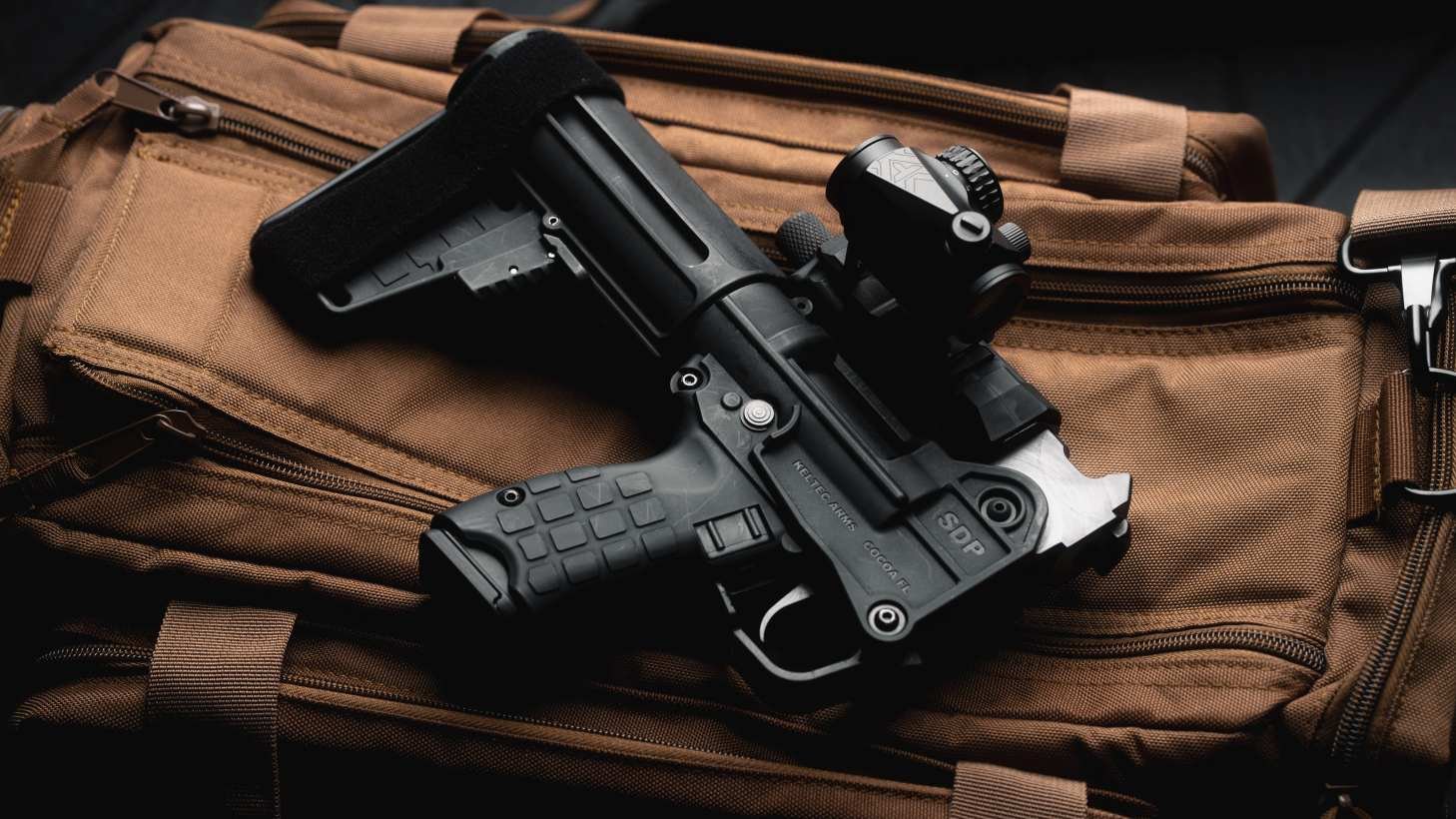 KelTec Introduces Folding SUB-SDP PistolKelTec has introduced the SUB-SDP “Nub Sub,” the first pistol variant of its folding SUB2000 platform. Chambered in 9mm Luger, the brace-equipped firearm measures 17.7 inches when deployed and folds to 10 inches for storage or transport. The SUB-SDP uses a 6-inch barrel, substantially shortening the platform compared with the GEN3 SUB2000 rifle. KelTec classifies it as a pistol, and every configuration includes an integrated stabilizing brace. Two versions are offered: a standard SUB-SDP with a $599 manufacturer’s suggested retail price and a Defender package priced at $799. Standard and Defender PackagesThe standard SUB-SDP ships with the integrated brace and a 15-round Glock-pattern magazine. It weighs 3.57 pounds unloaded and accepts compatible higher-capacity magazines where permitted. The Defender adds a pre-mounted Vortex Crossfire optic, two 27-round Magpul PMAG magazines, a compensator and a front M-LOK magazine holder. Its listed unloaded weight is 4.21 pounds with the packaged equipment. The Defender is available exclusively through KelTec Direct. Both versions share the same principal dimensions, barrel and trigger specifications. Folding and Accessory ConfigurationThe SUB-SDP retains the SUB2000 platform’s folding design while reducing its folded footprint to 10 inches. Deployed length is 17.7 inches, with a height of 6 inches and width of 1.94 inches. An M-LOK rail runs along the receiver to provide mounting positions for accessories such as lights and lasers. The 6-inch barrel has 1/2-28 muzzle threads, allowing installation of compatible muzzle devices. A compensator is included only with the Defender package. The integrated brace is intended to provide additional contact and control while preserving the compact folded dimensions. Listed trigger pull is 5 pounds on both models. Core SpecificationsThe SUB-SDP is chambered exclusively in 9mm Luger. The standard model has a listed magazine capacity of 15 rounds, while the Defender is supplied with 27-round magazines. Key measurements and specifications include: Barrel length: 6 inches Barrel threads: 1/2-28 Overall length: 17.7 inches Folded length: 10 inches Height: 6 inches Width: 1.94 inches Trigger pull: 5 pounds Standard unloaded weight: 3.57 pounds Defender unloaded weight: 4.21 pounds Position Within the SUB2000 LineThe SUB-SDP adapts KelTec’s folding-carbine design into its smallest configuration to date. Its shorter barrel and pistol classification distinguish it from the GEN3 SUB2000 rifle, while retaining the established folding mechanism and pistol-caliber format. The standard model is intended as the baseline brace-equipped configuration. The Defender bundles an optic, extended magazines, compensator, and magazine holder for buyers seeking a factory-equipped package. Availability may remain subject to applicable restrictions on magazines, braces and firearm configurations.
-
KelTec Introduces Folding SUB-SDP PistolKelTec has introduced the SUB-SDP “Nub Sub,” the first pistol variant of its folding SUB2000 platform. Chambered in 9mm Luger, the brace-equipped firearm measures 17.7 inches when deployed and folds to 10 inches for storage or transport. The SUB-SDP uses a 6-inch barrel, substantially shortening the platform compared with the GEN3 SUB2000 rifle. KelTec classifies it as a pistol, and every configuration includes an integrated stabilizing brace. Two versions are offered: a standard SUB-SDP with a $599 manufacturer’s suggested retail price and a Defender package priced at $799. Standard and Defender PackagesThe standard SUB-SDP ships with the integrated brace and a 15-round Glock-pattern magazine. It weighs 3.57 pounds unloaded and accepts compatible higher-capacity magazines where permitted. The Defender adds a pre-mounted Vortex Crossfire optic, two 27-round Magpul PMAG magazines, a compensator and a front M-LOK magazine holder. Its listed unloaded weight is 4.21 pounds with the packaged equipment. The Defender is available exclusively through KelTec Direct. Both versions share the same principal dimensions, barrel and trigger specifications. Folding and Accessory ConfigurationThe SUB-SDP retains the SUB2000 platform’s folding design while reducing its folded footprint to 10 inches. Deployed length is 17.7 inches, with a height of 6 inches and width of 1.94 inches. An M-LOK rail runs along the receiver to provide mounting positions for accessories such as lights and lasers. The 6-inch barrel has 1/2-28 muzzle threads, allowing installation of compatible muzzle devices. A compensator is included only with the Defender package. The integrated brace is intended to provide additional contact and control while preserving the compact folded dimensions. Listed trigger pull is 5 pounds on both models. Core SpecificationsThe SUB-SDP is chambered exclusively in 9mm Luger. The standard model has a listed magazine capacity of 15 rounds, while the Defender is supplied with 27-round magazines. Key measurements and specifications include: Barrel length: 6 inches Barrel threads: 1/2-28 Overall length: 17.7 inches Folded length: 10 inches Height: 6 inches Width: 1.94 inches Trigger pull: 5 pounds Standard unloaded weight: 3.57 pounds Defender unloaded weight: 4.21 pounds Position Within the SUB2000 LineThe SUB-SDP adapts KelTec’s folding-carbine design into its smallest configuration to date. Its shorter barrel and pistol classification distinguish it from the GEN3 SUB2000 rifle, while retaining the established folding mechanism and pistol-caliber format. The standard model is intended as the baseline brace-equipped configuration. The Defender bundles an optic, extended magazines, compensator, and magazine holder for buyers seeking a factory-equipped package. Availability may remain subject to applicable restrictions on magazines, braces and firearm configurations. View full article
-
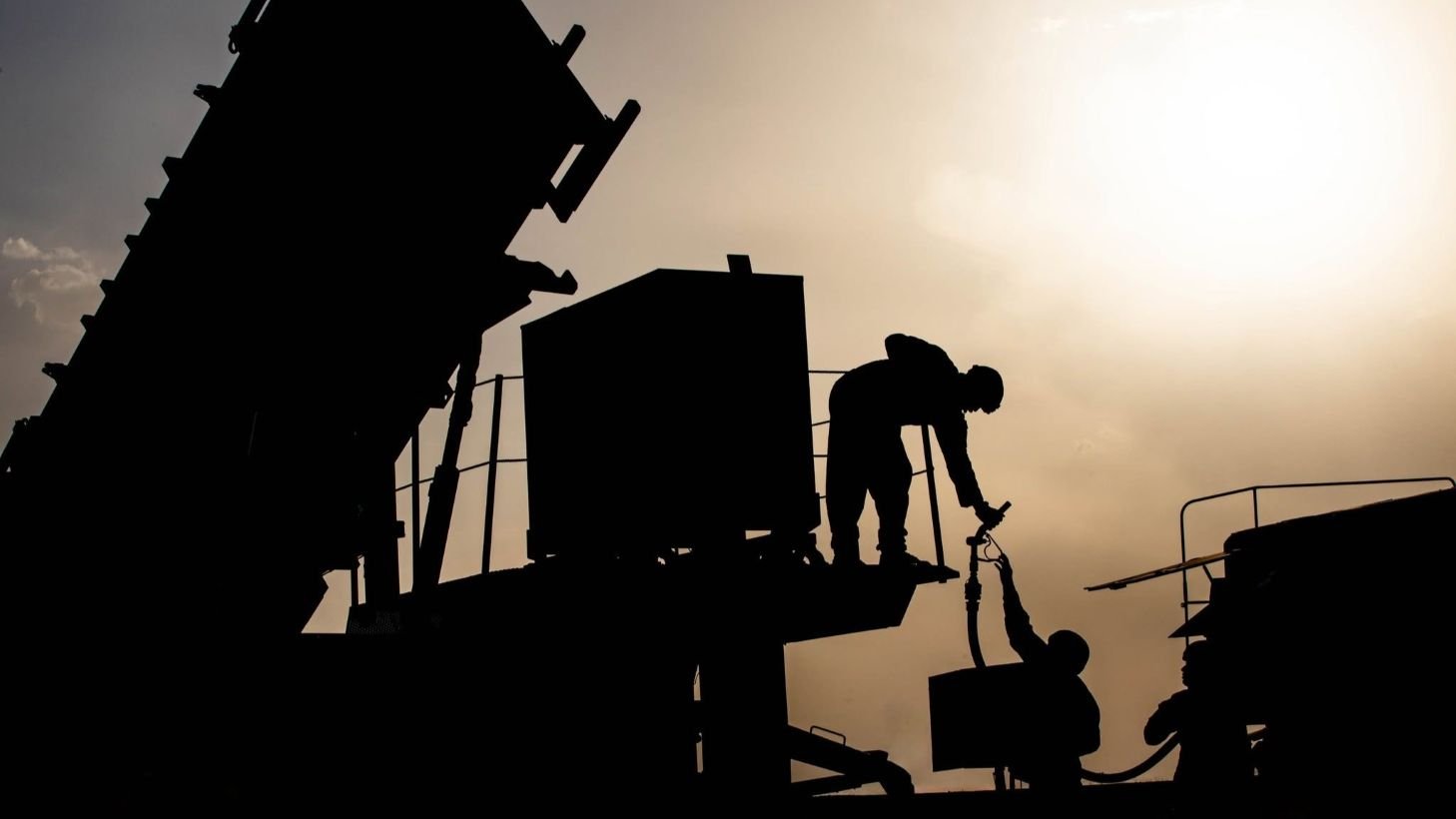 Pentagon Raises Iran War Casualty TotalThe Pentagon has updated its official casualty database to show that 18 U.S. service members have been killed and 624 wounded since the war with Iran began on February 28. The Defense Casualty Analysis System listed 420 wounded troops as of Friday, meaning the Saturday revision added more than 200 previously undisclosed injuries. The Pentagon also divided the casualties between Operation Epic Fury and a newly created category called “Overseas Operations,” covering casualties from July 7 onward. Operation Epic Fury now accounts for 14 deaths and more than 400 wounded. The remaining four deaths and 207 wounded are classified under Overseas Operations. Injuries and Service BreakdownMost of the newly categorized casualties are Army personnel. Of the 207 troops wounded since July 7, 182 are soldiers, 21 are sailors, and four are airmen. Chief Pentagon spokesperson Sean Parnell said 96% of injured service members had returned to duty and described most of the injuries as “minor concussions.” The military generally does not identify personnel wounded in combat or publicly detail their injuries. The revised figures follow reports that the number of wounded personnel exceeded previously published Pentagon totals. Other reporting found that nearly 100 service members had been injured in multiple Iranian airstrikes during the month. Four Deaths ReclassifiedThe Pentagon moved four July deaths from Operation Epic Fury to Overseas Operations. They include three soldiers killed in an Iranian attack in Jordan on July 17 and a soldier killed during a controlled detonation of a downed Iranian drone in Iraq. Those deaths had briefly disappeared from the official Operation Epic Fury count, drawing criticism from affected families. All four service members had previously been identified by name and memorialized by the Pentagon as combat casualties. The other U.S. deaths include six soldiers killed in an attack at Port Shuaiba, Kuwait; one soldier killed in Saudi Arabia; six airmen killed in a KC-135 crash in Iraq; and a Navy helicopter pilot from the USS George H.W. Bush who died in a crash in the Arabian Sea. New Categories and War Powers DisputeThe administration considers July 7 the end of Operation Epic Fury following the announcement of a short-lived ceasefire. It has treated subsequent hostilities as a separate period, although U.S. bombing missions and Iranian missile and drone attacks continued in largely similar forms. The classification is connected to the War Powers Act of 1973, which generally requires a president to end military operations within 60 days unless Congress authorizes them. The administration has argued that ceasefire periods paused or reset that timeline. Lawmakers from both parties have disputed that interpretation. Republican Representative Thomas Massie of Kentucky called the division “an absurd ruse,” arguing that the Pentagon was treating the conflict as two wars separated by a brief ceasefire. Earlier Revisions and ExplanationsThe update followed several unexplained changes to the casualty database. Days earlier, the Pentagon removed four deaths and 65 wounded personnel from its published totals. Officials initially linked the changes to reclassification after the ceasefire, while a Pentagon statement later attributed the shifting figures to “temporary data disruptions.” A defense official separately cited operational security as a reason casualty information may be delayed or inconsistent. U.S. Central Command said it does not manage the database, while the Pentagon office responsible for maintaining it did not initially explain the revisions. Former Pentagon spokesperson David Lapan said casualty reporting provides the public with one of the few available measures for assessing military operations when detailed information is limited.
-
Pentagon Raises Iran War Casualty TotalThe Pentagon has updated its official casualty database to show that 18 U.S. service members have been killed and 624 wounded since the war with Iran began on February 28. The Defense Casualty Analysis System listed 420 wounded troops as of Friday, meaning the Saturday revision added more than 200 previously undisclosed injuries. The Pentagon also divided the casualties between Operation Epic Fury and a newly created category called “Overseas Operations,” covering casualties from July 7 onward. Operation Epic Fury now accounts for 14 deaths and more than 400 wounded. The remaining four deaths and 207 wounded are classified under Overseas Operations. Injuries and Service BreakdownMost of the newly categorized casualties are Army personnel. Of the 207 troops wounded since July 7, 182 are soldiers, 21 are sailors, and four are airmen. Chief Pentagon spokesperson Sean Parnell said 96% of injured service members had returned to duty and described most of the injuries as “minor concussions.” The military generally does not identify personnel wounded in combat or publicly detail their injuries. The revised figures follow reports that the number of wounded personnel exceeded previously published Pentagon totals. Other reporting found that nearly 100 service members had been injured in multiple Iranian airstrikes during the month. Four Deaths ReclassifiedThe Pentagon moved four July deaths from Operation Epic Fury to Overseas Operations. They include three soldiers killed in an Iranian attack in Jordan on July 17 and a soldier killed during a controlled detonation of a downed Iranian drone in Iraq. Those deaths had briefly disappeared from the official Operation Epic Fury count, drawing criticism from affected families. All four service members had previously been identified by name and memorialized by the Pentagon as combat casualties. The other U.S. deaths include six soldiers killed in an attack at Port Shuaiba, Kuwait; one soldier killed in Saudi Arabia; six airmen killed in a KC-135 crash in Iraq; and a Navy helicopter pilot from the USS George H.W. Bush who died in a crash in the Arabian Sea. New Categories and War Powers DisputeThe administration considers July 7 the end of Operation Epic Fury following the announcement of a short-lived ceasefire. It has treated subsequent hostilities as a separate period, although U.S. bombing missions and Iranian missile and drone attacks continued in largely similar forms. The classification is connected to the War Powers Act of 1973, which generally requires a president to end military operations within 60 days unless Congress authorizes them. The administration has argued that ceasefire periods paused or reset that timeline. Lawmakers from both parties have disputed that interpretation. Republican Representative Thomas Massie of Kentucky called the division “an absurd ruse,” arguing that the Pentagon was treating the conflict as two wars separated by a brief ceasefire. Earlier Revisions and ExplanationsThe update followed several unexplained changes to the casualty database. Days earlier, the Pentagon removed four deaths and 65 wounded personnel from its published totals. Officials initially linked the changes to reclassification after the ceasefire, while a Pentagon statement later attributed the shifting figures to “temporary data disruptions.” A defense official separately cited operational security as a reason casualty information may be delayed or inconsistent. U.S. Central Command said it does not manage the database, while the Pentagon office responsible for maintaining it did not initially explain the revisions. Former Pentagon spokesperson David Lapan said casualty reporting provides the public with one of the few available measures for assessing military operations when detailed information is limited. View full article
-
Romania Downs Third Drone in Three DaysA Romanian Air Force F-16 shot down a drone that entered Romanian airspace on July 26, the third such interception in three consecutive days. The aircraft was destroyed at 10:13 a.m. over Romanian territorial waters in the Sulina–Chilia area of the Danube Delta, near the Ukrainian border. Two F-16s operating from Fetești Air Base under NATO command were involved in the July 26 response. Romanian reporting placed the engagement about 12 kilometers northeast of Sulina and said roughly five minutes elapsed between the drone’s entry and interception. An investigation confirmed that the drone downed on July 24 was a Shahed-type unmanned aircraft used by Russia against Ukraine. Investigations into the July 25 and July 26 incidents remain underway. NATO said the latest drone appeared to be of Russian origin. Diplomatic ResponsePresident Nicușor Dan called the repeated violations “inadmissible and intolerable,” noting that Romanian airspace is also NATO and European Union airspace. “Such actions are unacceptable, and we treat them with the utmost seriousness, together with our allies,” Dan said. He added that Romania’s diplomatic protest would be based on the investigations’ findings. Romania’s Foreign Ministry subsequently summoned the Russian ambassador over the repeated breaches. Russia had not publicly commented on the three incidents. Incursions and Legal AuthorityRomania’s Defense Ministry has recorded 33 Russian drone incursions since Russia began its full-scale invasion of Ukraine in February 2022. Most were monitored until they left Romanian airspace or crashed. Earlier incidents were also recorded in January and February 2025 and April 2026. On May 29, a Russian drone struck a residential building in Galați, injuring two people. Many incursions have occurred near the Danube Delta as Russia attacks Ukrainian port infrastructure around Izmayil and Reni, close to Romanian territory and Black Sea shipping routes. Romanian legislation now authorizes the military to destroy, neutralize, or take control of unauthorized drones entering national airspace. The law established the legal basis for active interceptions after years in which intruding aircraft were generally tracked rather than engaged. Counter-Drone DefensesRomania integrated the MEROPS counter-drone system into its national air defense network on June 24, 2026, deploying it primarily along the Danube corridor. Officials have not confirmed that MEROPS participated in the July interceptions, which were attributed to F-16 fighters. MEROPS uses the AS3 Surveyor, an AI-guided fixed-wing interceptor equipped with thermal imaging, radio-frequency detection and radar. The approximately 0.9-meter aircraft can reach 282 km/h, compared with the Shahed-136’s speed of about 185 km/h, and is designed to operate in GPS- or radio-jammed environments. Each Surveyor is reported to cost approximately $14,500 to $15,000. A missed interceptor can deploy a parachute for recovery and reuse. The mobile system requires a four-person crew and can be transported by pickup truck. Romania also signed a June 2026 agreement worth more than €2 billion with Israel’s Rafael Advanced Defense Systems for a layered short- and medium-range air defense package. NATO separately announced a five-year, $40 billion Drone Edge Initiative covering counter-drone systems, aircraft procurement and operator training. Shahed-136 CharacteristicsThe Iranian-designed Shahed-136, manufactured by Russia as the Geran-2, is a one-way attack drone measuring about 3.5 meters long with a 2.5-meter wingspan and a mass near 200 kilograms. Its standard warhead weighs approximately 50 kilograms, while Russia has also deployed a 90-kilogram version. Its low altitude, limited radar signature and relatively slow speed can complicate detection by systems designed for aircraft and missiles. Russia’s upgraded variants reportedly incorporate satellite navigation, communications equipment and computer-vision capabilities intended to improve accuracy and resistance to jamming. View full article
-
 Romania Downs Third Drone in Three DaysA Romanian Air Force F-16 shot down a drone that entered Romanian airspace on July 26, the third such interception in three consecutive days. The aircraft was destroyed at 10:13 a.m. over Romanian territorial waters in the Sulina–Chilia area of the Danube Delta, near the Ukrainian border. Two F-16s operating from Fetești Air Base under NATO command were involved in the July 26 response. Romanian reporting placed the engagement about 12 kilometers northeast of Sulina and said roughly five minutes elapsed between the drone’s entry and interception. An investigation confirmed that the drone downed on July 24 was a Shahed-type unmanned aircraft used by Russia against Ukraine. Investigations into the July 25 and July 26 incidents remain underway. NATO said the latest drone appeared to be of Russian origin. Diplomatic ResponsePresident Nicușor Dan called the repeated violations “inadmissible and intolerable,” noting that Romanian airspace is also NATO and European Union airspace. “Such actions are unacceptable, and we treat them with the utmost seriousness, together with our allies,” Dan said. He added that Romania’s diplomatic protest would be based on the investigations’ findings. Romania’s Foreign Ministry subsequently summoned the Russian ambassador over the repeated breaches. Russia had not publicly commented on the three incidents. Incursions and Legal AuthorityRomania’s Defense Ministry has recorded 33 Russian drone incursions since Russia began its full-scale invasion of Ukraine in February 2022. Most were monitored until they left Romanian airspace or crashed. Earlier incidents were also recorded in January and February 2025 and April 2026. On May 29, a Russian drone struck a residential building in Galați, injuring two people. Many incursions have occurred near the Danube Delta as Russia attacks Ukrainian port infrastructure around Izmayil and Reni, close to Romanian territory and Black Sea shipping routes. Romanian legislation now authorizes the military to destroy, neutralize, or take control of unauthorized drones entering national airspace. The law established the legal basis for active interceptions after years in which intruding aircraft were generally tracked rather than engaged. Counter-Drone DefensesRomania integrated the MEROPS counter-drone system into its national air defense network on June 24, 2026, deploying it primarily along the Danube corridor. Officials have not confirmed that MEROPS participated in the July interceptions, which were attributed to F-16 fighters. MEROPS uses the AS3 Surveyor, an AI-guided fixed-wing interceptor equipped with thermal imaging, radio-frequency detection and radar. The approximately 0.9-meter aircraft can reach 282 km/h, compared with the Shahed-136’s speed of about 185 km/h, and is designed to operate in GPS- or radio-jammed environments. Each Surveyor is reported to cost approximately $14,500 to $15,000. A missed interceptor can deploy a parachute for recovery and reuse. The mobile system requires a four-person crew and can be transported by pickup truck. Romania also signed a June 2026 agreement worth more than €2 billion with Israel’s Rafael Advanced Defense Systems for a layered short- and medium-range air defense package. NATO separately announced a five-year, $40 billion Drone Edge Initiative covering counter-drone systems, aircraft procurement and operator training. Shahed-136 CharacteristicsThe Iranian-designed Shahed-136, manufactured by Russia as the Geran-2, is a one-way attack drone measuring about 3.5 meters long with a 2.5-meter wingspan and a mass near 200 kilograms. Its standard warhead weighs approximately 50 kilograms, while Russia has also deployed a 90-kilogram version. Its low altitude, limited radar signature and relatively slow speed can complicate detection by systems designed for aircraft and missiles. Russia’s upgraded variants reportedly incorporate satellite navigation, communications equipment and computer-vision capabilities intended to improve accuracy and resistance to jamming.
-
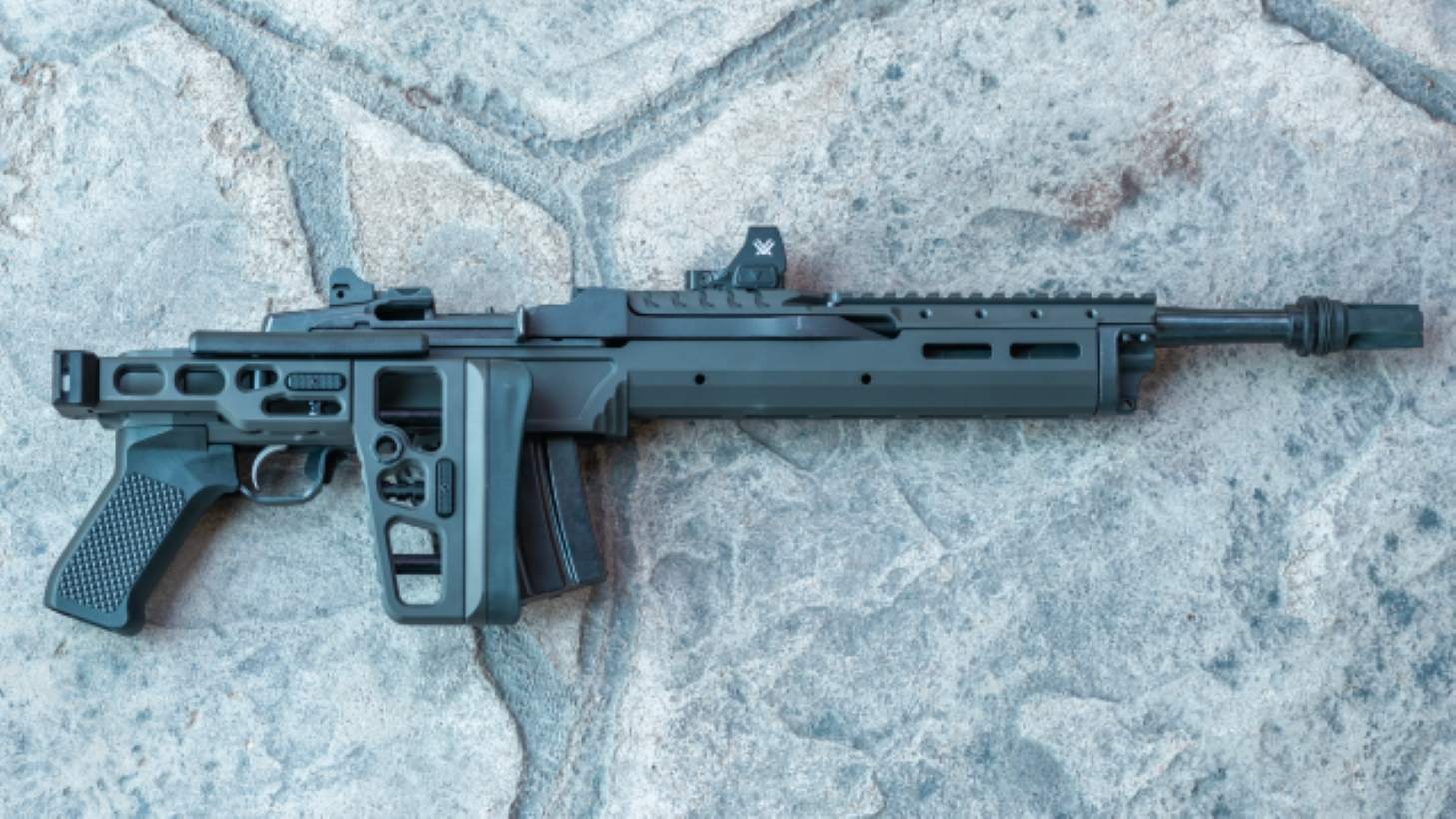 Samson Releases SAS-14 Folding Chassis for Ruger Mini RiflesSamson Manufacturing has released the SAS-14, a folding chassis system for compatible Ruger Mini-14 and Mini Thirty rifles. The chassis is available directly from Samson for $650. The company warns that lead times may exceed 30 days because of order volume. Orders remain pending until they are ready to ship, and payment is not captured until the product has been made, packed, and prepared for shipment. Orders are fulfilled in the order received. Compatibility and ConfigurationThe SAS-14 fits Ruger Mini-14 rifles with serial numbers beginning at 181 and higher, as well as all Mini Thirty models. It builds on Samson’s A-TM folding-stock design while adding an aluminum M-LOK handguard and the company’s SAS-K tactical folding stock. The chassis is also compatible with Samson Hannibal Rails using Multi and T-1 optic footprints. Buyers must select the appropriate Hannibal Rail version for their rifle’s barrel type and production range. Mini-14 rifles with a factory flange barrel and serial numbers beginning at 580 or higher require the “2008/Later/All Mini Thirty” rail. Mini-14 rifles with a factory straight pencil barrel and serial numbers from 181 through 579 require the “2007/Earlier” version. All Mini Thirty rifles use the “2008/Later/All Mini Thirty” model. Samson advises owners who are unsure of their rifle’s production year to consult Ruger’s serial-number lookup. Installation should stop if fitment concerns arise, as the rail and barrel type must be correctly matched. Stock, Sling and Accessory FeaturesThe integrated SAS-K stock folds for storage and transport. It provides an adjustable length of pull from 11.25 to 12.25 inches, along with an adjustable cheek riser. Quick-detach sling attachment points are positioned on the left side of the chassis, while the stock includes ambidextrous QD points. The handguard uses M-LOK accessory slots and is supplied with polymer rail covers. The SAS-14 is intended to provide a more contemporary accessory interface than Samson’s A-TM stock, which was patterned after an earlier Ruger folding-stock design. Dimensions and ConstructionThe chassis measures 19 inches with the stock folded and between 27 and 28 inches unfolded. When installed on a rifle with a 16-inch barrel, overall length is listed as 26 inches folded and 34 to 35 inches unfolded. The SAS-14 weighs 2.8 pounds by itself and 3.3 pounds when equipped with a Hannibal Rail. It is manufactured from 6061-T6 aluminum and finished with MIL-A-8625 Type III, Class 2 anodizing. Production takes place in Keene, New Hampshire. Included Components and Purchase NotesThe $650 listing covers the folding chassis system. The barrel, receiver, trigger assembly, Hannibal Rail, optics, and other pictured accessories are not included. Buyers selecting an optional Hannibal Rail must choose the version corresponding to their Mini-14 or Mini Thirty configuration before ordering.