Skip to content

Advertisement

Advertisement

Uncrowned Armory News

Introducing the 1911 DS Prodigy Compact from Springfield Armory
In a landmark announcement, Springfield Armory has launched a brand-new compact firearm - the 1911 DS Prodigy Compact in 9mm. Crafted with care, the Prodigy Compact heightens the 1911 platform's legacy by presenting two sizes - 3.5” and 4.25” - along with increasing the capacity to a double-stack and integrating carry-driven features.
Distinctive Design for Optimal Performance
The Prodigy Compact is meticulously configured around a flush-fitting, double-stack magazine. Despite the firearm's slim design for user-friendly gripping, it can efficiently house 15 rounds of 9mm ammunition. Two magazines come as a standard provision with both variants of the gun.
For those who value concealed carry and self-defense, the innovative features of this firearm serve the purpose. A tritium front sight post is incorporated for improved visibility under low-light conditions. This alignment complements a serrated black U-notch rear sight unit. Importantly, the firearms are furnished with AOS (Agency Optic System) plates exclusively designed for the 1911 DS.
Advanced Features for Seamless Use
The AOS plate, machined from billet steel, is tailored to provide the appropriate optic height to ensure an intuitive sight picture and instant target acquisition. It is also equipped with an integral rear sight. A HEX Dragonfly compatible plate and a standard cover plate are shipped together with the Prodigy, and additional optic-specific plates can be procured through the Springfield Armory Store.
In terms of weight, the Prodigy Compacts score high on the usability scale, with the 3.5” model weighing 25.5 oz. and its 4.25” counterpart 29 oz. This has been made possible with the integration of polymer grip modules into the billet machined 7075-T6 aluminum frame. These compact and lightweight carry concealed weapons (CCW) also feature slides made from forged carbon steel and match-grade bull barrels of forged stainless steel.
Comfort and Durability for Everyday Carrying
The Prodigy Compacts have been designed with an ambidextrous safety mechanism, recontoured hammers, and beavertail grips that cut down on bulk while keeping full functionality intact. To enhance corrosion resistance, the firearms boast a black Cerakote finish on metal parts, complementing the black polymer grip module. The barrels have been given a black DLC finish.
Springfield Armory's Vice President of Marketing, Steve Kramer, expressed his excitement about the release of these compact variants of the popular 1911 DS Prodigy. Kramer stated that the new Prodigy Compact's mix of a double-stack capacity, ease of carrying, and the 1911’s dynamic shooting traits make it an enticing option for EDC enthusiasts.
A Masterful Blend of Tradition and Innovation
Priced at $1,549 for all variants, the 1911 DS Prodigy Compacts incorporate beloved characteristics of the 1911 legacy and marry them with a modern capacity to offer unmatched functionality suitable for day-to-day carrying.
For the 1911 DS Prodigy 3.5” Compact AOS (PH9115AOS, 706397969080), and the 1911 DS Prodigy 4.25” Compact AOS (PH9116AOS, 706397969073), each model carries the same price tag of $1,549 MSRP, reinforcing Springfield Armory's commitment to providing quality and value in their offerings.
  • Text Only
Ukraine Launches 'Massive' Strike on Russian Military and Industrial Facilities
The General Staff of Ukraine’s Armed Forces reported a severe overnight assault on Russian military and industrial centers on January 14. The attack, described as the most extensive of its kind, spanned an estimated 1,100 kilometers (around 620 miles).
Critical targets included chemical plants, refineries, and ammunition depots at the Engels airbase, according to an insider from Ukraine's Security Service (SBU). The SBU source confirmed to the Kyiv Independent that these coordinated strikes aim to cripple Russia's capacity to wage war on Ukrainian soil.
Drone Strikes Across Russian Regions
A series of Ukrainian drone strikes reportedly targeted areas including Saratov, Voronezh, Orel oblasts, and Tatarstan. However, the Russian Defense Ministry declined to release exact figures on the number of drones involved in the operation.
Dmitry Milyaev, the governor of Russia's Tula region, disclosed a "massive drone attack" via a Telegram post. Milyaev stated that at least 17 drones took part in the assault. Despite damage to vehicles and structures due to drone debris in Aleksin, there were thankfully no reported casualties.
Engels Airfield and Industrial Facilities Hit
Important military installations and industrial facilities have been heavily impacted by the assault. Governor Roman Busargin of Saratov and Engels confirmed that two industrial facilities received significant damage due to drone strikes. The strikes included one on the Kristal oil facility in Engels, which had been reeling from a fiery incident caused by an earlier attack on January 8.
The Engels airfield, over 750 kilometers from Ukraine's closest controlled territory, is believed to have suffered damage to its ammunition depots. These depots supposedly contained FAB glide bombs, KAB bombs, and cruise missiles. Nearby, the Saratov oil refinery was also reportedly engulfed in flames.
The airfield is known for housing three different types of Russian strategic bombers—the Tupolev Tu-95, Tu-22, and Tu-160. These bombers are known for frequently launching missile strikes on Ukrainian cities.
Due to the ongoing threat from drone strikes, Mikhail Isayev, the acting head of the Engels district, announced that schools in the city would transition to remote learning.
Ukraine’s Unmanned Systems Forces Confirm Strike
After strikes damaged a chemical plant in the town of Seltso, situated near Bryansk, Ukraine's Unmanned Systems Forces confirmed their involvement. The plant was reported to produce gunpowder, explosives, and missile fuel components vital to Russian military operations.
The drone-led assault was a significant distraction to Russian air defense, enabling missiles to hit primary targets. Following the missile strike, long-range drones reportedly destroyed substations and other critical infrastructure.
In Tatarstan's capital, Kazan, a drone strike ignited a gas tank at a fuel facility. The local authorities confirmed that the fire, which happened around 1,000 kilometers from the Ukrainian border, caused no significant damage.
Impact on Russia's Oil Industry
These concerted attacks are a part of Ukraine's strategic plan to disrupt supply chains crucial to Russia's military efforts. Notably, Ukraine's forces have increasingly targeted Russia’s oil industry, ammunition depots, and airfields.
These systematic strikes aim to cripple Russia's war apparatus, striking deeply into its territory and are part of Ukraine's ongoing efforts to undermine Russia's ability to sustain a full-scale invasion. Fossil fuel exports, which the strikes have significantly impaired, remain a significant revenue source for the Kremlin's military operations.
  • Text Only
Mossberg Unveils Next-Level Pump-Action Shotguns: The 590R and 590RM with Rotary Safety Selector
Mossberg, a pioneer in pump-action shotgun manufacturing, has introduced a new breed of its acclaimed 590 series - the 590R and 590RM (Mag Fed) models. Renowned for its reliability, superior performance, and range of configurations, the Mossberg 590 series has set the standard for duty and home defense shotguns for years. The evolution of this supreme tactical platform now presents gun enthusiasts with groundbreaking features like a user-friendly redesigned forend, an integrated barrel/single heat shield, and most notably, an ambidextrous rotary safety selector. Available in four unique models, including two standard models and two mag-fed versions, the 590R keeps its predecessor's key features while being the first in the market to feature double-stack magazines for pump-action shotguns.
Core Features of the 590R and Improved Design for Ease of Maintenance
Boasting the universally revered features of the 590 platform, including non-binding twin action bars, positive steel-to-steel lock-up, and an anti-jam elevator, this next-generation version offers enhanced features for unprecedented user comfort and accessibility. A versatile clean-out magazine tube with a cap, designed for easy maintenance, added to the dual extractors, aluminum receiver, and drilled and tapped receivers, further elevates the 590R’s status as the ultimate shotgun choice.
Mossberg 590RM: The Evolution of the Mag Fed 590M and Key Features
Closely following the blueprint of the 2018-introduced 590M Mag Fed, the new 590RM shotgun stands out with its detachable magazine and integral stabilizing ribs. Designed to provide secure lock-up, the ribs directly engage with notches on the receiver, resulting in a sturdy connection. The 590RM, provided with a magazine release button and mounting guide located ahead of the trigger guard, is fully ambidextrous. The shotgun’s detachable magazines are available in 5, 10, 15, and 20-round capacities, offering options for varying individual needs.
590R and 590RM Pump-Action Shotguns: Overview of Key Features
The laundry list of features for the 590R and 590RM models includes an ambidextrous, rotary safety selector and a Mossberg-designed stock adjustable to five positions (12 – 15.25 inches). Stock/Base compatibility with other grip designs, a compact ergonomic forend, a 5-inch barrel with a removable heat shield, an enlarged beveled loading port, and an elongated bolt release all contribute to a smooth and personalized shooting experience.

Furthermore, the newly introduced models come furnished with a Magpul MOE+ pistol grip, a front M-LOK adapter with dual-sided accessory mounting slots, a flat profile trigger with a smooth, crisp break, and an extended follower for ease of loading (590R only). The icing on the cake is the electroplated internal and external receiver, offering unmatched durability with a smoother finish.
The Superior Shotgun Series: Model Details and Pricing
The 590R (50762 and 50761) each carry a Manufacturer's Suggested Retail Price of $1,085. The 12-gauge, 3-inch standard versions come standard with an 18.5-inch barrel, a compact forend, an adjustable 5-position stock, a MOE pistol grip, and a Picatinny rail.
The 590RM (50213 and 50218) versions, each priced at $1,190, offer a 2.75-inch 12-gauge, magazine-fed pump action. Each model is equipped with an 18.5-inch barrel with an integrated heat shield, a compact forend, a 5-position adjustable stock, and a 10-round magazine.
This evolved shotgun series from Mossberg, with cutting-edge features and a design philosophy focusing on ease of use and reliability, is poised to redefine the tactical platform and set the new standard for pump-action shotguns.
  • Text Only
Ukrainian Special Forces Successfully Counter North Korean Assault
Ukraine's Special Operations Forces have successfully thwarted an assault by North Korean troops in Russia's Kursk Oblast, according to the unit's press service. The reported confrontation, which took place on Jan. 13, resulted in the death of 17 North Korean soldiers.
North Korean soldiers had been stationed in Kursk Oblast to back Russian resistance against a Ukrainian advance launched on Aug. 6. Despite the escalating conflict, Ukrainian troops have persisted in their efforts, observing their territorial gains as a potential leveraging strategy for future dialogue.
The extent of the conflict, while yet to be officially identified, lasted a considerable amount of time, spanning morning until night. Footage capturing the aftermath, released by Ukrainian forces, highlights what appears to be North Korean casualties.
Perilous Encounters and High Casualties Amid Clashes
As the confrontation drew to a close, Ukrainian forces reportedly confronted one surviving North Korean soldier who attempted but failed, to execute a trap. To evade capture, the soldier allegedly detonated a grenade, resulting in his demise.
South Korea's National Intelligence Service (NIS) suggests that the conflict with Ukraine has resulted in significant North Korean casualties, with estimated figures standing at 300 fatalities and 2,700 injuries. This heavy toll is purportedly due to a lack of training in modern warfare techniques, including unsuccessful attempts to counter long-range drone attacks.
Allegedly, North Korean soldiers have been coerced into suicide to evade capture by Ukrainian forces, highlighted in claims made by the White House National Security Council spokesperson John Kirby in late December. Kirby suggests that North Korean soldiers captured fear severe punishment for their families if they choose to surrender.
Russia Expands its Hold in Eastern Ukraine
In another unfolding development, Russia's Defense Ministry announced on Jan. 12 that they have successfully seized the villages of Yantarne in Donetsk Oblast and Kalynove in Kharkiv Oblast, Ukraine. Verification of these claims is ongoing, as Ukraine has not yet commented.
As Ukrainian forces grapple with outnumbering and superior firepower, Russia intensifies pressure within eastern Ukraine. The village of Yantarne, located nearly 10 kilometers southeast of the eastern town of Kurakhove, has almost entirely fallen to Russian forces.
Reports from Ukraine-based war monitoring website, DeepState, are vague, neither confirming nor denying the reported loss of Yantarne. Conversely, Ukraine's Khortytsia forces have confirmed ongoing clashes in the area.
Meanwhile, the northeastern village of Kalynove, a strategic location on the west bank of the Oskil River, has also reportedly come under Russian control. The fall of Kalynove could provide Russian forces a significant advantage, specifically the ability to flank Ukrainian defenders as they maintain a vigilant presence on the Ukraine-held western bank of the river.
  • Text Only
North Korean Casualties in Kursk Oblast: Seoul Cites 3,000 Victims
According to South Korea's National Intelligence Service (NIS), approximately 300 North Korean soldiers have been killed and a further 2,700 injured in the Russian region of Kursk Oblast. The NIS released these figures on January 13, with the data being reported by the South Korean news agency, Yonhap.
Unfamiliarity With Modern Warfare Behind High Casualties
The NIS indicates that the high casualty rate is due to the North Korean soldiers' unfamiliarity with modern warfare techniques. What the NIS termed "futile" attempts to neutralize long-range drones is one such aspect of the lack of understanding on the part of the North Korean military.
In the last fall, North Korean soldiers were reportedly positioned in Kursk Oblast to supplement Russian forces, resisting a Ukrainian offensive initiated on August 6. The Ukrainian military has maintained its presence in the region, fortifying its positions for possible future negotiations.
Conflicting Accounts of North Korean Losses and POW Reports
The recent statement by the NIS is in contrast to Ukrainian President Volodymyr Zelensky's assertion on January 9. Zelensky claimed that North Korean troops fighting alongside the Russian military had incurred 4,000 casualties, inclusive of fatalities and injuries.
The NIS further alleged that North Korean soldiers were compelled to commit suicide to prevent being captured by Ukrainian forces. This claim was confirmed on December 27 by White House National Security Council spokesperson John Kirby. He acknowledged that some North Korean soldiers had taken their own lives due to fear of potential reprisals against their families in case of capture.
Notably, on January 11, President Zelensky announced the arrest of two North Korean soldiers in Kursk Oblast. These prisoners of war (POWs), believed by the NIS to be members of the Reconnaissance General Bureau, North Korea's military intelligence agency, are now under the umbrella of Ukraine's Security Service (SBU) and are receiving medical treatment.
Zelensky shared video footage of the SBU investigating the POWs with the help of Korean translators. One of the detained soldiers expressed a wish to return to North Korea, while the other expressed a desire to stay in Ukraine.
  • Text Only
Biden Administration Unveils Further Security Support for Ukraine
The United States Department of Defense (DoD) has announced an increased wave of security aid for Ukraine, aimed at strengthening the nation's defense structure. The initiative is driven by the Presidential Drawdown Authority (PDA) package, valued at approximately $1.25 billion. This package will enhance Ukraine's air defense capacities, artillery munitions, and anti-tank weaponry, responding to the nation's key security challenges.
A Comprehensive Aid Package Strengthening Ukraine's Defense System
Alongside the PDA package, the DoD has unveiled the Ukraine Security Assistance Initiative (USAI) package, an additional $1.22 billion endeavor, specifically targeted at fortifying Ukraine against Russian hostility. This initiative caters to a myriad of defense sectors, including Unmanned Aerial Systems, air defense, and air-to-ground capabilities.
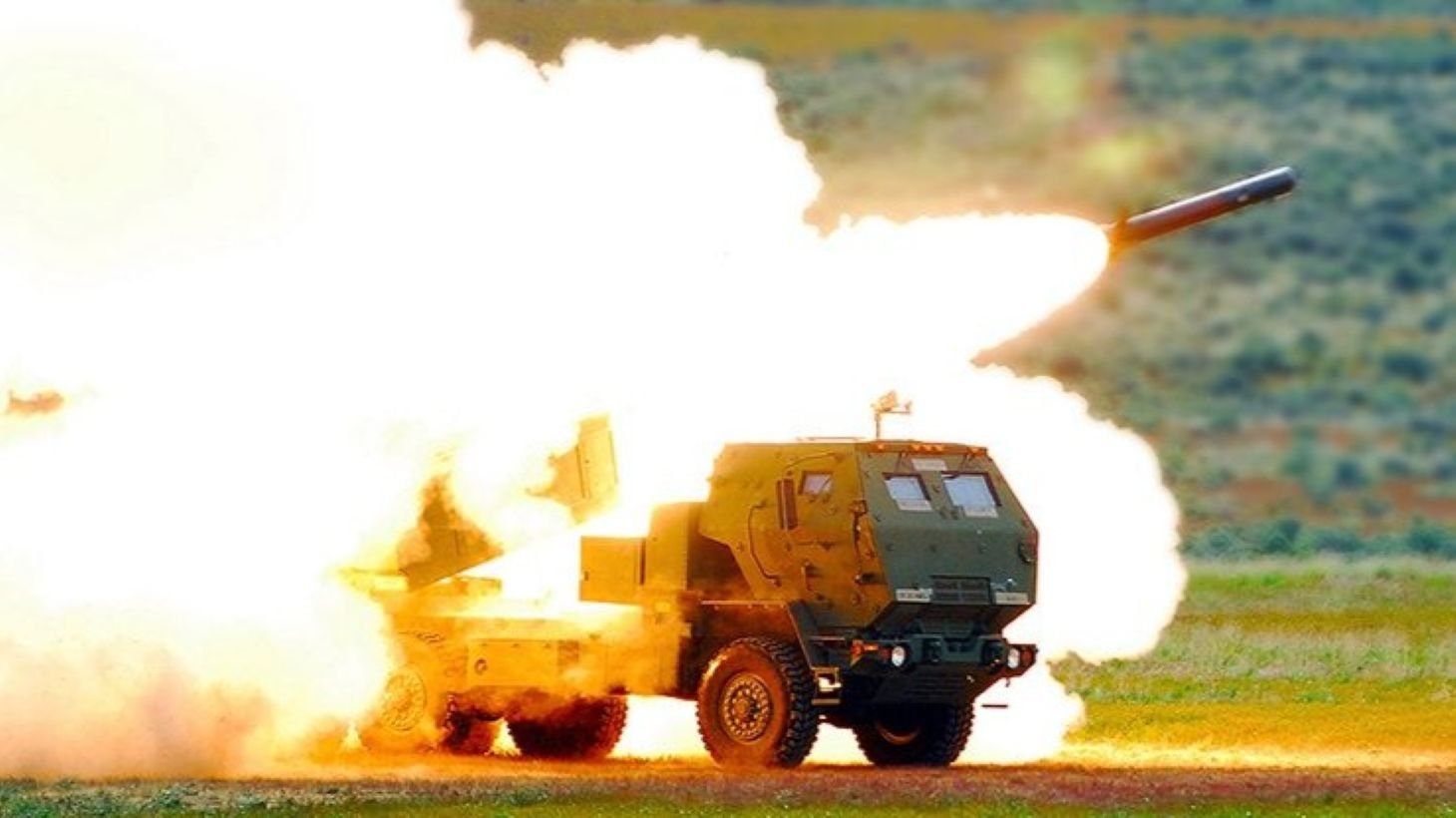
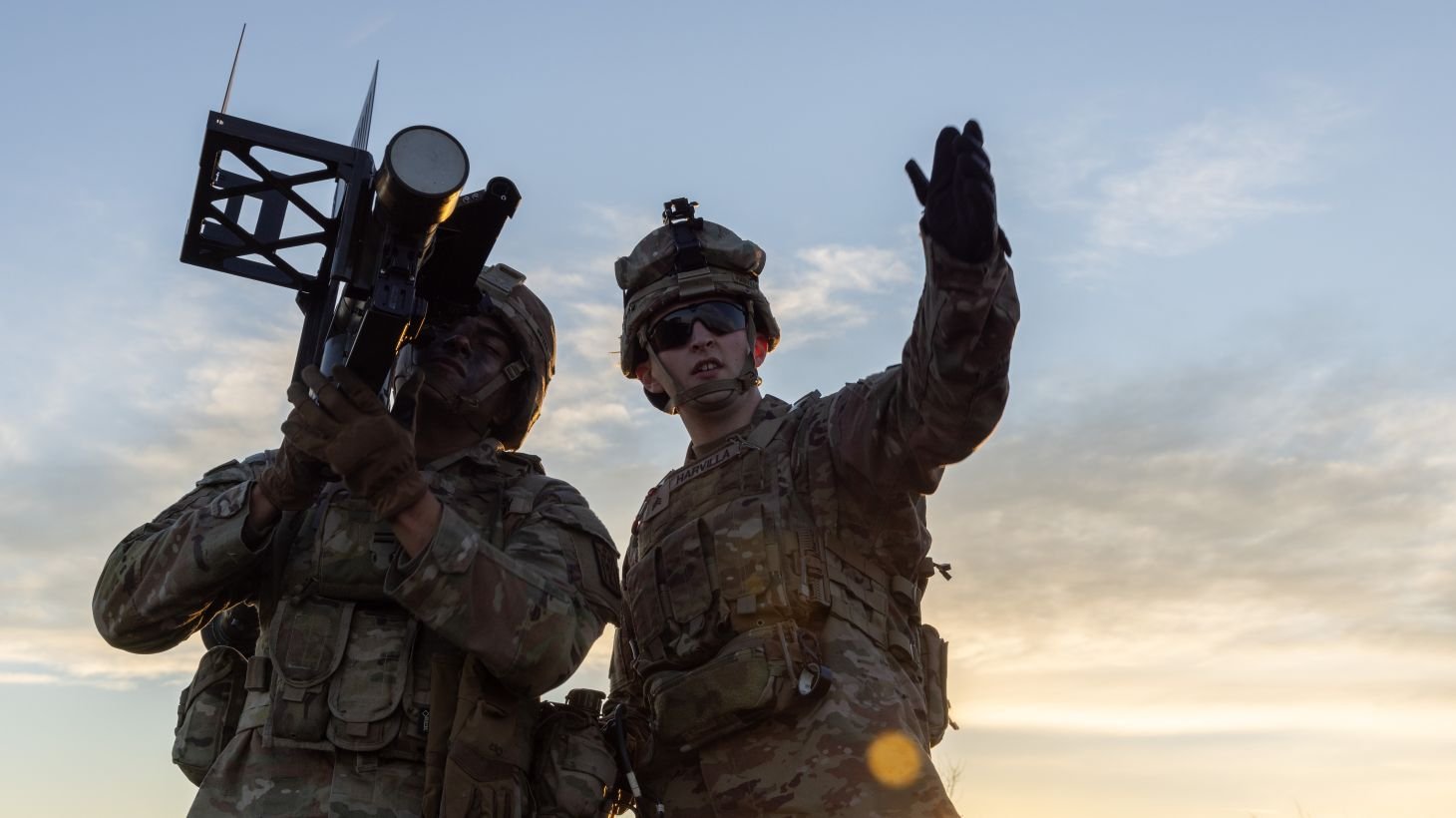
Among the multitude of supplies encompassed by the USAI package are: munitions for National Advanced Surface-to-Air Missile Systems, HAWK air defense munitions, Stinger missiles, Counter-Unmanned Aerial Systems munitions, ammunition for High Mobility Artillery Rocket Systems, 155mm and 105mm artillery ammunition, air-to-ground munitions, High-speed Anti-radiation missiles, Unmanned Aerial Systems, Javelin and AT-4 anti-armor systems, Tube-launched, Optically guided, Wire-tracked missiles, small arms, grenades, demolitions equipment, medical equipment, secure communication equipment, satellite imagery services, maintenance support, training services, individual clothing, and equipment.
Continual US Support for Ukraine and International Aid
This recent addition marks the Biden Administration's twenty-third USAI package and the seventy-third tranche of equipment provision from the DoD for Ukraine since August 2021. The United States remains committed to supporting Ukraine in its struggle against Russian aggression, collaborating with nearly 50 allies and partners through the Ukraine Defense Contact Group and the associated Capability Coalitions.
Ukraine's Finance Minister Serhii Marchenko highlighted significant international backing in 2024, with the nation receiving over $41 billion in aid. This assistance allowed Ukraine to maintain full social payments alongside considerable defense expenditures.
"On Dec. 25, in response to Russia's mass attack on the country on Christmas Day, President Joe Biden directed the Pentagon to 'continue its surge' of weapons deliveries to Ukraine," Marchenko disclosed. This continued commitment signals the Biden Administration's unwavering support for Ukraine in its enduring conflict.
  • Text Only
Trains Destined for Occupied Ukrainian Territories Torched
On the night of December 30, Ukrainian partisans, residing in Russia's Moscow Oblast, reportedly put two locomotives to the torch. According to Petro Andriushchenko, an adviser to the exiled mayor of the Russian-occupied Mariupol, these trains were destined for the occupied areas of Ukraine. The information, disseminated on Andriushchenko's Telegram channel, included several video clips showcasing the flaming ruins of the locomotives. However, independent verification of these claims by official sources remains elusive.
Andriushchenko went on to detail how the members of the Mariupol resistance destroyed an electric train estimated at around 50 million rubles ($460 million), while the Azov resistance group took down a diesel train. The damages incurred were of a permanent nature. This behavior isn't new amongst Ukrainian partisans. They also previously claimed responsibility for several attacks on Russian transit infrastructure, including an incident earlier this month concerning the sabotage of a critical railway line connecting Russia's Moscow and Kursk oblasts, a move that significantly interrupted supply lines.
German-Russian Citizens Charged with Spying
In a separate turn of events, three German-Russian citizens from the town of Bayreuth, Germany, found themselves at the mercy of Germany's Federal Prosecutor's Office. On December 30, they were charged with spying for Russia. Of the trio, one of the main suspects falls on Dieter S., a 40-year-old former participant of Russian proxy forces in Ukraine who reportedly photographed military facilities and plotted railway sabotage.
According to warnings from Der Spiegel, Russian hybrid attacks and sabotage operations against NATO countries have witnessed a sharp increase, following Moscow's launch of a full-scale war against Ukraine in 2022. Dieter S., alongside two other suspected accomplices, was allegedly zeroing in on potential targets within Bavaria. Their rumored list consists of the U.S. Grafenwoehr military base where Ukrainian soldiers are currently undergoing training. Potential plans deviate from just railway track sabotage; conversations about bomb attacks and arson entered the mix. The aim? To undermine Germany's backing for Kyiv.
NATO Warns of Rising Sabotage Cases and Potential Casualties
German investigators assert that Dieter S. has previous ties to Russian intelligence services. His record includes serving for Russian proxy forces against Ukraine in Donbas from 2014 to 2016, a stint landing him legal charges as soon as October this year. Dieter S. and Alexander J. found themselves under arrest in April of this year following an initial investigation by German security services. However, the arrest warrant against Alexander J. was subsequently suspended, with no explanation given.
Apprehensions regarding Russian hybrid attacks threatening allied nations have been voiced by NATO Deputy Assistant Secretary-General James Appathurai. According to his warning, such an attack might lead to substantial casualties, especially as sabotage cases experienced a surge in 2024. The latest case registers the Finnish authorities seizing the Eagle S tanker, which was transporting Russian oil, under suspicion of cutting an undersea cable between Finland and Estonia.
  • Text Only
Trump Team's Ukrainian Peace Deal Proposals Rejected by Russia
In the ongoing political tension surrounding Ukraine, Russia has expressed dissatisfaction with the peace deal proposals put forward by the team of U.S. President-elect Donald Trump, as per Russian Foreign Minister Sergey Lavrov's statement on December 29.
While the Wall Street Journal earlier indicated that Trump’s team was considering a plan to postpone Ukraine’s NATO membership by an estimated two decades in reciprocation for sustained Western arms resources and the stationing of European peacekeepers to oversee a ceasefire, these proposals have not sat well with Russia.
Lavrov's Denouncement of Peacekeeper Proposal
Lavrov expressed his disapproval of the proposed strategy - putting a pause on hostility concentrated along the current battlefront and shifting the onus of encountering Russia to Europe. He particularly denounced the concept of deploying European peacekeepers in Ukraine. In Lavrov's words, the Russian government finds the proposals made on behalf of members of the president-elect's team decidedly unsatisfactory.
In a meeting held in Paris on December 7, Trump allegedly discussed these topics with Ukrainian President Volodymyr Zelensky and French President Emmanuel Macron, underlining Europe’s responsibility in warding off Russian aggression.
Lack of Official Communication and Future Interactions
Lavrov has noted that no direct communications have been received from Washington in relation to these suggestions. He further added that, with Trump’s inauguration not due until January 20, current policies remain under the Biden administration's jurisdiction.
Despite the disagreements, Lavrov demonstrated Russia's willingness to connect with the new U.S. administration, given that Washington takes the initiative to reestablish the dialogue severed amidst Russia’s invasion.
Russia's Position on the Conflict
Russian President Vladimir Putin announced on December 26 that Russia's objective is to "end the conflict" in 2025 while maintaining confidence in frontline success. This followed earlier comments by Lavrov downplaying the likelihood of a ceasefire, dubbing it "a road to nowhere."
Putin expressed readiness for discussions with Trump but simultaneously upheld Russia’s inflexible demands, which included non-negotiability on territorial concessions and rejection of Ukraine’s NATO membership.
Trump's Team: No Official Steps Outlined
Despite his audacious claims of ensuring peace "within 24 hours," Trump’s team is yet to officially articulate any concrete measures for ending the war, keeping stakeholders in anticipation of a clear roadmap.
  • Text Only
Latvia Announces Support for Ukraine with Over 1,000 Drones
Latvian Defense Minister, Andris Spruds, disclosed via social media on Dec. 28 that the country is committed to transferring more than a thousand varied types of combat drones to Ukraine. The operation will be facilitated via the international drone coalition.
Enhancing Ukraine's Aerial Arsenal through the Drone Coalition
The supplied drones, produced in Latvia, will be coordinated and dispersed through the U.K. and Latvian-led drone coalition. This organization's primary objective is to bolster Ukraine's collection of unmanned aerial vehicles (UAVs). In additional support, Latvia declared its intent to contribute a further 20 million euros ($20.8 million) to the coalition in 2025.
Latvia, a notable supporter of Ukraine, has committed to providing military aid at a rate of 0.25% of its GDP annually, including the promise of thousands of drones. In August, Latvia declared its intention to grant 112 million euros ($126 million) in military aid to Ukraine within 2025 alone, while also playing a significant role in expanding the drone coalition initiative.
Seven other nations have joined the drone coalition, alongside the founding states. These include Germany, Canada, the Netherlands, Lithuania, Sweden, Estonia, and Denmark. Previously, the coalition had set a goal to raise 1.8 billion euros ($1.8 billion) by the end of 2024 to extend support to Ukraine.
In November, additional funding of $30 million for the drone coalition was announced by the U.K., Germany, Canada, and Luxembourg.
Ukraine's Focus on Domestic Drone Production and Usage
Ukraine is also aspiring to increase domestic drone production, with a target of manufacturing at least 1 million drones in 2024. On Dec. 29, Ukrainian Defense Minister Rustem Umerov stated that over 96% of all UAVs employed by the military in 2024 were of Ukrainian origin.
Kyiv uses long-range drones to make deep strikes into Russian territory, mainly targeting military infrastructure such as airfields, logistics hubs, oil refineries, and depots.
  • Text Only
Potential Unconventional Russian Attack Poses Threat, Signals Top NATO Officer
The North Atlantic Treaty Organization (NATO) may find itself on the precipice of a significant threat from suspected Russian hybrid aggressions, according to the organization's deputy assistant secretary general. These tactics would have been deemed profoundly intolerable just half a decade earlier, suggesting that NATO is situated in an increasingly precarious "boiling frog" situation.
The NATO official shared with Sky News the serious possibility of unconventional Russian attacks on NATO - actions such as sabotage or arson - which may possibly precipitate "substantial" casualties.
Redefining Grey Zone Warfare Response Strategy
James Appathurai, entrusted with updating NATO's strategy to monitor and prevent 'hybrid warfare', has emphasized the necessity for increased solidarity and clarity among NATO allies and Moscow. The objective is to define which levels of grey zone hostility may demand an allied response, potentially including the utilization of military force.
There has been a discernable surge in more "kinetic" acts, such as the incapacitation of critical undersea cables, building sabotage, and the installment of incendiary devices inside aircraft cargo since Russia initiated its full-scale invasion of Ukraine in February 2022.
Ensuring Preparedness for Suspected Russian Hybrid Attacks
Appathurai's concern lies in the possibility of an attack so significant that it could compel NATO to invoke its Article 5 collective response, which interprets an attack on one member as an attack on all. He cited the incident in 2018 when Russia attempted to assassinate former Russian double agent, Sergei Skripal and his daughter Yulia, using the potent nerve agent Novichok, displaying the potential devastation such unconventional attacks can cause.
The need for effective preparation and response strategy is at the forefront of these concerns in order to minimize the damage in case of a significant attack.
Updating Strategy to Deter Hybrid Warfare
Appathurai and his team are working on refreshening NATO's strategy to understand, deter, and counter hybrid warfare, last reformed in 2015. This new effort involves the documentation of all suspected hybrid attacks, not only from Russia but also from other hostile actors like China, Iran, and North Korea.
Scheduled for approval in 2025, the updated policy aims to equip NATO with the necessary knowledge and techniques to better deter aggression and decide on the most appropriate response. Establishing clarity over 'red lines' for hybrid warfare with Russia is crucial and this endeavor aims at marking out such 'no-go' areas and thresholds.
The notable increase in subtle forms of aggression signifies a shift towards the 'boiling frog' scenario where today's unacceptable becomes tomorrow's norm. Acknowledging the escalated hybrid hostilities as potential triggers for collective response under Article 5, NATO aims to prevent escalation, manage it if it arises, while also striving to return to pre-conflict conditions.
  • Text Only
USS Carl Vinson Docks in Malaysia
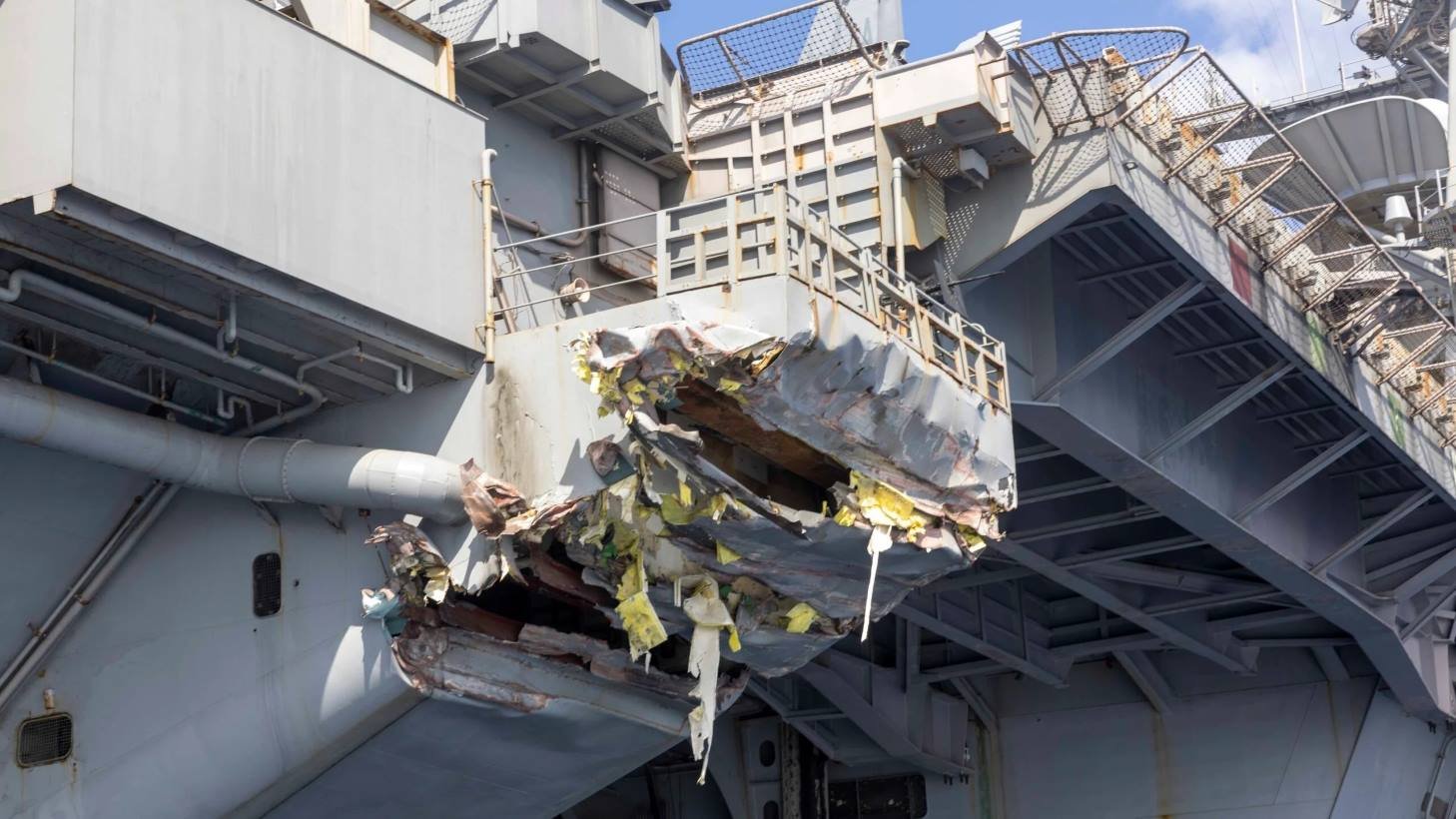
The USS Carl Vinson, a Nimitz-class aircraft carrier belonging to the United States Navy, officially made her port call in Malaysia, marking a significant moment for international cooperation. This arrival happens just over a month after the USS Abraham Lincoln’s visit, highlighting consistent contact between the global naval powers.
A Decade of Partnership: US and Malaysia
The call marks the 10 years of a robust US-Malaysia partnership. Rear Admiral Michael Wosje, Carrier Strike Group One (CSG-1) commander, offered his remarks on the occasion, noting that the long-term security and military cooperation between both nations underlines their shared commitment to bolstering prosperity, security, and peace in the region.
Beyond these shared objectives, the Rear Admiral pointed out how the visit by the world's largest warship facilitates further cooperation with the Royal Malaysian Navy. "This visit allows us to build upon our strategic and mutually beneficial partnership while also giving our sailors much-deserved rest and relaxation, exploring the rich cultural offerings of Kuala Lumpur and becoming closer to the local community," Wosje announced per NST.
Wosje expressed gratitude for the opportunity to work alongside the Royal Malaysian Navy. He repeated his commitment to deepening ties through joint exercises, reemphasizing the close cooperation that exists between the US and Malaysia on security matters.
Enhancing Relations through Cultural Exchanges
Captain Matthew Thomas, the ship's commanding officer, thanked the welcoming citizens of Port Klang and Kuala Lumpur, recognized for their hospitality. He revealed his delight in inviting Royal Malaysian Navy and government officials aboard the Vinson and the opportunity to embrace the diverse history and culture of Malaysia. The significant docking will see nearly 7,500 sailors from CSG-1 taking part in cultural exchanges, community events, and morale, welfare, and recreation-sponsored tours to foster cultural understanding and cooperation.
The visit also included a media tour, where press members were shown the ship's vast flight deck, home to over 60 aircraft, and other key facilities such as its canteen and medical amenities. The USS Carl Vinson will remain docked at Port Klang for several days before continuing its operations in the region.
The Carl Vinson Carrier Strike Group operates within the territory of the US Seventh Fleet, preserving a free and open Indo-Pacific region. This naval giant, towering at approximately 244 feet tall from keel to mast, houses over 5,000 personnel. The US-Malaysia diplomatic relations began in 1957, following Malaysia's independence, culminating in a Comprehensive Partnership agreement in 2014. This latest port call by the USS Carl Vinson reaffirms this ongoing collaboration.
  • Text Only
Ukraine's Unique Plan to Prioritize Education Amid Conflict
By 2025, Ukraine is revealing a rather unique blueprint for education, foreseeing the launch of over 150 underground educational facilities, as stated by Deputy Education Minister Nadiia Kuzmychova in a recent briefing.
A Response to Unprecedented Challenges
Ukraine has found itself entangled in a web of adversity resulting from continuous Russian aerial attacks. The relentless bombardment has severely impacted the nation’s civil infrastructure, compelling the government to ponder safer alternatives for its educational institutions.
These underground schools and vocational training centers are, therefore, a calculated strategic move in response to the persistent threats. As detailed by Kuzmychova, the plan encompasses the building of 139 underground schools, alongside several vocational training institutions, as an efficacious way to ensure the provision of quality education amidst the crisis.
The Journey of Construction
As of now, there are 79 underground education facilities under construction, with most of them being built in regions that suffer the brunt of Russian shelling. Kuzmychova asserted that construction would continue vigorously, with an anticipated completion of all the facilities as early as September 1, 2025.
Kharkiv, a city in Ukraine, has taken the lead by leveraging its metro stations to hold classes, thus pushing the boundaries and paving the way for a safe yet efficacious learning environment. Such initiative showcases the country's unwavering determination to keep educational opportunities alive despite turbulence.
Impact of Russian Invasion on Ukraine's Education System
The conflict with Russia has dramatically hampered Ukraine's educational foundation. Data published by the Education Ministry in February 2024 revealed that Russia's invasion had disrupted one in every seven Ukrainian schools, besides completely obliterating 400 educational institutions.
Similarly, the commencement of the school year in September 2024 bore witness to the heartbreaking reality of conflict. Within the initial three days, at least 12 educational institutions were ravaged by Russian strikes, leading to many casualties. As such, Ukraine's innovative approach to its educational infrastructure underlines its commitment to the continuity of learning in the face of adversity.
  • Text Only
German-Made Leopard 1 Tanks Flood into Ukraine After Extended Delays
It has taken a surprising period of 19 months for German industries to refurbish and deliver the first batch of 58 Leopard 1A5 tanks, out of a minimum of 155, pledged to Ukraine by a consortium led by Germany, including The Netherlands and Belgium. However, despite parts shortages, dispatch rates are finally on the rise.
Since the initial delivery of the 58 Leopard 1A5 tanks, which arrived in Ukraine in early September, an additional 45 tanks have been shipped, increasing the pace significantly.
The Impact of the Leopard 1A5 on Ukraine's Defense Capabilities
The delivery schedule is significant to the Ukrainian's defense strategy. The Leopard 1A5, manned by a four-person crew, is set to become the most populous Western-made tank in Ukraine, outnumbering the Leopard 2 tanks (104 in total), the American-made M-1s (80 units), and surpassing the modest 14 British-made Challenger 2s.
Currently, the Ukrainian general staff has already assigned the Challenger 2s, M-1s, and Leopard 2s to their designated brigades. This leaves the Leopard 1s, the only Western tanks, to equip the dozen or so new heavy brigades that the Ukrainians have formed recently. Each Ukrainian mechanized brigade typically houses a single tank battalion consisting of 31 tanks.
Berlin announced the delivery of the most recent batch of 15 Leopard 1s on Monday. This delivery also included armored trucks, artillery, air-defense equipment, and a significant quantity of ammunition, adding to the nearly 7 billion Euros worth of aid that Germany has sent to Ukraine in the past 34 months since Russia intensified its warfare.
The Key Features and Utility of the Leopard Tanks in Ukraine’s Warfare
The Leopard 1 tank, a relic from the 1980s, is not the latest addition to the Ukrainian inventory, but it is not the oldest either. Its relatively light construction and armor compared to, for instance, the 69-ton M-1, should not detract from its powerful 105-millimeter main gun and robust EMES-18 fire-control system. Ukraine, recognizing the Leopard 1’s main flaw of thin protection, has added blocks of reactive armor and anti-drone netting to increase its defense capabilities.
So far, the additions to the tanks appear to be constructive. Only six of the 58 Leopard 1s that Ukrainians received between July 2023 and early September have been confirmed as destroyed. However, it's noticeable that the Ukrainians tend to avoid sending the Leopard 1s to high-risk sectors.
Despite some flaws, the Leopard 1 has inspired confidence in its crew members. Ukrainian units have developed tactics to reduce the risk of a catastrophic event, such as limiting the stowage of rounds in the turret to avoid ammunition explosion following an enemy hit.
Ukraine's New Mechanized Brigade and Leopard 2 Tanks Strengthen Pokrovsk Ahead of Potential Russian Attack
The eerie silence enveloping Pokrovsk, a transportation hub in eastern Ukraine’s Donetsk Oblast, gives a chilling warning of an impending storm. The once-populated city has seen its residents shrink to a handful of Ukrainian military personnel since Russia escalated its war on Ukraine in February 2022.
The looming threat is the Russian army’s 90th Guards Tank Division, which forms the powerhouse of a formidable force consisting of dozens of brigades and regiments in two field armies. This force, totaling nearly 70,000 troops, is preparing to capture Pokrovsk shortly.
The Ukrainian garrison, much smaller in comparison, is expecting key reinforcements. The 155th Mechanized Brigade, equipped with the German-designed Leopard 2 tanks and French-made Caesar howitzers, is reportedly deploying near the city.
The Russians, however, are closing in on Pokrovsk. Russian units south of Pokrovsk are reportedly pushing forward to form a defensive line, in an attempt to cut off Ukrainian support from the south. Ukrainians might respond by pulling back several brigades and battalions currently holding a small salient within the Russian-occupied territory.
As the conflict escalates, the 155th Mechanized Brigade with its German tanks, French howitzers, and 2,000 new soldiers should be fully deployed in Pokrovsk. The question of whether they can hold the city against an onslaught is one of the pivots of this phase in the wider war that has, so far, claimed over a million casualties.
  • Text Only
AFN Now Streaming Service Reaches Unprecedented Milestones
The Defense Media Activity (DMA) and the American Forces Network (AFN) have recently achieved a significant feat with their streaming service, AFN Now. Since its inception just two years ago, the Department of Defense's television streaming app has delivered over a million hours of content to military viewership globally, indicating its rising popularity due to its far-reaching accessibility and handiness.
Kim Antos, the Associate Director of the AFN Broadcast Center, who has played a pivotal role in the expansion and adoption of AFN Now, commended the relentless efforts of the AFN team. "Our tenacity has not been in vain. It is gratifying to see that the military personnel based overseas can enjoy easy access to quality news, entertainment, and high-ticket sports events," Antos made this statement while reflecting on the app's success over the past year.
Rapid Subscriber Growth and New Milestones
Besides the one million hours streamed, Antos highlighted that AFN Now marked another significant milestone this year. Just two years since its launch, the app has garnered an impressive 100,000 subscribers in November. Antos attributes this achievement to the popular demand for simulcasting traditional satellite TV channels. “The live sports and newsreel viewers in, however, the excellent entertainment programming ensures they become loyal members," said Antos.
Following AFN's partnership with the NFL, the network's authorization to stream each NFL game to military audiences overseas gave another spike to the app's popularity. Football enthusiasts from Korea to the Red Sea welcomed this development with open arms. Additionally, AFN Now offered Free Ad-Supported Television (FAST) channels for a tailor-made viewing experience, a feature that quickly became a favorite among the subscribers.
AFN Now's Impact on Military Communities
The smashing achievements of AFN Now go beyond the significant numbers it boasts. Antos emphasized the substantial benefits offered to troop morale, reenlistment, safety, and quality of life by the streaming service. The special partnership with the NFL and the provision of custom-made channels like FAST have considerably enhanced user engagement. This year, AFN Now added another feather to its cap by offering an extra five channels dedicated solely to holiday-themed content, much to the delight of military families stationed overseas.
The streaming app also played a critical role in disseminating timely information regarding breaking news events and community updates. Alongside AFN’s radio streaming app, AFN Go, the app provided access to crucial information on events like natural disasters or high-risk episodes.
AFN Now's Legacy and Future
Applauding the staggering growth of AFN Now, Jim Alexander, Director of the AFN Broadcast Center, praised the team behind the outstanding success of the service. He pointed out that the continual refinement and robust testing of the app have immensely contributed to its success. With over a million hours streamed, it is evident that AFN Now is invariably meeting the distinctive needs of overseas military audiences.
The AFN Now app continues the long-standing legacy of AFN, which has catered to U.S. forces since World War II. As the network's biggest technological advancement since introducing satellite-delivered television in 1997, it effectively embodies AFN's motto of 'We Bring You Home'.
The free AFN Now app is readily available for download and registration at AFN Now Registration for service members, families, and retirees living overseas. The app supports various platforms including Apple iPhones, iPads, Apple TV, Android phones, Android TV and tablets, Amazon Fire, Roku, and smart TVs with app functionality.
  • Text Only
Lockheed Obtains $11.8 Billion F-35 Production Contract Bid from Pentagon
The Pentagon has extended an approximately $11.8 billion contract to Lockheed Martin, securing the continued production of the globally-coveted F-35 Joint Strike Fighter. The perceived progress in contract negotiations has been viewed favorably as both parties edge closer to a comprehensive agreement for the stealth fighter.
This hard-won contract encompasses 145 instances of the tri-variant fighter, set to serve the US Air Force, Marine Corps, Navy, and various international clientele. It's noteworthy that the contract is in the undefinitized stage; where particulars regarding dollar amount and quantities could undergo adjustments as discussions persist. The contract exclusively caters to production lot 18 of the stealth fighter.
Quest for Contract Finalization: Spring 2025
Lockheed deferred all queries to the Pentagon. Russ Goemaere, an F-35 Joint Program Office spokesperson, relayed to Breaking Defense that the objective is to finalize this lot 18 contract during the spring.
Goemaere went on to announce that similar expectations are in place for the issuance of an undefinitized contract for lot 19 production, contingent upon the approval of the 2025 fiscal budget. However, this may not transpire until as late as March, given the last-minute, stopgap provision approved by legislators recently.
Overcoming Negotiation Impediments and Coronavirus Challenges
Despite the original plan to secure an agreement last year for production lots 18 and 19, the Pentagon and Lockheed, have warsawed in reaching a consensus due to inflation and further complications. Although a "handshake" deal for these two lots was agreed upon in November, the specifics of quantities or prices remained unshared. Nonetheless, Lockheed indicated positive progress could be made with the issuance of an undefinitized contract as talks continued.
Lockheed previously attested that securing a contract was essential to provide a cash influx that the company had been partly funding out-of-pocket to ensure continued production.
F-35 Stealth Fighter: Quarrels and Defenders
Notably, the F-35 program has been variously scrutinized by Trump's supporter Elon Musk, who is expected to cochair a "Department of Government Efficiency" (DOGE). The commission could theoretically recommend expenditure reductions. Musk's sharp criticism of decision-makers for continuing to produce the jet and DOGE co-chair Vivek Ramaswamy's advocacy for redirecting funds from manned fighters to alternate platforms such as drones bring up valid questions concerning the Joint Strike Fighter's future under the new administration.
Nevertheless, the fighter continues to have its own advocate in the outgoing Air Force Secretary Frank Kendall, who despite his well-known skepticism of the F-35 program, defended its continued production and upgrading in the face of Musk's critiques last Thursday.
  • Text Only
U.S. Defense Department Allocates Nearly $254 Million for Missile Production Boost
The U.S. Defense Department announced on December 23 that it will award $253.7 million to Williams International. The funding, part of the Defense Production Act (DPA), aims to facilitate expanded missile production. The initiative will contribute towards military assistance programs for Ukraine, according to Pentagon reports.
The declaration is pivotal as the Biden administration seeks to ramp up military assistance to Ukraine ahead of Donald Trump's inauguration as President-elect. This move follows escalating apprehensions that an incoming Trump administration could halt weapons shipments to Kyiv.
Enhanced Production Capacity for Precision Strike Armaments
The additional financing will empower Williams International to augment engine production capabilities, thereby meeting the Defense Department's demands. The increased production is a prerequisite for accelerating the manufacture of precision strike weapons such as Harpoon, Joint Air-to-Surface Standoff Missiles (JASSM), Long Range Anti-Ship Missiles (LRASM), and Tomahawk, among others.
The bolstering of production capacity aligns with the objectives outlined in the National Defense Industrial Strategy, valid until 2024. The strategy envisions expanding domestic production and securing sustainable supply chains.
Laura Taylor-Kale, Assistant Secretary of Defense for Industrial Base Policy, stated, "This endeavor is a critical aspect of the DoD's strategy to expedite the capacity and availability of precision strike weapons that offer cutting-edge capabilities and options to our armed forces."
Funding Sources and Future Plans
The crucial funds for DPA procurements are sourced from the Indo-Pacific Supplemental Security Appropriations Act of 2024 and the Ukraine Supplemental Security Appropriations Act of 2024. These Acts emphasize increasing the production capacity of critical materials essential for defense against aggression.
"This facilitization effort is critical for both the Air Force and the Navy's engine-dependent weapons and is a necessity to facilitate the rapid restocking of our Nation's long-range weapons of choice," as per the statement from the Pentagon.
Under the Biden administration, the U.S. granted over $60 billion in military aid to Ukraine. Moreover, the Biden administration is reportedly preparing to announce a final aid package in the coming days. This package, part of the Ukraine Security Assistance Initiative (USAI), is estimated to be worth around $1.2 billion, as per reports from Reuters on December 20.
  • Text Only
Ruger Debuts Ultra-light 10/22 Rifle with Carbon Fiber Barrel Sleeve
Sturm, Ruger & Company, Inc. is excited to reveal the newest addition to their renowned armory — a supremely lightweight 10/22 rifle. Assembled at Ruger's Newport, New Hampshire facility, the .22 LR rifle is surrounded by a flurry of standout features, creating a custom-aesthetic and user experience.
Sitting Atop the Lightweight Ladder
This revolutionary new piece underscores Ruger's commitment to innovative design, as they proudly present the lightest 10/22 rifle in the company's current repertoire. Tipping the scales at only 3.5 lbs, this agile rifle showcases a 16.1" cold hammer-forged barrel enveloped by a carbon fiber sleeve. This clever construction not only reduces weight but enhances rigidity due to the stainless-steel tensioned barrel. Ideal for users seeking reduced vibration alongside the option to add muzzle devices, the barrel is threaded 1/2"-28.
Hardy Stock with Enhanced Grip and Design
The Magpul MOE X-22 stock, renowned for its lightweight yet robust characteristics, encases the new rifle. The black aesthetic is elevated with a textured, weather-resistant splatter paint finish that assures improved grip even in challenging climatic conditions. Built for the modern user, the stock is equipped with M-LOK attachment slots positioned at 6 o’clock and integral locking sling swivel loops. The length of pull measures at 13.5".
Trigger Configurations for Improved Firing
Ruger has also added a distinctive touch to the new 10/22 model with their authentic Ruger BX-Trigger®. This encapsulates a pristine break, coupled with an approximate pull weight of 2.75 lbs.
Ruger Custom Shop: Launching Chassis Models
In addition to the lightweight 10/22 release, Ruger's Custom Shop is also introducing two unique 10/22 rifles enveloped in a Grey Birch chassis. Sporting a tensioned barrel with a carbon fiber sleeve, the BX-Trigger, and options for right-handed and left-handed shooters, these models exemplify versatility. The high-end Grey Birch chassis has adjustable configurations for length of pull and comb height. It folds effortlessly, ensuring easy transportation. The 10" forend accommodates M-LOK slots and an Arca-Swiss rail underneath.
  • Text Only
Derya Arms Sets Foot in U.S. with New Manufacturing Unit, Unveils Fresh E-Commerce Platform
Derya Arms, a trusted name for 9mm pistols and 12-gauge shotguns, has extended its footprint to the United States, setting off a ripple of excitement among American firearm enthusiasts. This marked expansion involves the establishment of a primary 15,000-square-foot base in Jacksonville, Florida. The facility will serve as both the headquarters and the factory where the company will import firearms, with domestic shooting absolutely on the cards scheduled from 2025 onwards.
Breathing Life Into American Manufacturing with Top-tier Firearms
Abdullah Celer, president of South Derya Corporation dba Derya, conveyed the company's enthusiasm for this venture. "With an unflinching commitment to quality, we are thrilled to introduce the Derya brand to the United States. Our initial launch will feature two of our hallmark creations, the DY9 pistol and the DY12 shotgun," expressed Celer. He further highlighted the admirable dedication and proficiency of American labor, voicing his anticipation about expanding the product range in the future.
The DY9 and DY12 introductions promise shooters a superior shooting experience with high-quality, versatile, and high-capacity 9mm-chambered guns and adaptable shotguns that offer tactical leverage. Both products have earned a commendation for their striking reliability, performance, and groundbreaking design.
New Digital Interface to Bolster U.S. Presence
Alongside this expansion, Derya Arms has also brought forth a revamped U.S. website. This digital avenue will connect enthusiasts and dealers directly to the brand, featuring comprehensive product information, exclusive U.S.-based promotions, news, upcoming launches, and a committed customer service division catering to product inquiries.
A Legacy Carved from Years of Excellence
Starting its journey in the Beysehir region of Turkey back in 1998, Derya Arms has risen to become a global brand, boasting a massive 250,000-square-foot factory and exporting its top-tier shotguns, pistols, and rifles to 65 countries worldwide. To continue meeting the escalating demand, the firm is on the brink of unveiling a second manufacturing facility of equivalent size in the Konya locale of Turkey. Derya Arms stands tall as the largest shotgun manufacturer and the second-largest small-arms producer in Turkey, as per website details.
Fans can brace themselves for an early 2025 launch of Derya Arms guns, with the high-capacity DY9 primed to be the first off the shelves.
  • Text Only
Troubling Declarations About Alaska Cause Stir, Reflect Russian Sentiment
Shocking, or perhaps more appropriately laughable, statements from a member of Russia's mercenary organization, the Wagner Group, have once again placed Alaska under the spotlight of international politics. The Group's officer, Aleksey Berezutski, issued a bold assertion via social media stating, "Alaska, we will definitely come back to you, Russia!" alongside AI-generated images of Russian paratroopers descending on Alaskan territory.
Paratrooper Threat Gains Attention Worldwide
This audacious claim rapidly gathered momentum, amassing an enormous audience of over 14 million viewers on X, the social media platform owned by business magnate Elon Musk. Though ostensibly improbable, these statements underscore an increasingly dominant narrative propagated by some Russian factions, including members of the State Duma, Russia's lower house of parliament.
In fact, as early as June 2022, Vyacheslav Volodin, the Speaker of the Russian State Duma, cautioned the U.S. to acknowledge Russia's historical entitlement over Alaska. Volodin twice emphasized the importance of America's recollection of Alaska's initial ownership, a memory that erstwhile belonged to Russia before the land was sold to the United States in 1867 for $7.2 million, a deal formalized in the Treaty of Cession.
Rekindling Old Flames: The Alaska Case Reopened?
The legitimacy of this sale, entrenched in history though it may be, is currently being questioned in light of recent Russian pronouncements. In an unexpected turn of events in January 2024, Russian President Vladimir Putin provisioned funds for the investigation and registration of Russian properties overseas. These properties encompass territories earlier governed by the Russian Empire and the Soviet Union. Despite the absence of explicit mention of Alaska, numerous military bloggers inferred that this decree targets the discrediting of the 1867 sale.
American officials have largely dismissed such declarations as frivolous. Vedant Patel, Deputy Spokesperson for the State Department, outright ridiculed attempts to question Alaska's allegiance at a recent public briefing, causing the audience to erupt into laughter. Troublingly, Dmitry Medvedev, former Russian President and current Deputy Chairman of Russia's Security Council, belittled the U.S. dismissals. He wrote on social media," We'll just wait for [Alaska's] return any day now. War is now unavoidable", a statement which he casually punctuated with a smiley face emoji.
These comments from Berezutski and Medvedev have sparked apprehensions about the possible misuse of inflammatory speech for domestic politics. Despite their doubtful credibility as genuine military threats, such proclamations appear to manipulate and incite nationalist sentiment amidst Russia's persisting frictions with the West.
  • Text Only
Ukrainian Security Service Targets Alleged Russian War Criminal
Lt. Gen. Igor Kirillov, commander of the Russian Armed Forces’ radiation, chemical, and biological defense troops, died under mysterious circumstances in Moscow on December 17. A source within the Security Service of Ukraine (SBU) claimed responsibility for the operation. The Kyiv Independent reported this alleged operation.
Assassination by Explosion: The Scenario
Kirillov and another member of the Russian service lost their lives in an apparent explosion occurring in the Russian capital on the morning of December 17. Ukrainian prosecutors had previously accused Kirillov of deploying unlawful chemical weaponry against Ukraine during conflicts.
The SBU informant disclosed that explosives strapped to a scooter detonated as Kirillov and his aide neared the entrance to a house on Ryazansky Prospect in Moscow.
"It is inevitable that there will be retribution for war crimes," the source proclaimed, adding that "Kirillov was a war criminal and entirely justified target, having commanded the deployment of illegal chemical weapons on Ukrainian soldiers".
However, external validation of these allegations remains unattained.
Investigation Unfolds, Accusations Levied
According to the Mash Telegram channel, the detonation took place at around 6 a.m. local time in the vicinity of a service car conveyed for Kirillov. Kommersant, a pro-state media outlet, uncovered that the purported murder weapon was a homemade explosive device carrying an equivalent of 300 grams of TNT.
The Investigative Committee of Russia has opened a terrorism investigation into the incident. Reports by the Russian news agency RBC, citing anonymous sources, suggest investigators are most inclined to attribute the incident to Ukraine.
This incident, if attributed to Ukraine, may heighten the already severe tensions between the two nations. An investigation by the Kyiv Independent in August showed escalating use of gas attacks by Moscow’s forces against Ukrainian troops. Anonymous interviews conducted by the Kyiv Independent also suggest these tactics have been effective for the Russian side.
In addition to this, Kirillov had been subject to sanctions from the United Kingdom in October over allegations of chemical weapons deployment on Ukrainian battlefields. Having held high-ranking positions within the radiation, chemical, and biological defense troops since 2012, Kirillov was appointed as the department's chief in 2017, according to reports by Meduza.
  • Text Only
Polish Foreign Minister Pushes for Western Pressure on Russia Over Ukraine
In an impactful press conference held in Brussels on December 16, Polish Foreign Minister Radoslaw Sikorski strongly voiced that Western countries should focus their efforts on pressuring Russia, instead of Ukraine, to enter peace talks as a measure to halt the ongoing conflict.
Unsettling Global Dynamics as U.S. Support Appears Uncertain
This steely declaration from Sikorski arrives at a time when Europe finds itself preparing for a potential decline in U.S. support. The world awaits the return of President-elect Donald Trump to the White House and his subsequent potential to expedite the discussion process between Moscow and Kyiv.
Proxy Support: Urgent Call to Strengthen Ukraine's Negotiating Position
Emphasizing Russia's role as the instigator in the conflict, Sikorski accentuated that it should be Russia feeling the brunt of the pressure to enter negotiations. It's crucial, he stated, for both the United States and the European Union to aid Ukraine in evolving a more advantageous stance for any impending discussions. These viable negotiations, according to Sikorski, ought to be promoted and imposed on the offender, i.e., Russia, not on the target, Ukraine.
Drawing attention further, Sikorski appealed for a consolidated front against Russia comprising of Europe and its allies. He added that the E.U. should exhibit a more forceful response to Russian transgressions.
Ukraine: Bolstering Defenses and Solidifying Support Amid Unsettled Times
Amid these uncertain conditions, Ukraine's allies have intensified their backing by amplifying economic and military aid to Kyiv. This driven effort aims to bolster the war-stricken nation's stand ahead of potential peace negotiations.
In a significant move, on December 16, the E.U. sanctioned its 15th penalty package against Russia, focusing on disabling Russia's clandestine fleet and defense sector. Prior to this announcement, Foreign Minister Andrii Sybiha debriefed his European colleagues, including Sikorski, about the ongoing circumstances in Ukraine.
  • Text Only
U.S Government Responds to Increased Drone Sightings
In this new era of technology, monitoring the daily drone activities in the United States is inevitable. Today, the Federal Aviation Administration (FAA) records over a million legally registered drones that regularly occupy U.S. skies alongside those used for commerce, hobbies, and law enforcement. As we navigate these burgeoning technological frontiers, we anticipate this figure to rise further.
Federal Government Investigating Multiple Drone Reports
Over the recent weeks, an upsurge in reported drone sightings, surpassing 5,000, has found a way to the Federal Bureau of Crime (FBI). Approximately 100 potential leads have been generated from these reports. The federal government, respecting each department's individual mission and authority, is promptly prioritizing and pursuing these leads. In response to this surge, advanced detection technology and trained visual observers have been dispatched across relevant regions.
Through meticulous examination of technical data and citizen tip-offs, the government has deduced that previous sightings encompass a mix of legally operating drones for commercial and hobbyist purposes, law enforcement drones, and conventional aircraft, including helicopters and fixed-wing aircraft. In some cases, stars were wrongly reported as drones. To date, the government has been unable to identify any unusual activities or perceive any national security or public safety threats over the civilian airspace in New Jersey or other northeastern states.
U.S Government Addressing Public Concerns and Military Facility Security
However, the government has taken note of concerns raised in several communities and continuous support is being delivered to state and local authorities through advanced detection technology and law enforcement backing. In light of this, they are urging Congress to pass counter Unmanned Aerial Vehicle (UAV) legislation that would broaden existing counter-drone mandates to identify and negate any emerging threat.
Additionally, there have been a few isolated cases of drones sighted over military facilities in New Jersey and other locations, including within restricted air space. Intrusions over Department of Defense (DoD) installations are not rare and are being taken gravely by the DoD. The department is in active collaboration with federal, state, and local law enforcement agencies as needed. Measures are underway to ensure adequate detection and mitigation procedures are implemented by local commanders.
  • Text Only
Russia Gears for Possible NATO Confrontation within a Decade, Warns Defense Minister
Amid lingering tensions and political maneuvers, Russian Defense Minister Andrei Belousov has cautioned the nation to brace for potential conflict scenarios, including a war with NATO, over the next ten years. These concerns came to light during a Defense Ministry meeting on December 16, as reported by the Interfax news agency.
Belousov's fears are rooted in perceived shifts in NATO countries' doctrines and conclusions derived from the landmark Washington summit held in July. "The decisions of the North Atlantic Alliance summit, along with the altered doctrinal documents of the United States and other NATO countries, indicate a need for preparedness for war," remarked Belousov.
His assertion is further strengthened by the increased support for Ukraine manifested during NATO’s 75th-anniversary celebration. From receiving more air defense systems, secured funding, and a NATO representative in Kyiv to the irreversible promise of its membership, developments have consistently ignited Russia-NATO tensions.
Dissecting the Growing Tensions Between Russia and NATO
Evidence of the escalating friction between NATO and Russia is visible, particularly in the support extended by allied countries to Ukraine after the advent of the full-scale invasion. Moscow's withdrawal from multiple nuclear treaties during the full-scale war and the deployment of a new intermediate-range ballistic missile, Oreshnik, in a strike against Dnipro in November, corroborate this fact.
In return, Russia has retorted with concealed and open threats toward the West, possibly hinting at a nuclear response. Western officials have reciprocated these warnings with their own sentiments, predicting a possible open clash with Russia in the upcoming years. In light of this, NATO leaders propose amplifying the defense spending benchmark from 2% to 3% of gross domestic product.
Russia's Advancement in Unmanned Battle Systems
Along with its anticipatory move toward a potential war with NATO, Russia has announced its intention to set up an exclusive military division centered on unmanned systems. Mimicking Ukraine's establishment of the Unmanned Systems Forces in September this year, the Russian counterpart is projected to be finalized by the third quarter of 2025.
The new branch's creation, as mentioned by Russian Defense Minister Andrey Belousov, is intended to enhance its focus on drone warfare in response to swiftly revolutionizing military technologies. Over 3,500 drones are deployed daily in Russia, with their air defense systems intercepting more than 27,000 drones in 2024 alone.
  • Text Only
Ruger and Magpul Unveil Collaborative Creation: The RXM Glock-alike
Ruger and Magpul, renowned for their cost-effective, top-tier offerings, have recently announced a new collaborative work dubbed the RXM - an achievement expected to be ready for consumers in 2025. The 9 mm Luger semi-automatic handgun reflects the companies' transition from bolt-on collaborations to an integral, mutually designed firearm.
 
Advanced Features Packed Into Compact Design
Measuring an overall length of 7.15” with a 4” barrel, the striker-fired RXM combines potency with portability. The RXM's fire control elements are installed in a removable, stainless-steel structure termed the Fire Control Insert (FCI). This serialized component is considered the true firearm, allowing customization of the hardware with different size frames and slide. This smart modular design is set to spark a robust aftermarket.
Housed within a Magpul Enhanced Handgun Grip (EHG) RG9 grip module, the FCI is elegantly clothed in the familiar Magpul aesthetics. The Trapezoidal Surface Projection (TSP) technology stamps a unique texture across the grip's front strap, backstrap and side panels, augmenting the grip's safety and control. The module is designed to expedite reloading process with an expanded magazine well and a scallop cut that ensures swift access to the Glock Gen3-size magazine release.
Accommodating Design For Comfort, Practicality and Compatibility
The RXM's grip angle, designed at 20 degrees, is slightly less obtuse relative to the bore axis compared to the Glock 19’s traditional 22 degrees. However, with its flat backstrap, elongated beavertail, and minimalist trigger guard, the overall result is a decidedly "neutral" handle—likely to please ardent M1911 aficionados.
In terms of aesthetics, Black and Stealth Gray frames are currently available direct from Ruger and Magpul, with a wider color spectrum and sizes expected to roll out sequentially from both suppliers.
The robust steel slide features forward and rear cocking serrations, a black FNC nitride finish, and an integrated direct-mount slide cut that aligns with popular optics footprints. The RXM is geared to be compatible with most Glock Gen3 9 mm Luger parts, accessories, and magazines—an advantage that has led to the availability of a sweeping array of aftermarket components available at shopruger.com.
Affordability and Availability
The Ruger Magpul RXM, tagged with a $499 MSRP, also comes with a co-branded carry case. Available initially with two Magpul PMAG 15 GL9 15-round magazines (with 10-round magazine models for restriction-bound locations), this co-developed pistol marks an exciting milestone in the firearms sector. More details are available on the manufacturer's website.
  • Text Only

Editorial Information

Advertisement

Advertisement

Important Information

We have placed cookies on your device to help make this website better. You can adjust your cookie settings, otherwise we'll assume you're okay to continue.

Account

Navigation

Search

Search

Configure browser push notifications

Chrome (Android)
  1. Tap the lock icon next to the address bar.
  2. Tap Permissions → Notifications.
  3. Adjust your preference.
Chrome (Desktop)
  1. Click the padlock icon in the address bar.
  2. Select Site settings.
  3. Find Notifications and adjust your preference.