Skip to content

Advertisement

Advertisement

Uncrowned Armory News

US-Russia High-Level Talks Spotlight Ukraine Crisis
On February 18, top officials from the US and Russia convened in Saudi Arabia to deliberate on the ongoing conflict in Ukraine. This marked the first substantive interaction between the two nations since Russia's full-fledged invasion of the conflicted region.
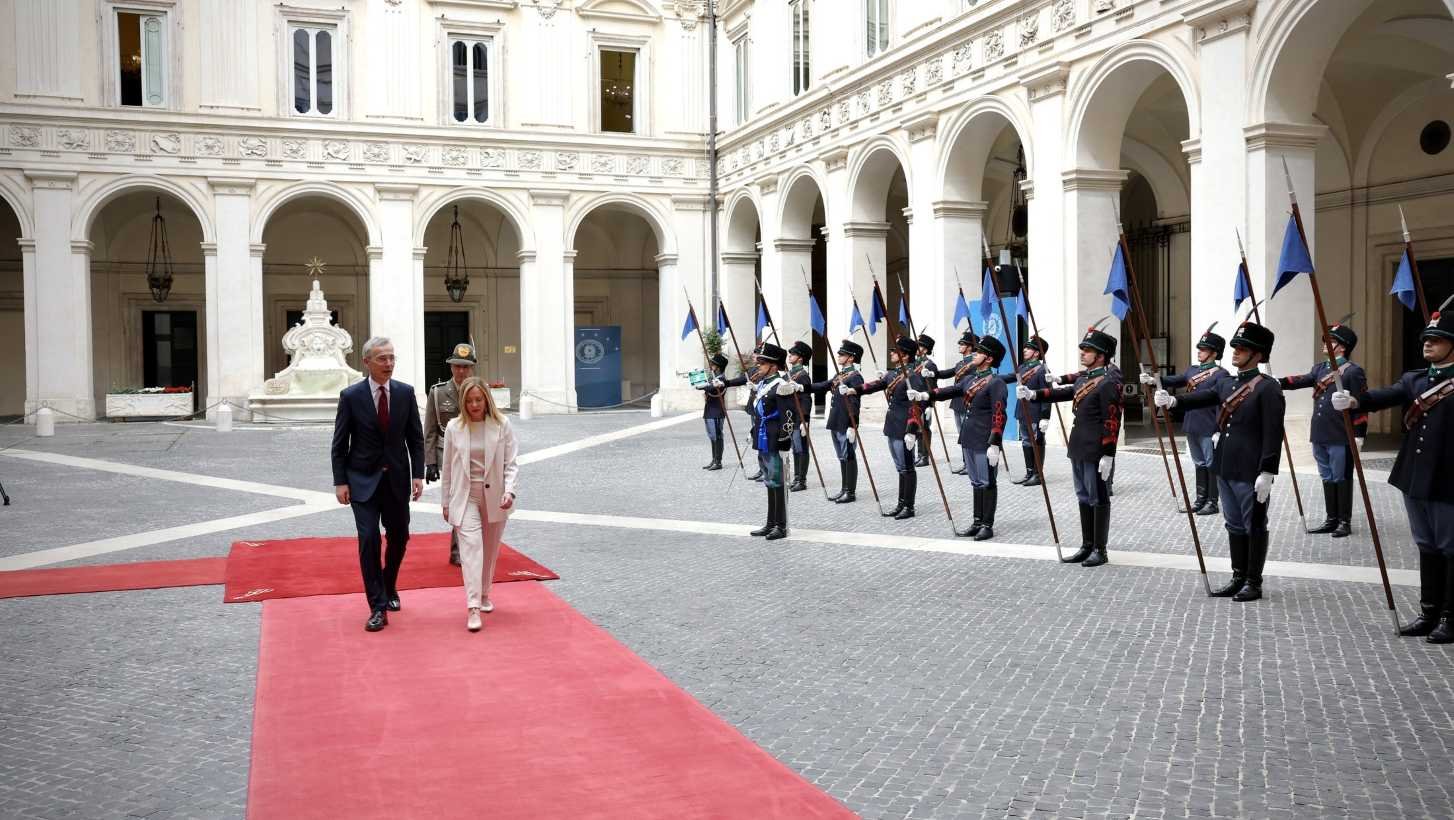
Representing Washington was a delegation headed by State Secretary Marco Rubio, while his Russian counterpart Sergey Lavrov led his nation's delegation. High-level officials of both nations were present at this pivotal meeting held in Riyadh's Diriyah Palace.
Post-meeting remarks from the Russian side painted a mixed picture of the talks, only deeming them as "not bad" and providing little clarity on possible points of agreement between the two nations.
Intensive Diplomatic Engagements Amid Ukrain's Absence
Following the US-Russia bilateral, another diplomatic dialogue involving Ukrainian President Volodymyr Zelensky is set to occur later this week in Saudi Arabia. Despite being the nation at the center of these discussions, neither Ukraine nor Europe was invited to the main round of talks, triggering unease in Kyiv and other European capitals.
Zelensky stressed in an interview with the German network ARD that any peace agreement should involve Ukraine directly. He categorically rejected the notion of Ukraine accepting a peace deal that they played no part in negotiating.
Amid the ongoing diplomatic efforts, Russia refuses to consider any territorial concessions to Ukraine. Notably, Russia controversially annexed Ukraine's Crimea peninsula in 2014 and took over Kherson, Zaporizhzhia, Donetsk, and Luhansk oblasts in 2022.
Post-Talks Violence and Disinformation Accusations
Following the US-Russia talks, the region of central Ukraine was troubled by a large-scale Russian drone attack. The attack damaged a residential block in the city of Dolynska, injuring a mother and her two children and sparking a rapid evacuation of inhabitants.
In the ensuing counteroffensive, Ukraine claims to have shot down 103 of the 176 drones deployed by Russia, with 67 falling before reaching their targets due to electronic countermeasures.
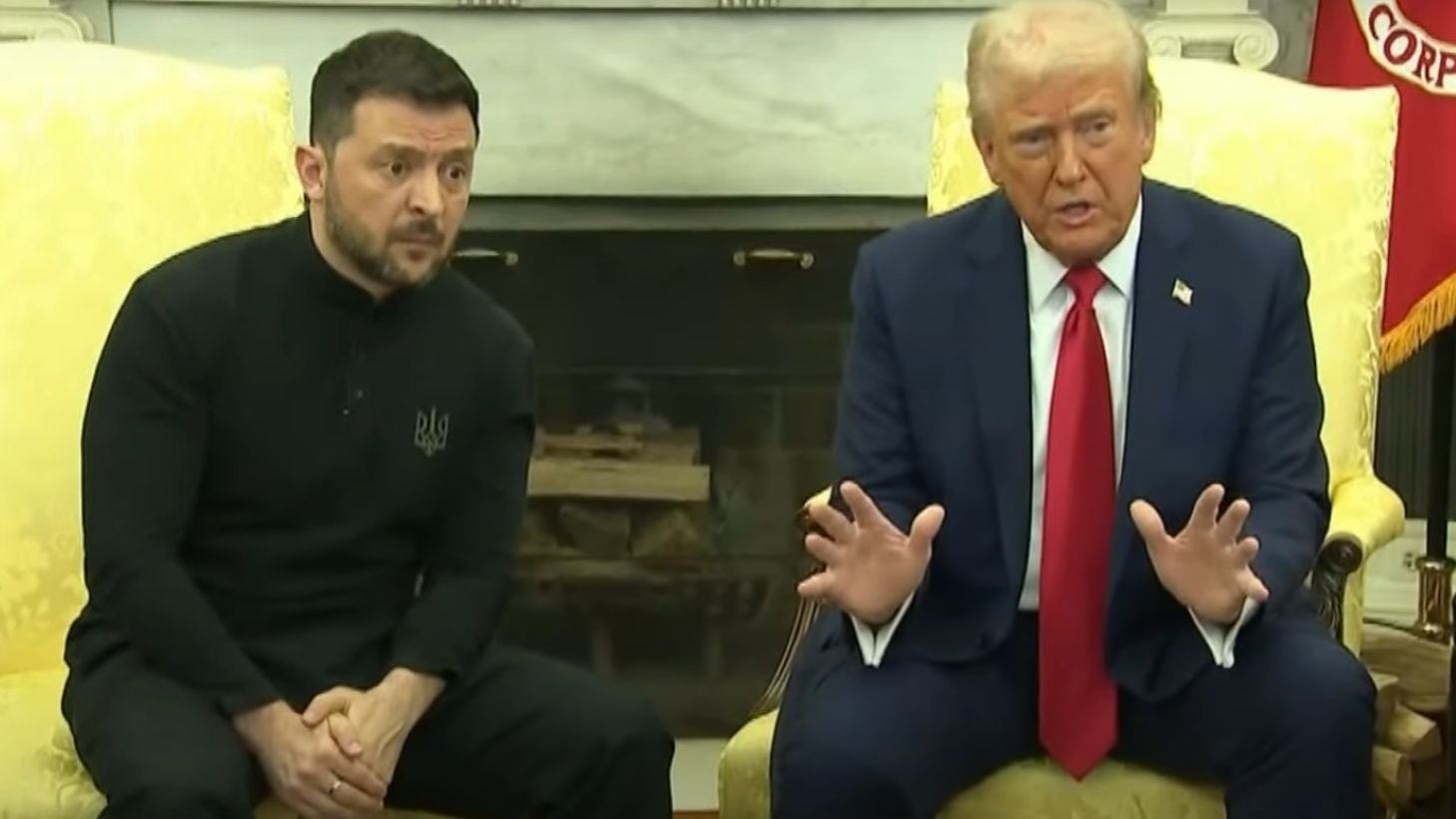
Amid these international discussions and military clashes, US President Donald Trump added more fuel to the fire by suggesting that Ukrainian President Zelenskyy should hold another election due to his supposedly low approval rating. Zelenskyy swiftly rebutted this claim and labeled it as Russian "disinformation," affirming his significant support among voters and his legitimate position as the Ukrainian President.
As the war wages on, Ukraine finds itself negotiating the challenging terrain of military conflict, diplomatic discourse, and complex geopolitical interests.
  • Text Only
Estonia Questions US About HIMARS Production, Considers Alternative Options
Uncertainty clouds the possibility of Estonia purchasing a second batch of M142 High Mobility Artillery Rocket Systems (HIMARS) from Lockheed Martin, with the US government's ability to expedite production and provide better delivery slots in question. Defense Minister Hanno Pevkur has indicated that Estonia's decision hangs in the balance and an alternative course could be charted in the coming months.
"Current data shows that the waiting period for the product delivery is quite prolonged, and unfortunately, we do not have the luxury of excessive time," Pevkur noted during a recent sideline interview at the Munich Security Conference.
One of their key advantages is the ability to strike fixed targets. HIMARS has been a formidable asset for Ukraine, effectively disrupting Russian supply lines, ammunition depots, and command-control centers. Over 40 HIMARS units have already been supplied by the US to Ukraine, as stated on a US State Department factsheet.
Alternative Avenues for Defense Assets and Equipment
The US government's response determines if Estonia will pursue a second HIMARS consignment or divert to an alternate route, said Pevkur, suggesting the choice of a preferred platform could be announced in a few months.
Rocket production firms such as Rocketsan's Khan from Turkey and the Israeli-built Elbit Precise and Universal Launching System (PULS) seem likely contenders for Estonia's consideration. Pevkur specifically highlighted South Korea's K239 Chunmoo, developed by Hanwha Aerospace, as a strong competitor.
Boasting clientele in Poland and under consideration by Norway, Hanwha Aerospace is no stranger to Estonia. The South Korean firm also supplies Estonia with 36 K9 Thunder self-propelled howitzers, bolstering its chances.
HIMARS Significance for Estonia Amidst Ukraine Support
Estonia has prioritized investment in long-range weaponry, partly owing to its significant contribution of equipment towards Ukraine's defense efforts. These donations have required Estonia to refill the void in its hardware.
Tallinn has made substantial headway in acquiring six HIMARS units, a $200 million deal that features rockets capable of traveling between 70km and 300km, as well as communication systems, training, and logistics.
The official keys to these systems have been handed over to Estonia in a ceremony at Lockheed Martin's headquarters last month, and they are expected to be delivered soon. While Pevkur indicated there still is some time to decide about future procurements like the XA-180 armored personnel carrier replacement.
Currently, both Lockheed Martin and the US State Department have remained tight-lipped about queries related to HIMARS production.
  • Text Only
Smith & Wesson Unveils Latest CSX E-Series Micro-Compact Pistols
In a recent move showcasing their commitment to innovation and craftsmanship, Smith & Wesson has presented the latest addition to their concealed carry platform - the CSX E-Series. Building upon the success of the CSX line, which debuted only three years prior with the introduction of the aluminum alloy frame CSX micro-compact pistols, the premier gunsmiths have been diligently honing the line's design and features, and the results are anything but ordinary. Now, we turn our attention to what makes the CSX E-Series stand out.
On Improved Specifications and New Design Upgrades
The CSX E-Series, while holding on to its predecessor’s aluminum alloy frame, is packed with design enhancements that are far from trivial. Ranging in barrel lengths of 3.1” or 3.6”, these new-generation 9mm micro-compact weapons come bundled with three magazine capacity options of 12, 15, and 17 rounds, as well as 10-round compliant versions, thus catering to varied user requirements.
Enhanced Optics and Ingenious Adaptability
Shaping up as optics-ready firearms, the CSX E-Series pistols are fitted with an RMS-C footprint, fully compatible with the Holosun 507K, ensuring an unrivaled shooting experience. The ClearSight cut, a Smith & Wesson exclusive feature, effectively diverts gases from the optic lens, securing an unmasked view for the shooter.
Additionally, the CSX E-Series emphasizes versatility, featuring a newly conceived modular grip adapter. This empowers users to adjust frame dimensions to their preference, be it for deep concealment or more robust handling and greater capacity. Other enhancements include an enlarged front strap for an improved grip, a redesigned trigger for better shooting accuracy, interchangeable backstraps, ambidextrous controls, standard white-dot sights, and a timeless flat-black finished frame.
Pricing and Availability of CSX E-Series Variants
With all four variants of the Smith & Wesson CSX E-Series now available in markets, they carry a listed MSRP of $699.00. Given their advanced design, adaptability, and feature-packed characteristics, these pistols unquestionably better the concealed carry platform.
Smith & Wesson is asserting with the launch of the new CSX E-Series model that it embodies an enhanced evolution of a classic platform, evolving to meet the high demands of those requiring more from their concealed carry, making it more than just a firearm – it's a reliable companion.
  • Text Only
Discovery of Shahed Drone Wreckage At Chernobyl Confirmed
The remains of a Shahed kamikaze drone have been uncovered by Ukrainian emergency services at the Chernobyl Nuclear Power Plant, where a Russian Strike targeted the shelter of Reactor 4. The incident took place overnight on the 14th of February, and despite the aggression, officials assert that no notable increase in radiation levels has been documented.
The drone remnants, confirmed to be those of a Shahed-136— under the alias Geran-2, used commonly by Russian militaries— have been captured on camera by Ukraine's State Emergency Service. The footage showcases the drone's engine and clear evidence of damage resulting from the impact.
Russia's Recurrent Strikes on Ukraine's Vital Infrastructure
Russia's military activity has consistently targeted Ukraine's crucial infrastructure throughout the ongoing war, with this recent attack further emphasizing this destructive pattern. The Chernobyl Exclusion Zone, used previously by Moscow for strategizing and planning, has become a hotspot for said military activity. On February 24, 2022, Russian armies launched a full-scale invasion, occupying the nuclear facility in the initial days of the onslaught.
This instance is not the first of its kind where Russian forces have utilized drones in the Chernobyl Zone. Recorded accounts of drone activity in the area spanning the last three years have raised alarms regarding the probable hazards of military exercises near places that house sensitive nuclear equipment.
Zaporizhzhia, Europe's most extensive nuclear power plant, remains the only one to have been attacked and seized exclusively by Russia- a fact that escalates the prevalent concerns about nuclear safety.
The unearthing of Shahed drone remains in Chernobyl only amplifies the worry about the region's long-term security and the susceptibility of wartime nuclear sites.
Russia Continuously Denies Chernobyl Strike Despite Evidence
Notwithstanding the discovery of Shahed drone debris, Russian officials continue to deny responsibility for the strike on Chernobyl Nuclear Power Plant's reinforced confinement architecture. The Kremlin has rejected all allegations of targeting Ukraine's nuclear infrastructure, even with the existence of video footage capturing the moment of the strike.
Kremlin spokesperson Dmitry Peskov has labeled such accusations "provocations and distortions," dismissing the tangible proof discovered at the site.
The model of the retrieved drone is Shahed, a model produced jointly by Russia and Iran under the alias Geran-2.
A parallel denial was exhibited in Moldova following an identical episode where Moscow's special envoy, Oleg Ozorov, was presented with fragments of Russian drones as evidence of Russia's involvement in recent strikes on Moldovan territory. Authorities in Moldova seized these drones after crashes near the towns of Chumai and Ceadîr-Lunga on February 13. Despite being provided with material proof, the Russian envoy declined to acknowledge the drones' Russian origin and demanded additional evidence of Russia's role in the incident.
This evasion strategy is characteristic of Russia, which consistently overlooks international standards while rejecting accountability. Its recurring dismissals of allegations as misinformation and propaganda paint a telling picture. The Chernobyl incident further demonstrates Moscow's strategy of avoidance, even in light of firm evidence linking it to drone strikes in Ukraine and beyond.
  • Text Only
Army Sees Surge in Recruitment: Influence of Trump's Leadership or Reinvented Recruitment Strategy?
Despite President Trump's recent claim to have triggered an uptick in army recruiting, evidence suggests that the rise in enlistments began predated his recent time in office. Even though POTUS's re-election and return to office have indeed corresponded with an elevated number of new soldier enlistments, the shift began nearly a year earlier, following the Army's comprehensive reinvention of its almost $2 billion recruitment efforts.
Insight into the Recruitment Surge
An official White House statement lauds the Army's best recruitment outcomes in the past 15 years. Similarly, Secretary of Defense Pete Hegseth points out that December and January have emerged as the most successful months for recruiting in 12 and 15 years, respectively. Neither party, however, detailed specific enlistment figures from these periods.
Meanwhile, evidence has surfaced indicating the Army's recruitment drive began to recover last year, well ahead of Trump's election, as it launched significant alterations to its recruitment strategy. This rebound resonated in the 2024 fiscal year, highlighted by active-duty soldier recruitment, reaching 55,000 — a significant achievement following two previous years of missed targets.
The current trend, influenced by either POTUS's tenure, the novel recruitment tactics, or a combination of both, continues into 2025. By October, the Army had already reached 59% of its 2025 Fiscal Year recruitment goal, according to a service spokeswoman.
Revamping Recruitment: The Future Soldier Preparatory Course
Two former Army officials cite the recent recruitment success as the fruit of years of diligent work, building off the backbone of the newly introduced Future Soldier Preparatory Course. This multi-week program has been instrumental in preparing potential soldiers for basic training.
Introduced in 2022 and expanded significantly over the following years, the Future Soldier Preparatory Course is heralded for reversing the Army's previous recruitment shortfalls by assisting potential soldiers in meeting the service's physical and academic requirements.
Throughout the 2024 fiscal year, approximately 24% of all new soldiers enlisted in the Army were graduates of this course. Furthermore, research suggests the increased difficulty for Americans to meet enlistment requirements over the past decade has also contributed to the course's effectiveness and overall success.
It's worth noting that an increase in military enlistment over the past year reflects additional external factors. More women and racial minorities have joined the military, suggesting a broader shift beyond the recent election outcome. Economic benefits and education opportunities also play critical roles in individual decisions to enlist.
Therefore, while the resumption of President Trump’s leadership might appeal to some potential recruits, the Army's invigorated recruitment tactics have provided a steady foundation for the rise in enlistments seen over the past year.
  • Text Only
Admiral Nakhimov Battlecruiser Reactivates Its Nuclear Reactors
The Russian Navy's nuclear-powered battlecruiser, Admiral Nakhimov, which was out of service for an extended period, is displaying encouraging signs of operational readiness, with its two nuclear reactors now reportedly activated. This impressive 28,000-ton vessel is scheduled to re-enter maritime service in the upcoming summer, although it has experienced several postponements in the past. Whether this timeframe pans out as planned remains to be seen.
Restoring the Vessel: Progress and Hurdles
According to an unattributed insider source from Russia's defense industry, the ship's second nuclear reactor was launched last Sunday. An earlier report disclosed that the first reactor was made functional in late December 2024. These successive launches signify the entire nuclear powerplant of the Admiral Nakhimov is primed for a full-operational state.
The Admiral Nakhimov first sailed in 1986 and belongs to Russia's Project 11442 class of warships, known in NATO circles as the Kirov class. Upon modernization, the battlecruiser will bear the revised designation Project 11442M.
Though the vessel stayed in dry dock for a lengthy duration to undergo a deep refit, its eventual reappearance aims to project a potent assertion of capability and prestige. The aftermath of this extended refit aims to field a refurbished vessel carrying new weapons and sensors, breathing new life into the Kirov class of Russian naval vessels.
Contingent Modernization Plans and Uncertainties
As it stands, the only current operative Kirov class battlecruiser in the Russian Navy is the Pyotr Veliky (Peter the Great), which is associated with the Northern Fleet and has only received minor modernization. Hence, it is primarily reliant on Soviet-era armaments and detection systems.
Simultaneously, plans for the comprehensive upgrade of the Pyotr Veliky — mirroring the methodical improvements applied to the Admiral Nakhimov — are steeped in uncertainty due to indications that the Russian Navy may retire the battlecruiser and instead, shift its attention to the Admiral Ushakov.
The objective of restoring the Admiral Nakhimov to operational status has been plagued by numerous interruptions and complexities. The ship sat idle for over a decade in the frigid waters of the White Sea before restoration work finally gained momentum in 2014. Despite several setbacks in the projected delivery dates, significant strides have been made in refitting the colossal warship.
Unique Ammunitions and State-of-the-art Defense Systems
The reworked battlecruiser is anticipated to house 174 vertical launch tubes, the most any surface combatant or submarine can boast, and will be equipped with modern weaponry including the subsonic Kalibr, the supersonic Oniks, and possibly the hypersonic Zircon.
The battlecruiser is also slated to feature an air defense network, with tubes packed with surface-to-air missiles of the S-300FM Fort system. The old arsenal will be reinforced by the Pantsir-M combined gun/missile systems which will provide robust short-range air defense.
A Strategic Naval Powerhouse
If the battlecruiser emerges fully equipped with the anticipated array of weaponry and sensors, it will establish the Admiral Nakhimov as the Russian Navy’s most formidable surface combatant. The revitalized battlecruisers will serve as the nucleus of the Russian fleets, especially given the uncertainty surrounding the return of the aircraft carrier, Admiral Kuznetsov, to service.
In an era when the Russian Defense Ministry's focus is on the Ukrainian conflict and the enhancement of its strategic arsenal, the reintroduction of a revamped surface combatant offers some solace to the naval institution. This holds true, particularly in light of the shelf life of plans to inaugurate a new class of 'super-destroyer'. Current construction projects are more centered on developing frigates, corvettes, and new-generation submarines.
As the last operating nuclear-powered surface combatant in the world, the Kirov class illustrates a potent symbol of Russia's naval influence. With the Admiral Nakhimov set to rejoin the fleet, it will undoubtedly serve as a representation of the country's military might and standing for many more years to come.
  • Text Only
Trump Elucidates New Controversial Approach to Gaza Strip
In a surprising revelation, on February 4, President Donald Trump enunciated an unorthodox proposal for the United States to "take over" the Gaza Strip. He hinted at the possibility of deploying American military forces to achieve this end.
US Envision Comprehensive Restructuring Amid Turmoil
President Trump disclosed his vision for a future American role in the region during a news conference with Israel's Prime Minister Benjamin Netanyahu. He illustrated a scenario where the United States would 'own' the Gaza Strip, and be accountable for weapons dismantling and site rebuilding to eradicate the remnants of ruined buildings.
He framed the takeover as a quest for regional stability, stating, "We're going to take over that piece, that we're going to develop it." Trump views this as a long-term strategic ownership, believing it could bring lasting harmony to the Middle East.
Even though President Trump has been a vocal advocate for ending the Ukraine war, he did not rule out possibly sending American troops to Gaza "if it's necessary."
Palestine: The New Middle Eastern Riviera?
Trump's proposed plan also encompasses a reimagined future for Palestinians residing in the region. By transforming Gaza into a hub for jobs and tourism - a "Riviera of the Middle East" -, it is hoped to breathe new life and prospects into the area. In addition, Trump sees a significant role for neighboring countries like Egypt and Jordan in potentially accommodating Palestinian resettlement, regardless of their prior reluctance to accept refugees.
These new insights into his administration's approach to the Middle East mark a quick about-face on Trump's original 2016 campaign pledge to withdraw American troops from the region following the Iraq War fallout.
Israel-Palestine Ceasefire and Trump's 'No War' Stance
Despite the currently agreed ceasefire between Israel and Palestine, Trump suggested a bold measure of sending troops to the region, contradicting his election victory speech in November 2024 where he vowed to "stop the wars." He remained proud of his record of having "no wars" during his first four years in office, and most notably beating back the forces of ISIS.
Ukraine to Help Secure Rare Earth Minerals
Trump's knack for surprising comments continued with his suggestion that Ukraine could secure American aid in return for supplying the U.S. with its rare earth minerals. "We're looking to do a deal with Ukraine, where they're going to secure what we're giving them with their rare earths and other things," he said. However, allies of Ukraine remain skeptical about the future of U.S. aid under Trump's administration due to his criticism of former President Joe Biden's assistance to Kyiv.
  • Text Only
Over 45,000 Ukrainian servicemen have fallen since the war's onset, President Zelensky reports
In a revealing conversation with British journalist Piers Morgan, Ukrainian President Volodymyr Zelensky revealed astoundingly tragic statistics—over 45,100 Ukrainian soldiers have tragically lost their lives since the ruthless full-scale invasion launched by Russia commencing in February 2022.
High casualty count poses colossal challenges
The Ukrainian President also touched upon the daunting reality faced by wounded servicemen, with a staggering 390,000 instances of soldiers maimed on the battlefield. This figure, he noted, might be indicative of lesser soldiers bearing the brunt of lasting injuries, considering some might have been wounded multiple times in distinct involvements. Furthermore, he mentioned a noteworthy fact realized through past statements—the valorous half of the soldiers recuperate and return to their battlefield duties post-injury.
Zelensky's frank disclosure comes off as a seldom gesture by a Ukrainian official, illuminating the reality of the toll inflicted upon their fighting regime.
The uncertainty of Prisoners of War and Missing in Action
The Ukrainian President had previously unveiled casualty figures in December 2024. He stated that Ukraine had suffered an immense loss of 43,000 servicemen, supplementing this with 370,000 incidents of medical support for the wounded. Despite this breakdown, a cloud of uncertainty hangs over the precise numbers of those held as prisoners and those classified as missing in action. Zelensky expressed his unacquainted state with these specifics but assured continuing endeavors for obtaining clarity.
Russia's supposed death toll overshadows Ukraine's, Zelensky declares
Amid the grim revelations, President Zelensky paralleled Ukraine's count with Russia's alleged numbers. He shared an estimated figure asserting nearly 350,000 Russian soldiers have fallen, supplemented by the occurrence of 600,000 to 700,000 wounded soldiers on the battlefield.
Echoing these alarming numbers, Ukraine's General Staff estimates Russia's overall troop losses to be approximately 842,930 since the conflict's onset. While these figures have been matched to Western intelligence predictions, there is some ambiguity about whether they encompass deceased, wounded, captured, or missing personnel.
Engaging international troops for reinforcement
In the shadows of these figures, Russia has maintained secrecy over its casualty figures. However, an inadvertent comment by a Defense Ministry official pointed towards nearly 48,000 applications to identify missing soldiers.
Attempting to alleviate the casualty count among its citizens, Russia has sought reinforcement from foreign troops. A strategic exclusive relationship with North Korea has seen Pyongyang reportedly deploy between 10,000-12,000 soldiers to aid Russia in the war efforts against Ukraine.
Information advanced by Ukraine's military intelligence chief Kyrylo Budanov, however, differs from a claim made by a Special Operations Forces spokesperson who corroborated a report from The New York Times that North Korean troops had been withdrawn from the front for three weeks. Budanov refuted this, indicating that while the presence of North Korean troops had indeed reduced, investigations are ongoing to ascertain the cause.
  • Text Only
North Korea Conducts Cruise Missile Test, Reigniting Global Attention
In a move recognized by global analysts as both a demonstration of prowess and a not-so-subtle greeting to US President Donald Trump, North Korea recently conducted a test launch of a 'strategic' underwater cruise missile. The launch not only underscores the nation's evolving military capabilities but also highlights a critical foreign relationship that will likely dominate much of the news in the coming weeks.
The US-North Korea Relationship: A Retrospective
From 2017 to 2021, the bond between the United States and North Korea was a roller coaster ride of quotable remarks, high-profile meetings, and dramatic policy shifts. President Trump's interactions with the North Korean dictator Kim Jong Un were anything but uneventful, with moments like North Korea's escalating nuclear crisis in 2017 and President Trump's historic crossing into North Korean territory in 2019 marking significant touchpoints in their relationship.
However, North Korea's recent cruise missile test on January 25—reported as "successful" by the Korean Central News Agency—indicates that the country still wishes to command global attention through displays of military power. Analysts suggest that this might be an attempt to grab the attention of the newly reinstated American leader.
Dystopian Dance: President Trump and Kim Jong Un's Unresolved Relations
As President Trump re-enters the international stage, his approach towards North Korea will be shaped by a number of dynamic geopolitical considerations. Whereas Kim Jong Un has solidified a position of power since Trump's initial ascension to the presidency in 2016, Trump's tenure will likely involve pressing domestic and international challenges before recalibrating the US's relations with North Korea.
On the home front, Kim Jong Un has incrementally cemented North Korea's position, cutting ties with South Korea and steering his nation onto a war footing. The dictator is expected to further strengthen the nation's military capabilities, including advanced missiles suited for tactical and strategic nuclear warfare. Regardless, the dream of denuclearizing North Korea remains elusive, with few hopeful signs of materializing.
Recognizing these realities, many have questioned how Trump will manage US and allied relations with North Korea, particularly given the convoluted and often shifting political terrain.
Russia Comes into Play
Possibly the most pivotal change in the geopolitics of North Korea has been its growing alliance with Russia's heavyweight leader, Vladimir Putin. In return for sending North Korean troops to assist Russia in the conflict with Ukraine, North Korea has received a substantial influx of capital, advanced weaponry, food, and oil from Russia. Analysts see this burgeoning alliance as an important factor in securing Kim Jong Un's regime and North Korea's continued geopolitical influence.
The Post-Test Fallout
Following the missile test, Kim Jong Un toured a nuclear weapons establishment where he extolled their "epochal successes" in advancing North Korea's nuclear arsenal. Such claims further galvanize suspicions about North Korea's military technological progress.
One salient question revolves around the nuclear capability of the tested cruise missile. While North Korea has claimed it possesses a small nuclear warhead that can fit onto this weapon, this is yet to be validated. Furthermore, there are concerns about the missile's potential to threaten other countries due to its unpredictable flight path and difficulty in detecting, underscoring the urgent need for precise intelligence and strategic planning in mitigating potential threats.
To conclude, the recent series of events has revitalized the spotlight on North Korea, reminding the global community that the nation remains an ongoing player on the world stage. The unfolding developments and their implications remain to be seen.
  • Text Only
US Military Reinforces Guantanamo Bay and Southern Border
The U.S. military has begun a significant mobilization with nearly 500 marines preparing to rendezvous at Guantanamo Bay, while roughly the same number from the 10th Mountain Division prepares to mobilize at the southern border in Texas. This move comes amid increased efforts to strengthen border operations under the tough immigration crackdown by President Donald Trump's administration.
Role in Migrant Holding Operations and Security
The hundreds of troops deployed are set to ensure security at a large migrant facility in Guantanamo Bay, Cuba. This 30,000-person hutment is under the U.S. military base and holds migrants as per strategies announced previously by the White House. The reinforcement at the base comprises 310 service members in total, with troops hailing from the U.S. Southern Command, U.S. Army South, and U.S. Marines with the 1st Battalion, 6th Marine Regiment, 2nd Marine Division. With 170 Marines stationed at the base just over the weekend, the U.S. military base in Cuba is seeing an exponential increase in numbers.
What the Move Fulfills
Information from a distinct Pentagon official has revealed that this movement of approximately 500 Marines to Guantanamo Bay, along with about 500 soldiers from the 10th Mountain Division moving to Texas, is slated to aid in the creation of a Joint Task Force Headquarters for the southern border mission. This deployment is in line with President Trump's staunch promise to expel undocumented migrants from the U.S. and enhance security measures at the southern border. He recently posted on Truth Social that Mexico would allocate 10,000 soldiers to the border, helping stem the flow of both drugs and migrants into the U.S.
During the early days of his administration, military engineers and police from eight states were deployed to the border as per communication from the Department of Defense. The U.S. Coast Guard concurrently kicked off the migrant deportation endeavor, flying detained individuals to deportation hubs across Texas and California.
Hints that the 82nd Airborne and 10th Mountain Divisions could participate in the southern border operations were released in mid-January, although “prepare to deploy” orders weren't officially issued. Furthermore, toward the end of January, the New York National Guard divulged its intent to send around 100 soldiers from a military police company to Cuba. However, it was specified that they would be focusing on maintaining security at the detention facility holding suspects of U.S. terrorist events, including the perpetrators of the September 11, 2001, terrorist attacks, who have been confined there for over two decades.
  • Text Only
Ukrainian Military Embarks on Overhaul: Zelensky Targets Modernization
The Ukrainian Armed Forces are on the precipice of a comprehensive structural transformation aimed toward significant modernization. On February 3rd, President Volodymyr Zelensky gave the green light to an elaborate plan that signals a new organizational era in defense.
Adopting the Corps System: A Step Forward
It follows the public endorsement of the corps system by Commander-in-Chief Oleksandr Syrskyi, who marked this approach as pivotal to meeting the contemporary challenges of the Ukrainian military. Syrskyi had been explicit about his vision that revamping the structure of the armed forces and making a successful transition toward a corps-centric system are not just desirable, but necessary.
According to President Zelensky, the proposed transformation has already gotten approval, and “A plan has already been approved to transition to a new organizational structure of the Armed Forces of Ukraine." The focus now, corroborates Zelensky, is on the efficient implementation of the proposed structural changes.
The president reinforced his conviction in the project's potential, stating emphatically, "We need the corps system."
Corps Commanders at The Helm: Leading The Change
Zelensky briefly outlined the new command structure during his announcement. He explained, "Today we discussed approaches to the appointment of corps commanders: these should be the best-trained, most promising officers with combat experience and modern thinking. The army must be modern."
The specific decisions regarding the structural reorganization are yet to be revealed to the public but will be communicated in due course as assured by Zelensky.
Syrskyi asserted the same day that these organizational reforms were already set in motion, with the ultimate goal to fortify the Armed Forces amid the complexities of contemporary conflict conditions.
This development comes at a time when Ukrainian military units are severely outnumbered by Russian forces in several areas of the contested front lines. Despite the daunting circumstances, Ukraine grapples with a range of issues, such as personnel scandals, mismanaged brigades, an ongoing mobilization crisis, and uncertainty over future U.S. military aid. Amid adversity, this shift in military structure is perceived as a step closer to creating a modern and competent force capable of countering the manifold challenges facing Ukraine.
  • Text Only
Trump Asks for Ukrainian Rare Minerals as Precondition for Aid: Kyiv Considers it Favorable
As reported by Kyiv Independent, President Trump apparently revealed his interest in gaining access to Ukraine's pool of rare minerals in exchange for the U.S. providing monetary aid for the war-affected nation. He shed light on this proposal during a discussion with journalists in the White House's Oval Office on the 3rd of February.
President's Office: No Official Word Yet
The U.S. President did not clarify the specifics regarding the materials that Washington seeks to obtain from Kyiv. There was no immediate official confirmation of any finalized agreements about this exchange. However, a reliable contact from the President's Office revealed to the Kyiv Independent that the notion of sharing Ukraine's rich natural resources with its strategic partners forms a fundamental component of President Volodymyr Zelensky's 'victory plan.' This strategy has been presented to multiple foreign dignitaries, including President Trump.
Aid Distribution Under Scrutiny Amidst Ongoing War Situation
Trump's declaration arrives at a time when there are persistent questions about the U.S.'s continued financial support to Ukraine. President Volodymyr Zelensky affirmed during a recent press briefing with Moldovan President Maia Sandu on January 25th, that the military assistance, tallying to $65.9 billion since Russia's full-blown invasion in February 2022, is not endangered by any funding blockade.
Nevertheless, the U.S. Agency for International Development's (USAID) initiatives in Ukraine have experienced a financial vacuum as a consequence of the new U.S. executive's actions. From the time Russia initiated its all-out invasion, USAID has channeled $2.6 billion for humanitarian relief, $5 billion for developmental aid, and more than $30 billion in direct fiscal support to Ukraine.
Presently, the Ukrainian parliamentary humanitarian and information policy committee has started exploratory talks with its European associates to substitute the U.S. financial aid facilitated through USAID temporarily, at least until any formal agreement is established regarding the plan proposed by President Trump.
  • Text Only
U.N. Reports Rising Count of POW Executions by Russian Forces
In a concerning development, the U.N. Human Rights Monitoring Mission in Ukraine has expressed alarm over an escalating number of Ukrainian prisoners of war (POWs) executions carried out by Russian forces. This revelation was made public in a press statement secured by the Kyiv Independent.
The U.N. mission has documented a staggering 79 executions spanning 24 different incidents since late August 2024, with suggestions hinting at the possibility of group executions taking place within these figures.
Unraveling Russian Violations of the Geneva Conventions
Ukrainian authorities have indicated a widespread contravention of the Geneva Conventions by Russian forces during the conflict. In an interaction with Ukrainska Pravda, Ukraine's Ombudsman Dmytro Lubinets revealed that by mid-December 2024, 177 executions of captive Ukrainian soldiers had been logged, with 109 of these taking place within the previous year.
The mission's report includes evidence gathered from witness testimonies and analysis of visual content detailing the deaths of Ukrainian POWs, divulged by Ukrainian and Russian sources.
Interestingly, the mission reported a case where an injured, but unapprehended, Russian soldier was executed by the Ukrainian forces in 2024, to which Kyiv has not responded.
The report also reveals that a large number of Ukrainian soldiers who surrendered or were under Russian custody were executed on the spot, including unarmed and wounded personnel. Locations of reported executions largely overlap with continued Russian offensive operations.
Call for Inhumane Treatment from Russian Public Figures
The mission's head, Danielle Bell, has voiced concern over explicit calls for the inhumane treatment and execution of captive Ukrainian soldiers by Russian public personalities, with a minimum of three such instances plus social media posts from groups linked to the Russian military documented.
Asserting that such occurrences are not isolated incidents, Bell has called for comprehensive investigations into all reports of Ukrainian military personnel executions and public statements endorsing such actions. The mission's statement categorically brands the declaration of "no quarter" as a serious infringement of international humanitarian law and constituted a war crime.
Identification of Ukrainian Soldier in Gruesome Photo
Ukrainian Commissioner for Persons Missing in Special Circumstances, Artur Dobroserdov, announced on 3rd February, the preliminary identification of a decapitated Ukrainian serviceman, images of whom had been disseminated online by Russian sources. The disturbing photo depicts the severed head of a Ukrainian soldier held, presumably, by a Russian soldier.
Further investigation into the incident's surroundings, locating the body, and obtaining additional details is being undertaken by the National Police, as per Dobroserdov. He pleaded with the public to refrain from circulating unverified information and to trust only authoritative sources.
The National Police is also responsible for locating the soldier's relatives and examining the case while Ukrainian authorities are cataloging yet another violation of international humanitarian law by Russia. Dobroserdov relayed that the country's Prosecutor General's Office had been apprised of the incident, falling within the ongoing effort to document Russian war crimes.
  • Text Only
North Korean Troops Retreat from Kursk Region Revealed by Ukraine
The Ukraine's Special Operations Forces (SSO) has validated the withdrawal of North Korean forces previously stationed along Russia’s Kursk front.
The Last Sighting of Invaders
The SSO spokesperson, Colonel Oleksandr Kindratenko, stated that North Korean troops were last spotted approximately three weeks ago in the region. Specifically, Kindratenko noted, “Special Operations Forces report only on areas where our units operate. In this respect, it is pertinent to mention that North Korean troops have seemingly disappeared for nearly three weeks. Likely due to heavy losses, they seemed to have been compelled to pull back.” This statement was conveyed in an interview with the Ukrainian publication, Ukrainska Pravda.
U.S and Ukraine Officials Reflect on North Korean Withdrawal
Further input, including from independent sources such as The New York Times, seemingly corroborates the narrative. The publication, while citing U.S. and Ukrainian officials, duly noted that significant losses had contributed to the removal of the North Korean unit from frontline positions in Kursk.
However, amidst the withdrawal specifics, U.S. officials hint at a potentiality where this withdrawal may not be a permanent occurrence. Their viewpoint predicates that post additional training, North Korean forces could yet redeploy, especially if Russian commanders devise methods to mitigate further casualties.
North Korean Troops in Russia: A Historical Overview
In hindsight, November 2023 marked the induction of approximately 11,000 North Korean troops into the Russian territory. This influx resulted in mounting tensions among Ukraine and its Western allies concerning potential war escalation. According to the Ukrainian Military Chief General Oleksandr Syrsky, the North Korean troops' count dwindled by half in just the span of three months.
Ukrainian officials, while acknowledging the fierceness of the North Korean soldiers, highlighted the unit's lack of synergy with Russian forces resulting in unprecedented casualties. Reports from Ukrainian frontline troops and officials expound on the limited armored support and rare retreats or regrouping instances, further fueling casualties within the North Korean troops.
Uncertainty Looms Over Future North Korean Involvement
Despite their noted withdrawal from Kursk, North Korean participation in ongoing and future warfare remains ambiguous. As Russia continues to face military pressure and depleting ranks, experts warn of Russia potentially reinforcing their battlefronts with additional foreign deployments - North Korean personnel being a strong possibility.
  • Text Only
U.S. Military Executes Airstrikes Against Islamic State in Somalia
The U.S. military recently orchestrated airstrikes against Islamic State operatives in Somalia. Initiated during President Donald Trump's second term, these strikes are the first in the African Nation.
Defense Secretary Pete Hegseth confirmed on Saturday that these strikes, carried out by U.S. Africa Command, were instructed by Trump and coordinated with the Somali government. The Pentagon’s initial assessment indicates a successful operation with “multiple” operatives eliminated and no civilian casualties reported.
President Trump took to social media revealing that the operation targeted a senior IS planner and recruits. However, the White House hasn’t clarified whether the mentioned IS planner was killed in the strike or revealed his identity.
Somalia’s Reaction and the Importance of the Strikes
Hassan Sheikh Mohamud, Somalia's president, praised the operation, portraying it as a reinforcement of the “strong security partnership” between the U.S. and Somalia against “extremist threats.” The President of Somalia commended their ally's assistance in their collective terror elimination and regional stability efforts.
The operation consisted of several airstrikes launched in northern Somalia. These are targeting the Islamic State's branch in the African nation. Currently, this is the largest announced military operation of Trump's second term.
The attacks, which occurred as specified within the Gholis mountain range in Somalia’s Puntland state, were successful in eliminating “multiple” ISIS operatives, according to AFRICOM.
Details of the Military Operation in Somalia
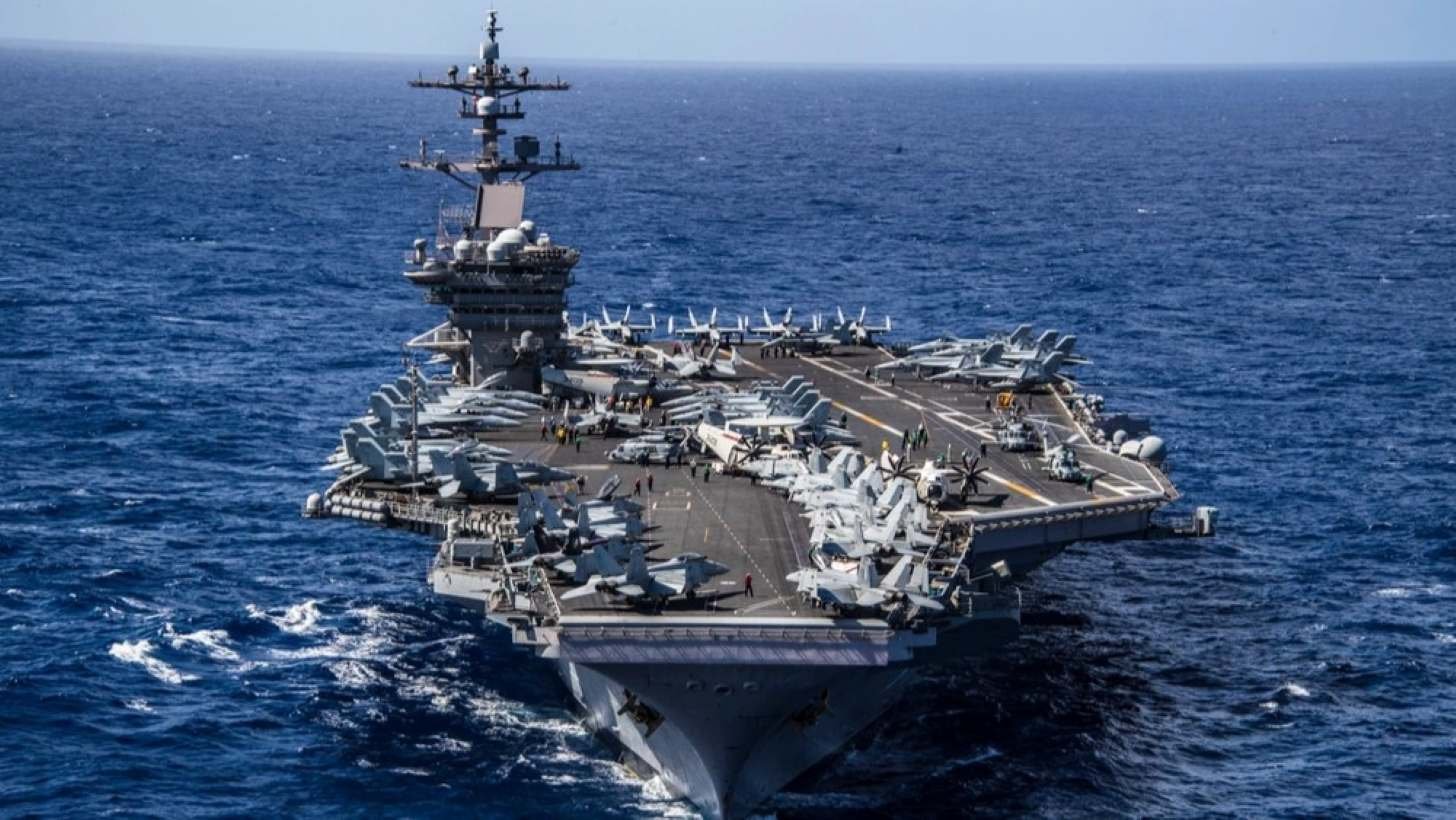
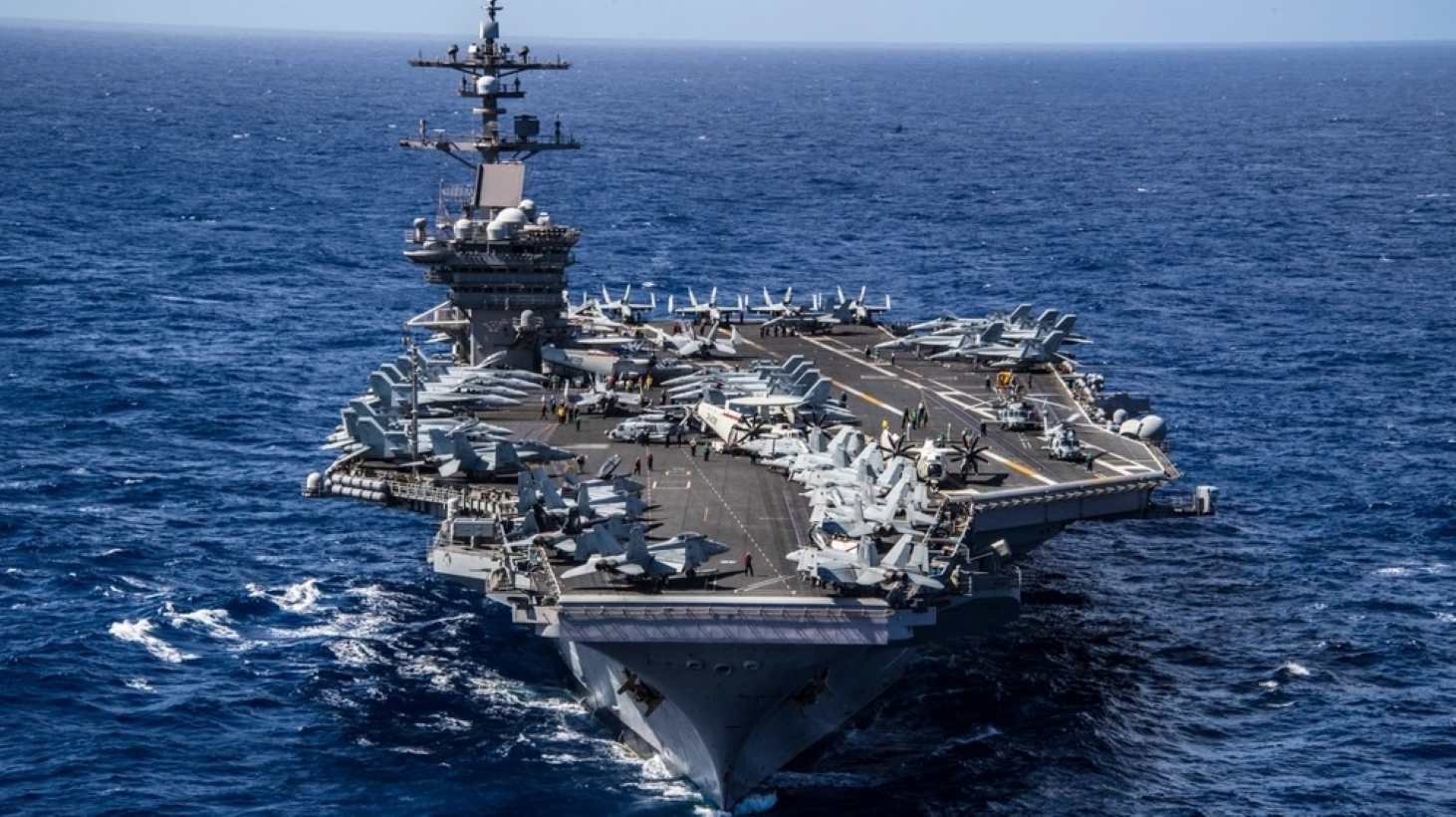
While specifics about the military assets used in the operation remain undisclosed, released AFRICOM imagery features Carrier Air Wing 1 in the USS Harry S. Truman. The Truman Carrier Strike Group has been in action for several weeks in the Red Sea, Yemen, and Somalia waters countering the Houthi movement in Yemen.
AFRICOM reported no civilian casualties, however, further specific details of the operation remain undisclosed. Somali President Hassan Sheikh Mohamud confirmed the airstrikes and his awareness of the operation relayed by the United States.
The U.S. military operation in Somalia trails an airstrike executed in northwest Syria on Jan. 30. This earlier operation successfully eliminated a leader of the al-Qaeda affiliate group Hurras-al-Din, marking the first announced military action under Trump’s administration.
During his previous term, President Trump directed numerous drone strikes, airstrikes, and special operations missions inside Somalia — a total of 219 operations.
Defense Secretary Pete Hegseth’s Statement
In a statement, Defense Secretary Pete Hegseth addressed the successful U.S. Africa Command strikes in Somalia. Directed by Trump and coordinated with the Somali Federal Government, the coordinated airstrikes did target ISIS-Somalia operatives in the Golis mountains. The Secretary asserted that these actions degrade ISIS's ability to plot and carry out terrorist attacks, thus protecting U.S. citizens, their partners, and innocent civilians.
  • Text Only
Sweden's Substantial Military Aid Package for Ukraine and Moldova
In an effort to bolster the military might of Ukraine in the face of ongoing territorial aggression from neighboring powers, Sweden has announced a robust aid package valued at 13.5 billion SEK ($1.23 billion). This marks the 18th time that Stockholm has stepped forward to show support for Kyiv, highlighting Sweden's unyielding commitment to backing Ukraine's struggle for sovereignty.
Key Components of the Aid Package's Arsenal
This comprehensive aid package strives to enhance Ukraine's military capabilities, allocating $90 million towards the production of long-range missiles and drones. Moreover, the Swedish government and its coalition party, in their Thursday announcement, confirmed the donation of 1,500 anti-tank TOW missiles, 200 anti-armor AT4 weapons, 16 CB90-class fast assault boats, and one million rounds of combat boat ammunition. Included are 23 naval weapons stations, aimed at amplifying Ukraine's naval potential.
In the words of Defence Minister Pål Jonson, "This is also a signal to our other allies that we need to prepare for the fact that Europe will have to take greater responsibility for the support to Ukraine."
Financial Breakdown and Strategic Partnerships
Close to half of the aid package, totaling $544 million, is earmarked by the Swedish Defense Material Administration for acquiring further equipment from European defense industries to meet Ukraine's defense requirements. The decisions on procurement will be made in sync with Ukraine and deliveries are slated for completion within the next two years.
Furthermore, Sweden has dedicated a substantial amount to investing within Ukraine, with $181.5 million channeled via the "Danish model" directly into Ukraine's defense industry. An additional $72.6 million has been allocated to initiatives like the Comprehensive Assistance Package (CAP) and the British International Fund for Ukraine (IPU), facilitating the acquisition of military equipment.
Support Beyond Ukraine’s Borders
This aid package's strategic reach extends beyond Ukraine, marking a significant turn in Sweden's defense policy in the region. Stockholm took a noteworthy step by including AT4s for Moldova, a nation viewed as a likely target of Russian aggression. Jonson elaborated on the strategic shift, emphasizing that efforts to curtail Russia's influence and nefarious activities include increased engagement with countries within the EU’s Eastern Partnership, like Moldova.
Sweden's total contribution to Ukraine's military support is a considerable $5.6 billion since the invasion began nearly three years ago, signifying Sweden's ongoing commitment to national sovereignty in Eastern Europe. Looking ahead to 2025, plans are already afoot to allocate $58 million for the education and training of Ukrainian soldiers, underscoring a long-term vision for enhancing Ukraine's military prowess.
  • Text Only
Trump Launches 'Iron Dome for America' Defense Initiative
President Donald Trump recently signed a robust executive order calling for the development of an expansive new missile defense system, dubbed the "Iron Dome for America," for the United States. The order calls for advanced technological solutions, including the contentious space-based interceptors, to counter emerging threats such as hypersonic missiles.
Inspired by Israel's successful Iron Dome system, the U.S. project would require considerable upscaling to protect the American continent from sophisticated intercontinental ballistic missiles. This is in comparison to the shorter-range rockets that Israel's defense system is equipped to handle.
Expanding on Israel-US Defense Collaboration
Working shoulder-to-shoulder with Israel on missile defense technology since the 1980s, the United States has long supported and learned from Israel's Iron Dome system, which has intercepted thousands of incoming rockets since its deployment in 2011. However, a U.S. defense system would need to protect an area nearly 500 times larger than Israel and also counter more advanced threats such as China's hypersonic glide vehicles.
The new defense initiative also leans heavily on space-based solutions, which have long stirred controversy. A pivotal part of the order instructs the Department of Defense to develop space-based interceptors— weapons deployed in orbit to nullify incoming threats. While supporters of this approach highlight it could ensure global coverage and early intercept capabilities, critics warn of triggering an arms race and undermining existing treaties.
Upcoming Challenges and Expectations
Under the directive, the Pentagon has been ordered to submit a proposed architecture for the system within 60 days. This includes plans to hasten the Missile Defense Agency's ongoing Hypersonic and Ballistic Tracking Space Sensor program and develop a "custody layer" within the Proliferated Warfighter Space Architecture — a set of military satellites currently being procured by the U.S. Space Force’s Space Development Agency. 
The executive order also underscores the necessity of securing the defense industrial base, requiring "next-generation security features" for the supply chain as the U.S. races to construct advanced interceptors and tracking systems.
Future Hurdles and Stakeholder Reactions
The most significant obstruction in the realization of the ‘Iron Dome for America’ order could be the financial obligations needed to cover its expansive scope and high-tech requirements. Senate Armed Services Committee Chairman Sen. Roger Wicker, R-Miss., voiced this concern, highlighting the scale difference between Israel’s Iron Dome and the proposed American equivalent. He considered the plan a must, acknowledging the president’s urgency in getting it done.
Analyst Roman Schweizer from TD Cowen noted that the order would likely require tens of billions of dollars to develop and field, deeming it a significant expansion of existing programs. Yet, Schweizer views this as a highly positive development for numerous ongoing projects.
Despite the sparse details in the current executive order, the overarching plan offers various options for defense missions and projects, including the ambitious National Capital Region Integrated Air Defense System aimed at repelling incoming aerial threats to the Washington, D.C. area. Also in the works is a new air defense framework for Guam, expected to include the Army's answer to Iron Dome, dubbed the Indirect Fire Protection Capability (IFPC) Increment 2 system.
Overall, this groundbreaking executive order is a reminder of how defense strategy continues to evolve as the international threat landscape diversifies.
  • Text Only
Russia Intensifies Military Strikes Against Ukraine
Russian military forces have significantly increased their assault on Ukraine, launching 1,250 aerial bombs, over 750 attack drones, and 20 missiles in the past week alone, Ukraine's President, Volodymyr Zelensky, announced on January 26th.
Ukrainian Cities Bear the Brunt of Increased Attacks
The attacks orchestrated by Russian forces have targeted several Ukrainian cities, including Kyiv, Zaporizhzhia, Mykolaiv, Donetsk, Kherson, Sumy, Kharkiv, and Dnipropetrovsk oblasts. Among the deadliest episodes, Russian bombardment led to a tragic incident in Zaporizhzhia, causing the death of at least one individual and severely injuring 45 others. Following this intense attack, the city's residential areas lie in devastation, with apartment buildings bearing the brunt of drone and missile barrages.
On January 25-26, during night operations, Russian troops launched an additional 72 drones which Ukrainian air defense systems successfully intercepted, shooting down over 50 of them.
In his response to these brutal actions, Zelensky has called for international unity in opposing Russian aggression, emphasizing sanctions as an essential response, and highlighting the importance of undercutting Russia's oil-reliant economy.
Trump's Stance on Russo-Ukrainian Conflict: Sanctions and Lowering Oil Prices
Newly inaugurated U.S. President Donald Trump, in his initial remarks since taking office, has presented a hard line against Moscow after his initial peace talks have collapsed, hinting at the prospects of imposing sanctions and undermining Russia's oil-heavy economy.
Addressing the World Economic Forum on January 23, Trump indicated his strategy of negotiating lower oil prices as a means to bring an immediate halt to Russia's aggressive actions against Ukraine. Furthermore, Trump communicated plans to persuade the Organization of the Petroleum Exporting Countries (OPEC) to decrease global oil prices. The President also plans to encourage domestic oil and gas drilling to further challenge Russia's fuel sector.
A day prior to presenting his address at Davos, President Trump shared the gravity of the situation- unless a viable solution to de-escalate the conflict is established promptly; he will have no choice but to instate intense financial restrictions targeting Russian exports to the U.S. and other countries.
  • Text Only
Unyielding Conflict and Strategic Withdrawals in Velyka Novosilka
Reports reveal that Ukrainian forces managed to avert total encirclement in the determined face-off against Russian forces in Velyka Novosilka, Donetsk Oblast. These troops chiefly belong to the 110th Separate Mechanised Brigade, who, amidst escalating engagements, have managed a tactical retreat from certain areas to prevent a total encirclement.
Despite the relentless fighting around the strategic village located approximately 15 kilometers east of neighboring Dnipropetrovsk Oblast, the threat looms large as the Russian infantry, greatly outnumbering the Ukrainian troops, edges closer.
Toils and Triumphs on Both Sides of the Frontline
The attrition is palpable on both sides. Equipment and resources are dwindling, and yet the imposing number of Russian infantrymen tips the scales unfavorably for the Ukrainian side. News of this scenario emerges from the brigade's dedicated Telegram channel.
Forecasts suggest an impending control of the village by Russian forces; however, advancing their offensive may be an uphill struggle. The Mokri Yaly River poses a significant logistical challenge for the Russian advance, and their troops find themselves in a vulnerable position referred to as a “fire pocket”. The brigade reports that they face suppression from shellings and drone attacks in any attempt to move.
The river isn't just an impediment for the Russians. The river also affects Ukrainian supply routes, a problem punctuated by Military spokesperson Viktor Trehubov's warning about the potential encirclement of Ukrainian troops. According to Trehubov, Russian forces are leveraging heavy fire to control access routes into the village.
Contesting Control and Claims in Velyka Novosilka
Fuel to this firestorm was added by the recent claim from the Russian Defense Ministry, stating their troops had managed to plant a Russian flag in the heart of Velyka Novosilka, effectively splitting the town in two and dividing Ukrainian forces.
A collaborative effort by Kyiv Independent experts suggests Ukrainian troops may still be holding onto the village's northwestern sectors, and estimate the complete capture will occur within a “few days”. If this scenario plays out, it would mark one of Russia’s first notable victories this year.
Amidst Uncertainties, the Battle Continues
There is a maelstrom of uncertainty currently swirling around the conflict. It's challenging to ascertain how many Ukrainian troops remain trapped within the southern pocket of Velyka Novosilka. Estimates range from two to three battalions which, according to Pasi Paroinen of the Finland-based intelligence organization Black Bird Group, might amount to several hundreds of soldiers.
The struggle is far from over amid high levels of hostility in Donetsk Oblast. Russian troops continue their slow advance, making operational gains in southern Donetsk Oblast, including areas near Toretsk and Chasiv Yar, while also making inroads near Kupiansk and on Russian soil in Kursk Oblast. Regardless of these advances, victory hangs in the balance as both sides fight tooth and nail to assert their control.
  • Text Only
The Price of War: A Momentous Decision on Funding Military Aid
The implications of warfare are far-reaching, extending beyond the battlefield into the realm of economics. Financing military aid represents a precarious balancing act for any global power. Since Russia's extensive incursion into Ukrainian territory, Western countries have yearned for actionable ways to bolster Ukraine's fortification efforts. Simultaneously, they aim to deal a financial blow to Russia as a punitive action.
Freezing Russian Assets: A Potential Source of Funds
In light of this, Western governments have adopted the strategy of immobilizing Russian assets held in their financial institutions. Current discussions revolve around the allocation and utilization of these frozen funds. A plan currently under consideration by the Trump administration is the utilization of these frozen Russian assets to acquire US-manufactured armaments for the Ukrainian military.
Trump's special envoy for peace negotiations between Ukraine and Russia, Keith Kellogg, has verified that such a proposal is, indeed, currently on the table. Against a backdrop of $300 billion in frozen Russian assets in Western banks, a pivotal suggestion has emerged.
The Ukrainian President's Proposal and an Expansive Strategy
The architect of this groundbreaking proposal is none other than Ukrainian President Volodymyr Zelensky, who unveiled the plan during an interview conducted on January 6. As Zelensky elaborated, Ukraine could purchase U.S. weaponry using the capital procured from Russia’s immobilized assets-his plan, according to a report by Digi24. However, the Ukrainian leader stopped short of revealing Trump's response to his proposition.
While the utilization of these assets for arming Ukraine remains a feasible option, Kellogg emphasized that it forms part of a more comprehensive strategic plan under consideration. It is not, importantly, a standalone solution. As he acknowledged, governments are contemplating the use of interest accruing from these frozen assets. With an estimated annual yield of $3.2 billion, the potential is substantial.
Past Contributions and Prospects for Future Aid
To put things into perspective, in December 2024, the U.S. disbursed $20 billion to Ukraine as a fraction of a $50 billion loan committed by the G7. The expectation is that loan repayment will be facilitated from interest garnered from Russia's frozen assets.
The U.S. Treasury affirmed that the amounts were sent to a World Bank intermediary account, from whence they would be transferred to Ukraine. In October, an agreement among G7 leaders was struck to use interest generated from frozen Russian assets as collateral for the loan.
Apart from U.S. contributions, the European Union has pledged an aid package of €160 million to bolster Ukraine's winter preparedness and bolster its energy infrastructure defenses. Around €100 million of this support is set to be financed from interest accrued on Russian assets frozen in the EU.
  • Text Only
Breaking News: Pete Hegseth Wins Confirmation as US Secretary of Defense in Decisive Vote
In a momentous event that took place on Jan. 24, the U.S. Senate verified the appointment of Pete Hegseth as the Secretary of Defense, ending with a tie-breaking vote. Mr. Hegseth, who possesses a commendable track record as a combat veteran and a former Fox News contributor, was ratified with the Senate equally divided at 50-50.
Key Role of Vice President in Swing Vote
Adding an extraordinary twist to the proceedings, Vice President JD Vance tipped the scales by casting the deciding vote. This unusual event came to pass as three Republican Senators, namely Mitch McConnell, Lisa Murkowski, and Susan Collins, exhibited their political independence, siding with their Democratic counterparts and voting against Mr. Hegseth's appointment.
Hegseth Stares Down Opposition to Take Charge of Defense Portfolio
Despite the vigorous opposition and multifaceted allegations of misconduct, Mr. Hegseth is entrusted with the enormous responsibility of leading the country's staggering 1.3 million-strong military. With a budget of nearly $850 billion under his purview, he would spearhead policy-making for the national defense, advise on strategic directions, and actively engage with the U.S.'s esteemed global allies.
Undeterred by Controversies, Trump Sees Victory in Hegseth Confirmation
President Donald Trump expressed his endorsement of Mr. Hegseth's confirmation, underscoring the significance of this political victory over the dissenting voices within the party. With this appointment, President Trump's top national security ensemble is now complete.
Hegseth's Service Record and Stance on Global Defense Perspectives
Mr. Hegseth, who accrued valuable battlefront experience during his service as an infantry captain in the Army National Guard, is no stranger to being under fire, having served in dangerous locales like Iraq and Afghanistan.
His ideas on defense structures, as he has previously articulated, show an inclination towards reducing the U.S.'s commitment toward the NATO military alliance and advocating for lowered spending on foreign aid.
During his confirmation hearing held on Jan. 14, some concern arose regarding his perspective on the Ukraine situation due to his ambiguous statement regarding the full-scale Russian invasion. Responding to this, Mr. Hegseth clarified his stance: "We know who the aggressor is, and we know who the good guy is. We’d like to see the resolution of the war be as advantageous for the Ukrainians as possible." He underscored his view that this conflict needed to come to an end soon.
  • Text Only
Lithuania Unveils Landmark Defense Spending Increments
Lithuania has revealed plans to dramatically increase its defense budget, pledging to dedicate 5-6% of its GDP to military expenditures from 2026 until 2030.
Boosting Operational Capabilities and Solidifying Global Position
Termed a landmark decision by authorities, Lithuania aims to solidify its operational prowess and fast-track the establishment of a fully operational National Infantry Division by the close of 2030. The decision came into effect in a meeting of the State Defense Council (VGT), where the regional security scenario was evaluated, and plans to enhance Lithuania’s defense framework were discussed. The initiative asserts Lithuania's determination to not just fortify its military preparedness but also contribute significantly to NATO’s collective defense initiative.
At the meeting, National Defense Minister Dovilė Šakalienė and Commander of the Lithuanian Armed Forces General Raimundas Vaikšnoras proposed strategies to revamp and update Lithuania’s armed forces. Proposals featured plans for acquiring military apparatus and developing the required infrastructure for the National Infantry Division that would smoothly integrate into NATO’s defense system.
Enhancing Lithuania's Combat Power and Deterrence Capabilities
According to Minister Šakalienė, the boost in finances will allow Lithuania to expedite payments, swiftly secure crucial weaponry, and put money into the military infrastructure, emanating a robust message of strategic deterrence. The National Infantry Division is predicted to significantly elevate Lithuania’s combat utility and deterrence capabilities, build upon present land units and auxiliary units, the division will act as a vital infrastructural component within NATO’s regional defense methodology.
Minister Šakalienė stated, “Lithuania demonstrates unified political resolve to safeguard its citizens,” further iterating the country’s readiness to adopt all necessary steps to ensure its future security.
Adherence to Updated NATO Targets and Regional Economic Growth
This step further reiterates Lithuania’s commitment to updated capability objectives formulated during the 2023 NATO Summit in Vilnius. Alongside increased military readiness, the initiative anticipates contributing to economic expansion through job creation and support to national industries engaged in defense output and infrastructure development.
Aligning with NATO's Regional Defense Plans
The enhanced defense expenditure aligns with NATO’s regional defense strategies and underlines Lithuania’s leadership role in fulfilling alliance obligations. Lithuanian investment ensures smoother incorporation of allied forces within its jurisdiction in sync with other NATO members seeking divisional-level capabilities.
This groundbreaking commitment to assign a considerable chunk of its GDP towards military spending solidifies Lithuania as a global frontrunner in defense investment and showcases its readiness to tackle hybrid threats and an evolving security landscape.
Minister Šakalienė added, “This is an opportunity to secure a safe future, and we will not waste it.” By prioritizing national defense and aligning with NATO principles, Lithuania is setting a benchmark for readiness and collaboration in navigating increasing regional challenges.
  • Text Only
$5.2 Billion Pact to Enrich Israeli Air Defense Backed by US Aid Package
The Israeli Defense Ministry affirmed on Thursday that a new deal, enabled by American funding, will bring essential upgrades to the layered defense system protecting Israel from airborne threats. Rafael Advanced Defense Systems is the primary beneficiary of the $5.2 billion contract - a pioneering agreement fostered through a U.S. aid scheme sanctioned by Congress the prior year.
The cutting-edge Iron Dome and David's Sling deterrent systems are set to be reinforced through the contract. The deal, revealed on X platform, previously recognized as Twitter, additionally encompasses work on Iron Beam, a laser scheme presently being built by Israel to counter missile attacks. This agreement emerges in the backdrop of current ceasefire discussions with Hamas to halt the ongoing conflict in Gaza.
The Remarkable Role of the Iron Dome and Related Defense Systems
The Iron Dome is specifically engineered to thwart short and medium-range rocket, missile, and drone attacks. The Defense Ministry noted its "exceptional performance" during the latest conflict with Hamas. The U.S. has played a significant role in the creation of the Iron Dome, in addition to supporting the production and development of the Arrow Weapon System and David’s Sling, both aimed at neutralizing medium to long-range missiles.
High Value Achievements of the US-Israeli Defense Partnership
Maj. Gen. Eyal Zamir, Director General of the Israeli Defense Ministry, conveyed gratitude to the United States, attributing the viability of the contract to the aid package they supplied. The defense system enhancement is part of a more extensive $8.7 billion U.S. aid package granted to Israel in the previous Autumn to aid its continuous military initiatives. These defense systems remain crucial in combatting onslaughts from Iran-backed Houthi rebels in Yemen.
In a show of continued collaboration, U.S. Defense Secretary Lloyd Austin deployed a Terminal High Altitude Area Defense (THAAD) missile battery and a team of military personnel last October to assist Israel against incoming missiles.
  • Text Only
The Staccato HD: Innovation in 2011 Pistols
Staccato has recently unveiled its highly anticipated product: the innovative and technologically advanced Staccato HD. This next-level edition of the 2011 platform has been developed based on valuable insights from elite law enforcement and government customers and tested extensively to endure the toughest environments and conditions.
Featuring a Suite of Performance Upgrades
The Staccato HD, built on a chassis of substantial performance enhancements both inside and out, offers an even more refined handling experience. One of the standout features of this new pistol range is its compatibility with the readily available Glock-pattern magazines. This characteristic ensures an efficient, affordable, and easily available ammunition source, making the Staccato HD series a seamless addition to law enforcement and government equipment rosters.
Modifications to the grip have resulted in a slimmer, more ergonomic experience, including a higher beavertail and a larger trigger guard. Notably, all fire controls on this line will be fully ambidextrous, offering a perfectly mirrored manual-of-arms for either hand. The HD line also showcases a revamped HOST system for direct-mounting red dot optics, allowing for easy dot acquisition and smaller backup iron sights.
Introducing the Staccato HD P4 and P4.5
At the heart of the HD line is the Staccato HD P4. This model is based heavily on feedback from elite government customers and is built to meet the preferences of both professionals and armed citizens. The dimensions, weight, and general specifications of the Staccato HD P4 ensure it is a top-tier product in its category.
Looking forward to the spring of 2025, Staccato will be launching the HD P4.5. This model extends the success of the P4 by featuring a unique 4.5-inch sight block barrel. Benefits included reduced muzzle flip and a shortened 4-inch slide for faster cycle time.
Customizable Upgrade Packages Available
For those looking to add a personal touch or seeking advanced refinement, Staccato offers two upgrade packages for their HD pistols: the HD Preferred and the HD Premium. Upgrades within these packages range from a DLC barrel to an upgraded Trijicon front sight and additional magazines.
The Staccato HD line will be available on January 28th for purchase through their website and at select Staccato dealers. With its combination of proven performance enhancements, its roots in extensive feedback from elite forces, and room for further customization, the Staccato HD series is a promising new entry in the world of 2011 pistols.
  • Text Only

Editorial Information

Advertisement

Advertisement

Important Information

We have placed cookies on your device to help make this website better. You can adjust your cookie settings, otherwise we'll assume you're okay to continue.

Account

Navigation

Search

Search

Configure browser push notifications

Chrome (Android)
  1. Tap the lock icon next to the address bar.
  2. Tap Permissions → Notifications.
  3. Adjust your preference.
Chrome (Desktop)
  1. Click the padlock icon in the address bar.
  2. Select Site settings.
  3. Find Notifications and adjust your preference.