Skip to content

Advertisement

Advertisement

Uncrowned Armory News

U.S. Dispatches Additional Naval Carrier Group to Middle East
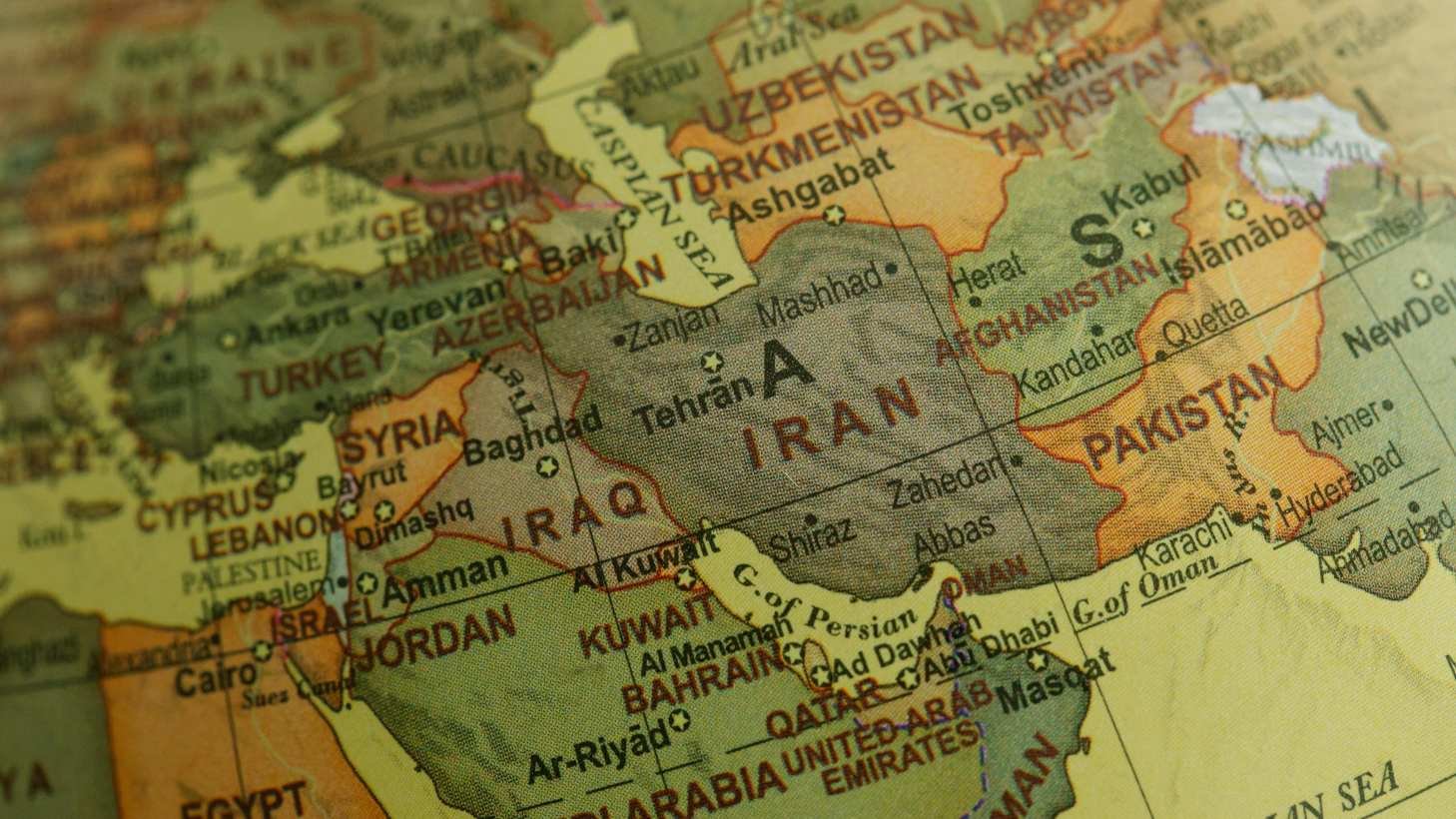
In response to the escalating conflict with the Houthi forces in Yemen, the U.S. military has deployed an additional naval Carrier Strike Group, the USS Carl Vinson, to the Middle East. The Vinson joins the USS Harry S. Truman, thus enhancing the forces currently combating the Houthi insurgency.
Expansion of American Naval Presence Amid Renewed Conflict
The deployment of the USS Carl Vinson comes as the confrontation with the Houthi rebels, who control much of Yemen, reignites following a pause of about two months. The past week observed heightened tensions and resumed fighting between U.S. forces and the Houthis. According to U.S. military reports, the Vinson and its accompanying ships are scheduled to arrive in the Middle East in about two to three weeks.
In line with the U.S. military's strategic goal of increasing its resources in the region, Defense Secretary Lloyd Austin had similarly ordered the augmentation of naval forces to deter potential Iranian attacks against Israel in August. With the USS Carl Vinson's forthcoming arrival, there will be two carrier strike groups in the CENTCOM area of responsibility; an arrangement last observed in September.
Enhanced Military Projection and Striking Capabilities
The upcoming naval presence, which includes the Vinson Carrier Strike Group comprising a Ticonderoga-class guided-missile cruiser and two Arleigh Burke-class guided-missile destroyers, fosters a heightened ability for prompt action. Notably, the USS Harry S. Truman has been actively engaged in action against the Houthis. Despite a minor collision with a merchant ship requiring a brief hiatus for repairs, the Truman returned to the Red Sea, extending its deployment period.
Last week's conflict, according to Pentagon officials, is perceived as "not an endless offensive." Rather, U.S. strikes are considerably targeting a broader range of locations across Yemen than those seen in previous months. While ground forces continue to remain a contested topic, this responsiveness showcases the armed forces' adaptability and flexibility under ever-changing battlefield circumstances.
Despite several calls for peace and intermittent ceasefires, the conflict in Yemen continues. However, the U.S. defense sector remains resilient in its commitment to neutralizing perceived threats and ensuring regional stability.
  • Text Only
Russia Employing Propaganda to Shift War Blame to Ukraine, Warns ISW
Russian authorities have been utilizing propaganda narratives to justify the continuation of the current conflict and to undermine ongoing peace discussion, according to a report released by the Institute for the Study of War (ISW) on March 21.
The ISW has highlighted Kremlin spokesperson Dmitry Peskov's assertion that the denial of involvement by Ukraine in the fire at the Sudzha gas distribution station was intended to harm Kyiv's credibility. Meanwhile, Russian Foreign Ministry spokesperson Maria Zakharova accused Ukraine of violating an agreement on strikes against energy infrastructures still in negotiation. Zakharova further indicates that the U.S. bears the responsibility to control Ukraine's actions.
With these statements, the Kremlin successfully redirects the narrative portraying Ukraine as the transgressor in the ongoing conflict.
The narrative was further supported by the accusations made by Russian officials against Ukrainian forces, claiming they targeted Russian nuclear power facilities and committed war crimes against Russian citizens. Furthermore, an account of current investigations into Ukrainian offenses against the Kursk Nuclear Power Plant and civilians in the area was given by Russia’s Investigative Committee on March 21.
Neutral Figure Parrots Russian Propaganda Claims
U.S. envoy to the Middle East, Steve Witkoff, emerged as a leading figure in the ongoing peace discussions between Russia and the U.S. In a significant development, Witkoff appeared to overtly repeat several of Russia's propaganda claims during an interview with American far-right political commentator Tucker Carlson on March 21.
Witkoff's acceptance of Moscow's claims creates further uncertainty as to whether Ukraine can achieve a ceasefire that aligns with its terms.
One of Witkoff's statements acknowledges the overwhelming desire of residents in Russia-occupied regions of Ukraine to live under Russian rule. This statement ignores the circumstances surrounding the forced referenda conducted by Russia in occupied parts of Ukraine.
UK Intelligence Labels Putin's Decree as Ushering in Russification of Ukrainians
In other developments, British intelligence has classified a recent decree signed by Russian President Vladimir Putin as heralding a new phase of the Russification policy in unlawfully occupied regions of Ukraine.
The decree demands Ukrainian citizens residing in Russia to obtain Russian documents to leave by September 10.
According to the UK intelligence assessment, Putin's decree is a clear ploy to force out Ukrainian nationals from Russian-occupied territories who refuse to accept Russian citizenship.
Most importantly, the decree substantiates the accusation against Russia of trying to systematically wipe out Ukrainian culture, identity, and statehood in the occupied territories by forcing the adoption of Russian culture and citizenship. This charge is especially relevant in light of the open adoption of Russian propaganda by key figures such as U.S. envoy Steve Witkoff in recent interviews.
  • Text Only
Springfield Armory Reveals New Coyote Brown 1911 DS Prodigy Comp 9mm
Springfield recently introduced another exciting range of weapons to their ever-growing holster after their successful attendance at the SHOT Show. The newest addition to Springfield Armory's collection is the 1911 DS Prodigy Comp AOS 9mm handgun, now available in the striking Coyote Brown colorway—an exciting notice for fans of 50 Shades of FDE.
Choosing the Perfect Model
Springfield Armory’s Coyote Brown 1911 DS Prodigy Comp 9mm offers four distinct variations for potential consumers. You can choose between two sizes - 5” and 4.25” models, and two magazine options, Hi-Cap and Lo-Cap, based on local ordinances and personal preferences.
Featuring an AOS mounting system allowing compatibility with favorite optics, these variants continue the tradition of the well-loved 1911 ergonomic design. Now available with a unique Coyote Brown twist.
Springfield Armory Speaks on the New Addition
The Vice President of Marketing for Springfield Armory, Steve Kramer, expressed pride in the new addition. “The 1911 DS Prodigy gives shooters a pistol with the classic appeal of the 1911, but enhanced with a double-stack magazine capacity and modern features.”, says Keramer. The new flat-shooting Coyote Brown Prodigy Comp pistols aim to offer reduced muzzle flip and faster follow-up shots while adding a highly popular color option.
Final Considerations
The vast offerings from Springfield Armory, ranging from colorways to magazine capacities to barrel sizes - everything caters to the diverse tastes of gun enthusiasts, demonstrating the freedom to personalize. The new 2011-style handguns, including the Coyote Brown 1911 DS Prodigy Comp 9mm pistols, are priced around a reasonable $1,600.
Each pistol includes one 17-round and one 20-round magazine, with the possibility to purchase an optional 26-rounder. Both the 5” and the 4.25” models retail for an MSRP of $1,649. Ten-round versions of both models are also accessible in certain locations at the same MSRP.
Coyote Brown 1911 DS Prodigy Comp AOS 9mm | PH9119AOSCB-COMP | 706397987435 | MSRP: $1,649 Coyote Brown 1911 DS Prodigy Comp AOS Lo-Cap 9mm| PH9119AOSCBLC-COMP | 706397988012 | MSRP: $1,649 Coyote Brown 1911 DS Prodigy Comp 4.25” AOS 9mm | PH9117AOSCB-COMP | 706397987428 | MSRP: $1,649 Coyote Brown 1911 DS Prodigy Comp 4.25” AOS Lo-Cap 9mm | PH9117AOSCBLC-COMP | 706397988029 | MSRP: $1,649
  • Text Only
Ukrainian Air Force Deploys French Mirage 2000-5F Jets in Combat for the First Time
In a significant advance for the Ukrainian Air Force, March 7, 2025, marked the maiden operational usage of Mirage 2000-5F fighter jets, first transferred from France. The aircraft was actively involved in repulsing a Russian missile attack focused on critical Ukrainian infrastructure, signifying the first recorded operational deployment of Mirage 2000-5F jets in Ukraine.

Ukrainian Forces Counter Nighttime Combined Missile and Drone Strike
On the night of the engagement, Russian forces launched a coordinated missile and drone onslaught aimed at gas extraction plants and related facilities. The Ukrainian air defenses, in response, tracked 261 flying threats that included a mix of 67 missiles and 194 drones of various types. The combined air defense mechanism, including ground-based systems and combat aircraft, led to the destruction of 134 airborne targets by the following morning. Of the total destroyed, there were 25 Kh-101/Kh-55SM cruise missiles, eight Kalibr cruise missiles, a Kh-59/69 guided missile, and 100 Shahed drones. This confrontation also saw a failed missile strike, with ten missiles not achieving their aim, while 86 unmanned aerial vehicles were shot down without an impact report.
Record of Russian Nocturnal Missiles and Drone Attacks on Ukraine
Over recent months, night attacks by Russia on Ukraine have abounded, causing widespread damage to essential facilities like energy plants, transportation systems, and populated areas. Adding to the devastation, these assaults have caused numerous civilian deaths and upended the power supply in winter, derailed essential services.
An example was the vast assault launched by Russia on August 26, 2024, deploying over 100 missile and drone units, which led to significant casualties and infrastructure damage. A similar large-scale air attack was unleashed in November that year, which resulted in numerous civilian deaths while crippling the power supply.
Boosting Air Defense with Mirage 2000-5F Jets After Suspension of U.S. Aid
The incorporation of French-supplied Mirage 2000-5F fighter jets into the Ukrainian Air Force will provide critical impetus to Ukraine's aerial defense prowess, especially in light of the recent U.S. halt on military aid, which included intelligence sharing and air defense assistance. Armed with advanced avionics and capable of deploying AASM guided bombs and SCALP cruise missiles, the Mirage 2000-5F jets will add both to Ukraine’s defensive and offensive maneuvers, potentially compensating for the diminished support from the U.S.
Official Announcements and Transfers of Mirage 2000-5F Aircraft to Ukraine
The decision to transfer Mirage 2000-5F jets to Ukraine was publicly announced on June 6, 2024, by French President Emmanuel Macron. Macron indicated France's willingness to supply Ukraine with these aircraft while offering training to 4,500 Ukrainian pilots. Later that year, in October, French Defense Minister Sébastien Lecornu confirmed a package support for training six Mirage 2000-5F aircraft. Delivered in batches, the first three Mirage 2000-5F jets were dispatched in early 2025, with the remaining expected in the first quarter of that year.
The Mirage 2000-5F: A Significant Addition to Ukraine’s Military Aircraft Fleet
Debuting in the late 1970s as a replacement for the Mirage III and Mirage F1, the technically advanced Mirage 2000-5F—with its enhanced avionics, radar, and weapons systems—bolsters Ukraine's military aircraft fleet and complements its existing air squadron of Soviet-era aircraft and Western-supplied F-16 fighters. Special modifications made specifically for the Ukrainian models included the addition of SCALP-EG cruise missiles, AASM guided bombs, strengthening its precision strike ability, and mechanisms to counter jamming and electronic countermeasures.
  • Text Only
Russian Drone Attack on Ukrainian Shipping Facility Claims a Civilian Life
In an alarming escalation of the conflict unfolding in Eastern Europe, a Russian drone attack targeted a shipping facility in Sumy, killing a civilian worker early Thursday. This occurred not far from where Ukrainian forces continue to hold their ground, steadfastly engaging Russian forces in the Kremlin's Kursk region — despite the recently publicized US decision to pause military aid and intelligence sharing with Kyiv.
Iran-Made Shahed Drones: The New Weapons in Russia's Arsenal
This attack marks the second use of an Iranian-made Shahed drone to target civilian infrastructure in Sumy. Just days prior, a similar attack was launched on a children's hospital near the town center, local authorities confirmed. These recent Iranian deployments suggest that Russia may be depleting its ammunition resources and, instead, increasingly relying on outside sources for weaponry.
Casualties Rise as Attacks on Ukraine Continue
Further south in Kryvyi Rih, a Shahed strike on a hotel took the lives of four more civilians and left over thirty injured. According to Ukraine President Volodymyr Zelensky, the hotel had just housed volunteers from a humanitarian organization hailing from Ukraine, the United States, and the United Kingdom. They survived the attack due to a timely evacuation from their rooms.
"These attacks underscore the urgent need to apply continuous pressure on Russia to cease this war and terror against life", Zelensky argued.
The Aftermath of Drone Strikes Paints a Grave Picture
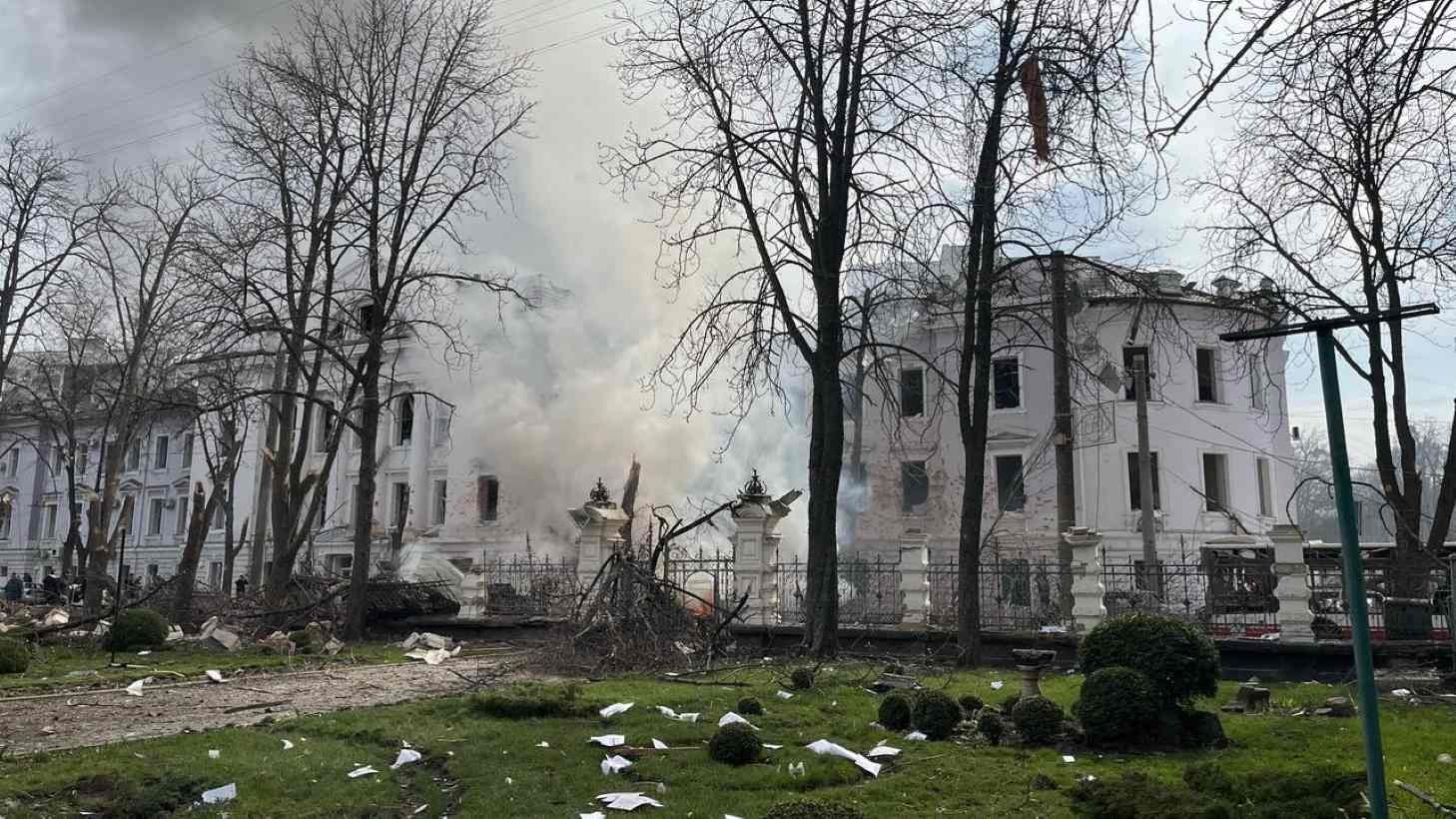
Images from the aftermath of the attack in Sumy showed the shipping facility severely damaged and still smoldering. Police on the scene sifted through debris in search of additional casualties. Remnants of the drone, including its internal electronics and heavy steel structure, were visible among the wreckage.
Shifts in Military Strategy and Their Impact
A year ago, the Sumy region had been largely untouched by the three-year-long invasion by Russian forces. However, this changed dramatically in August 2024 when a surprise offensive by Kyiv's forces into Kursk shocked the global community.
In response, Russia reeled back its focus from southeast Ukraine, diverting forces toward the sustained Kyiv offensive. This week, however, the strategic landscape shifted yet again as recent pauses in US intelligence sharing rattled Kyiv's offensive capabilities.
US Assistance and Its Effects on the Ukrainian Front
The effects of withdrawn US intelligence support have left the Ukrainian forces' strike capabilities weakened, according to Ukrainian military insiders. While Ukrainian reconnaissance officer Denis Yaroslavsky believes the frontline situation remains unaffected, defense experts argue Russia could now move their planes closer to Ukraine, posing an even greater threat.
“Ukraine’s ability to conduct ATACMS and HIMARS strikes against Russian air defense systems within Russia and occupied Ukraine will likely impact how close to the frontline Russian pilots are willing to operate," warn experts from the Institute for the Study of War.
Moscow Readjusts Strategy Amidst US Intelligence Pause
Public discussions in Moscow suggest plans to exploit the intelligence-sharing pause to inflict maximum damage on Ukraine before US weapon deliveries possibly resume. Ukrainians, on the other hand, have expressed consternation at this abrupt turn of events.
The resulting tension gave rise to multiple questions and speculations - some pointing blame at Zelensky's negotiation team, while others, like Yaroslavsky, believe that better strategies could have been employed to mitigate escalating conflict.
  • Text Only
Potential Sale of Armored D9 Bulldozers to Israel Receives US Clearance
Recent developments reveal that the US Department of State has given the green light to a potential military sale to Israel, a deal including Caterpillar D9 bulldozers and ancillary equipment estimated at around $295 million. The Defense Security Cooperation Agency (DSCA) has formally conveyed the details of this expedited transaction under an emergency procedure to Congress, forgoing the standard legislative scrutiny.
Detailing The Scope and Rationale of The Delivery
Israel has expressed interest in obtaining D9R and D9T bulldozers, along with an assortment of spare parts, maintenance facilities, corrosion prevention, technical manuals, preliminary delivery inspections, and logistical assistance. The U.S. government endorses the proposed sale, citing national security, asserting that the deal will strengthen Israeli forces' defense capacity and operational preparedness.
The militarized version of the Caterpillar D9 tracked tractor is encapsulated in armor crafted by Israel Aerospace Industries and Israel Military Industries, making for the armored D9 bulldozer, widely used by Israel Defense Forces (IDF). This robust 62-ton machine with its protective casing is driven by a Cat 3408C engine and furnished with a vanguard blade and back ripper. With a service history stretching back to the 1950s, it has proven indispensable in a variety of conflicts, particularly for engineering assignments and thwarting improvised explosive devices (IEDs).
Unraveling the Essential Features and Functionalities of The D9
Designed to withstand small arms fire, shrapnel, and RPG threats, the D9's armor is supplemented with bulletproof glass panels and slat armor. The cabin, housing a driver and commander, is outfitted with cutting-edge communication and fire suppression systems. The vehicle is pivotal to combat operations, route clearance, and support to infantry and engineering units.
Evaluating The Impact and Potential Consequences of This Sale
The main aim of this acquisition is to augment the capabilities of Israeli ground troops in safeguarding the country’s borders, crucial infrastructure, and urban localities. The State Department affirms that the regional military equilibrium will remain unsullied by this sale, and that integrating the new equipment into the Israeli forces will be a pain-free process.
Facilitating the sale is Caterpillar Inc., based in Irving, Texas. At this juncture, no offset agreements have been declared, though such deals could come under negotiation between Israel and the manufacturer. The sale does not necessitate the extension of additional U.S. government or contractor personnel in Israel and is unlikely to erode U.S. military preparedness.
Anticipations are that the delivery of bulldozers and associated apparatus will commence in 2027. The ultimate value of the contract may fluctuate due to budget realignments and the final terms of the agreement. This timely transaction echoes the U.S. commitment to bolster Israel's defense against present and budding threats.
Considering the Historical Backdrop of Military Sales
Under Donald Trump's administration, some arms exports found themselves on hold as part of a larger scheme to revisit military sales to foreign allies. Restrictions were imposed on the transfer of ammunition and other protective gear, citing U.S. foreign policy and national security considerations, sparking varied reactions within Congress and amongst allies.
Paradoxically, numerous defense contracts were either under debate or clinched during Trump’s administration, particularly with principal allies like Israel and Saudi Arabia. These include fighter aircraft, missile defense systems, and high-grade military equipment. The ongoing support detailing the continuity of U.S. military backing to its associates despite certain export limitations.
  • Text Only
Japan Bolsters Maritime Defense with Fourth Taigei-Class Submarine
On March 6, 2025, the fourth submarine of the Taigei-class, Raigei, was officially commissioned into the Japan Maritime Self-Defense Force (JMSDF) at the Kawasaki Heavy Industries' Kobe Shipyard. The event was marked by a ceremony, attended by top-ranking defense and maritime officials. The JMSDF's flag was also presented to the submarine in a traditional show of induction into the fleet.
Specifications and Capabilities of the Newly Inducted Submarine
The JS Raigei, SS-516 – a 3000-ton diesel-electric attack submarine- represents a further enhancement to Japan's maritime defense prowess. The 84-meter-long submarine is powered by two Kawasaki 12V 25/31 diesel engines and a single-propulsion motor hooked to a single-shaft system. Its state-of-the-art lithium-ion batteries offer a clear advantage over previous classes in operational flexibility and underwater endurance.
Additionally, the Raigei submarine showcases enhanced stealth and detection capabilities, including an upgraded sonar suite and a new combat management system fostering improved situational awareness. Being capable of housing female crew members, the Raigei presents a progressive move in the naval fleet of Japan.
Raigei's Armament and Its Construction Timeline
Raigei is equipped with six 533mm HU-606 torpedo tubes, capable of deploying Type 18 torpedoes and UGM-84L Harpoon Block II anti-ship missiles. These armaments equip the submarine with a robust offensive stance against surface or subsurface threats, while its sophisticated electronic warfare and countermeasure systems enhance Raigei's survivability amidst enemy detection and attacks.
The submarine was built under the JMSDF's Mid-Term Defense Program. The fifth submarine of the class, Chogei, which was launched in October 2024, is expected to join the service in 2026.
Role and Deployment of Raigei Amidst Rising Naval Threats
Assigned to the 1st Submarine Squadron of Submarine Flotilla 1, stationed at the Kure Base in Hiroshima Prefecture, Raigei is anticipated to play an indispensable role in Japan's maritime security strategy. This comes as a response to the escalating naval activities in the region and the projected expansion of the Chinese Navy in the Western Pacific.
A Transition From Soryu-Class to Taigei-Class Submarines
The Taigei-class marks an evolved generation of submarines, following the Soryu-class by integrating updated stealth, endurance, and detection capabilities. This leap forward is realized with the implementation of lithium-ion battery technology that enhances longer submerged endurance and a fiber-optic array technology-based sonar system for improved operational effectiveness.
Japan’s Changing Submarine Doctrine and The Future of Taigei-Class
Today, the Taigei-class hosts five planned installations, with four already in service and the fifth foreseen to enter service in 2022. As the region encounters growing security concerns, these submarines, stationed at JMSDF’s Kure and Yokosuka bases, are set to play a pivotal role in countering looming maritime threats. Japan's sole familiarity with lithium-ion battery technology, a perk enabling longer patrols and increased operational flexibility, underlines the instrumental role of these submarines in curbing the expanding presence of the Chinese Navy in the Western Pacific.
  • Text Only
Potential Extention of NATO's Article 5 Protection to Ukraine: Italian PM's Suggestion
Italy's Prime Minister, Giorgia Meloni, on March 6 put forward a significant recommendation. Despite Ukraine not being an official member of NATO, Meloni proposes that NATO could justifiably extend the protections of Article 5 to the eastern European nation.
Aspiring for Durable Solutions Beyond Peacekeeping
Known as the backbone of NATO's defense structure, Article 5 emphasizes the commitment of each member to defend fellow nations in case of any form of attack. However, Meloni, during her participation at the EU leaders' meeting in Brussels, advised that the need for more durable solutions for Ukraine should be the prime focus, rather than relying solely on sending European peacekeepers. Enlarging the scope of NATO's coverage to encapsulate Ukraine, without necessitating its formal enrollment in the alliance, could be one possible approach, according to her.
Evolving Coalition for Peace Monitoring in Ukraine
European nations led by the U.K and France are in the works of forming a collaborative coalition, designed explicitly to monitor any possible ceasefire in Crimea. Interestingly, nations outside the EU such as Canada, Australia, and Ireland have shown their willingness to contribute to such a mission.
Despite NATO allies validating Ukraine's "irreversible" journey toward NATO membership in July 2024, a formal invitation has yet to be extended.
Meloni's thoughts provide a clear insight into her standpoint on the security assurances for Ukraine. However, her proposal may not garner support from the American establishment, despite her serving as a link between European allies and the Trump administration.
Lingering Questions on Security Guarantees to Ukraine
Up until now, the U.S. has favored the deployment of European peacekeeping forces to supervise a potential Ukraine ceasefire. However, they have stopped short of offering any palpable security guarantees. As this discussion unfolds in Brussels, European leaders have yet to clarify how they would manage to give sustainable security assurances, particularly without U.S. support.
When queried on how security guarantees could be provided to Ukraine without U.S. sponsorship, both European Council President Antonio Costa and European Commission President Ursula von der Leyen sidestepped the direct question. Instead, they chose to praise the valor of the Ukrainian military in contending with Russia's invasion for over three years. Costa commented, "The best security guarantee is the Ukrainians themselves", underscoring Ukraine's tenacity in dealing with adversities.
  • Text Only
US Air Force Unveils OA-1K Skyraider II Attack Aircraft
The U.S. Air Force Special Operations Command (AFSOC) has officially announced the arrival of its latest aircraft, the OA-1K Skyraider II. The designation is a tribute to the iconic A-1 Skyraider, active from 1946 to the early '80s. The announcement was made during the Special Air Warfare Symposium, illuminating the anticipated role of the aircraft in upcoming special operations.

Skyraider II: A Powerful Ally for Special Operations
AFSOC commander Lt. Gen. Michael Conley characterized the Skyraider II as a unique capability designed to meet evolving operational demands. He emphasized the aircraft's potential to deliver crucial support to special operations forces and the extended Joint Force with close air support, precise strikes, and armed intelligence, surveillance, and reconnaissance missions.
AFSOC authorities commended the aircraft's affordable and flexible design, highlighting its capacity to operate in diverse combat scenarios. Brig. Gen. Craig Prather, AFSOC’s Director of Strategic Plans, Programs, and Requirements, noted that while the Skyraider II is not intended for high-end aerial combat, its capability to deliver precise impact in contested zones deems it a precious resource.
One of the aircraft’s standout characteristics is its tailwheel configuration, a trait reminiscent of the famed aircraft it's named after. This design allows the Skyraider II to conduct short take-offs and landings, thereby enabling operations from austere and unimproved airfields.
The Skyraider II: Distinctive Capabilities and Incoming Deployment
Lt. Gen. Michael Conley voiced excitement about the Skyraider II, expressing confidence in its ability to provide unique solutions, which might currently be unnoticed requirements for the nation.
The Skyraider II, in addition to being cost-effective, is an adaptable crewed aircraft geared to operate across a wide spectrum of conflicts. Brig. Gen. Prather emphasized the Skyraider II's capacity to deliver scalable and precise effects where needed, from countries like Africa to regions like the southwest border.
The Skyraider has a history of proving its toughness and firepower during the Korean and Vietnam Wars, providing robust support for Air Commando combat operations. The first Skyraider II is expected to touch down at Hurlburt Field in the spring of 2025.
  • Text Only
US Navy Carrier Group Strengthens Presence Amid North Korean Missile Tests
Days after North Korea's fourth missile test this year, the Carl Vinson Carrier Strike Group marked its arrival in South Korea. This event underlines the continuous enforcement of the U.S. military presence, notably against Pyongyang's escalating missile tests.
A Scheduled Visit with Strategic Timing
The USS Carl Vinson aircraft carrier and its support ships from the strike group reached Busan, South Korea, on March 2. The timing, though stated by the Navy as part of a routine schedule, coincides with Pyongyang's latest oceanic missile test, which took place in the Yellow Sea on February 26. North Korean state media reported that the missiles covered a distance of approximately 130 miles under the supervision of leader Kim Jong Un. This development has since been verified by South Korea's military forces. The missile tests were allegedly carried out as a message to the "enemies escalating the confrontation environment", as stated by the North Korean state media.
Reemphasizing Commitment to a Free Indo-Pacific
Recognizing the crucial role of the maritime and air domains, U.S. Forces Korea Commander Gen. Xavier T. Brunson said the presence of Carl Vinson in South Korea reconfirms the commitment to maintaining a free and open Indo-Pacific. Integrating these capabilities into an all-domain approach bolsters the strategic importance of this particular visit.
"The Carl Vinson’s presence here not only underscores the importance of both the maritime and air domains but also reaffirms our commitment to maintaining a free and open Indo-Pacific by integrating these unique capabilities into our comprehensive all-domain approach," stated Brunson during his visit to the carrier.
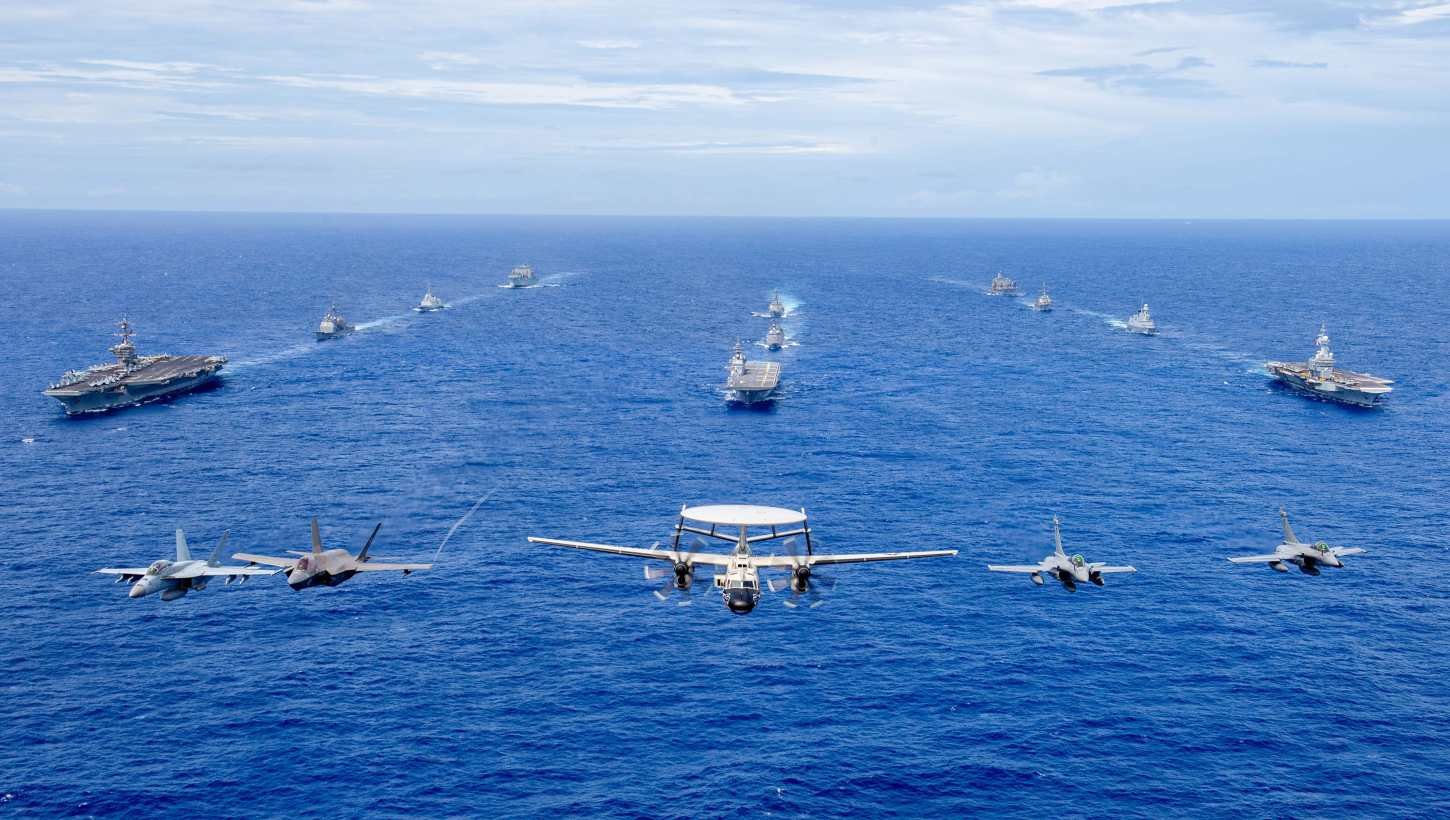
The first carrier group to visit South Korea since June 2024, the Carl Vinson Carrier Strike Group, operates in the U.S. Navy’s 7th Fleet area. Before arriving in South Korea, the carrier was engaged in the Philippine Sea-based Exercise Pacific Steller 2025, a joint force exercise with the French Navy and the Japanese Maritime Self-Defense Force.
Strengthening the Naval Fleet
The carrier strike group includes the Ticonderoga-class guided-missile cruiser, USS Princeton, and the pair of Arleigh Burke-class guided-missile destroyers – USS Sterett and USS William P. Lawrence. The group also carries the Carrier Air Wing 2, which comprises squadrons flying F-35C Lightning II, F/A-18E/F Super Hornets, and MH-60R/S Seahawks, among other aircraft.
The US Responds to Aggression with Military Exercise
In response to Pyongyang's continued acts of aggression, the United States has orchestrated various military exercises and force projection missions over the Korean Peninsula. This strategic show of strength involves bomber flyovers and joint aircraft exercises with South Korea and Japan, reassuring partners and upholding a free Indo-Pacific.
  • Text Only
Russian Forces Witness Historic Vehicle Casualties in February
In the span of February, Ukrainian forces disintegrated an unprecedented quantity of Russian machinery since the outset of the full-blown assault, as stated by Ukraine's Defense Ministry.
The shortest month bore witness to the obliteration of 3,472 Russian vehicles and fuel reservoirs, alongside 596 armored means of warfare and 331 war tanks, as declared in the ministry's report.
Lower Combat Encounters But Heightened Air Strikes in February
The month of February saw a dip in combat encounters, amounting to 3,274 from the preceding 5,087 in January. However, this did not translate to a peaceful stretch for the Ukrainian squadrons. Instead, they endured an escalated wave of air raids from the Russian side across their strategic posts and adjoining civilian territories. The attacks launched approximately 2,400 navigated aerial explosives in January, a figure that surged to 3,522 by February's end.
Shadows of Dwindling Manpower Loom Over Russia's Forces
Russia's army suffered grave losses in its ranks per the General Staff's personnel casualty data. The Russian military saw an irreversible loss of 36,570 individuals in the month of February alone.
Despite Russia making meager territorial gains in eastern Ukraine and Kursk Oblast recently, it has come at a steep price of mass casualties and crucial equipment losses.
Russian Commanders in Dire Straits as Equipment Supplies Diminish
Amid depleting military resources, Russian commanders are backed into a corner and have been compelled to compromise on protection equipment for their soldiers. This precarious scenario is evidenced by the military's resort to civilian automobiles for launching assaults.
As per the General Staff's recent report on March 1, Russia has faced a staggering loss of 875,610 troops on Ukrainian soil since it commenced its full-scale invasion on February 24, 2022. This estimation aligns with the calculations made by Western intelligence agencies.
  • Text Only
Stryker Brigade Combat Team Deployment: Making A Stand At The Southern Border
In response to instructions issued by President Trump, Secretary of Defense Pete Hegseth has directed the deployment of a Stryker Brigade Combat Team (SBCT) and General Support Aviation Battalion. Tasked with augmenting existing operations to fortify the southern border and uphold America's sovereign integrity, the deployment signifies Trump's administration's priority to solidify the nation's borders.
The multifaceted forces are expected to report on site within a few weeks. This initiative highlights the Department of Defense's unwavering commitment to work in conjunction with the Department of Homeland Security to safeguard America's territorial integrity under the leadership of President Trump.
Pentagon Mobilizes Strykers to US-Mexico Border
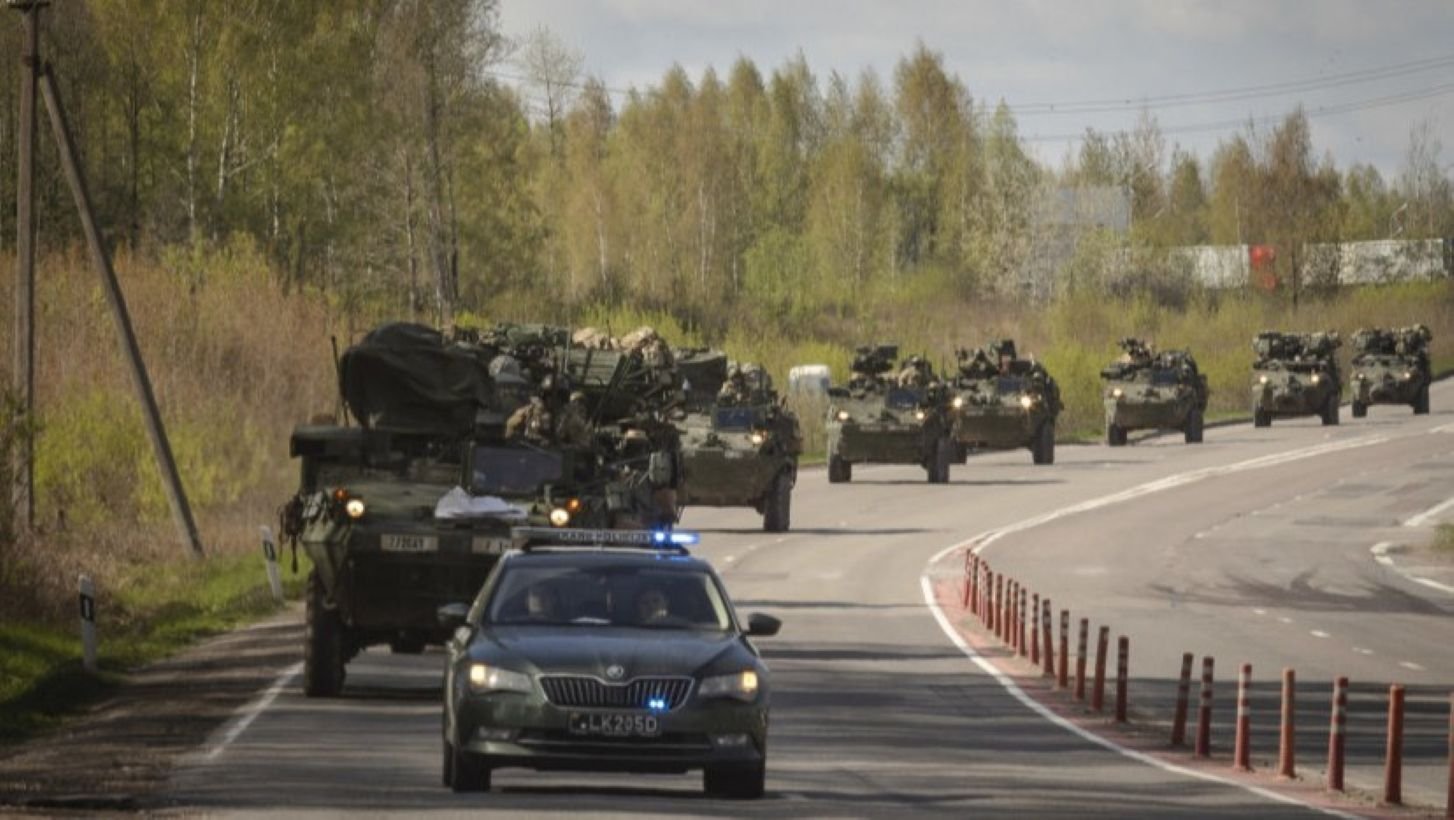
The Pentagon has authorized the dispatch of up to 3,000 active-duty soldiers to the U.S.-Mexico border. The Brigades, which included soldiers from a motorized unit armed with Stryker combat vehicles, will strengthen the region, per defense officials' confirmation to The Washington Post.
Secretary of Defense Pete Hegseth sanctioned the deployment amid escalating tensions surrounding border security and prevalent concerns over drug cartels and illicit migration.
Primarily from the 4th Infantry Division's 2nd Stryker Brigade at Fort Carson, Colorado, the units will also include specialists in engineering, intelligence, and public relations. The deployment order, which includes 20-ton armored Stryker combat vehicles designed for swift response in intricate operational situations, has yet to receive public commentary from the U.S. Northern Command and the Pentagon.
Heightened Measures Against Cross-Border Crimes
The move comes on the heels of reports suggesting that Hegseth cautioned Mexican officials about the U.S. military's readiness to act single-handedly against drug cartels. This warning surfaced should Mexico fail to take stringent measures to stem fentanyl trafficking and illegal migration.
Allegedly, the Mexican authorities reacted with surprise and anger, interpreting the warning as an indication of potential U.S. military strikes within Mexican territory. The possibility of unilateral action has caused unease within the Mexican government, considering the U.S.'s history of intervention in Mexico's domestic affairs.
Assigned to the southern border, this decision places thousands of U.S. troops in a strategic position, stressing the growing significance of the Pentagon in border security operations. Indeed, the U.S. Government is grappling with record levels of illegal crossings and violence related to drug cartels. Furthermore, the deployment of Stryker combat vehicles, typically used for urban warfare and rapid response missions, indicates an intensifying military presence in response to escalating security challenges along the border.
While the U.S. military has regularly offered support to border enforcement operations—primarily in the form of logistical and surveillance backup—this latest deployment is considered one of the largest in recent years. The duration of the troops' stationing at the border or any potential escalations remains undetermined at this point.
  • Text Only
Enhanced International Coordination Urged by President Xi
China's President Xi Jinping has urged for an intensification of coordination between China and Russia on international and regional matters. On February 28, Xi made his sentiments known during a meeting with Mr Sergei Shoigu, who holds the post of Secretary in Russia's Security Council. His call for strengthened ties was broadcasted via Chinese state media outlets.
Maintaining Communication for Significant Agendas
In addition to fostering enhanced coordination, President Xi emphasized the importance of maintaining robust communication across different levels. He alluded to pivotal agendas that both nations are set to undertake in the future. In a separate interaction on the same day, Mr Shoigu met with Chinese Foreign Minister Wang Yi. Wang reaffirmed the Sino-Russian relationship, describing it as "rock-solid and unshakable". This sentiment was circulated in a statement by the Chinese Foreign Ministry. Furthermore, both parties agreed to organize a new series of strategic security consultations when the timing is appropriate.
Increased NATO Influence in Asia Deemed Unacceptable
The expansion of NATO influence and activity in Asia was mutually declared unacceptable by both nations. The Security Council of Russia substantiated this perspective, stating that NATO's enlarged responsibility zone encroaching on the Asia-Pacific region is intolerable. Additionally, Mr Shoigu and President Xi agreed to be ready for future rounds of strategic security consultations at varied levels.
Remembering World War II Victory Over Nazi Germany
Preparations for commemorative events in Moscow in May were also tackled. This event will mark the 80th anniversary of WWII's victory over Nazi Germany, a significant moment for both Russian and Chinese history.
  • Text Only
China Issues Stern Warning to Taiwan over Expanded Military Exercises
In response to Taiwan's announcement of extended military training drills, China's Ministry of National Defense responded with a clear and severe warning. Wu Qian, the ministry's spokesperson, shared the uncompromisingly harsh message with Beijing reporters on Thursday, stating, "We will come and get you, sooner or later."
This explicit unease from Beijing's perspective further highlights the increasing tensions with Taiwan over its intensified self-defense measures.
Escalation Following Expanded Taiwan Military Exercises
The increasingly humming diplomatic atmosphere between the two nations follows Taiwan's revelation that its annual Han Kuang military exercises are slated for a broadened scope this year. The modified training program revolves around an extended live-fire phase, with the deployment of nearly 3,000 reserve troops.
Taiwan views these expanded drills as a critical element of its defensive strategy to either resist or discourage any potential military aggression from China, a country that has had a public, longstanding intention to bring the independently governed island under its control.
Accusations and Warning from Beijing
In a critique targeted at Taiwan's government, the Democratic Progressive Party (DPP), Wu contended that Taipei's endeavors to bolster its defense were a gross misjudgment. He accused Taiwan of soliciting U.S. support for independence and attempting to withstand unification by military means.
Moreover, Wu expressed fear that Taiwan's strategies would only lead to its self-destruction. Beijing regards Taiwan as an integral part of its territory, persistently resisting what it sees as international interference, with particular objection to involvement from the United States.
Maritime Incursions Stir Further Concerns
On the same day that Wu delivered his stark warning, reports indicate that four Chinese Coast Guard vessels ventured into Taiwan's territorial waters near Kinmen, prompting interception and expulsion by Taiwan's own Coast Guard. This incursion marks the latest in a spate of similar maritime incidents, increasing the strain between the two nations.
  • Text Only
Tensions Rise as High-Stakes Meeting Unfolds in the Oval Office
President Trump and Vice President JD Vance expressed deep dissatisfaction with Ukrainian President Volodymyr Zelenskyy during what was supposed to be a significant and constructive face-to-face meeting in the Oval Office. Their encounter was marked by a tense atmosphere as negotiations over a pending rare mineral resources deal stood on shaky ground.
President Trump conveyed a stern message to Zelenskyy, voicing threats to withdraw support if Ukraine does not broker peace with Russia. Both Trump and Vance accused the Ukrainian president of behaving disrespectfully during crucial diplomatic interactions.
Diplomats' Dilemma: Accusations and Retorts Fly across the Room
Among the many fiery exchanges, the highlight was Vance's criticism of the Biden administration and advocating for more diplomacy. Zelenskyy countered Vance’s argument, questioning the effectiveness of diplomacy in light of repeated violations by Russia.
The discussion escalated to Vance accusing Zelenskyy of exemplifying disrespect, asserting that the Ukraine leader was ungratefully exploiting the global media to make his case. Vance emphasized that Zelenskyy should show gratitude to the US administration for attempting to resolve the ongoing conflict.
The tension underscored as Zelenskyy questioned Vance about his understanding of the war-ravaged situation in Ukraine. Vance responded with accusations that Zelenskyy had constructed a "propaganda tour" for visitors.
An Unresolved Ending: Ukraine’s Security Hangs in the Balance
Despite Zelenskyy maintaining a composed demeanor throughout the tumultuous exchange, the meeting ended without visible progress. Trump maintained a defiant stance, warning Zelenskyy about Ukraine's precarious standing and pressed for a tone of gratitude.
Discussions also involved Ukraine's demand for security assurances in tandem with a potential ceasefire agreement. The persistence of hostilities, however, cast doubt on the proposed ceasefire and raised questions about Russia's commitment to uphold it.
As the meeting concluded, Trump maintained his criticism of Zelenskyy, voicing his assessments on social media and stating that Zelenskyy was not prepared for peace as long as it involved American participation.
During the buildup to the meeting, there were speculations about a significant deal between the US and Ukraine to share mineral resources. It was hoped that the agreement would bring continuous security support for Ukraine. Despite the public tension and harsh criticism exchange, negotiations over the mineral resources deal continued.
Interestingly, even as the war continues, Trump expressed his trust in Russian President Vladimir Putin, affirming Putin wants to end the conflict. This stance, coupled with Trump's controversial labeling of Zelenskyy as a "dictator," raises further questions about the future of US- Ukraine relations and the enduring Ukraine- Russia crisis.
  • Text Only
Update: This Deal Appears to be off due to a clash of mindsets between Trump and Zelensky.
Historic Meeting Between Trump and Zelensky Culminates in Natural Resource Agreement Signing
The presidents of the United States and Ukraine convened on February 28th in Washington D.C., signing a groundbreaking agreement on Ukraine's natural resources. U.S. President Donald Trump and Ukraine's President Volodymyr Zelensky successfully concluded weeks of grueling negotiations to formalize a deal that had initially been rebuffed by Ukraine due to a perceived lack of security countermeasures from the U.S.
Disputes and Controversies Preceding the Agreement
In the run-up to the agreement, initial drafts proposed by the U.S. Treasury were initially deemed inadequate by Ukraine. The rejected drafts were branded as imposing unilateral duties on Ukraine without sufficient security commitments from Washington. Trump's public denouncement of Zelensky following the rejection caused further controversies. Accusing Zelensky of dictatorial tendencies and denying democratic processes, Trump's harsh criticism parroted unfounded claims propagated by the Kremlin about Zelensky's legitimacy.
Financial Fundamentals and Security Concerns of the Agreement
The blueprint of the contentious agreement entails the creation of a fund to be financed with 50% of the earnings from the future liquidation of state-owned mineral resources. This portfolio includes oil, gas, and logistics infrastructure.
While the Ukrainian negotiating team managed to soften some of the harsher stipulations set forth in the early drafts – such as a demand for Ukraine to contribute $500 billion to a reconstruction fund, and a 2:1 clause mandating that Ukraine doubles any aid provided by the U.S. – security guarantees remain largely absent from the final agreement.
Trump's subsequent retraction of his derogatory remarks against Zelensky coincided with advancements made in the deal negotiations - a final draft was made available to the Kyiv Independent. After querying his earlier remarks about Zelensky being a "dictator" during a meeting with U.K. Prime Minister Keir Starmer, Trump expressed surprise, questioning whether he had made such a statement.
The Path Forward: Security Commitments and Future Negotiations
Following the agreement, Zelensky indicated that future negotiations with the U.S. and other allies are expected to focus on security concerns. Trump, however, has already communicated his anticipation that European allies shoulder the responsibility for Ukraine's post-war security. As it stands, the revolutionary agreement signifies a monumental milestone for both nations, despite the underlying points of contention, as they stride towards furthering their diplomatic and economic alliances.
  • Text Only
Staggering Death Toll: Over 165,000 Russian Soldiers Reportedly Killed in Ukraine Conflict
Reports from independent Russian media outlets, Meduza and Mediazona, suggest a massive loss of life among the Russian armed forces in the ongoing Ukraine conflict. Since the commencement of the full-scale invasion of Ukraine, an estimated total of 165,000 Russian troops have been killed according to the report published on February 24.
Escalating Consequence: Rising Russian Casualties Year after Year
To arrive at this shocking statistic, the investigators utilized open-source research and statistical analysis. The data indicates an unsettling trend - Russian casualties have been increasing with each passing year. In 2022, the death toll of Russian soldiers was around 20,000. However, this figure saw a significant increase, more than doubling in 2023, estimated to be between 47,000 and 53,000. By 2024, nearly 100,000 Russian soldiers had reportedly lost their lives.
This alarming assessment doesn't take into account the forcible recruits from the occupied Ukrainian territories or foreign fighters aiding Russian forces. The final estimate was reached by cross-verifying the roll call of the deceased with Russia's Register of Inheritance Cases.
The Greater Loss: Beyond The Deceased
The overall impact of the conflict on Russian personnel expands beyond fatalities. The Ukrainian General Staff, on Feb. 24, reported a total of 868,230 cases, encompassing not only the dead but also wounded, missing, and captive personnel. Such overwhelming figures suggest that the devastation caused by the war is far wider and deeper than death alone.
Ukrainian President Volodymyr Zelensky too shed light on the dire situation. Moscow had lost nearly 250,000 soldiers in the conflict, with battles in Russia's Kursk Oblast accounting for 20,000 of the total, Zelensky claimed on Feb. 15. He also noted that over 610,000 Russian soldiers had been wounded since the onset of the invasion.
The Battlefront: Embroiled in War Against Ukraine
In August 2024, Kyiv undertook a cross-border incursion into Kursk, initially securing about 1,300 square kilometers (500 square miles) of Russian territory. The persistent presence of Ukrainian forces was met with additional forces being deployed. Approximately 12,000 North Korean soldiers were sent to Kursk Oblast last fall to assist Russian forces in combating Ukrainian soldiers.
Russia's Painful Tide: Surging Cases of Missing Persons
The rising death toll in the conflict has had tragic effects on the home front. Russian courts dealt with about 20,000 missing persons cases in 2024, which is a distressing two-and-a-half times the pre-war annual average, as reported by Mediazona on Feb. 4. The escalating conflict and increasing casualties, it seems, are leaving long-lasting marks on Russia, both in its ranks and among its civilians.
  • Text Only
Nordic Nations Stand with Ukraine in Crisis Times
On February 24, which marked the third anniversary of Russia's pervasive invasion of Ukraine, Nordic countries- Denmark, Norway, Sweden, and Finland, pledged substantial humanitarian, military, and energy aid to the beleaguered nation. The announcement underscored the joint visit of the Nordic leaders to Kyiv, Ukraine's capital city, on the inception day of the full-blown war.
Denmark Increases Humanitarian and Military Assistance
Denmark, according to its Foreign Ministry, is extending a generous sum of 405 million Danish kroner ($56.8 million) primarily for humanitarian aid and restoration endeavors in Ukraine amid the ongoing grave circumstances. The project is divided into two sections, with one-half intended to meet essential needs such as food, medicine, water, and shelter in Ukraine's most impacted areas. The other half will cater to the country's reconstruction demands.
Since the outbreak of the invasion, Denmark's total humanitarian contribution to Ukraine has exceeded 1 billion Danish kroner (over $140 million). In parallel, Denmark's military aid to Ukraine during the invasion has escalated to about $7.5 billion.
Norway Bolsters Aid for Ukraine's Humanitarian and Energy Security
Norway pledged a substantial amount of 12.5 billion Norwegian kroner ($1.1 billion) in aid to Ukraine for humanitarian and energy security measures. This financial allotment forms part of the package sanctioned by the Norwegian parliament in November for the 2025 Nansen Support Program for Ukraine. This program has seen an accumulation of 35 billion Norwegian kroner ($3 billion) in support, from which $1.1 billion is allocated to civilian necessities and $2 billion is dedicated to military backing.
Sweden and Finland Uphold Ukraine's Independence and Resilience
Sweden, in its quest to support Ukraine's struggle for autonomy and security, will fund air defense systems worth 1.2 billion Swedish kroner (over $113 million). This sum is drawn from an aid package worth 13.5 billion Swedish kroner ($1.2 billion), initialized in January. "Strengthening Ukraine's capacity to defend itself against Russian hostility also uplifts our security," remarked Swedish Prime Minister Ulf Kristersson.
Finland too, has extended its support by contributing €4.5 million ($4.7 million) through the Partnership Fund for a Resilient Ukraine (PFRU). The aid will cover the period from 2025 to 2027, aiming to foster Ukraine's resilience and stability. "Reconstructing Ukraine and bolstering basic services will facilitate the country's resilience, an element also pivotal to achieving lasting peace," Finnish Foreign Trade and Development Minister Ville Tavio asserted. Finland has already donated €4.3 million ($4.5 million) for the fund between 2022 and 2024 to ensure a robust, resilient Ukraine.
  • Text Only
France Boosts Defense Budget and Accelerates Rearmament Plan
In the aftermath of several global conflicts, France is heightening its defense production and seeking additional financial investment for its rearmament plan. This announcement was made by Sébastien Lecornu, France's Armed Forces Minister, in an interview with newspaper, Le Parisien. The initiative comes within the context of the Ukrainian conflict and other issues in the Middle East which have pushed France to rethink its defense stance.
Seeking Investors for the Future of Defense
To meet the monetary demands of these ambitious plans, the French government is scheduling a conference for March 20. The event, which will take place in Bercy, is expected to gather key figures from private banking institutions, investment funds, and defense companies. This meeting aims to pool financial resources to fulfill France's rearmament commitment. Lecornu is collaborating closely with the Ministry of Economy to ensure the success of this event.
The Minister acknowledged the immense costs of rearmament efforts in light of recent global conflicts. However, he emphasized the urgent need for such investment in the defense sector. To this end, Lecornu hopes to communicate the extent of these necessities not just to the French public, but also to the wider European audience.
Enhancing France's Military Economy
Lecornu revealed that, apart from state financing, new private funds are undergoing creation in support of this rearmament effort. Further, he discussed plans to invite French civilians to contribute to the defense budget voluntarily. Lecornu assured potential investors of considerable returns, stating that a 1-euro investment can become 2 euros in a decade, considering the durable lifespan of military equipment and ongoing increase in arms exports.
The Minister also commented on the notable progress already made in France's military economy. Ground weapon and ammunition manufacturing such as Caesar guns and 155-millimeter shells have amplified significantly. Lecornu stressed that the focus should not solely rest on the strategic guidelines of France's military planning law, but also on the pace of its implementation.
Expansion of Naval and Aerial Assets
In terms of specific upgrades, Lecornu highlighted the essence of enhancing its naval and air capabilities. The French government intends to extend its fleet of frigates from 15 to 18, enabling control over multiple sea zones including the Baltic Sea. Additionally, the French forces look to augment their aerial prowess with the creation of 20 to 30 additional Rafale fighters.
The ground forces will also benefit from this heightened focus on defense, with plans to equip them with drones and advanced electronic warfare equipment. These advancements are driven by the necessity to accommodate changing warfare strategies and to strengthen France's global defense positioning.
  • Text Only
UK and Norway Initiate Defense Pact Talks Amid Russian Threats
In response to intensifying concerns over Russian aggression and wavering American commitment to Europe's security, the United Kingdom and Norway embarked on negotiations for a comprehensive defense pact on Feb. 20. This proposed diplomatic agreement is set to bolster both nations' armed forces while fostering industrial alliances.
The British government voiced their stance: "With Russia persisting in the militarization of the High North and Arctic, this novel agreement will fortify the security of the U.K., Norway, and our NATO allies, strengthening defenses on NATO’s northern fringe."
The dialogue includes explorations around the protection of critical undersea infrastructure, in the wake of several recent cable damages suspected of Russian interference.
U.K. Defense Secretary John Healey affirmed the nation's intent to step into a central role in ensuring European security, exhibiting solidarity in the face of adversity to protect shared interests.
European Security Conscious of U.S. Withdrawal
Amid signals from the Trump administration that suggest a reduced presence, European nations are joining forces to reinforce security measures. The U.S. has urged Europe to back Ukraine in the face of Russian threats.
In response, U.K. Prime Minister Keir Starmer is expected to propose a peacekeeping plan involving 30,000 European soldiers in Ukraine during his impending visit to Washington to meet with President Trump.
Swedish Undersea Cable Damage Sparks Investigations
Following a new incident of undersea cable damage, Swedish authorities have initiated a sabotage inquiry. According to a report by Goteborgs-Posten on Feb. 21, this case adds to a sequence of damaged undersea infrastructure in the region, which some have linked to hybrid attacks and Russia's "shadow fleet."
The fiber-optic cable running between Finland and Germany suffered some damage near Gotland Island within Sweden's Exclusive Economic Zone, as stated by the Swedish Coast Guard. Though Finnish telecom operator, Cinia, characterized the damage as slight and maintained that the cable remained functional, Finnish media notes this is the third such incident within a short span.
Swedish Prime Minister Ulf Kristersson underscored the gravity of the situation: "We take all reports of potential damage to infrastructure in the Baltic Sea very seriously. As I have already said, these incidents must be viewed in the context of the existing serious security situation."
NATO Increases Presence in Baltic Sea Amid Heightening Tensions
Following repeated cases of infrastructure damage, NATO has augmented its presence in the Baltic Sea by assigning extra patrol vessels to counter potential sabotage.
Despite numerous Russian-linked vessels being seized in connection to the incidents, there are divergent views within U.S. and European intelligence communities, with some attributing these to simple accidents.
These incidents continue to strain NATO-Russia relations, particularly as Western nations rally behind Ukraine in light of the Russian invasion.
  • Text Only
President Trump Dismisses Gen. Charles Q. Brown as Chairman of the Joint Chiefs of Staff
In an unexpected move, President Donald Trump dismissed Air Force Gen. Charles Q. Brown from his role as Chairman of the Joint Chiefs of Staff last Friday. This decision sees a decorated and history-making pilot and senior officer removed from office amidst an ongoing drive to erase leaders advocating for diversity and equity within military forces.
As the second Black general to hold the role of Chairman, Brown’s exit will likely send ripples through the Pentagon. His tenure, though short-lived at 16 months, had been dominated by ongoing conflict in the Ukraine and escalating unrest in the Middle East.
Reactions to Gen. Charles Q. Brown's Dismissal
"I want to express my gratitude to General Charles 'CQ' Brown for his extensive contribution, spanning over 40 years of service to our country, including his recent role as our Chairman of the Joint Chiefs of Staff. He is a gentleman of exceptional caliber and an inspiring leader. I wish him and his family all the best for their future," President Trump remarked on social media.
President Trump also announced his nomination for Brown's successor, Air Force Lt. Gen. Dan "Razin" Caine.
In a surprising turn of events, Defense Secretary Pete Hegseth proclaimed on Friday evening that Chief of Naval Operations Lisa Franchetti and Vice Chief of Staff of the Air Force James Slife would also be removed from their positions. Franchetti earned her place in history in 2023 when she became the Navy's first female leader.
Further Changes to Senior Military Leadership
Moreover, advocates for the Army, Navy, and Air Force are also set to be replaced, according to Hegseth. This decision comes despite Brown's widespread congressional support and a seemingly amicable encounter with the President in mid-December at the Army-Navy football game. Brown had been regularly conferring with Hegseth, who only assumed his role at the Pentagon a mere four weeks ago.
Hegseth expressed confidence in his statement regarding Caine, affirming that his embodiment of the "warfighter ethos" made him an ideal candidate for this critical role. "I look forward to collaborating with him," Hegseth stated. Furthermore, he lauded Brown for his distinction throughout a long-standing career, spanning four decades of duty, and praised him for his thoughtful advisement.
  • Text Only
Nimitz-class Aircraft USS Harry S. Truman Command Change
In a surprising turn of events, the U.S. Navy has announced the relieving of the commanding officer of the Nimitz-class aircraft carrier, the USS Harry S. Truman. Citing a "loss of confidence in his ability to command," This development in the Navy command structure affirms the strict standards adhered to for naval officers.
Dismissal Stemming from Collision Incident
The dismissal of Captain Dave Snowden, the commanding officer (CO) of the aircraft carrier, arrives a little more than a week following a collision with the merchant vessel Besiktas-M near Port Said, Egypt, on Feb. 12. The Feb. 16 statement from the U.S. 6th Fleet sheds light on the incident, disclosing damage to the Truman’s exterior wall of two storage rooms and a maintenance space. The damage also extended to a line handling space, the fantail, and the platform over one of the storage spaces. Despite the unfortunate incident, the Navy remains committed to its motto to hold on to high standards and accountability.
Interim Appointment and Admiral Snowden's Future
The commander of Carrier Strike Group 8, Rear Adm. Sean Bailey, has been named as the officer responsible for relieving Snowden. Snowden's forthcoming assignment will be with the Naval Air Forces Atlantic. Filling in the gap after Snowden, Capt. Christopher Hill, currently commanding officer of USS Dwight D. Eisenhower, will take on the role of interim commanding officer of the Truman. The USS Dwight D. Eisenhower is currently undergoing scheduled maintenance following its deployment in July 2024 to U.S. Central Command and U.S. European Command. This strategic change in command is stated to be without impact on the Truman’s ongoing deployment in the U.S. 6th Fleet area of operations.
A Year of Challenges for the USS Harry S. Truman
While the USS Harry S. Truman is accustomed to challenging situations, the past year has been particularly eventful. In a separate incident, Truman’s F/A-18 fighter was inadvertently shot down by the guided-missile cruiser USS Gettysburg in the Red Sea in December last year, with both crew members ejected and safely recovered. Despite these incidents, the USS Harry S. Truman continues its mission, portraying the resilience of the American Navy in the face of challenging situations.
Rear Adm. Sean Bailey's Announcement Full Text
In the full release, Rear Adm. Sean Bailey was confirmed to be relieving Snowden, who had been the aircraft carrier’s commanding officer since December 2023. The transfer follows the collision on Feb. 12 involving Truman and the merchant vessel Besiktas-M in the vicinity of Port Said, Egypt. Bailey reiterated the line in the sand that the U.S. Navy has drawn – commanding officers are held to the highest standard and actions are taken when those standards are not met. Capt. Christopher Hill will temporarily serve as the commanding officer of the Truman. He assures that the change in command will not impact the deployment or the mission of the Harry S. Truman in the U.S. 6th Fleet area of operations.
  • Text Only
Trump's Special Envoy Meets President Zelensky Amidst Controversy
In an urgent diplomatic engagement on February 20th, President Volodymyr Zelensky of Ukraine sat down with Keith Kellogg, U.S. President Donald Trump's special envoy for Ukraine. The meeting focused on various critical issues, most notably the current battle conditions, the return of Ukrainian prisoners of war (POWs), and the potential for stronger security arrangements.
President Zelensky conveyed his country's readiness for a mutually beneficial agreement regarding significant U.S. investments and security enhancements. "Our proposal outlines the quickest and most efficient route to achieve the desired outcomes," Zelensky expressed on the social media channel, Telegram.
Washington had initially planned a press briefing post this meet, however, a direct request from the U.S. led to no joint statements being issued, according to Ukraine’s presidential spokesperson, Serhii Nykyforov.
Kellogg's Diplomatic Mission in Focus
One day prior to the meeting, on February 19th, Kellogg landed in Ukraine to forward Washington's conflict resolution efforts amidst the escalating full-scale war with Russia. On arrival, he expressed a keen intent to address Kyiv's concerns and to relay key insights to Washington.
This visit follows close on the heels of the U.S.-Russia secret negotiations in Saudi Arabia on February 18th. These exclusive talks were conducted without Ukrainian representation, a development strongly decried by Zelensky who asserted his country's right to be involved in all conversations revolving around peacebuilding for the region.
Tensions Simmer as Trump's Unfounded Claims Stir Outrage
This diplomatic engagement comes amidst escalating tensions between Kyiv and Washington, fueled by President Trump's unfounded allegations against Ukraine. Erroneously labeling Zelensky a "dictator" and alleging a refusal to conduct elections on his part, Trump's baseless accusations have not only stirred controversy but also blatantly overlooked Ukraine's constitutional clause barring elections during martial law, enacted due to Russia's full-scale invasion in 2022.
In addition to meeting with Zelensky, Kellogg also discussed key issues with top-ranked Ukrainian military and government officials during his visit to Ukraine.
Although Kellogg's specific role in Trump's peace efforts is still ambiguous, there is palpable speculation in the diplomatic gallery about his absence from the talks in Saudi Arabia on February 18th. Suspicions attribute this absence to his perceived pro-Ukraine stance, triggering possible objections from Russia.
Trump's recent pronouncements have stirred apprehension in Kyiv and amongst European allies, causing them to question Washington's wavering stance on the war.
  • Text Only
Collision Incidents Cause Noticeable Damage to USS Harry S. Truman
Recently released images of the U.S. Navy warship, the USS Harry S. Truman, reveal significant damage sustained after colliding with a mercantile vessel last week. The nuclear-powered aircraft carrier, with an impressive length of 1,100 feet, took a notable beating to its exterior starboard quarter during the mishap.
Post-incident, the warship had to undergo repairs and was subsequently docked at the U.S naval station in Souda Bay, Greece. The shots, made public by the Navy on Saturday, give a glimpse into the damaged areas that included the outer wall of two storage units and an area dedicated to maintenance tasks.

Impact of the Incident on Combat Capabilities & Repair Plans
Despite visible damage, the essentials of the ship remain intact and unaffected. The Navy confirmed in a statement that the accident did not compromise the ship's combat ability. It has been engaged in flight functions since the collision incident on Wednesday.
Preparing to mend the situation, a group that includes structural engineers and naval architects is devising a comprehensive repair plan. The Navy has refrained from announcing a potential timeline for implementing this plan, keeping information about the duration of repair work under wraps.
Details of the Collision and Its Ramifications
In the Mediterranean Sea, near Egypt's Port Said, the Truman made an unfortunate collision with the Besiktas-M; a 617-foot, Panamanian-flagged carrier. This collision occurred in the congested waters close to the entrance to the Suez Canal.
While the collision caused damage to both vessels involved, it fortunately did not lead to injuries aboard either ship as confirmed by the Navy post-incident. This occurrence happened near a popular anchorage area for ships crossing the canal, highlighting the hazards of marine navigation in crowded waterways.
Expert Views on Risk Factors & Operational Status of the Warship
Carl Schuster, a former U.S Navy captain and a current instructor at Hawaii Pacific University, comments on the inherent risk of navigating in restricted waterways due to the limited space for maneuvering. He explains, "Both ships need about one nautical mile to stop. Quick endangerment is possible due to minor navigation errors, such misinterpretation of the other ship's movements, or delay in decision-making."
Prior to the unexpected incident, the Truman was involved in a working port visit to Souda Bay following two months of combat missions in the Central Command location. During this period, multiple strikes were conducted against Houthi rebels in Yemen. Air strikes were also launched against ISIS in Somalia, according to the Navy.
Despite the incident, Rear Adm. Sean Bailey, the commander of Truman's carrier strike group, assures that the Truman remains operational within the region. The group includes a guided missile cruiser and three destroyers. Bailey emphasizes the commitment to responding to any challenges in this dynamic and globally significant security environment.
  • Text Only

Editorial Information

Advertisement

Advertisement

Important Information

We have placed cookies on your device to help make this website better. You can adjust your cookie settings, otherwise we'll assume you're okay to continue.

Account

Navigation

Search

Search

Configure browser push notifications

Chrome (Android)
  1. Tap the lock icon next to the address bar.
  2. Tap Permissions → Notifications.
  3. Adjust your preference.
Chrome (Desktop)
  1. Click the padlock icon in the address bar.
  2. Select Site settings.
  3. Find Notifications and adjust your preference.